
9 Best Sana Labs Alternatives in 2026 (After Workday)

By Roman GryshukRoman GryshukCorporate Training Expert & Content EditorHi, I’m Roman, a content specialist with over 5 years of experience in content writing and marketing. At…Read more
Corporate Training Expert & Content Editor
12 min read
The best Sana Labs alternatives in 2026 depend on one question: do you run Workday? If you do, Workday Learning, powered by Sana keeps the same experience inside Workday, while 360Learning and Absorb are independent picks that sync with Workday both ways. If you don't, Docebo and Cornerstone suit large enterprises, and lighter platforms with public pricing suit teams below Sana Learn's 300-user minimum.
Sana Learn, the LMS from Sana Labs, has been owned by Workday since November 2025. We checked each platform's pricing page, changelog and help center in October 2026, and we scored AI tools on the same 7-point checklist we use in our AI LMS comparison.
The best Sana Labs alternatives depend on whether you run Workday. Workday Learning, powered by Sana suits Workday HCM customers; 360Learning and Absorb are independent options with two-way Workday sync; Docebo and Cornerstone fit large enterprises; EducateMe suits teams under Sana Learn's 300-user minimum. Sana Learn scores 6.5 of 7 on AI tools but starts at $13 per user a month, with a 300-user minimum on a 3-year basis.
Sana Learn at a Glance (October 2026)
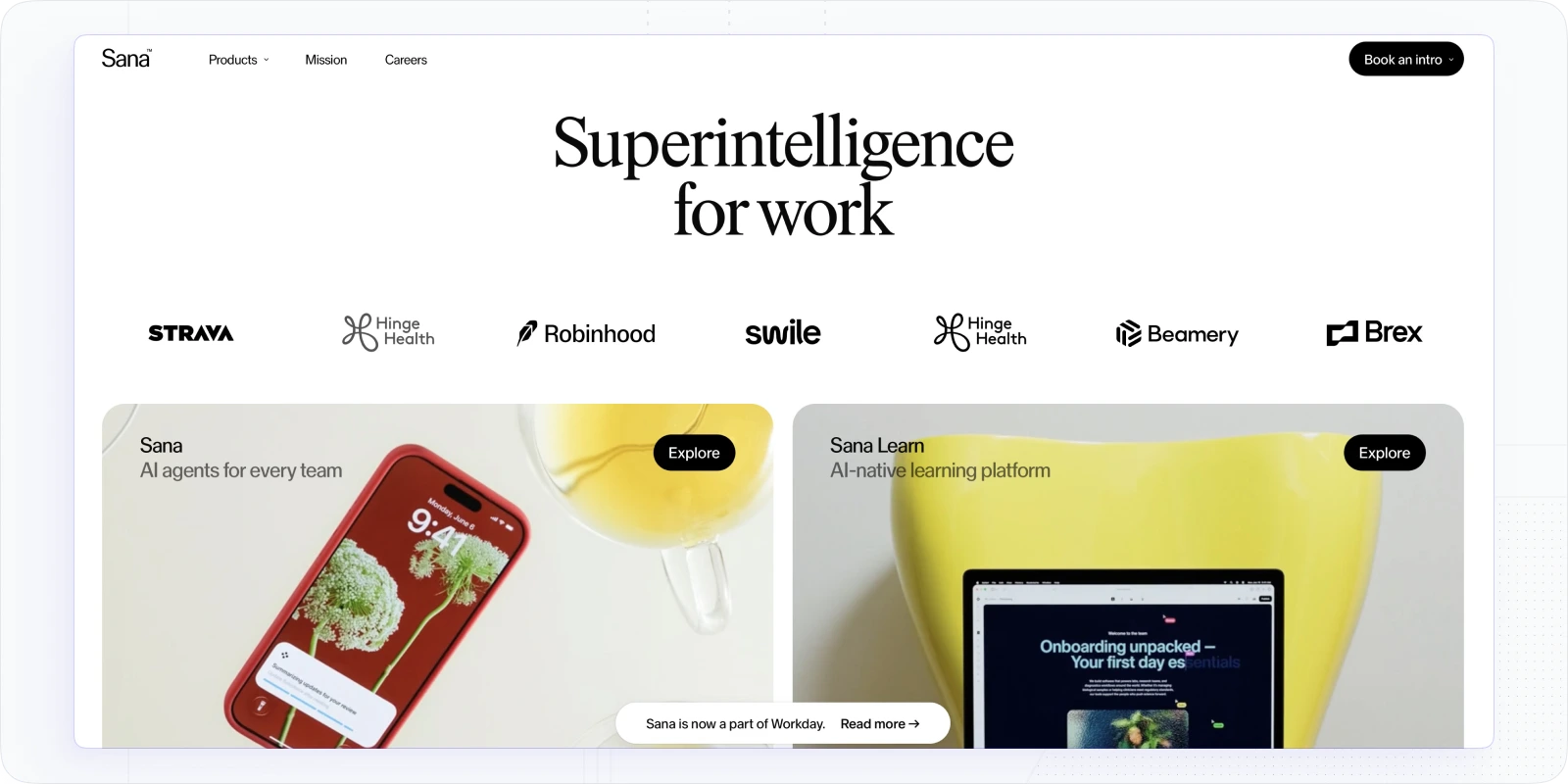
Sources: Sana's changelog, pricing page and help center.
- What it is: an LMS, LXP, authoring tool and virtual classroom in one AI-native platform, owned by Workday.
- Price: from $13 per user a month in the US for 300 to 3,000 users, "based on 3-year contract", with no plan below 300 users and no free trial. That's $46,800 a year at the minimum; our Sana Labs pricing guide has the full breakdown.
- AI tools (6.5 of 7): an AI course-design agent (November 2025), bulk PDF and SCORM conversion (July 2026), an AI tutor in every course, voice roleplay (March 2026), an AI admin agent that builds dashboards (September 2026) and an MCP connector for Claude and ChatGPT (September 30, 2026).
- Compliance and reporting: assessments, numbered certificates, expiry alerts, an audit lock on progress resets, and 11 dashboard templates.
- Gaps: no plan under 300 users, no native Sana Learn mobile app, and SCORM export that's off by default.
- Reviews: 4.8 out of 5 on G2 from 121 reviews, with praise for ease of use and AI course generation. One G2 reviewer noted: "I think some of the API integration still needs work."
What Changed After Workday Bought Sana
- September 2025: Workday announced it would buy Sana for about $1.1 billion.
- November 2025: the deal closed, according to Workday's quarterly filing.
- July 22, 2026: Workday Learning, powered by Sana became generally available and the standard learning offering for new Workday customers.
- September 30, 2026: Sana Learn shipped its MCP connector, the latest changelog entry so far.
Sana Learn is still sold on its own and Sana says you don't need Workday to buy it, while existing Workday Learning customers can keep their current product and Sana components aren't yet available in some regulated and sovereign deployments. Sana's changelog lists 61 entries from April to September 2025 against 27 from January to September 2026. Most are AI agents.
If I were renewing a Sana Learn contract now, I'd ask for the product roadmap in writing, because Workday now sells two versions of the same platform.
Should You Stay on Sana Learn?
Stay on Sana Learn if you have at least 300 users, can commit to a 3-year contract, and want AI authoring, an AI tutor and voice roleplay in one license. Look elsewhere if you're smaller, need a native mobile app or public pricing, or don't want your LMS roadmap tied to Workday.
I'd weigh the 3-year term more heavily than the $13 price. The term is harder to undo.
Stay on Sana Learn if
- You have 300 or more users and the 3-year pricing fits your budget.
- You want AI authoring, an AI tutor and voice roleplay without add-ons.
- You run Workday HCM and plan to move to Workday Learning, powered by Sana.
Look elsewhere if
- You have fewer than 300 users or want a free trial first. Our guide to the best LMS for small businesses covers that size.
- You need a native mobile app with offline access for frontline teams.
- You need public pricing for procurement, or an LMS roadmap that isn't tied to an HR software vendor.
Sana Learn Alternatives Compared
AI scores use our 7-point checklist: course creation, editing and translation, learner assistant, roleplay, AI assessment, AI reports and MCP. Prices were checked on vendor pages in October 2026.
| Platform | AI score (of 7) | Workday integration | Starting price | Mobile app |
|---|---|---|---|---|
| Sana Learn (reference) | 6.5 | SCIM user sync | $13/user/mo, 300 minimum, 3-year basis | No native app |
| EducateMe | 7 | API or Zapier | $239/mo for 80 users | Mobile web |
| 360Learning | 6.5 | Native, two-way | $8/user/mo (Team, up to 100 users) | iOS, Android, offline |
| Absorb LMS | 6 | Native connector, two-way | Quote, plus AI credits | iOS, Android |
| Docebo | 5.5 | Docebo Connect, one-way import | Quote, by active learners | iOS, Android |
| Workday Learning, powered by Sana | Not fully published | Native (system of record) | Quote | Workday mobile app |
| CYPHER Learning | 6 | Paid Workato connector | Quote | iOS, Android |
9 Best Sana Labs Alternatives
We grouped these nine by the situation each one fits best, with Sana Learn as the benchmark.
- EducateMe — teams under 300 users that want public pricing
- 360Learning — Workday shops that want two-way sync
- Absorb LMS — compliance-heavy training
- Docebo — enterprise and customer academies
- Workday Learning, powered by Sana — companies already on Workday HCM
- CYPHER Learning — AI course creation from an independent vendor
- Learn:Up by Confirm — sales and GTM onboarding
- Cornerstone — large enterprises that want a full talent suite
- Disco — AI-native academies with community built in
EducateMe – best for teams under 300 users and public pricing
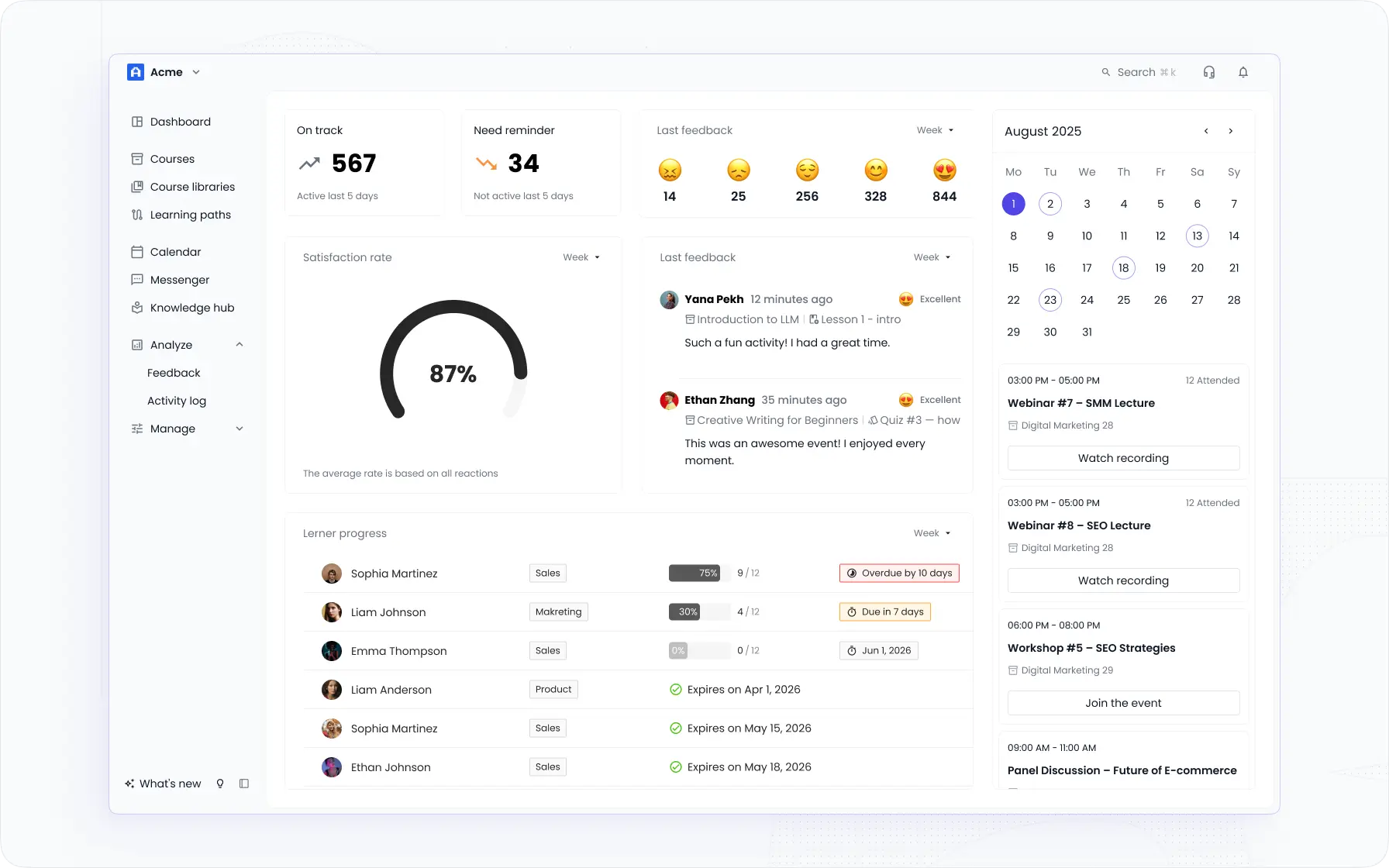
EducateMe scores 7 of 7 on our AI checklist. Where Sana Learn starts at 300 users and an intro call, you can start a 14-day trial with a team of any size.
AI tools: course creation from docs and prompts, translation, a learner assistant, AI roleplay by voice, chat or avatar, AI Practice that grades written answers, AI reports, and MCP for Claude and ChatGPT.
Workday and migration: no native Workday connector, so Workday connects through the API or Zapier; BambooHR, Rippling and Paylocity provisioning is native on Scale. Imports SCORM 1.2 and 2004.
Price: Pro is $239 a month for 80 users, plus $3 per extra user. At 300 users, Scale is $1,350 a month billed annually, about $16,200 a year against Sana Learn's $46,800 minimum.
Limitations: no native mobile app, no native Workday connector, and no off-the-shelf course library.
G2 rating: 4.8 out of 5 (13 reviews)
360Learning – best for Workday shops that want two-way sync
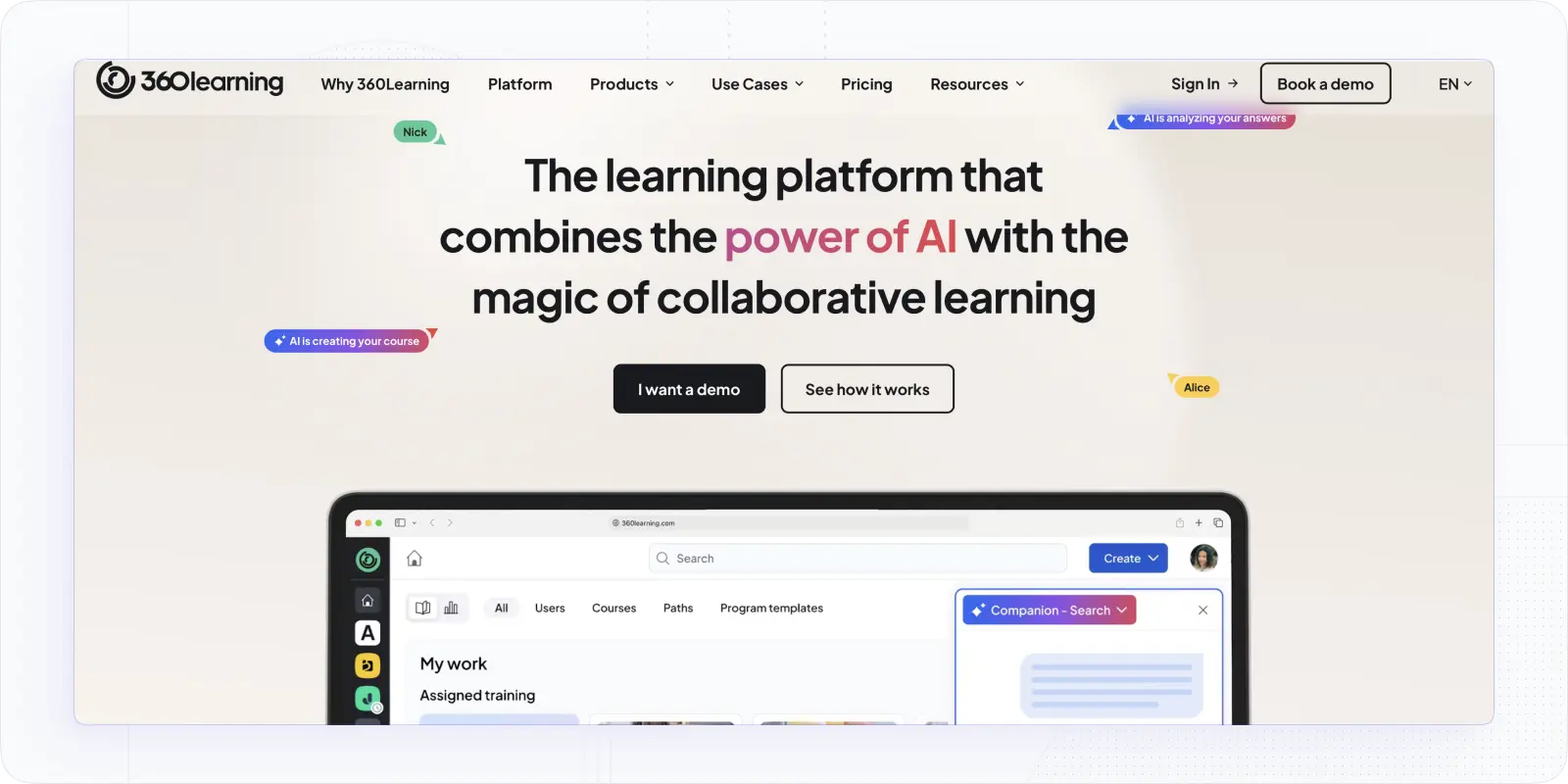
360Learning ties Sana Learn on AI at 6.5 of 7 and is built around collaborative authoring, where subject-matter experts write and update courses with AI help. It also has a mobile app with offline mode. Sana Learn doesn't.
AI tools: AI Roleplay scored against your success criteria, AI grading of written answers, an AI Companion that answers from your content, plain-language bulk edits across up to 500 courses, and MCP in beta.
Workday and migration: native two-way sync: employees come in daily, learning data goes back, and courses can appear in the Workday Learning catalog. Imports SCORM 1.2 and 2004.
Price: Team is $8 per user a month for up to 100 users, billed monthly, with a 30-day trial. Business and Enterprise are custom.
Limitations: MCP is still in beta, and 360Learning doesn't publish which plan includes the Workday connector.
G2 rating: 4.6 out of 5 (655 reviews)
Absorb LMS – best for compliance-heavy training
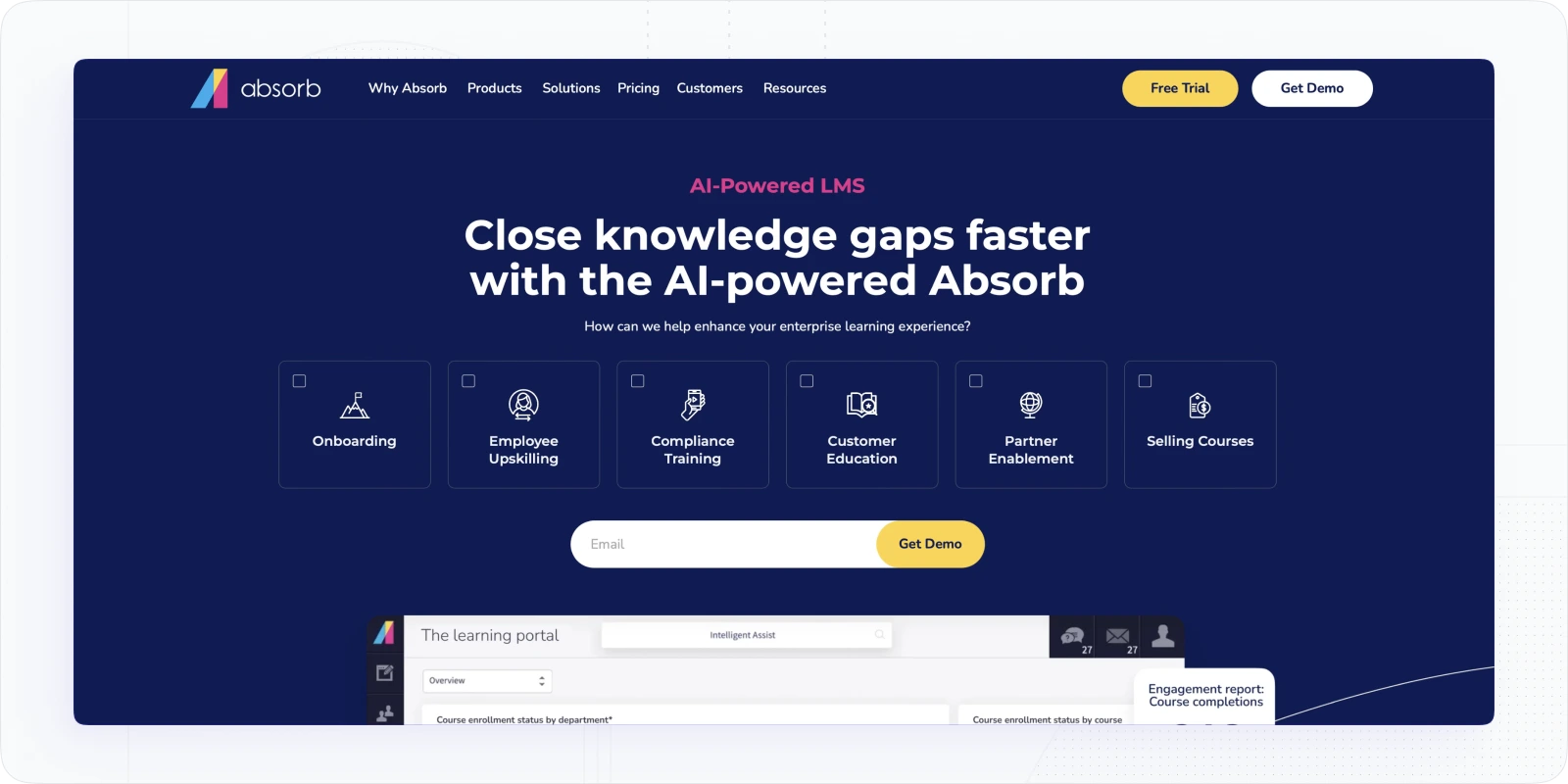
Absorb LMS is a mature corporate LMS with deep compliance and certification tools and pre-built HR connectors. Its AI layer, Absorb Aura, covers course creation, a plain-language admin assistant and a learner agent that answers from your courses with citations.
AI tools: Aura Rehearse, a rubric-scored roleplay, and an MCP connector for Claude and ChatGPT went live on October 27, 2026. AI score: 6 of 7.
Workday and migration: a two-way connector pulls worker profiles and org structure and sends learner progress back. Supports SCORM and xAPI, with migration help for data, content and users.
Price: quote only. Aura AI credits come on top, and our Absorb LMS pricing guide shows typical budgets.
Limitations: AI runs on credits, Rehearse and MCP are only days old, and there's no public price.
G2 rating: 4.6 out of 5 (996 reviews)
Docebo – best for enterprise and customer academies
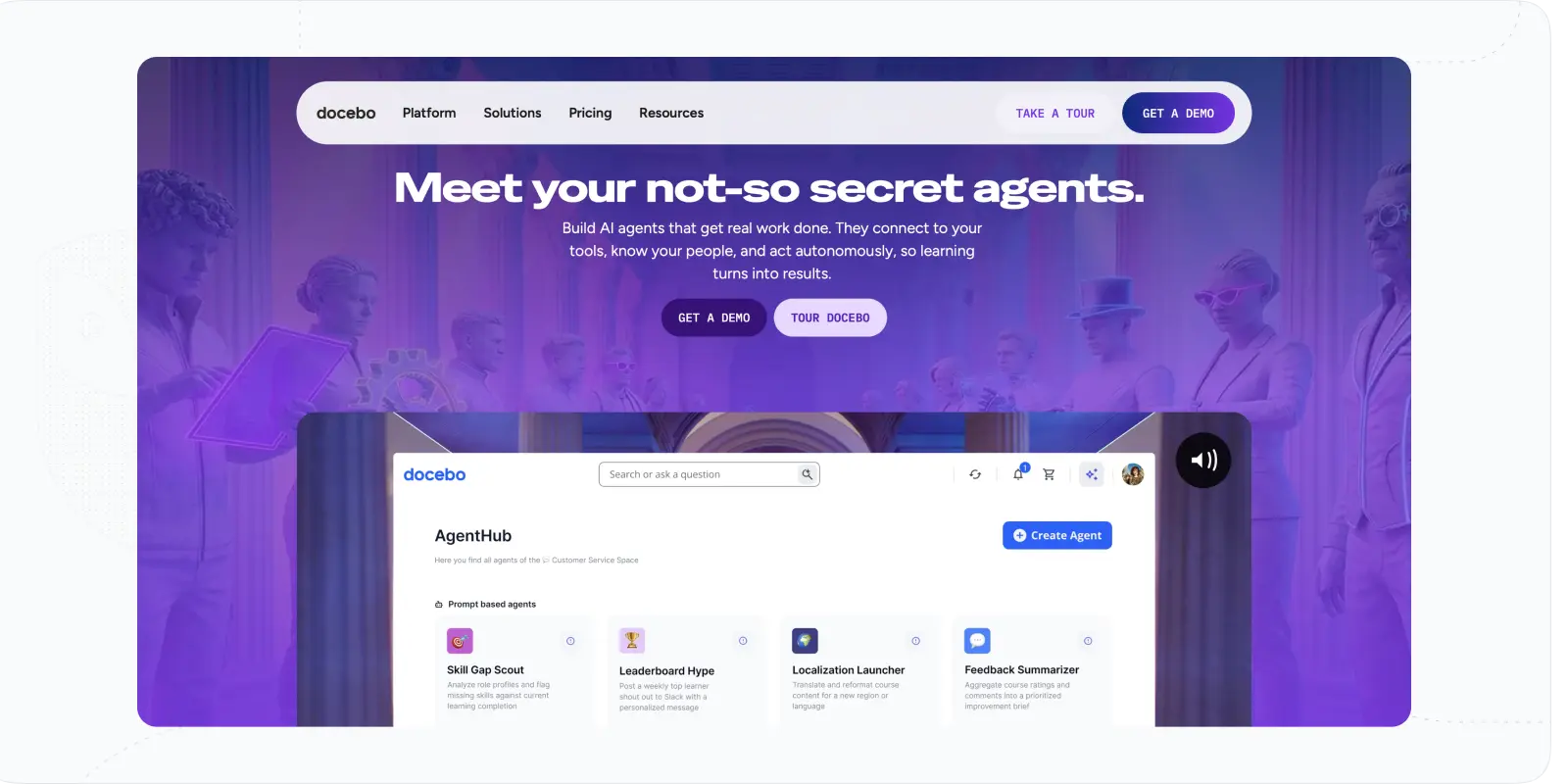
Docebo is the enterprise LMS buyers compare most often with Sana Learn. It runs internal training and customer or partner academies at scale, with a large integration catalog and a native Salesforce connector.
AI tools: AgentHub turns knowledge from 20+ sources into learning (April 2026), an MCP server for Claude, ChatGPT, Copilot and Gemini went GA in July 2026, and Docebo Roleplay gained rubric scoring. AI score: 5.5 of 7.
Workday and migration: Docebo Connect imports users and org structure from Workday one way, hourly by default, without writing completions back. Supports SCORM, AICC and xAPI.
Price: quote only, priced on active learners, with Roleplay, AI credits, Skills Intelligence and Communities as add-ons. See our Docebo pricing guide.
Limitations: add-ons push the real cost above the base license, and the Workday sync is one-way.
G2 rating: 4.3 out of 5 (752 reviews)
Workday Learning, powered by Sana – best if you already run Workday HCM
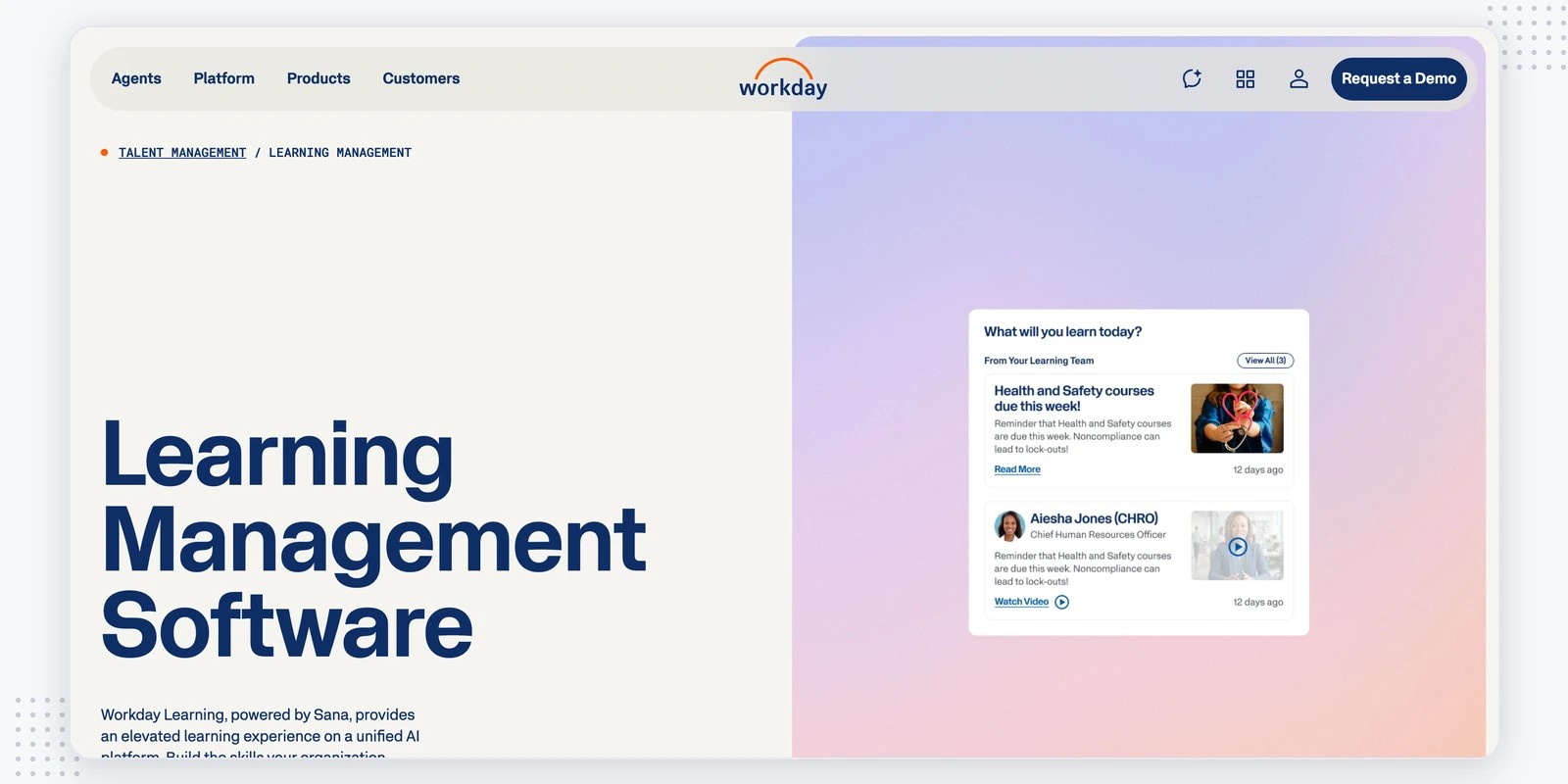
Workday Learning, powered by Sana is the Sana experience built into Workday. It became generally available on July 22, 2026, and it's the standard learning offering for new Workday customers. Workday stays the system of record. Sana handles authoring and lessons.
AI tools: an AI tutor, an AI editor that turns PDFs and slides into courses, a writing assistant and translation into dozens of languages. Workday doesn't say whether Sana Learn's voice roleplay, Admin mode or MCP connector work in Workday tenants.
Workday and migration: native, so there's nothing to sync. Imports AICC, SCORM 1.2 and SCORM 2004.
Price: not public; Workday packages it by workforce size, scope and services.
Limitations: only for Workday HCM customers, not yet in some regulated and sovereign deployments, and existing Workday Learning customers stay on their current product unless they switch.
CYPHER Learning – best for AI course creation from an independent vendor
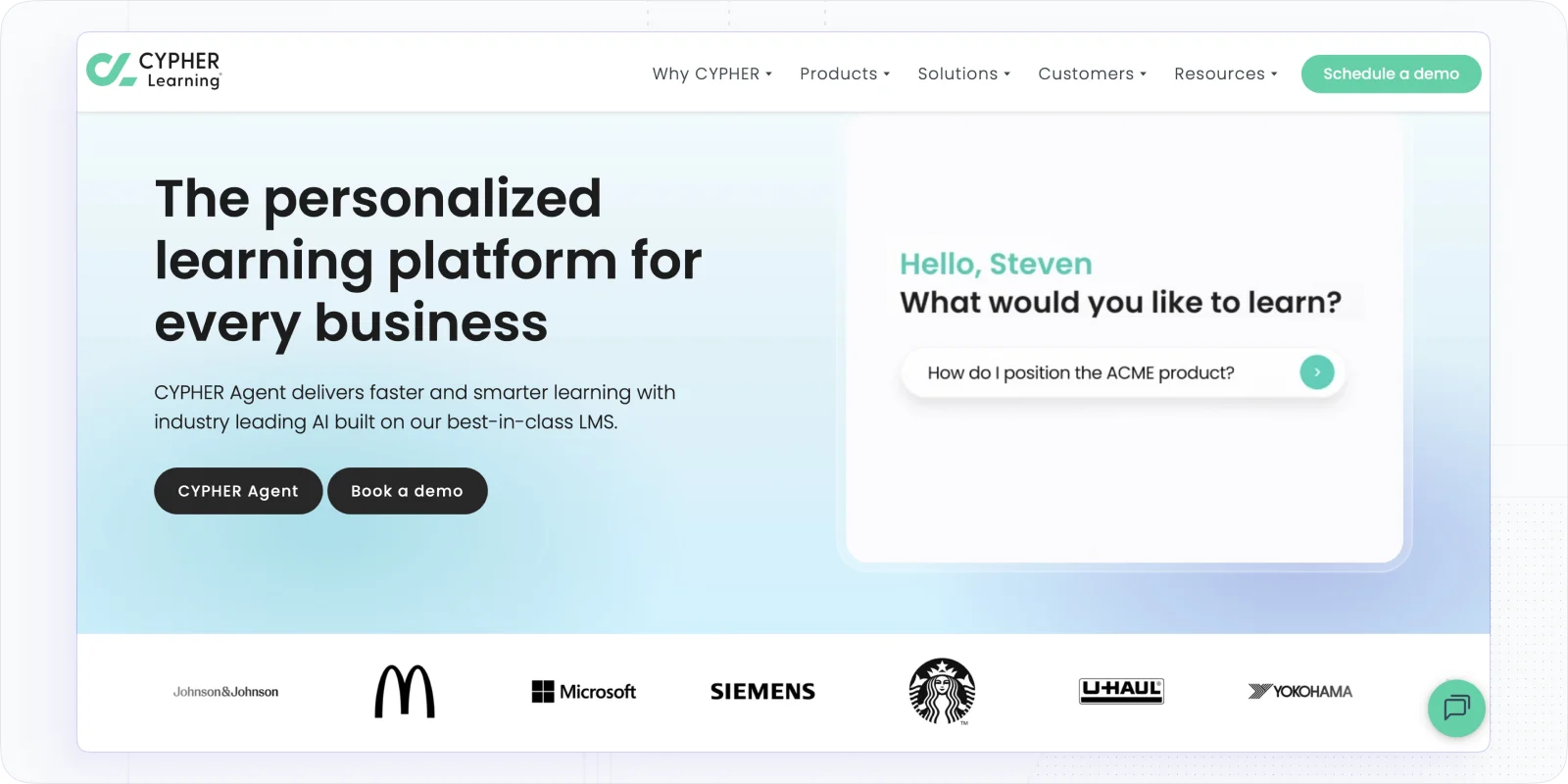
CYPHER Learning builds full courses from files and prompts and maps them to skills. It scores 6 of 7 on AI, close to Sana Learn, and it's privately held. No acquisition is reshaping its roadmap.
AI tools: AI course creation, a context-aware AI agent (July 2026), AI Practice conversations and AI conversational assessment.
Workday and migration: a paid Workato-based connector, which CYPHER describes as two-way. Plays SCORM 1.2, SCORM 2004 and AICC and supports LTI; xAPI is listed as coming soon.
Price: quote only, with 100 AI credits per user per year.
Limitations: no MCP connector yet, chat-only roleplay practice, and no xAPI yet.
G2 rating: 4.4 out of 5 (319 reviews)
Learn:Up by Confirm (formerly WorkRamp) – best for sales and GTM onboarding
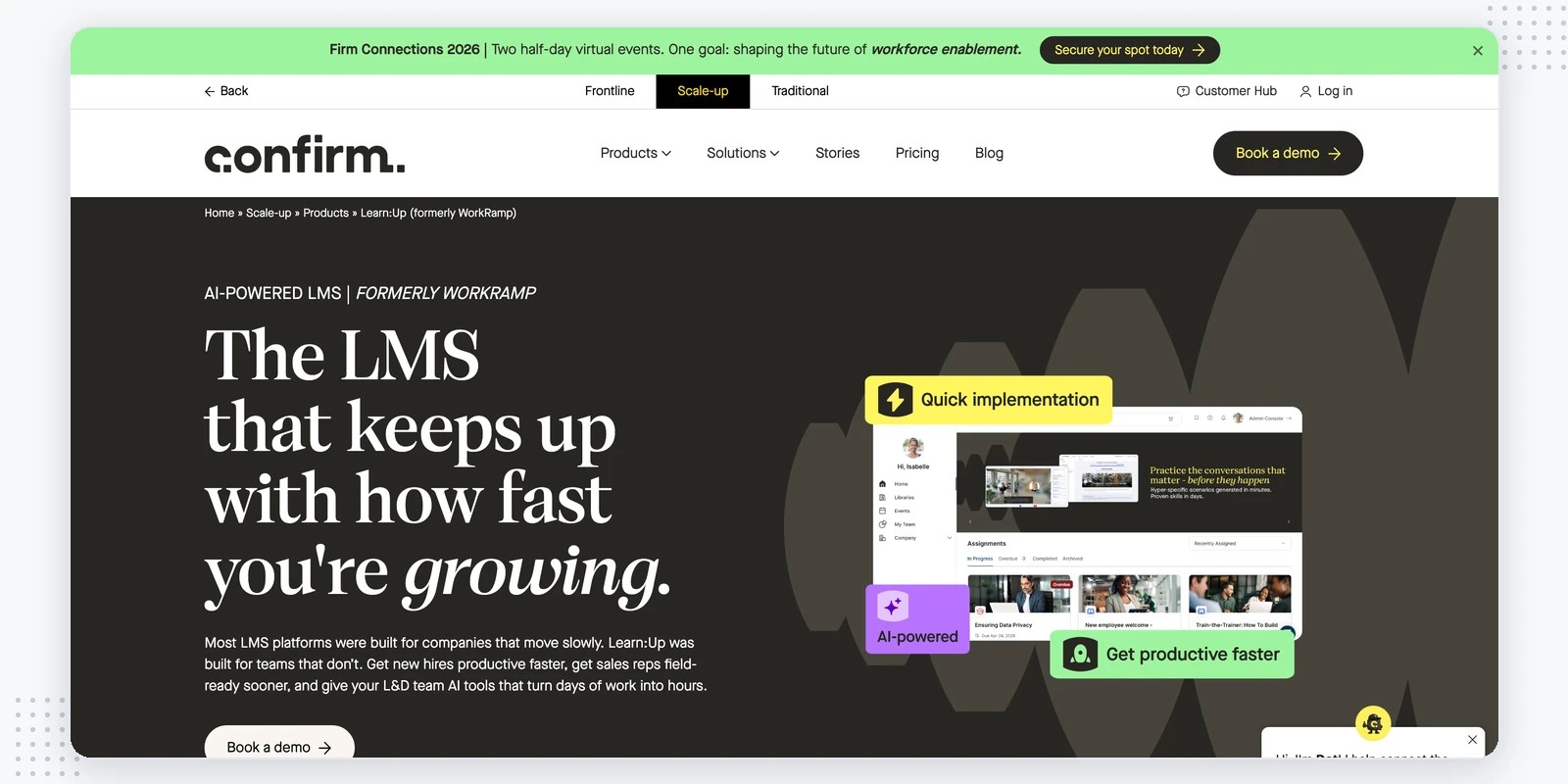
Learn:Up is the LMS formerly called WorkRamp. Learning Pool bought WorkRamp in October 2025 and renamed itself Confirm in August 2026, so Learn:Up has changed hands as recently as Sana has. Keep that in mind. It's built for go-to-market onboarding and certification.
AI tools: AI grading of written answers (November 2025), AI search answers (January 2026) and Practice, its voice or text roleplay scored per criterion. AI score: 5 of 7.
Workday and migration: a one-way daily file from a Workday report, with SCIM through Okta or Azure recommended instead. Plays SCORM, xAPI, AICC and cmi5.
Price: from $9 per user a month billed annually, quoted for a 200-person company, plus $4 per user for Practice.
Limitations: roleplay is sold separately, there's no MCP connector yet, and the mobile app isn't available to EU customers.
G2 rating: 4.4 out of 5 (622 reviews)
Cornerstone – best for large enterprises that want a full talent suite
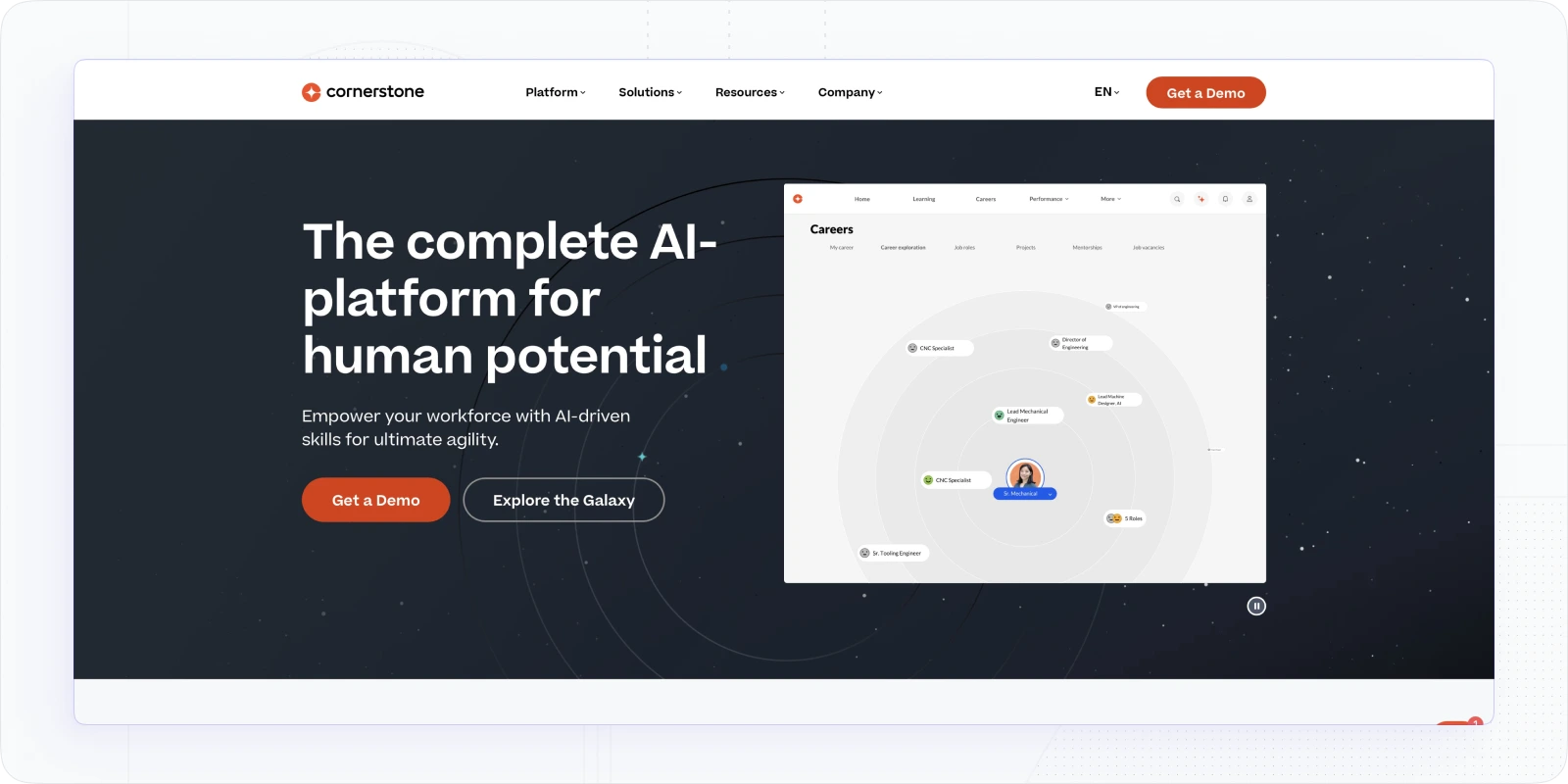
Cornerstone is a talent suite as much as an LMS, combining learning, skills data, career mobility and compliance for large organizations, and it's the alternative to weigh if you were looking at Sana inside Workday mainly for skills and talent data.
AI tools: Cornerstone Workforce AI (May 2026), built on a skills engine with 55,000+ skills, a Course Assistant (March 2026) and ISO/IEC 42001 certification. AI score: 4 of 7.
Workday and migration: Cornerstone says it integrates with Workday, but connector details aren't public. Supports SCORM, AICC and xAPI, with migration services on request.
Price: quote only. See our Cornerstone pricing guide.
Limitations: native AI authoring is thin, and G2 users rate its ease of use 7.6 of 10, the lowest in this list.
G2 rating: 4.1 out of 5 (530 reviews)
Disco – best for AI-native academies and communities
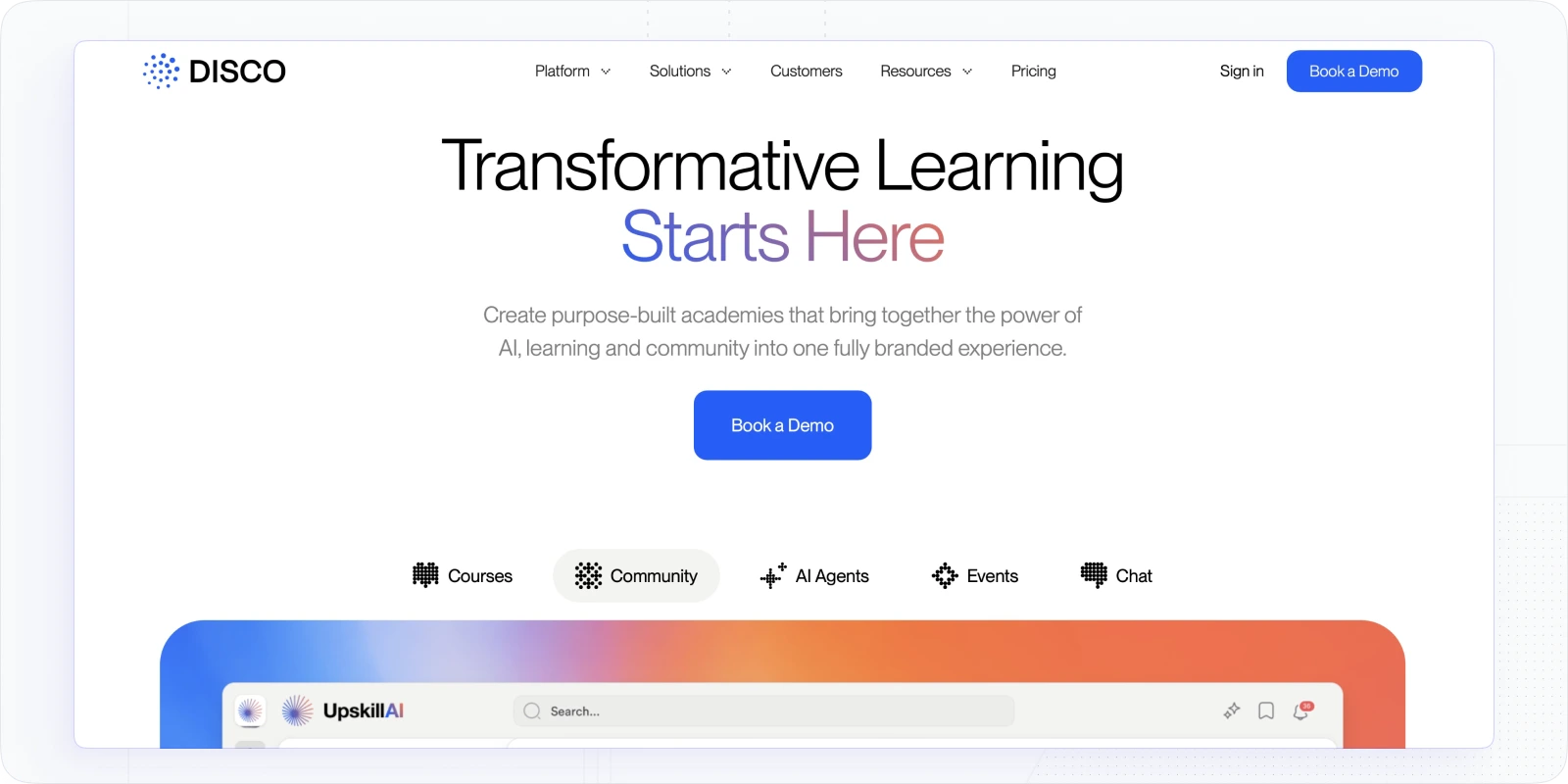
Disco is an AI-native platform for customer, partner and member academies, with member profiles, a member directory and communication tools built in.
AI tools: Knowledge Check, an AI conversational assessment (October 2026), an MCP connector (October 2026) and AI agents for admins and members. AI score: 6 of 7.
Workday and migration: no native connector; HR data comes through Zapier, the API or webhooks. Imports SCORM 1.2 and 2004.
Price: $399 a month billed annually ($499 monthly) for up to 500 members; Enterprise is custom, and there's a free trial.
Limitations: no Workday connector, no AI roleplay, and a small review base.
G2 rating: 4.4 out of 5 (24 reviews)
Sana Learn vs Docebo vs Absorb
Docebo and Absorb are the platforms buyers most often compare head to head with Sana Learn. If Workday data matters most, I'd put Absorb ahead of Docebo on this shortlist for its two-way sync.
| Sana Learn | Docebo | Absorb LMS | |
|---|---|---|---|
| Pricing | From $13/user/mo, 300-user minimum, 3-year basis | Quote, by active learners, plus add-ons | Quote, plus AI credits |
| AI score (of 7) | 6.5 | 5.5 | 6 |
| AI roleplay | Included, voice since March 2026 | Paid add-on | Aura Rehearse (October 2026), uses credits |
| MCP for Claude and ChatGPT | Yes (September 2026) | Yes (July 2026) | Yes (October 2026) |
| Workday | SCIM user sync; Workday Learning version for HCM customers | One-way import | Two-way connector |
| Native mobile app | No | Yes | Yes |
| G2 rating | 4.8 (121 reviews) | 4.3 (752 reviews) | 4.6 (996 reviews) |
How to Move Off Sana Learn Without Losing Data
I'd start this list at least three months before renewal. Sana has to switch exports on first.
- Check your term. Sana's price is based on a 3-year contract, so time the switch to your renewal date.
- Ask for portable files early. Sana's SCORM export is a connector package that "maintains a connection to Sana", and it's off until your Engagement Manager enables it. Request standalone SCORM files, PDFs and source documents before access ends.
- Export your records. Pull completion history, numbered certificates and assessment answers from the raw-data views in Insights.
- Pick the system of record. If you run Workday, decide whether Workday or the new LMS holds learning records. 360Learning and Absorb sync both ways; Docebo and Learn:Up import one way.
- Re-import as SCORM 1.2 or 2004. Every alternative here supports it. Plan to rebuild AI-native cards such as Studio, Tutor and Scenario cards.
- Re-create your automations. Enrollment rules, smart groups and reminder schedules don't migrate, so list them before you switch.
Which Sana Labs Alternative Should You Choose?
Start with your HR system. Workday HCM customers should compare Workday Learning, powered by Sana with 360Learning and Absorb, which sync with Workday both ways. Large enterprises without Workday should look at Docebo and Cornerstone. Teams under 300 users, or anyone who needs public pricing, should trial a platform that sells smaller plans.
Whichever of these Sana Labs alternatives you shortlist, I'd rebuild one real course and one roleplay in a trial before signing anything. You can do that in a 14-day EducateMe free trial.
Frequently asked questions
Not quite. Sana Labs is the Swedish company behind Sana, which Workday bought in November 2025. Sana Learn is its learning platform: an LMS, LXP, authoring tool and virtual classroom in one. Sana Agents is a separate AI assistant product. Workday Learning, powered by Sana is a version of the same learning experience built into Workday HCM for Workday customers.
Yes, but plan for it. Sana Learn's SCORM export is off by default, so your Engagement Manager has to enable it, and it produces a connector package that keeps a connection to Sana rather than a standalone file. Before your contract ends, request standalone SCORM files, PDFs and source documents, and export completion history and certificates from Insights.
No. Sana says Sana Learn can be bought, deployed and run alongside any HR system, with no migration to Workday's systems. It syncs users from Workday, BambooHR and other HR tools through SCIM. Workday HCM customers are offered Workday Learning, powered by Sana instead, which keeps learning records inside Workday.
In the US, Sana Learn starts at $13 per user per month for 300 to 3,000 users, with no plan below 300 users. The price is indicative and based on a 3-year contract, so the minimum is about $46,800 a year. Above 3,000 users, pricing is custom. Ask whether a one-off implementation fee applies, because Sana's pricing page answers that both ways.