
10 Top-Ranking Healthcare LMS Solutions [2026]

By Sofia KondratSofia KondratCorporate Training Expert & Content EditorHey there! I’m Sofi Kondrat, your go-to corporate training advisor here at EducateMe. I’ve been navigating the highs…Read more
Corporate Training Expert & Content Editor
8 min read
The best healthcare LMS platforms in 2026 are EducateMe, MedTrainer, Relias, HealthStream, Absorb, Cornerstone OnDemand, Docebo, TalentLMS, Tovuti, and Axonify. The right one depends on your regulatory exposure and staff mix, but every option here is judged against the same non-negotiable: can it prove mandatory training happened (on time, with a timestamp, a score, and an exportable audit trail) when a surveyor asks? This guide scores all 10 against HIPAA, OSHA, Joint Commission, and state CE requirements, and flags each platform's AI capabilities and honest limitations.
Most healthcare LMS comparisons read like they were written by someone who has never had a compliance officer breathing down their neck three days before a Joint Commission survey. The platforms get described as "robust" and "scalable," and then the list ends. Nobody mentions whether the system can actually export a timestamped completion report by department. Nobody asks whether certification expiry alerts fire automatically, or whether your training coordinator has to remember to send them manually. If you're still deciding what AI should and shouldn't touch in your training, start with what AI can and can't do in healthcare staff training, then come back to the platforms.
I've spent time evaluating how healthcare training buyers actually make LMS decisions, and the pattern is consistent: compliance comes first. Features come second. Price comes third. If an LMS can't prove training happened (with a timestamp, a quiz score, and an exportable audit trail) it doesn't matter how good the course builder is.
This guide is structured around that reality. Before the platform comparisons, I've included a section on what healthcare training compliance actually requires. The platform evaluations then assess each LMS against those criteria specifically.
The best healthcare LMS depends on your organization's size and compliance needs. EducateMe is the top choice for teams that want AI-powered course creation, automated role-based enrollment, and audit-ready reporting in one platform. Relias leads for clinical certification and professional development. Absorb LMS suits large healthcare organizations needing deep compliance tracking.
What Healthcare Training Compliance Actually Requires
This section exists because most LMS comparison articles skip it entirely, and then wonder why buyers don't trust them.
Healthcare organizations operate under several overlapping compliance frameworks, each with specific training implications:
HIPAA (Health Insurance Portability and Accountability Act)
The U.S. Department of Health and Human Services requires covered entities and business associates to train all workforce members on HIPAA policies and procedures. There's no federally mandated frequency in the statute itself, but HHS guidance and enforcement patterns make annual retraining the standard expectation. More importantly, training must be documented: who completed it, when, and whether they passed any associated assessment.
What the LMS must do: track completion with timestamps, store records for a minimum of 6 years (per HIPAA record retention requirements), and produce an exportable report that names the user, course, completion date, and score. If your LMS can't export that cleanly, your compliance officer is doing it manually in a spreadsheet, which is exactly the situation that creates audit risk.
2026 update: HHS has proposed a HIPAA Security Rule revision that would reclassify annual security-awareness training from "addressable" to explicitly required, so the record-keeping bar is rising, not relaxing. Insufficient staff training also remains one of the most common findings in OCR audits, which is exactly why exportable, on-demand completion records matter.
OSHA (Occupational Safety and Health Administration)
OSHA mandates specific safety training for healthcare workers — bloodborne pathogens (29 CFR 1910.1030), hazard communication, and workplace violence prevention in clinical settings. Bloodborne pathogen training is required annually. Documentation requirements mirror HIPAA: records must be maintained for 3 years post-employment for bloodborne pathogen training specifically.
What the LMS must do: automate re-enrollment when annual training expires, not rely on a coordinator manually checking spreadsheets each January.
Joint Commission Accreditation
The Joint Commission (which accredits roughly 22,000 U.S. healthcare organizations) doesn't prescribe a specific LMS, but surveyors will ask for evidence that staff training and competency verification happened on schedule. Findings in this area can affect accreditation status. The practical requirement: your LMS needs to produce clean evidence quickly, ideally filterable by role, department, and date range. For new hires, the healthcare onboarding checklist by role and week shows which sign-offs to record before patient contact.
State CE Credit Requirements for Licensed Roles
Nurses, physicians, pharmacists, and other licensed professionals often have state-mandated continuing education requirements for license renewal. The specifics vary by state and license type — a California RN has different CE requirements than a Texas PA. An LMS serving a healthcare team with licensed staff needs either native CE credit tracking or a clear workaround (SCORM import of accredited content, certificate issuance tied to completion).
In practice, healthcare compliance isn't a one-time push — it's a renewal engine. Most mandatory courses (HIPAA, bloodborne pathogens, hazard communication) recur annually, certifications carry hard expiration dates, and the metric that actually keeps you audit-ready is your overdue view: who is past due, on what, and by how many days. The platforms that earn their place below automate recurring re-enrollment, fire expiry reminders to learners and managers before certificates lapse, and surface an at-a-glance overdue dashboard — so nothing depends on a coordinator remembering to check a spreadsheet.
The 4 Questions Every Healthcare LMS Evaluation Should Answer
Before evaluating any platform below, I'd run these against every vendor:
- CE credit tracking — Does the platform natively track CE credits, or does it require a workaround?
- Certification expiry reminders — Are automated reminders sent to learners and managers before certificates expire?
- Audit log export — Can you export a full completion report (user, course, date, score) in PDF or CSV format on demand?
- Role-based compliance paths — Can you assign different mandatory training to clinical staff vs. administrative staff automatically?
The platform table below answers these for each LMS. Where I couldn't verify the answer directly, I've marked it "not confirmed" rather than guess.
| Platform | CE credit tracking | Certification expiry reminders | Audit log export | Role-based compliance paths | Best for |
|---|---|---|---|---|---|
| EducateMe | Workaround (SCORM/certificate issuance) | Yes — automated | Yes (CSV/PDF) | Yes | Mid-size orgs: pharma, health insurance, health centers |
| MedTrainer | Yes — native | Yes — automated | Yes — full audit trail | Yes | Federally regulated clinics, ASC groups, multi-site compliance |
| Relias | Yes — native (CE/CME) | Yes | Yes | Yes | Hospitals, post-acute care, home health |
| HealthStream | Yes — CE marketplace | Yes | Yes — configurable | Yes | Mid-to-large health systems |
| Absorb LMS | Workaround | Yes | Yes | Yes | Mid-to-large orgs with complex compliance |
| Cornerstone OnDemand | Workaround | Yes | Yes | Yes | Large health systems, data-driven orgs |
| Docebo | Not confirmed | Yes | Yes | Yes | Enterprise healthcare, social learning focus |
EducateMe – Top Healthcare LMS Overall
EducateMe is the best LMS for healthcare, designed specifically for medical staff training, patient education, compliance, and onboarding across employees, patients, and care partners.
I'd recommend it specifically for healthcare organisations that need reliable automated tracking, role-based enrollment, and clean exportable reports, but aren't running accreditation-specific workflows that require a specialist compliance platform like MedTrainer or Relias. That distinction matters. EducateMe is genuinely strong at the compliance documentation piece (timestamped completion logs, automated expiry reminders, CSV/PDF exports). It's not a clinical credentialing system.
One limitation to name up front: EducateMe does not natively track CE/CME credits. Accredited continuing-education content runs via SCORM import with certificate issuance tied to completion — workable for most teams, but organizations with heavy multi-state licensure (nurses, physicians, and pharmacists renewing licenses on CE hours) should weigh that gap against a specialist like Relias or MedTrainer.
EducateMe automatically enrolls learners by role, keeps certifications current, streams live audit logs to HRIS/EHR systems, and protects all data with enterprise-grade security. With more than 100,000 active learners, it scales from small departments to enterprise training programs.
However, the platform currently lacks a dedicated mobile app and built-in gamification features, which may limit engagement for some learners.
Best for: Small and mid-size pharmaceutical companies, health insurance providers, medical device manufacturers, and health centers that need an AI-powered LMS for medical staff training, onboarding and compliance programs.
Features that make EducateMe a good choice
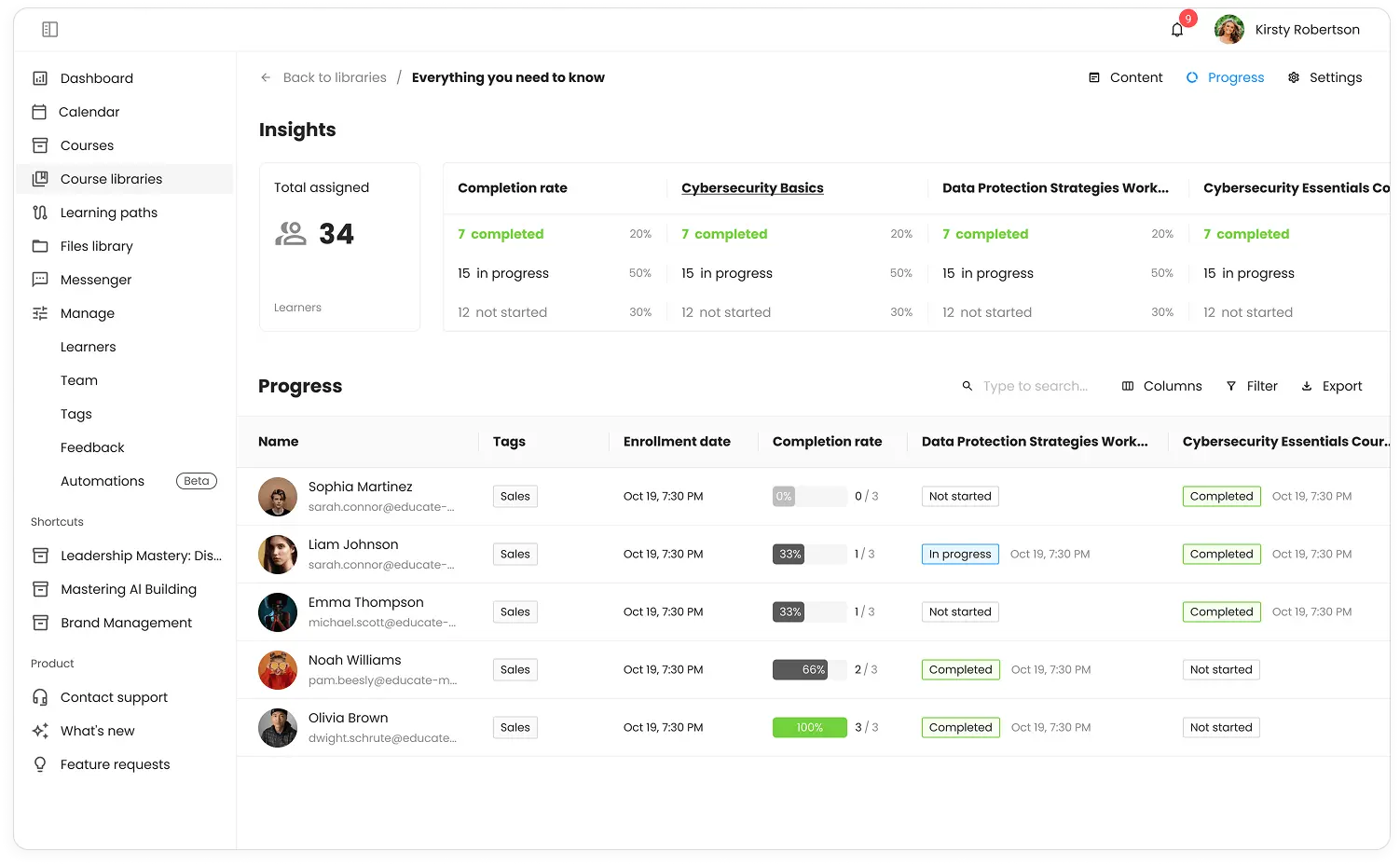
- Compliance automation powerhouse. Built-in workflows enforce role-based course assignments, scheduled recertification cycles, auto-issued certificates with secure e-signatures, immutable audit logs, and API or Zapier feeds to HRIS and EHR systems, ensuring readiness for HIPAA, OSHA, Joint Commission, and other audits with minimal manual effort.
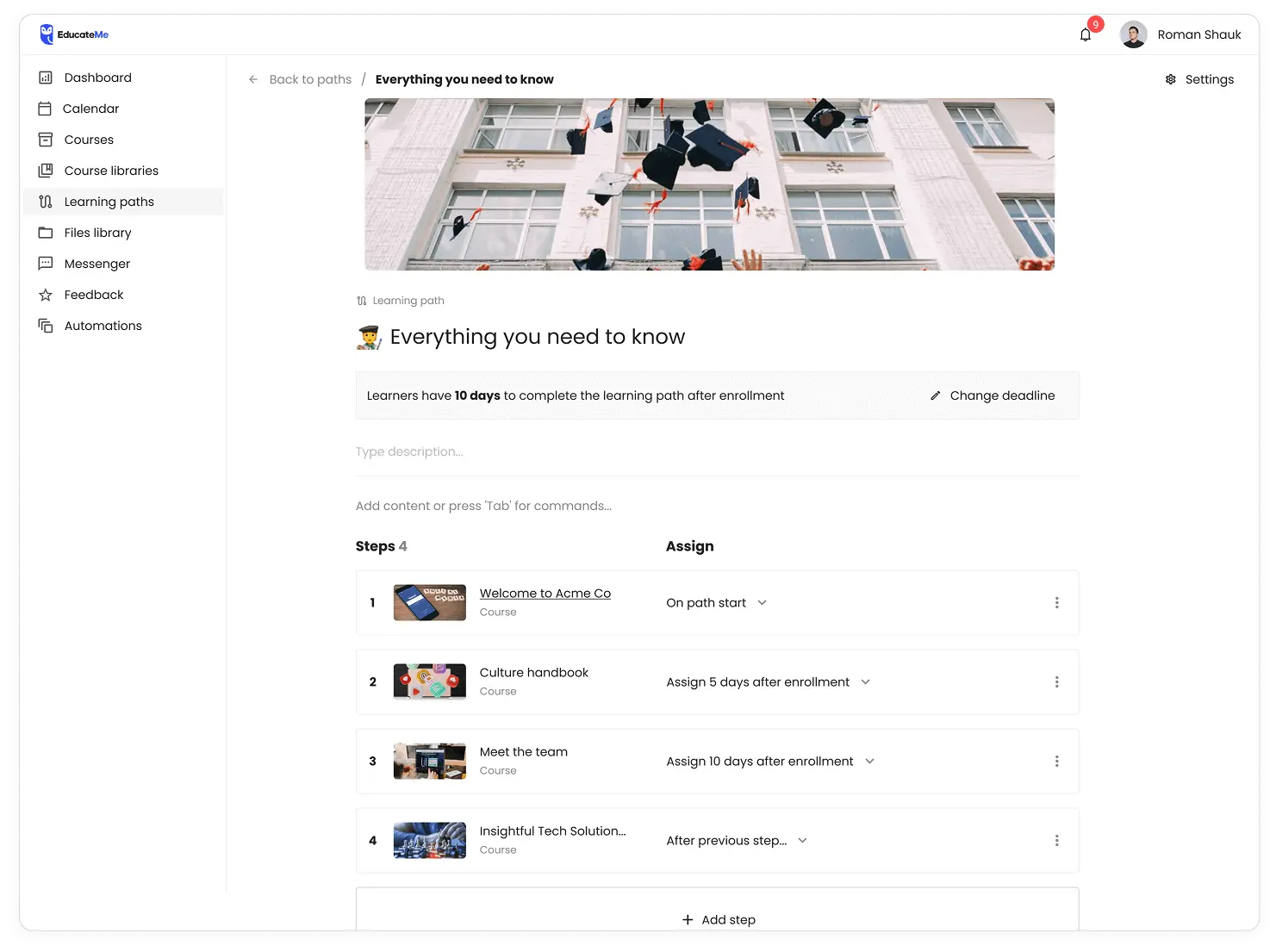
- Role-smart learning paths. Learners receive individualized tracks based on clinical role, specialty, and experience level — from nurses and physicians to allied staff and administrative teams.
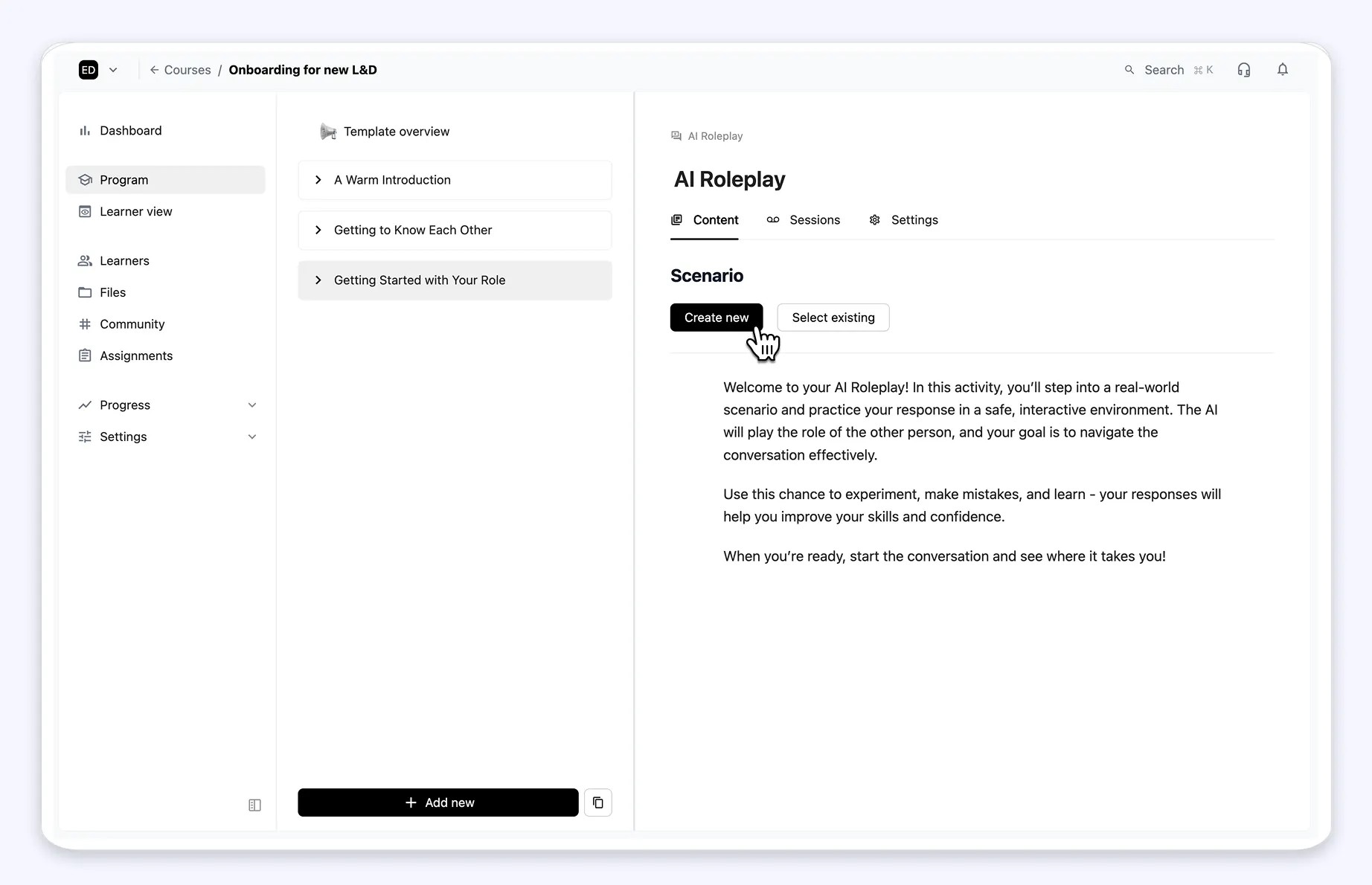
- AI roleplay coach & simulations. Beyond standard training, the AI coach enables realistic patient interaction practice, clinical reasoning drills, and scenario-based learning, a feature healthcare organizations are increasingly requesting to enhance competency and communication skills.
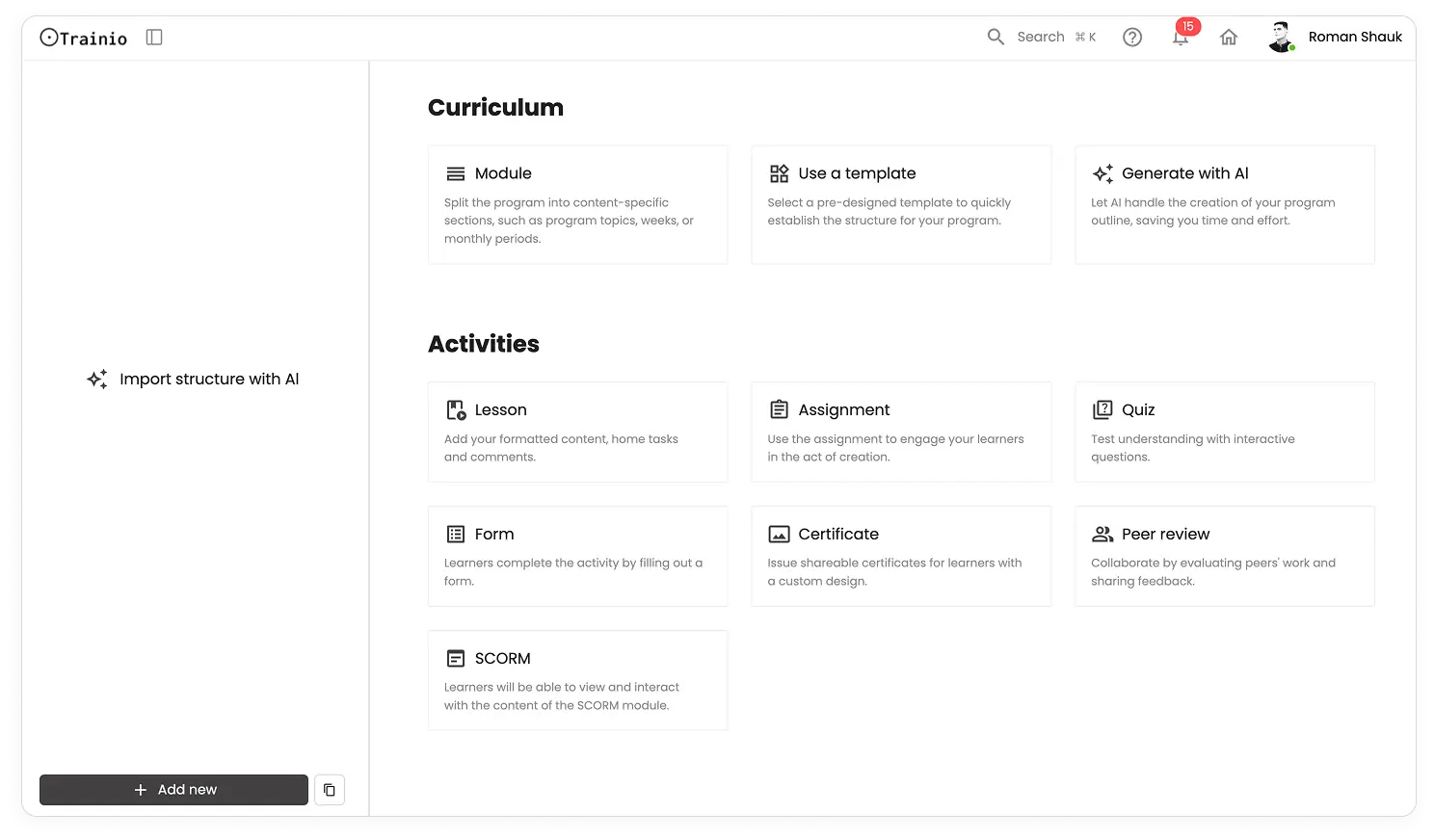
- Easy content creation and management. EducateMe offers comprehensive course creation tools, including manual, AI-powered, and template-based options, with a focus on creating modules, lessons, webinars, quizzes, and assignments tailored to medical education needs.
- Healthcare-oriented collaboration tools. EducateMe supports synchronous and asynchronous interaction with messaging, peer review, group tasks, and flexible deadline management built around clinicians’ schedules.
- Make-it-yours customization. Brand colors, custom domains, bespoke digital certificates, and adjustable UI elements make the system feel like an integrated part of your organization’s culture.
- Elastic scalability. The platform flexes effortlessly whether onboarding 10 locum nurses or rolling out enterprise-wide competency initiatives across thousands of staff in multiple facilities.
- Seamless integration with different systems. EducateMe has the option to integrate with hundreds of systems, including Electronic Health Records (EHR) systems like Epic or Cerner for efficient access to patient data and telemedicine platforms such as Doxy.me or Zoom, enhancing remote consultations and training sessions.
- Robust analytics and reporting. Real-time dashboards show engagement, progress, assessment results, and knowledge retention across care teams, enabling medical leaders to spot gaps and improve outcomes.
⚠️ Honest limitations: No dedicated iOS/Android app (mobile-responsive, not native). Not a specialist clinical credentialing platform. CE credit tracking requires a workaround rather than a native system.
MedTrainer – Best Healthcare LMS for Federally Regulated Clinics
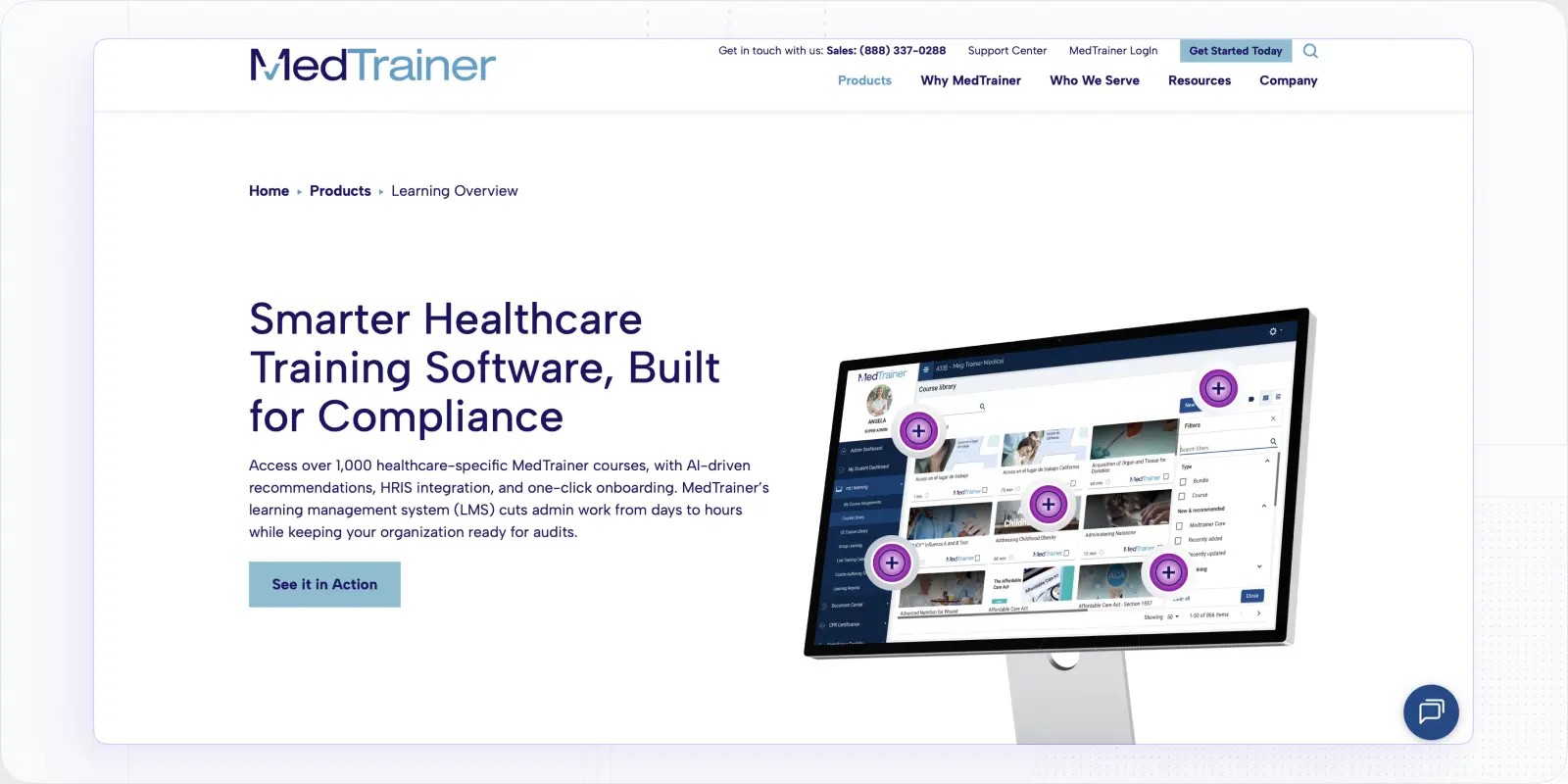
MedTrainer is purpose-built for U.S. healthcare compliance in a way that general-purpose LMSs aren't. Learning, policy attestation, contract management, SDS management, exclusion checks, and credential tracking all live in one dashboard. For the compliance officer who's currently running seven different spreadsheets, that consolidation is the product.
The platform recently earned "Leader" badges in both the Healthcare LMS and Healthcare Compliance categories on G2. Its library of 1,000+ healthcare-specific courses includes 300 CE credits — authored and reviewed by clinical subject matter experts, not generic L&D content with a medical keyword bolted on.
For the home care agency scenario: MedTrainer handles it cleanly, including native CE tracking for multi-state licensed roles, automated expiry reminders, and exportable audit trails built specifically for Joint Commission and OSHA documentation needs.
Best for: Federally regulated clinics, ambulatory networks, and ASC groups that need airtight documentation across many sites.
Features that make MedTrainer a good choice
- Unified compliance hub. Learning, policy attestation, contract & SDS management, exclusion checks, and credential tracking live in one dashboard, simplifying audits.
- Healthcare-curated course library. 1,000+ up-to-date modules – many with CE/CME credit – authored and reviewed by clinical SMEs.
- Robust reporting & dashboards. Exportable audit trails show course completions, policy sign-offs, and monthly exclusion reports in a few clicks.
- Smart recommendations. AI suggests courses based on role, licensure, and past performance, keeping staff current automatically.
⚠️ Honest limitations: Heavy U.S. regulatory focus makes it less suitable for global healthcare teams. Premium pricing may be disproportionate for very small practices.
Pricing: Custom quote based on users, modules, and credentialing add-ons.
Relias LMS – Best LMS for Healthcare Blended Learning
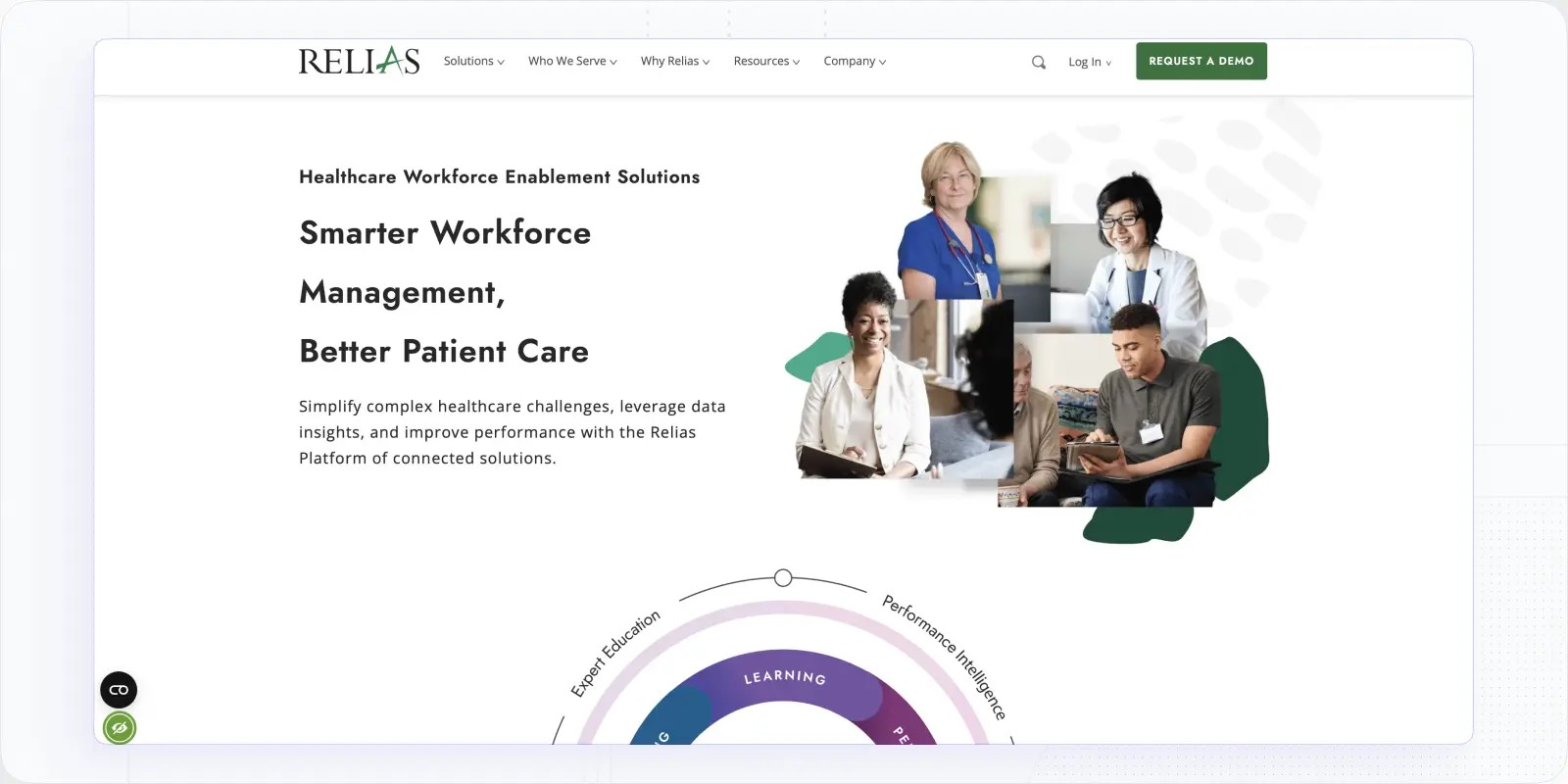
Relias LMS is one of the few LMS platforms that was built around healthcare from the beginning, not adapted for it. Its native CE/CME credit tracking, blended learning support, and clinical-specific content library are genuinely differentiated from general-purpose LMSs.
Where Relias stands out: post-acute care, home health, and long-term care organisations that run complex blended training (online modules plus in-person skills checkoffs, supervisor observation). The skills checklist functionality (where a supervisor can mark off observed competencies in the platform) is something you won't find in most general LMSs.
Potential issues worth noting: some users report inconsistent customer service and contract auto-renewal practices that have caught organisations off guard at renewal time. Verify contract terms before signing.
Best for: Hospitals, post-acute & long-term care organizations, and home health & care companies that combine online and offline learning.
Features that make Relias LMS a good choice
- Blended learning capabilities. Relias Learning's blended learning tools encompass PowerPoint to SCORM conversion, improved video technology enabling seamless integration of longer training videos with post-video testing, streamlined live training management processes, and skills checklist functionality facilitating supervisory observation and assessment.
- Course authoring tools (SCORM). With this LMS, organizations can leverage existing content by converting presentations into functional courses, streamlining the course creation process. This feature facilitates the development of customized curriculums aligned with performance goals.
- Customizable course content. The platform provides access to a wealth of content that can be tailored to create employee training and learning paths tailored to organizational objectives.
- Advanced tracking and reporting. Relias LMS offers robust tracking and reporting capabilities, allowing administrators to access real-time, customized dashboards and user-friendly reports. These features provide insights into staff course completions, progress, performance metrics, and more.
- AI-driven personalization (Performance Intelligence). Adaptive algorithms assess each clinician's knowledge base, specialty, and performance gaps to serve the right content and build individualized pathways, cutting time spent re-reviewing already-mastered material.
⚠️ Honest limitations: Reported inconsistent customer service; auto-renewal contract practices have caught organisations off guard; some users report slow platform connectivity and access issues.
Pricing: Custom pricing quote that you can get from filled out contact form.
HealthStream LMS – Best LMS for Personalized Learning
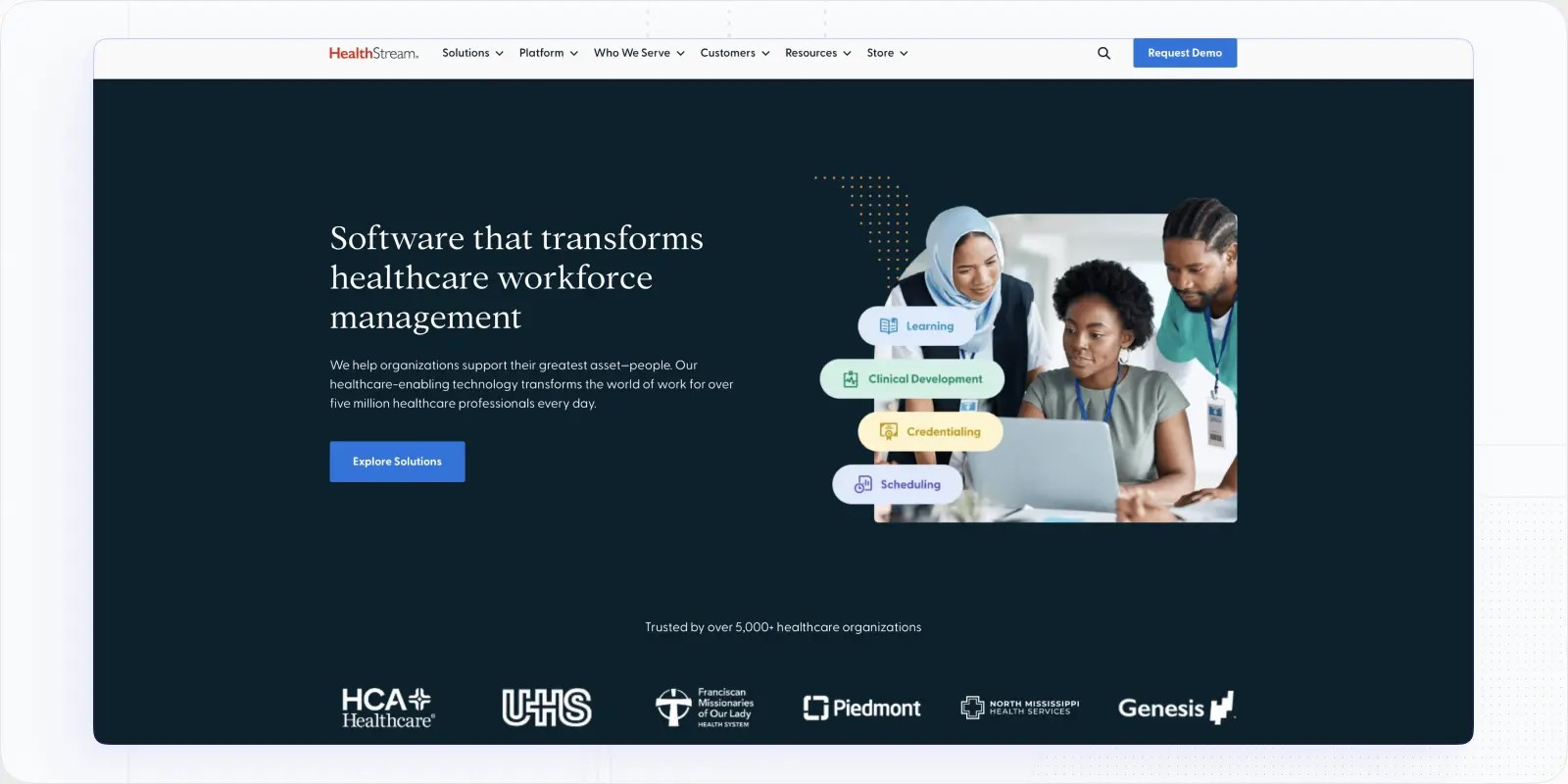
HealthStream LMS is designed to maximize learning for the healthcare workforce, ultimately improving outcomes and the quality of care provided. It addresses the crucial need for effective healthcare learning by offering personalized paths, ensuring that each learner's knowledge gaps are addressed efficiently.
With features like interactive learning experiences, access to third-party courseware, and highly configurable reporting, HealthStream's LMS empowers healthcare organizations. It allows them to strategically manage and continuously develop their staff towards better patient care while meeting compliance requirements and enhancing their reputation for providing superior care.
Yet, while HealthStream offers access to third-party courseware, the quality, and relevance of these courses may vary, potentially leading to inconsistencies in the learning experience and effectiveness of training programs. Also, some users find the user interface of HealthStream LMS to be outdated or less intuitive compared to other LMS in healthcare, which could impact user experience and engagement.
Best for: Mid-size to large healthcare organizations that implement personalized employee learning.
Features that make HealthStream LMS a good choice
- Assignment engine and learner groups. The Assignment Engine feature allows administrators to assign courses dynamically based on specific criteria. Additionally, the Student Groups feature enables administrators to create, edit, and manage groups of employees' assignments efficiently, facilitating targeted training initiatives and personalized learning paths.
- Highly configurable reporting. HealthStream LMS features highly configurable reporting capabilities, enabling administrators to generate customized reports based on various criteria such as department, job title, location, or custom fields.
- Access to third-party courseware. With access to the courseware marketplace, this LMS provides a wide range of learning resources, including medical product training and industry-sponsored CE/CME courses, allowing healthcare professionals to access comprehensive and up-to-date training materials.
- hStream AI workforce intelligence. HealthStream's healthcare-specific AI maps clinical competency across individuals, units, and specialties, then aligns learning to real competency gaps rather than one-size-fits-all assignments.
⚠️ Honest limitations: Interface described as outdated or less intuitive compared to modern platforms; third-party courseware quality varies; pricing not publicly listed.
Pricing: Custom pricing quote that you can get from filled out contact form.
Absorb LMS – Best for Scalabe Healthcare Training
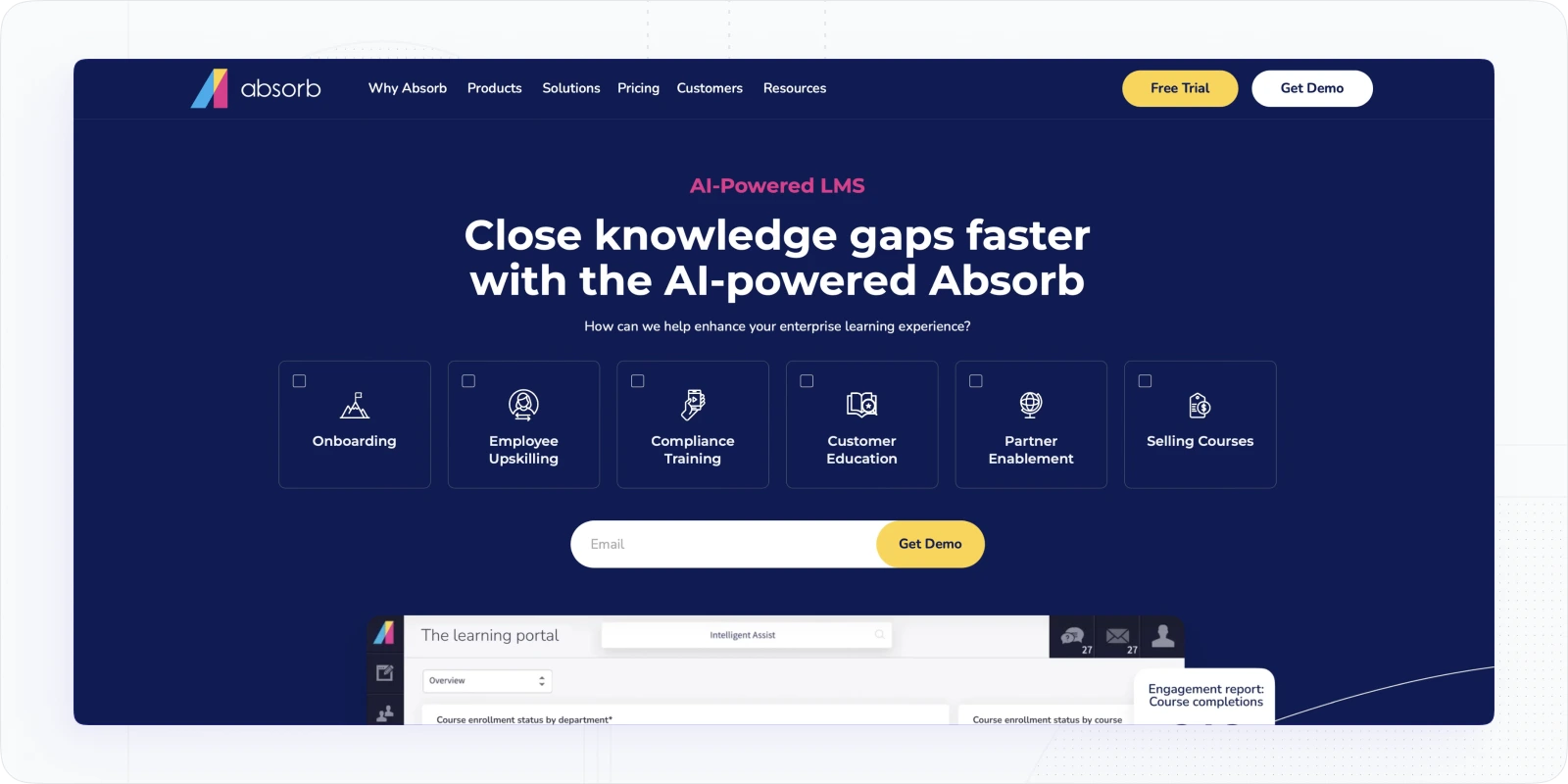
Absorb LMS handles the core compliance tracking requirements well: HIPAA and OSHA workflow automation, SCORM and multimedia content support, EHR and telemedicine integrations, and AI-powered course recommendations. For mid-to-large healthcare organizations that have already outgrown a simpler LMS, Absorb is a credible upgrade path.
CE credit tracking isn't native — you'd need to import accredited content and issue certificates manually. For organisations with many multi-state licensed staff, that's a meaningful gap to evaluate.
Best for: Mid-sized to large healthcare organizations needing a scalable LMS with advanced automation and compliance features.
Key features for healthcare businesses
- Compliance automation. Tracks HIPAA and OSHA requirements automatically, reducing manual oversight.
- Real-time analytics. Monitors employee performance and training progress instantly, providing actionable insights.
- Content flexibility. Supports SCORM courses, videos, and multimedia formats, simplifying content delivery.
- Seamless integrations. Connects with EHR systems and telemedicine platforms to streamline workflows.
- Scalable architecture. Expands effortlessly to accommodate growing teams and evolving training needs.
- Absorb Intelligence & Aura AI. Create AI generates course content in minutes, an AI Coach guides learners in real time, and the Aura agent suite (rolling out in 2026) lets admins and learners query the LMS and surface relevant content on demand.
⚠️ Honest limitations: No native CE credit tracking; high entry cost (reported $1,000+/month plus setup fee); some integrations require significant setup time.
Pricing: Custom pricing based on organizational size and features – contact sales for a quote.
Cornerstone OnDemand – Best for Data-Driven Healthcare Training
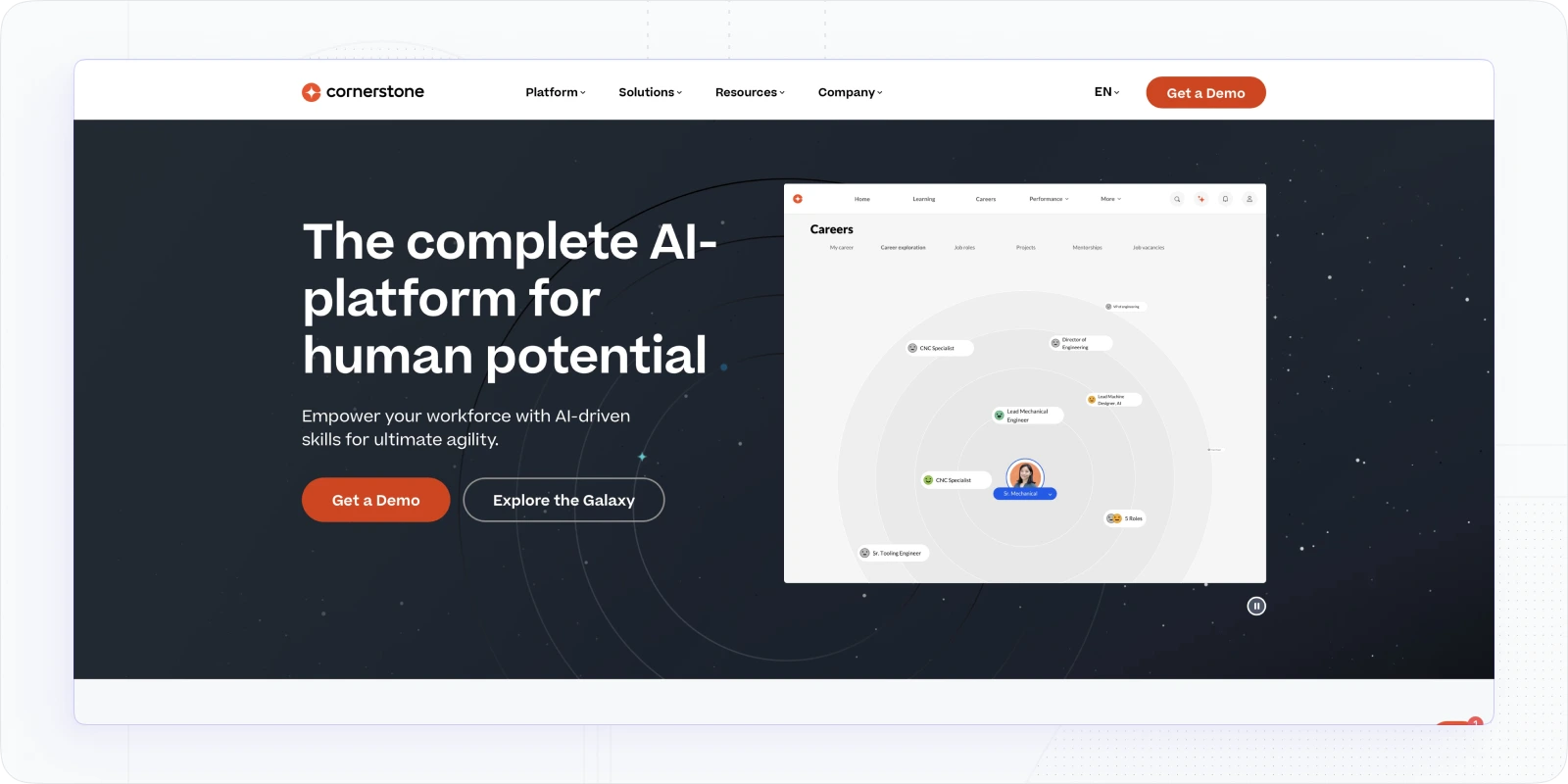
If your healthcare organization runs on data, Cornerstone OnDemand has your back. This LMS pairs advanced analytics with personalized learning paths, making sure everyone on your team gets exactly the training they need when they need it. Additionally, it integrates seamlessly with EHR systems and compliance tools to keep you on top of industry standards.
How can you make sure your team gets the most out of a platform like this? With its mobile-friendly design, staff can dive into training anytime, anywhere – perfect for busy professionals juggling a million things at once. Sure, there’s a bit of a learning curve, but with its powerful features, Cornerstone is a game-changer for tracking progress and boosting performance.
Best for: Large healthcare organizations and hospitals focused on data-driven decision-making and regulatory compliance.
Key features for healthcare businesses
- Advanced analytics. Tracks performance using customizable dashboards for actionable insights.
- Compliance automation. Automates training to meet industry standards like HIPAA.
- Personalized learning paths. Delivers tailored training for individual employee needs.
- Healthcare integrations. Connects seamlessly with EHR systems and other healthcare tools.
- Mobile access. Enables on-the-go learning for busy healthcare professionals.
- Cornerstone Galaxy AI. Multi-role AI agents, AI-native conversational learning, and dynamic skills intelligence — trained on individual and workforce data — help large health systems pinpoint and close skills gaps at scale.
⚠️ Honest limitations: High implementation complexity; requires dedicated internal admin resources; long onboarding timeline; not cost-effective for smaller organisations.
Pricing: Custom pricing based on organization size and requirements. Explore more -> Cornerstone LMS Pricing: Costs, Plans, and Hidden Fees Explained
Docebo – Best Healthcare LMS for Social Learning
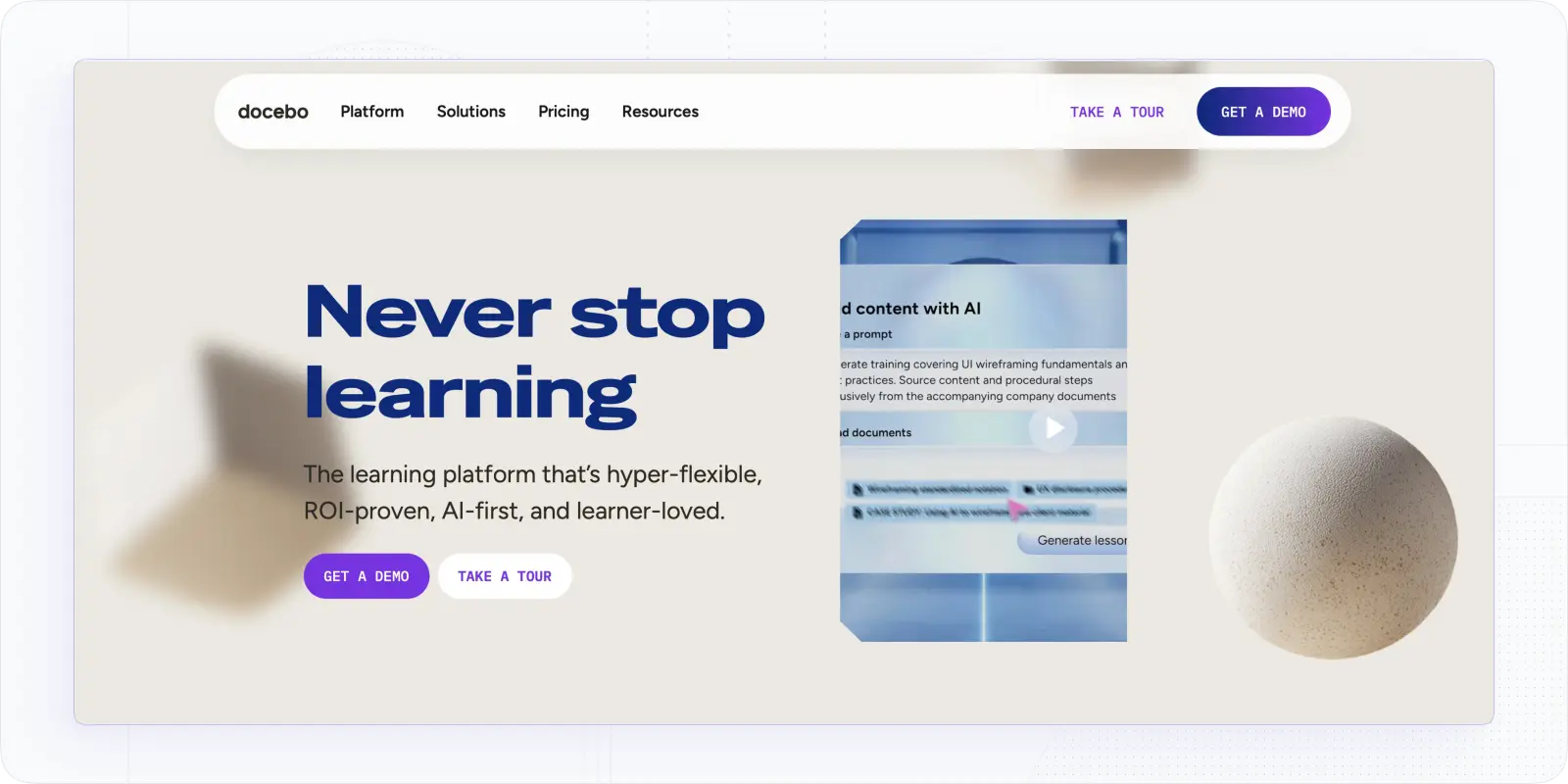
Docebo LMS is one of the top choices LMS for healthcare industry seeking a robust platform for social learning. How is it different? With its AI-powered capabilities, Docebo ensures healthcare professionals can easily collaborate, share knowledge, and engage in discussions within a supportive learning community.
The platform's extended enterprise features enable seamless training for various stakeholders, including employees, partners, and customers, fostering a culture of continuous learning and collaboration.
By offering a blend of formal and informal learning experiences, combined with intuitive social learning tools, Docebo empowers healthcare organizations to nurture a dynamic learning culture that drives better patient outcomes and professional development.
Importantly, healthcare organizations using Docebo may encounter challenges related to geofencing and notification management due to its non-US origin, along with reporting limitations. Additionally, issues such as cumbersome advanced features, limited customization options, and inconsistent user experience may pose hurdles in effectively utilizing the platform for training and development needs.
Best for: Enterprises and large healthcare organizations seeking advanced features and predictive analytics for social learning and regulatory compliance within a company.
Features that make Docebo LMS a good choice
- Personalized pearning paths. Docebo's learning management system healthcare tracks engaged learners, promotes interaction through leaderboards, and facilitates engaging discussions through Q&A threads turned into discussion boards.
- Enhanced business productivity. Docebo has capabilities for recording and sharing webinars, sales calls, success stories, and more directly within the learning platform, empowering employees to share valuable insights and strategies.
- On-demand access to information. Docebo's desktop and mobile learning capabilities enable learners to access information at their convenience, ensuring timely access to critical knowledge across remote teams and healthcare facilities.
- Automated regulatory compliance management. Docebo enables healthcare organizations to automate compliance with HIPAA and OSHA regulations. With features like automated tracking, reporting, and recertification, coupled with robust version controls, organizations can minimize risks and maintain a secure environment.
⚠️ Honest limitations: Geofencing and notification management issues reported for non-U.S. teams; CE credit tracking not confirmed; advanced features described as cumbersome by some users; limited customisation options.
- Docebo AI. Built-in AI automates content tagging, generates course pages and summaries, and powers virtual-coach and deep-search features that personalize what each learner sees and speed up authoring.
Pricing: Docebo offers custom pricing based on the number of users and features required. Discover more -> Docebo Pricing: Complete Guide to Costs, Plans, and Add-Ons
TalentLMS – Best Healthcare LMS for Fast, Budget-Friendly Roll-Outs
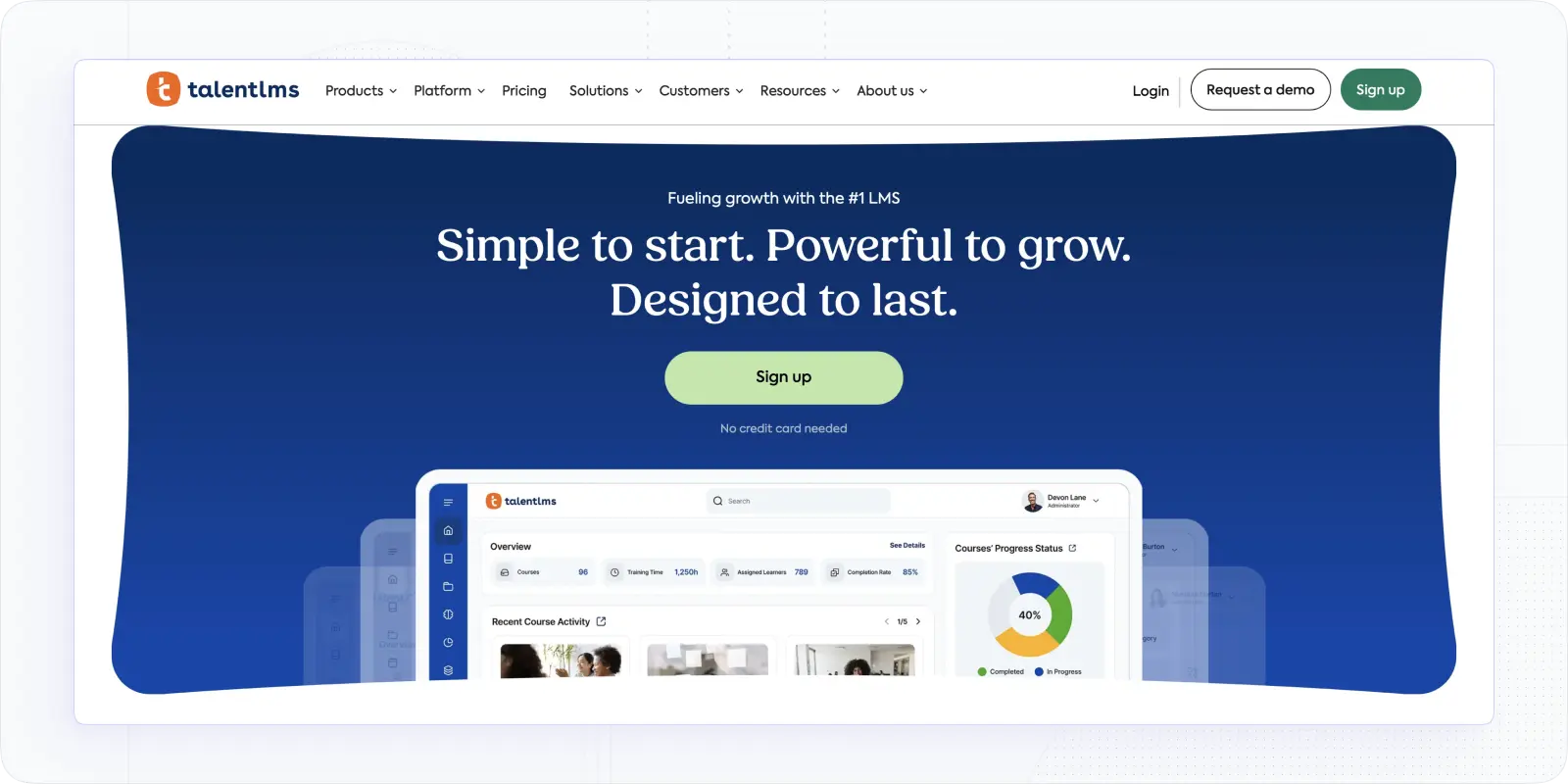
If you need to stand up compliance and skills training yesterday, TalentLMS is a crowd-pleaser. A drag-and-drop builder, ready-made automations (auto-enroll, expiry reminders, user deactivation), and mobile-offline access make it easy for lean L&D teams to launch in days, not months. While its content library isn’t healthcare-exclusive, you can plug in your own SCORM, xAPI, or YouTube assets and still satisfy HIPAA/OSHA tracking needs. The trade-off: analytics are solid but less granular than pricier healthcare-specific suites.
Best for: Community clinics, specialty practices, and health-tech startups that need a quick-launch LMS with low total cost of ownership.
What makes TalentLMS a good choice
- No-code automations. Set rules to assign/expire courses, deactivate users, or nudge overdue learners – zero scripting required.
- Compliance focus. Built-in certification engine plus detailed completion reports that export to CSV/XLS for audits.
- Any-device, any-time learning. 24/7 cloud access and an offline-syncing mobile app keep field nurses and home-health aides in the loop.
- Budget-friendly tiers. Free forever plan for small teams; paid tiers scale per active user, so you only pay for who trains.
- TalentCraft AI authoring & coaching. TalentCraft generates pages, images, quizzes, and full course outlines from a prompt, while the AI Coach and Learning Playground let staff rehearse real-world scenarios through simulation and role-play.
⚠️ Honest limitations: No native CE credit tracking; analytics less granular than specialist healthcare platforms; content library is not healthcare-specific.
Pricing: Free plan; start from $119/mo for 40 users; contact sales for enterprise HIPAA bundle.
Tovuti LMS – Best Medical LMS for Gamified Learning
Tovuti LMS is one of the leading LMS for healthcare industry with a wide range of gamification features. You might wonder, what benefits does gamification offer for organizations and their employees?
Healthcare employees benefit from personalized learning paths, interactive modules, and engaging gamification elements, fostering active participation and knowledge retention.
Offering a seamless integration of training resources, Tovuti simplifies course management, automates enrollments, and ensures compliance with regulatory standards. With robust reporting tools, administrators can monitor progress, address skill gaps, and make informed decisions to enhance the overall effectiveness of healthcare training programs.
But there are some challenges that you should consider before choosing this platform, including potential complexities in navigation and customization limitations compared to other healthcare learning management systems. Additionally, there are some concerns regarding the scalability and integration challenges that organizations may encounter when implementing Tovuti LMS.
Best for: Clinics and hospitals who are looking for engaging compliance processes and seamless integration with existing systems.
Features that make Tovuti a good choice
- Gamification toolkit. Tovuti LMS offers engaging interactive features like leaderboards, awards, memory games, fill-in-the-blank answers, virtual tours, image hot spots, 360-degree images, and certificates to boost engagement and knowledge retention among healthcare professionals.
- Extensive integrations. With over 2,000 API integrations, Tovuti connects seamlessly with leading platforms such as Salesforce, BambooHR, and Workday, ensuring compatibility with existing systems.
- E-signature functionality. Tovuti offers e-signature functionality compliant with regulations such as CFR, HIPAA, and OSHA, streamlining compliance processes for healthcare organizations.
- Mobile application. Tovuti's native mobile app and mobile-responsive healthcare training platform enable healthcare professionals to access training materials anytime, anywhere, ensuring flexibility and convenience in learning.
- Dizi AI course creator. Tovuti's native AI assistant turns a prompt, outline, or uploaded PDF, PowerPoint, or Word file into structured courses — lessons, quizzes, flashcards, narration, AI images, and SCORM-ready output — in a few clicks.
⚠️ Honest limitations: CE credit tracking not confirmed; audit log export not confirmed; potential scalability and integration challenges at enterprise scale; navigation complexity reported by some users.
Pricing: Custom pricing quote that you can get from filled out contact form. Read more -> Tovuti LMS Pricing: What It Costs, How Quotes Work, and What to Budget
Axonify – Best for Helathcare Microlearning & Frontline Engagement
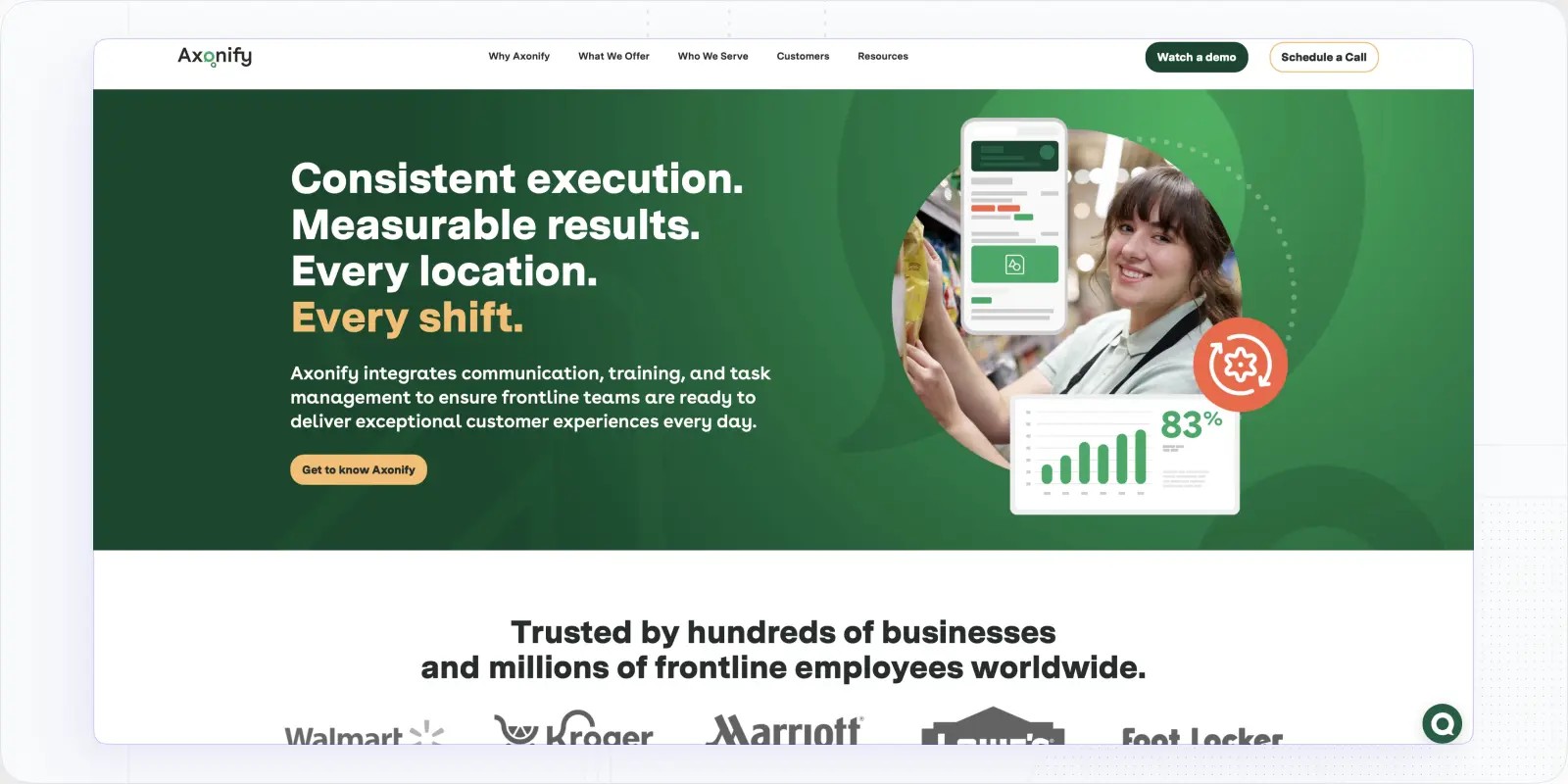
Axonify takes a different tack: three-to-five-minute “daily bursts” that use spaced repetition and AI to hard-wire critical procedures into frontline memory – perfect for nurses racing between beds or pharmacy techs on the retail floor. Built-in comms and task management let HQ push reminders (“Flu-shot season protocol – sign off today!”) and track execution in real time. Because it’s microlearning first, it won’t replace a full SCORM catalog, but as a reinforcement layer for high-risk workflows it’s tough to beat.
Best for: Hospitals and retail-health chains that need to reinforce SOPs with bite-sized, in-workflow learning for large frontline teams.
Features that make Axonify a good choice
- AI-powered spaced repetition. The platform pinpoints each learner’s knowledge gaps and personalizes daily questions to close them.
- Mobile-native microlearning. 3–5-minute bites fit between patient rounds; staff can train on POS handhelds, tablets, or personal phones.
- Embedded comms & tasks. Two-way messaging and guided task lists ensure policy updates turn into on-the-job actions.
- Operational analytics. Dashboards connect knowledge scores to performance KPIs so managers see real-world impact fast.
⚠️ Honest limitations: Not a compliance system of record; CE tracking, expiry reminders, and audit log export not confirmed; requires a separate primary LMS to handle documentation.
Pricing: Usage-based license; request a demo for personalized quote.
Conclusion
The most important decision in a healthcare LMS selection isn't which platform has the cleanest interface or the best AI marketing copy. It's whether the system can prove training happened (with a timestamp, a score, and an exportable report) when a surveyor asks for it.
The platforms that earn a genuine place in this list all handle that core requirement, at different levels of sophistication and cost. MedTrainer and Relias are purpose-built for clinical compliance. HealthStream and Cornerstone serve large health systems with complex needs. EducateMe and TalentLMS serve mid-size and smaller organisations that need reliable compliance tracking without enterprise complexity or cost.
Pick based on your actual regulatory exposure and staff profile, not based on which demo looked best.
Considering its strengths and potential benefits, we recommend trying EducateMe 14-days free trial to see everything firsthand.
Frequently asked questions
A healthcare LMS is configured (or purpose-built) to handle the specific compliance and documentation requirements of medical organisations: HIPAA and OSHA training logs with timestamps, CE credit tracking for licensed staff, certification expiry automation, and audit-ready reporting. A general-purpose LMS can cover these needs with workarounds, but a specialist platform like MedTrainer or Relias has them built into the core product. For smaller healthcare teams without accreditation-specific needs, a well-configured general LMS is often sufficient.
Yes, if your LMS stores any learner data that includes protected health information (PHI), the vendor should sign a Business Associate Agreement (BAA) and the platform should meet HIPAA security requirements. In practice, most LMSs used in healthcare store training completion records, not clinical data, but verify with your compliance officer what data the system will actually hold before selecting a vendor. Check whether your shortlisted vendors offer a BAA.
Platforms like MedTrainer and Relias offer native CE/CME credit tracking tied to accredited course libraries. On platforms that don't support this natively (EducateMe, TalentLMS, Absorb) the common workaround is importing accredited SCORM content from an external course library and issuing completion certificates that the learner submits to their licensing board. For large teams with many licensed roles across multiple states, a platform with native CE tracking is significantly easier to manage. EducateMe's learner analytics → can help track who's completed what, even when native CE crediting isn't the mechanism.
Surveyors typically look for evidence that training was assigned, completed on time, and passed. A clean audit export should include: employee name, job title or department, course name, completion date (with timestamp), assessment score, and certificate expiry date if applicable. The report should be filterable by department, role, and date range, because surveyors will ask for specific cohorts, not a full organisational dump. If your LMS can't generate this without a manual spreadsheet workaround, that's a gap worth flagging before your next survey window.