
10 Employee Onboarding LMS To Watch Out For In 2026

By Sofia KondratSofia KondratCorporate Training Expert & Content EditorHey there! I’m Sofi Kondrat, your go-to corporate training advisor here at EducateMe. I’ve been navigating the highs…Read more
Corporate Training Expert & Content Editor
14 min read
It might seem straightforward: a new hire joins, gets introduced to the team, is shown around the workplace, is briefed on the company, is given tasks, and is assigned a mentor with an onboarding plan. Everything falls into place, right? But it's not that simple.
General instability causes anxiety even among experienced colleagues. What can we say about a new employee who is worried about how the team will accept them, whether they will help them, and whether they will be able to hold on to a new job?
What employee onboarding management methods give the greatest results? What employee onboarding LMS do companies with successful experience use? Let's discover this in the article.
On the Goals of Modern Onboarding Methods
Onboarding is an interdependent process. Not only does the employee adapt to a new job, but the team also studies the newcomer. This requires time and motivation. Lack of effort on both sides leads to dismissal. According to the 2025 Job Seeker Nation Report, 30% of employees leave during the first 90 days on the job.
Onboarding is mutually beneficial because it makes the employee active, satisfied, and successful, and also reduces the employer's expenses on recruiting personnel. If the new employee gets used to it, they won't have to look for a replacement.
4 Methods of Employee Onboarding in an Organization
Methods of personnel onboarding and development are ways to help a new employee overcome anxiety, get used to the team, and integrate into the work processes of the organization. Each method is a system of specific actions.
1. Mentoring
Mentoring is a traditional method of professional employee onboarding. Its goal is to support a new employee, train them, introduce them to the team, and help them evaluate and accept the corporate culture. In recent years, the method has been transformed.
💡Interesting Fact: In companies, instead of a mentor with extensive experience and an age gap, an employee who came to the company several months earlier and successfully passed the onboarding is assigned to a newcomer.
Peers understand each other better. Friendly relations are quickly established between them.
2. The Buddy System
The Buddy System is a method of personnel adaptation that excludes a formal approach. Numerous beginners are united into a group with those who have already adapted. Newcomers feel support, and it’s easier for them to enter a new team. The role of a buddy is chosen by sociable, patient, and positive people, ready to spend time on support and performing the duties assigned to them:
- conducting tours of the office, answering any questions;
- inviting them to lunch, involving them in social life;
- talking about the company, goals, and why they are staying here;
- discussing prospects for training and developing leadership qualities.
💡Interesting Fact: When Microsoft switched to remote mode and 25,000 people were hired, they created a strong support network for beginners. According to the results, 97% of new employees noted that the support system at work helped them become more productive, and satisfaction with adaptation increased by 3.5 times.
3. Coaching
Coaching is a popular method in some large companies. It’s used to reveal the employee's potential. A coach is appointed for the first 90-100 days for individual work. Their task is to ask the right questions that make the new employee look at their work from the outside, evaluate themselves, and decide how and where they want to go, what to achieve, and what career to make in the company.
💡Interesting Fact: There is a strong correlation between coaching and increased employee engagement, with 72% of respondents in the 2023 ICF HCI Defining New Coaching Cultures report acknowledging this relationship.
4. Trainings
Trainings are used to get acquainted with the rules & values of the company, and study products & services. This method of adoption is used for group work on the onboarding program for mass hiring. In remote work, teams develop electronic courses and host webinars.
💡Interesting Fact: Adopting online employee onboarding tools can streamline processes, saving HR teams up to 75% of their time and freeing up to 2.5 hours per week for hiring managers, significantly boosting productivity and driving a higher ROI.
So, we have smoothly approached the question: what is the best employee onboarding software?
| Platform | Main capabilities | Best for | Limits | Pricing |
|---|---|---|---|---|
| EducateMe | AI Assistant builds courses from a prompt, URL, or file; AI Roleplay Coach with rubric feedback; auto-enrollment by role, seniority, or region; real-time analytics with skill gap detection; white-label & multi-tenancy | Small to Mid-sized teams that want AI-native LMS without setup complexity | No native mobile app (mobile-responsive only); light gamification | From $239/month; 14-day free trial |
| Docebo | AI-personalized learning paths; automated enrollment workflows; gamification with badges and leaderboards; social & collaborative learning spaces | Large enterprises with complex, multi-audience learning ecosystems | Quote-only pricing; enterprise-grade setup can be heavy for smaller teams | Upon request |
| TalentLMS | TalentLibrary with 1,000+ ready-made courses; Learning Playground practice space; gamification; Branch feature for per-team environments; native iOS/Android app; deep reporting with audit timeline | Small and mid-sized teams that need a fast, affordable launch | Social learning is forums-only; dedicated customer success reserved for enterprise tier | From $149/month (up to 40 users); free plan available |
| Absorb LMS | Automated role-specific learning paths; interactive video, quiz, and simulation training; live progress dashboards; compliance automation | Enterprises looking to cut onboarding time at scale | Quote-only pricing; enterprise focus may be more than small teams need | Upon request |
| eLoomi | Batch training assignments; ready-to-use course content; real-time progress tracking; compliance monitoring; any-device access | Teams that want simple, stress-free onboarding without complexity | Quote-only pricing; lighter feature depth for advanced or complex programs | Upon request |
| Continu | Training delivered inside Slack, Zoom, and Google Workspace; automated role-based workflows; smart segmentation by team or location; content partner integrations (LinkedIn Learning, Udemy Business, Go1) | Mid-sized and large distributed teams that want training in the flow of work | Designed for teams of 500+, so not a fit for small companies; quote-only pricing | Upon request; per monthly active user, billed annually |
| 360Learning | Collaborative course creation by in-house experts; in-context discussions inside lessons; AI content builder; 50+ HR and collaboration integrations; mobile app | Companies where internal expertise is the core onboarding material | Team plan capped at 100 users; advanced features require custom-priced tiers | Team plan from $8/user/month; Business & Enterprise upon request |
#1. EducateMe
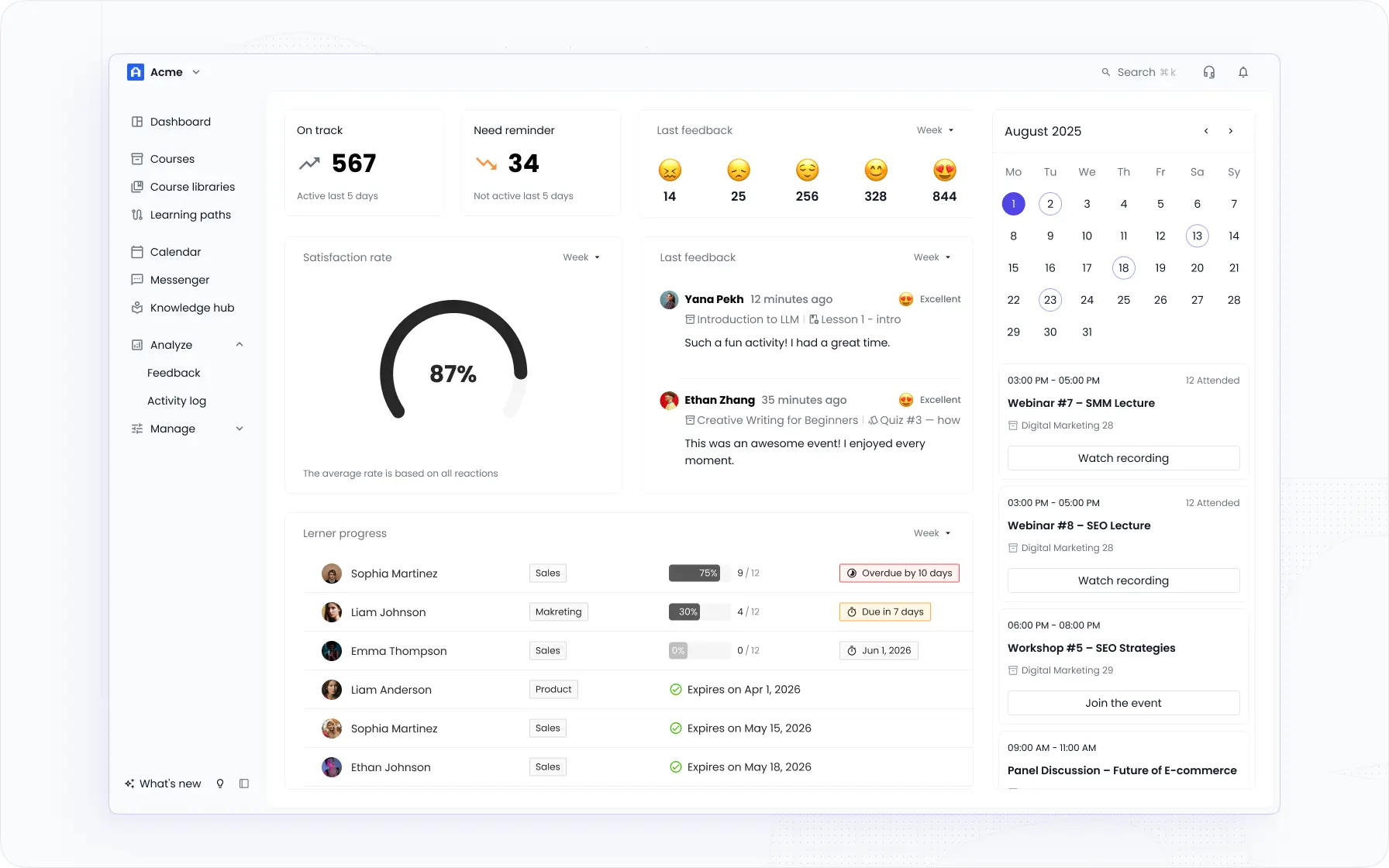
EducateMe is an AI-powered employee onboarding LMS that helps companies automate their processes, build custom onboarding journeys, and get new hires up to speed from the very beginning. Instead of manually sharing documents and chasing people for updates, you set everything up once: new hires are auto-enrolled into role-based learning paths, pre-set reminders and automated notifications keep them moving without managers following up, and real-time tracking shows exactly who's on track and who needs a boost.
AI is built into every step — the AI Assistant creates training materials, sets up quizzes, and analyzes feedback, the AI Roleplay Coach lets new hires safely practice real work scenarios with consistent rubric-based feedback, and AI search in the Knowledge Hub gives instant answers whenever someone gets stuck. Add native sync with HR systems like BambooHR, Rippling, Paylocity, and Zoho People, and onboarding kicks off automatically the moment a new hire lands in your HRMS.
⚡Want to put onboarding on autopilot? Start your 14-day free trial of EducateMe now.
Main features & benefits
- AI Assistant for course creation. Build onboarding courses from a simple prompt, a URL, or an existing file.
- AI Roleplay Coach. Let new hires rehearse customer calls, pitches, or support scenarios with instant rubric feedback, no social risk, and consistent quality at scale.
- Automated enrollment & role-based paths. Auto-assign new hires to the right learning path by role, seniority, or region, and cut ramp time with real-time tracking.
- Analytics & progress visibility. 10+ metrics, completion rates, skill gap detection, and per-manager dashboards.
- White-label & multi-tenancy. Run separate branded portals per department, client, or partner under one account.
#2. Docebo
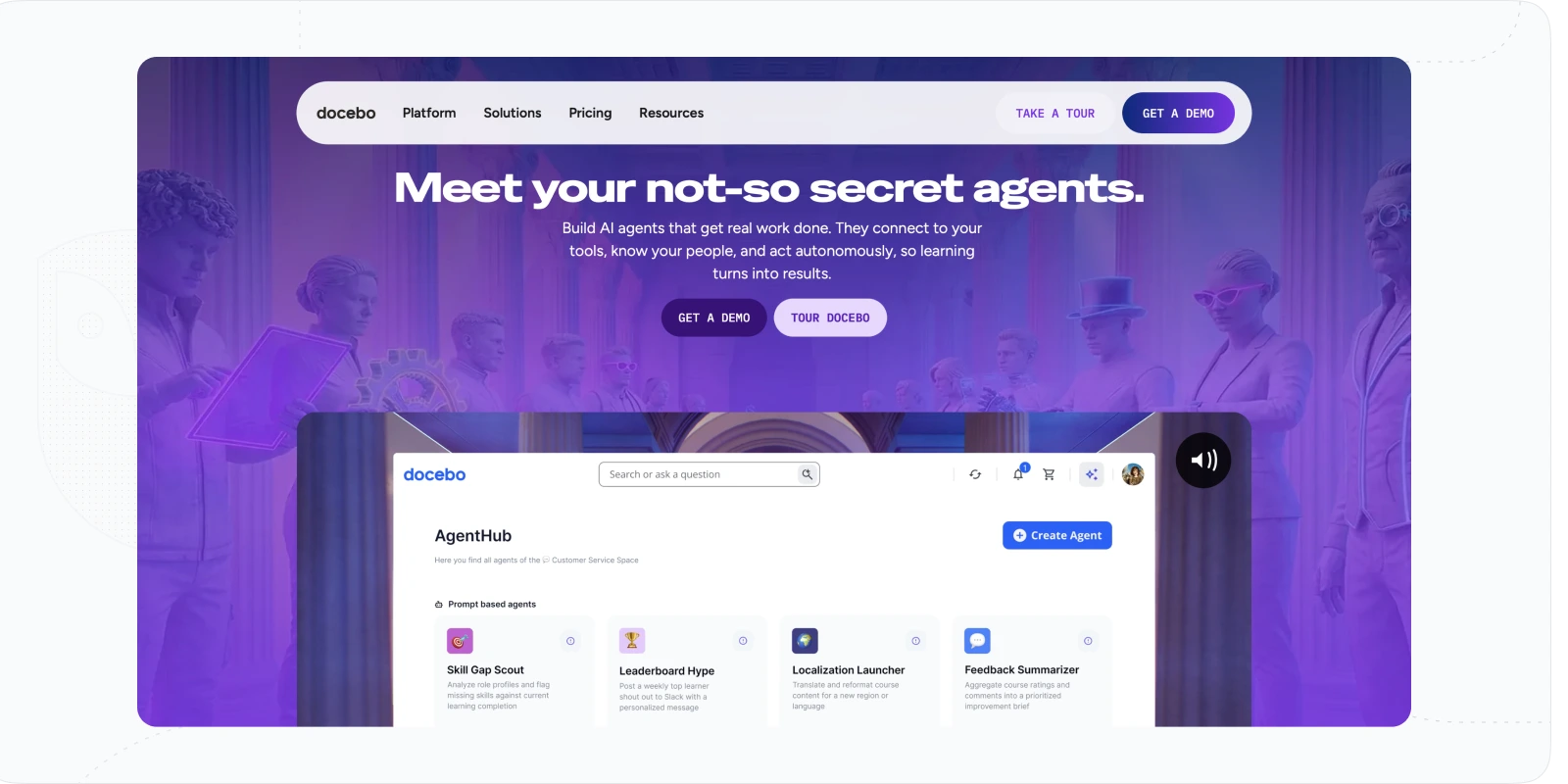
Docebo is another new hire onboarding LMS that makes the process easy with automated workflows and personalized learning paths. It uses AI to tailor content for each new hire. Features like gamification and social collaboration make onboarding fun and interactive. This employee onboarding solution allows you to create custom training with multimedia content, accessible on any device..
Key features & benefits
- Automated Enrollment. Automated workflows handle everything from enrollments to assigning the right training content.
- Hyper-Personalized Learning. AI-driven recommendations and adaptive learning paths that are customized based on their role, experience, and unique needs.
- Interactive & Fun. Users can gamify the process with badges, leaderboards, and contests to make learning fun and rewarding for your new hires.
- Social & Collaborative. You can create a central space to connect, share knowledge, and collaborate throughout the onboarding journey, so no one feels lost or isolated.
- Real-Time Insights. Use powerful analytics to track the progress of new hires and understand the impact onboarding has on your business outcomes.
Docebo Pricing: upon request.
#3. TalentLMS
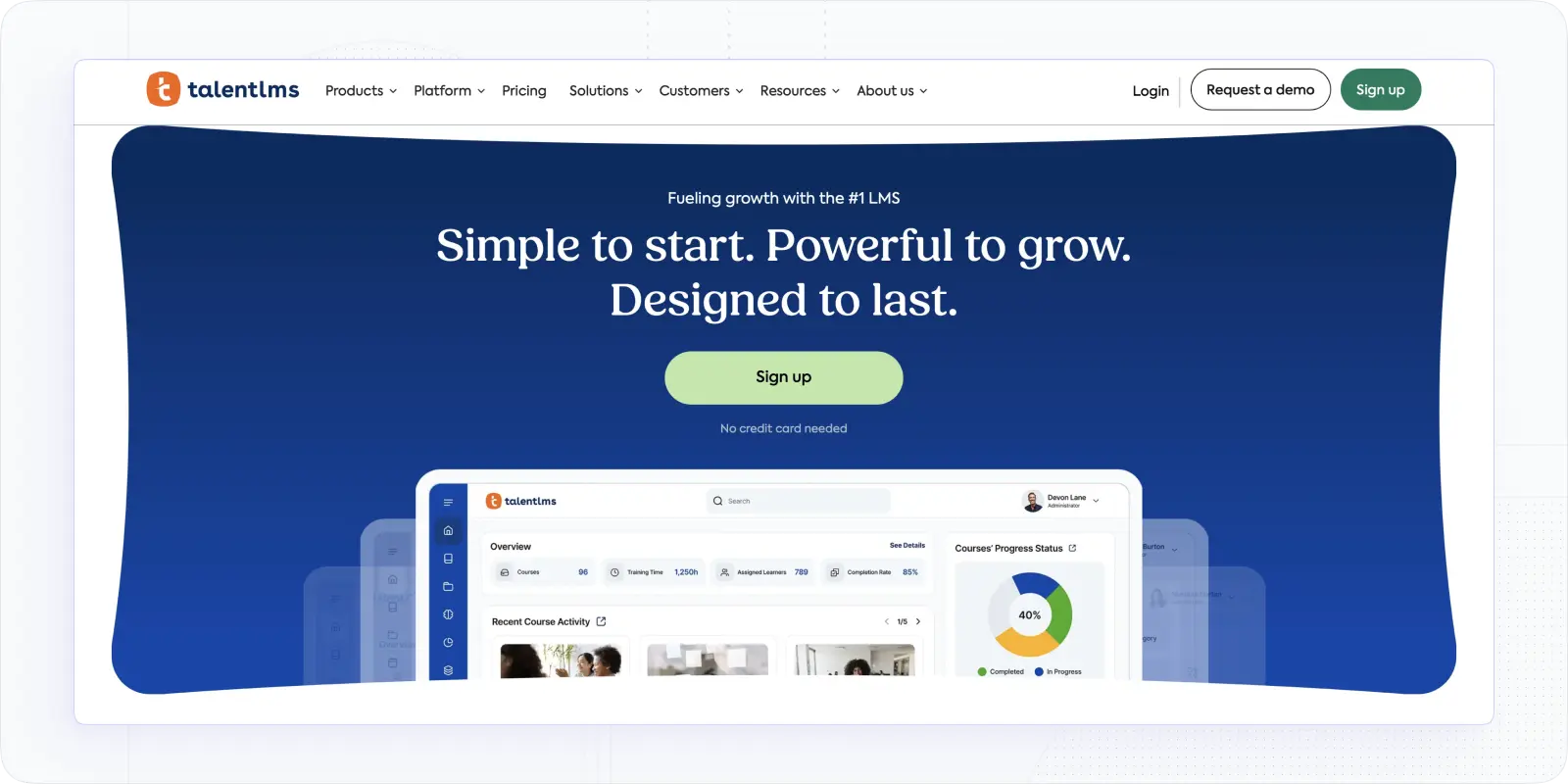
Looking for an employee onboarding LMS that's proven, affordable, and quick to launch? TalentLMS has been the go-to choice for small and mid-sized teams with transparent pricing and no lengthy setup. The platform combines gamification with personalized learning paths to keep new hires engaged from day one, while TalentLibrary's 1,000+ ready-made courses mean smaller teams without an L&D department can assign soft skills and compliance training without building anything from scratch.
The recently launched Learning Playground adds a self-led practice space where new hires can explore topics, run through branching simulations, and practice scenarios at their own pace. And with a properly built native mobile app (not just a responsive wrapper), it works well for frontline and deskless employees too.
Key features & benefits
- TalentLibrary. Deploy 1,000+ off-the-shelf courses on communication, management, and workplace compliance, with 50,000+ more available via OpenSesame.
- Learning Playground. Give new hires a self-directed practice space with role play, adaptive question sessions, and branching simulations.
- Gamification. Boost engagement with points, badges, and leaderboards to make learning feel less like a chore.
- Branch Feature. Create customized learning environments for different teams, so every new hire gets training relevant to their role.
- Native Mobile App. Onboard frontline and mobile-first employees with real iOS and Android apps, including offline access.
- Deep Reporting. Track new hires in real time with custom reports, scheduled report delivery, and a full audit timeline of every learner action.
Pricing: paid plans start at $149 per month for up to 40 users; a free plan is available.
#4. Absorb LMS
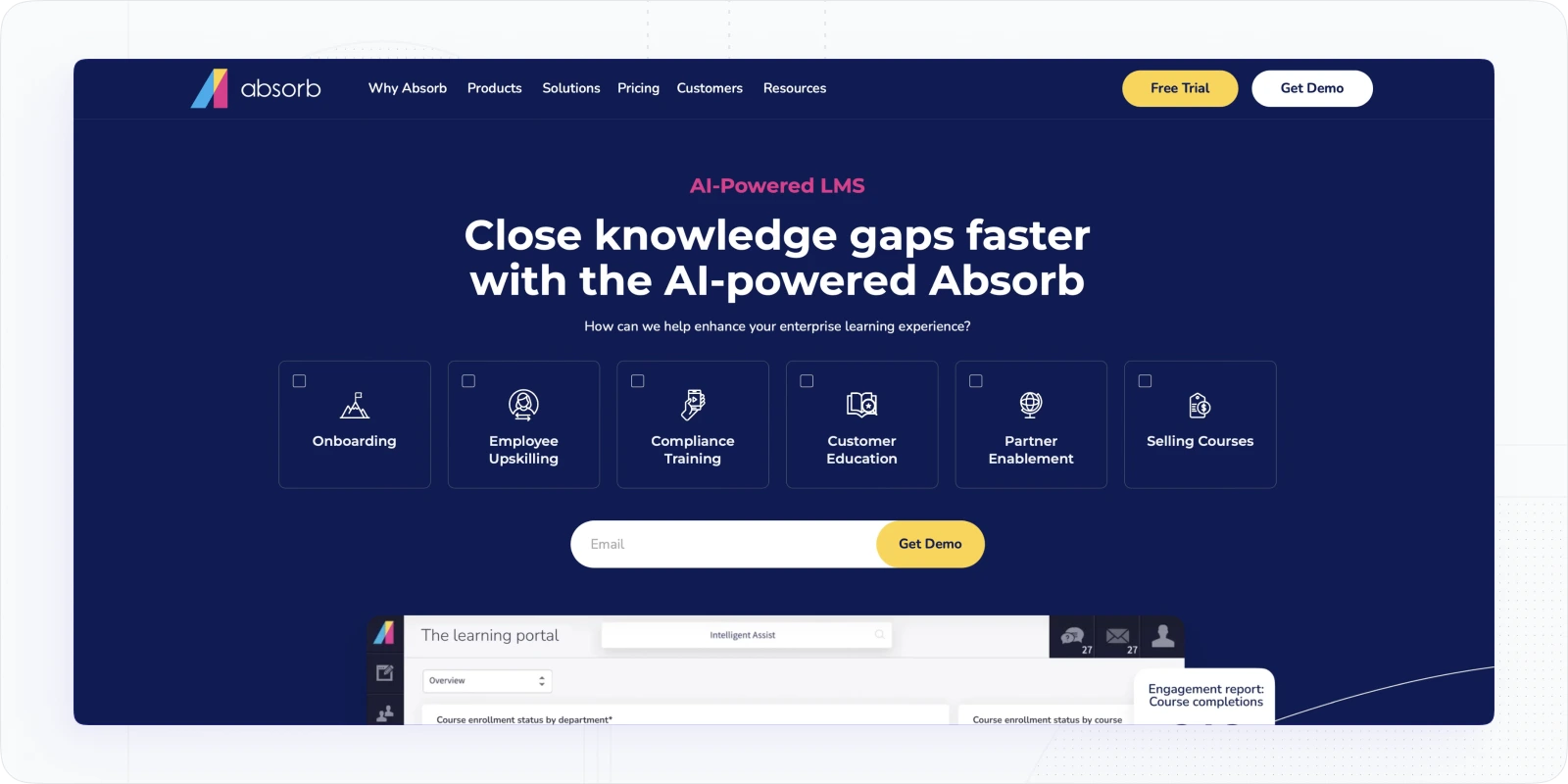
Absorb LMS is one of the onboarding LMS for new employees that helps their clients cut onboarding time by up to 40%. With Absorb, you can automate the boring admin stuff and focus on creating engaging, personalized training that helps new hires hit the ground running. Additionaly, you’ll get real-time progress tracking, so you’re never left guessing if someone’s fallen behind. All this makes onboarding less stressful and more effective for everyone involved.
Key features & benefits
- Automated Learning Paths. Automatically assign role-specific training, making sure new hires start with exactly what they need.
- Interactive Training. Use videos, quizzes, and simulations to keep learning fun and engaging from the get-go.
- Real-Time Tracking. Keep tabs on training progress with live dashboards and detailed reports, so you can catch issues early.
- Compliance Automation. Ensure all compliance and regulatory training is handled with automated workflows and tracking, saving time and reducing risk.
Pricing: upon request.
#5. eLoomi
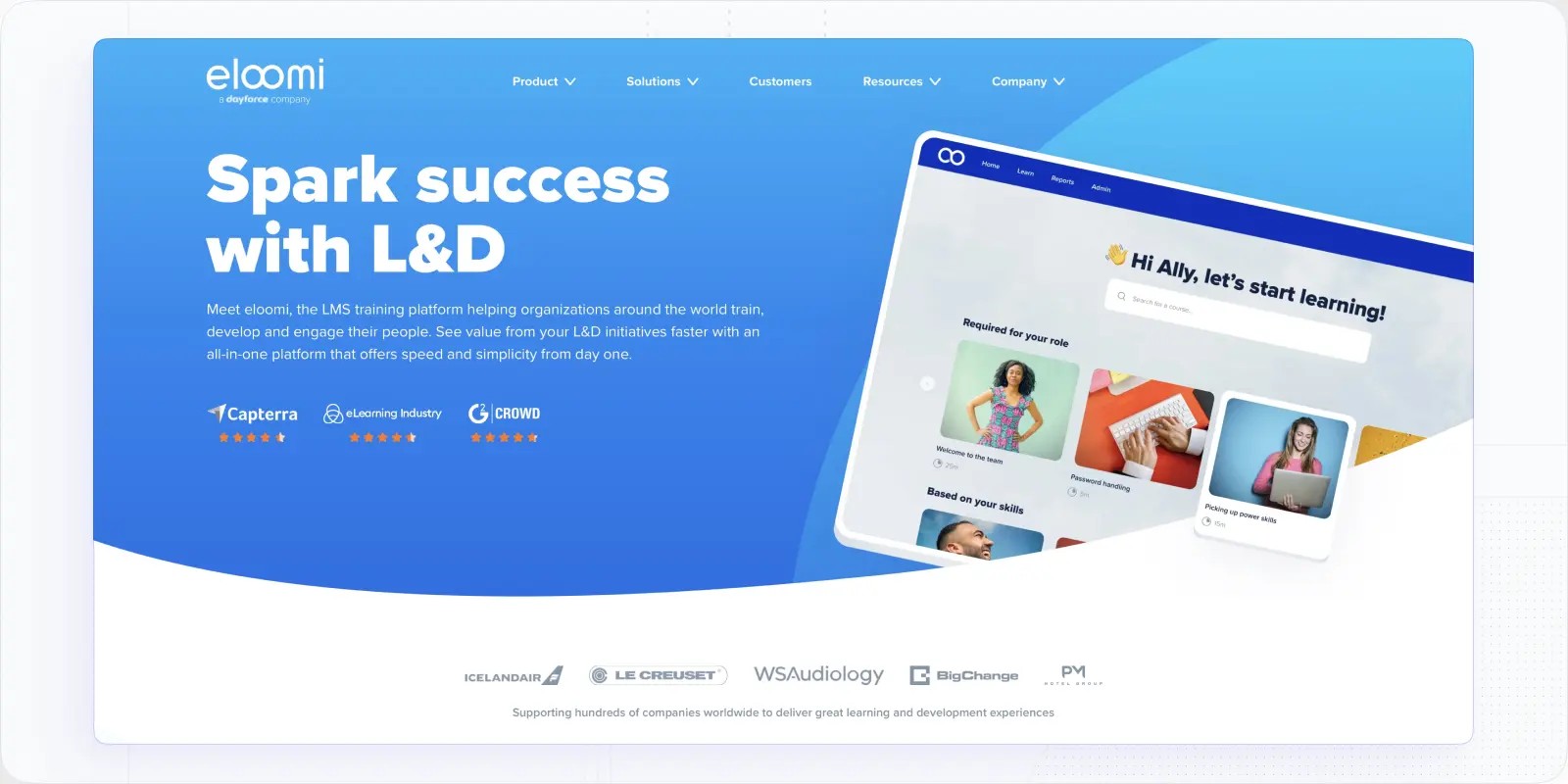
eLoomi is another representative of employee onboarding LMS that handles the heavy lifting by automating training, letting you focus on helping your team succeed. Keep things organized with real-time progress tracking and ensure everyone’s on the same page. Whether your team is in the office or remote, they can access everything they need from anywhere. It’s all about making onboarding smooth and stress-free.
Key features & benefits
- Batch Training Assignments. Quickly assign onboarding to all your new hires at once, no hassle.
- Ready-to-Use Courses. Use pre-built training content to get your team learning right away.
- Progress Tracking. See how employees are doing in real-time to make sure no one falls behind.
- Mobile-Friendly. Onboard employees wherever they are, with access on any device.
- Compliance Monitoring. Keep track of mandatory training and deadlines with ease.
Pricing: upon request.
#6. Continu
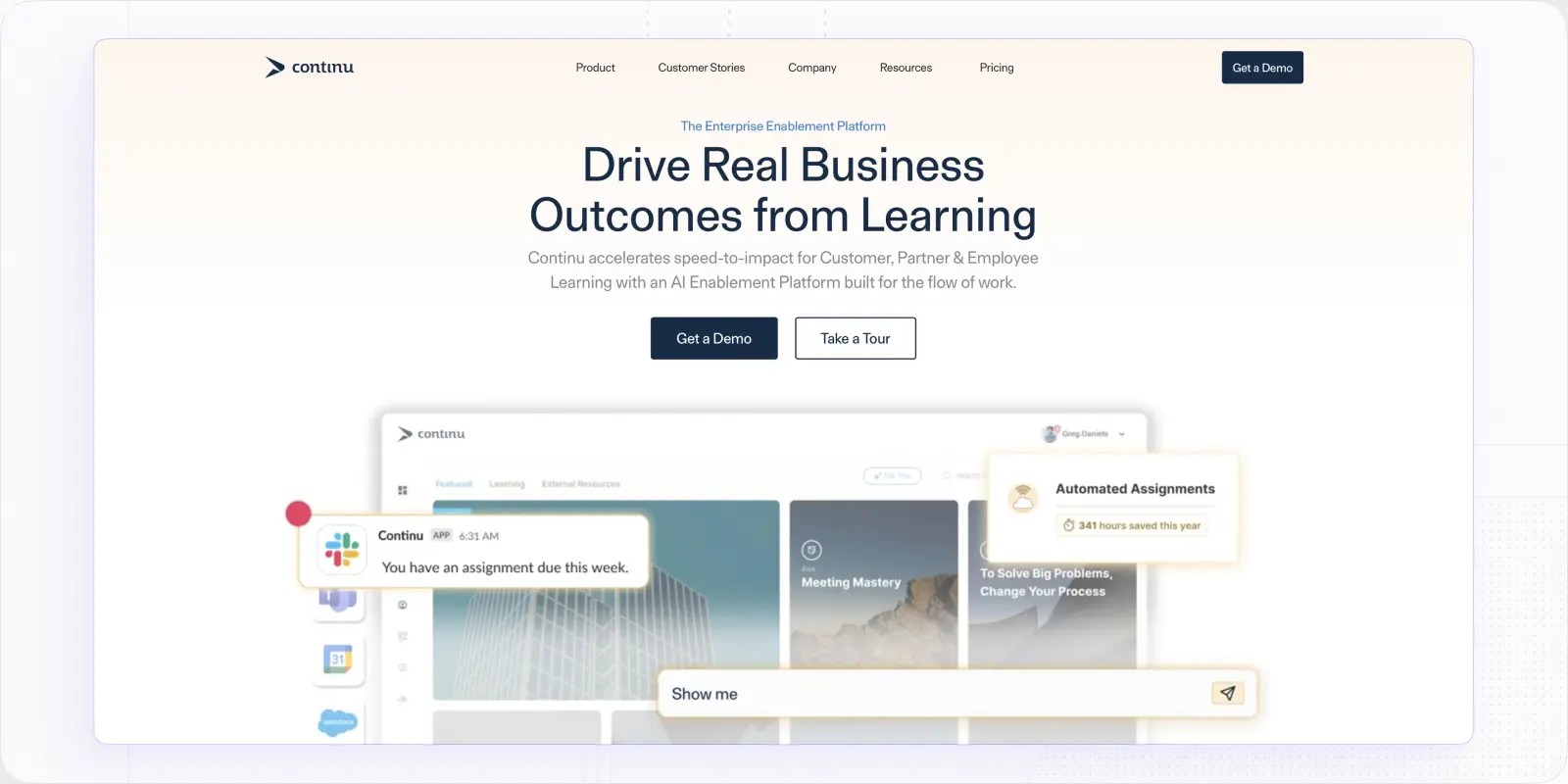
Continu's big idea is that onboarding shouldn't live in a separate tab nobody opens. The platform plugs directly into the tools your team already works in (Slack, Zoom, Google Workspace, Okta) so new hires get training assignments, nudges, and completion reminders right where they spend their day. Automated workflows deliver role-tailored learning paths without manual setup, smart segmentation routes the right content by team or location, and live progress insights show you exactly who's on track and where to step in. With a sleek, modern interface that new hires figure out in minutes, it's a strong fit for mid-sized and larger companies onboarding across distributed teams.
Key features & benefits
- Learn Where Work Happens. Slack and Zoom integrations deliver training and reminders inside the tools your team already uses daily.
- Automated Workflows. Set up role-based onboarding paths once, and every new hire gets the right training on time — no manual assigning.
- Smart Segmentation. Target content by team, department, or location so each new hire only sees what's relevant to them.
- Real-Time Progress Insights. Live dashboards show who's on track, so managers can step in before anyone falls behind.
- Content Partner Integrations. Pull in courses from LinkedIn Learning, Udemy Business, Go1, and OpenSesame to round out your program.
Pricing: upon request; plans are designed for teams of 500 to 50,000+, billed annually per monthly active user.
#7. 360Learning
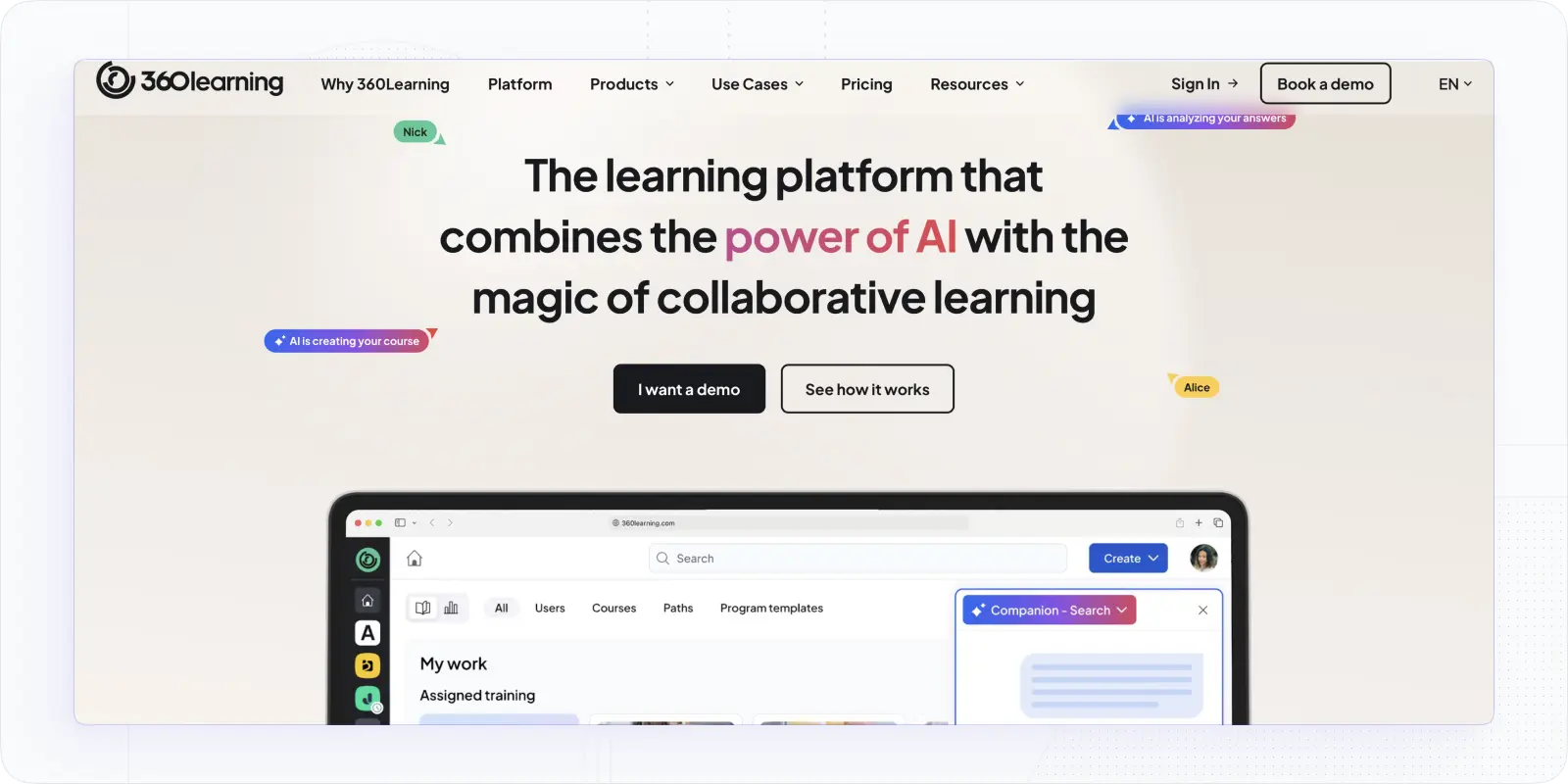
360Learning takes a different angle on onboarding: instead of L&D building everything alone, your in-house experts co-create the training. New hires learn directly from the people who actually do the job, and can react to and discuss course content right inside the platform, so no one onboards in isolation. The AI content builder speeds up course creation, and with 50+ integrations across HR and collaboration tools, onboarding fits neatly into your existing stack. It's a strong fit for companies where internal knowledge is the real onboarding material.
Key features & benefits
- Collaborative Course Creation. Let subject-matter experts build onboarding courses themselves — no instructional design degree required.
- In-Context Discussions. New hires can ask questions and react directly within lessons, turning onboarding into a two-way conversation.
- AI Content Builder. Transform internal expertise into structured courses faster with multimodal AI authoring.
- 50+ Integrations. Connect with BambooHR, Microsoft Teams, Google Drive, and other tools your team already uses.
- Mobile App. Keep onboarding accessible for deskless and remote employees.
360Learning Pricing: The Team plan starts at $8 per user/month for up to 100 users; Business and Enterprise pricing upon request.
#8. LearnUpon
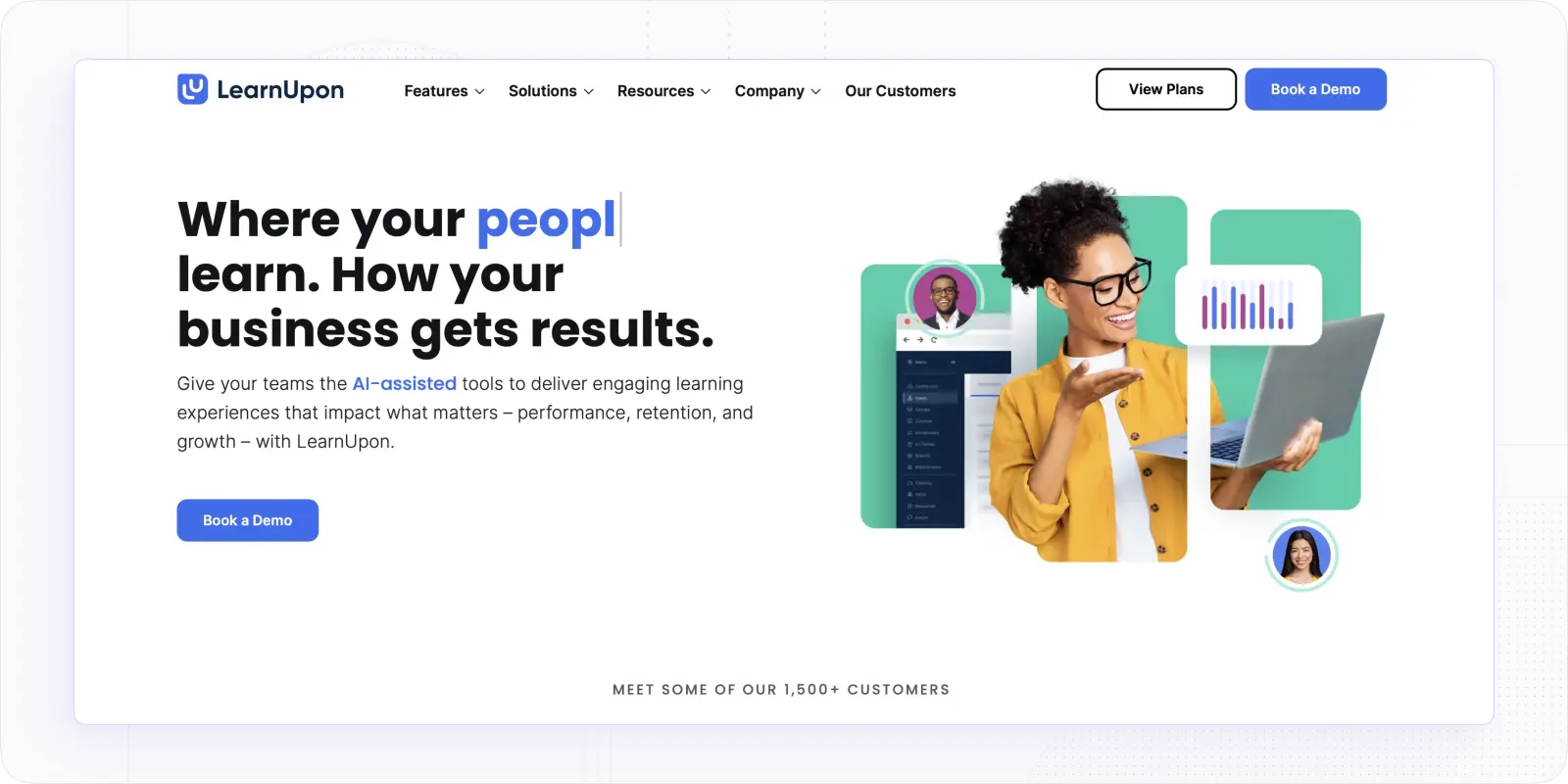
LearnUpon is built for companies that onboard more than just employees. Its multi-portal architecture lets you run separate, branded learning environments for new hires, customers, and partners — all managed from a single account. Automated enrollments assign the right onboarding content the moment someone joins, and detailed reporting shows exactly where each learner stands. If your onboarding needs stretch beyond HR into customer success or channel enablement, LearnUpon keeps everything under one roof without things getting messy.
Key features & benefits
- Multi-Portal Setup. Create separate branded portals for employees, customers, and partners, each with its own content and admins.
- Automated Enrollment. Assign onboarding courses automatically based on user groups, so new joiners start learning immediately.
- Learning Paths. Sequence courses into structured journeys that guide new hires step by step.
- Detailed Reporting. Track progress, completion, and exam results across every portal from one dashboard.
- HRIS & CRM Integrations. Sync learner data with tools like Salesforce and your HR stack to keep enrollment hands-off.
LearnUpon Pricing: upon request.
#9. SAP Litmos
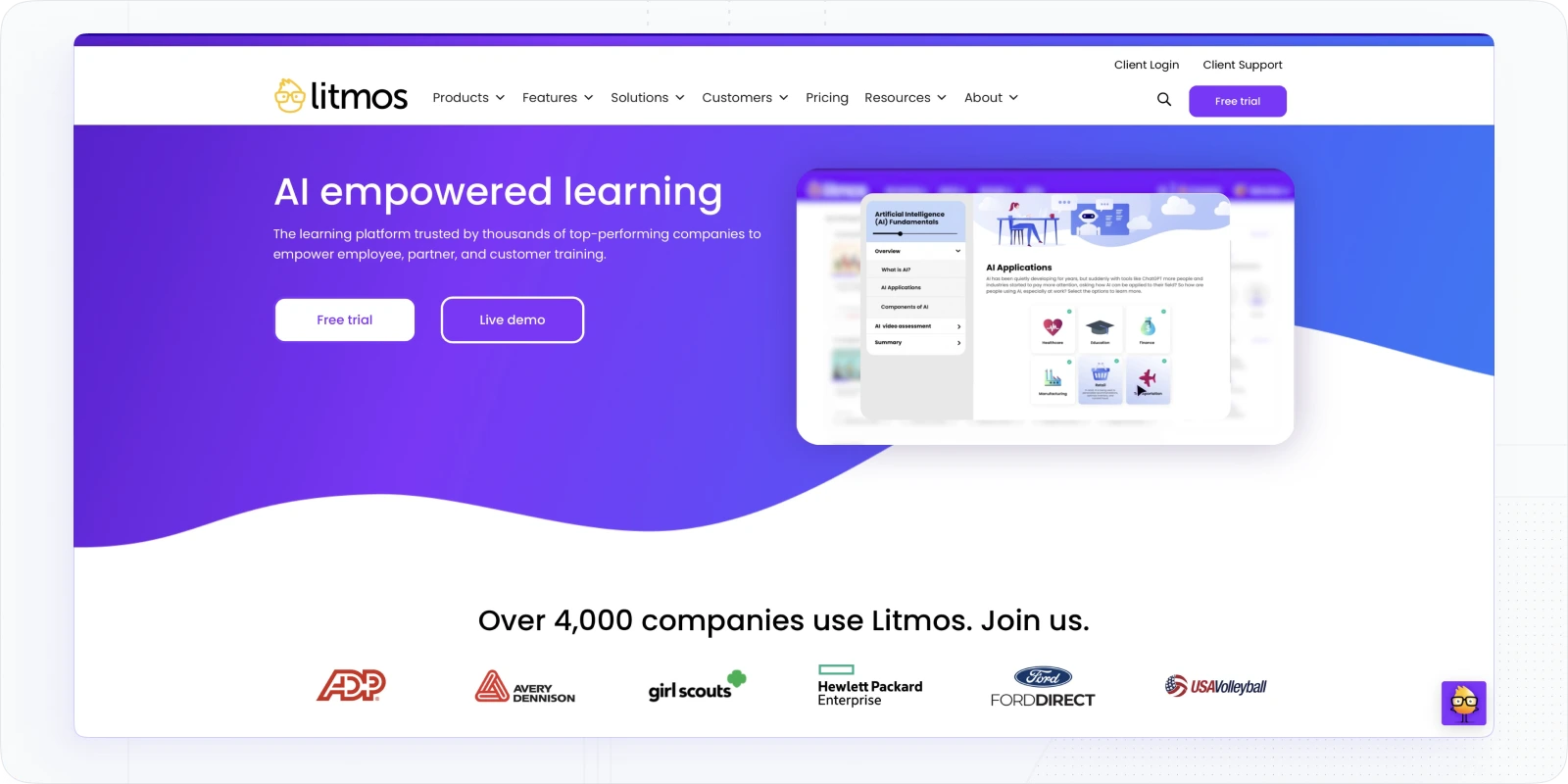
SAP Litmos is a solid choice when onboarding comes with a compliance checklist attached. The platform pairs a quick-to-deploy LMS with a massive off-the-shelf course library, so regulated teams in healthcare, finance, or retail can cover mandatory training from day one without building everything in-house. Automated learning paths, certifications, and audit-ready reporting keep you covered when regulators come knocking, and 100+ pre-built connectors make it easy to plug into your existing HR and sales systems. For clinical teams, our healthcare onboarding checklist lays out what that checklist has to contain, role by role, before a new hire sees a patient.
Key features & benefits
- Extensive Course Library. Access thousands of ready-made courses covering compliance, safety, soft skills, and more.
- Certifications & Retraining. Automate certification tracking and re-enrollment so no mandatory training ever lapses.
- Audit-Ready Reporting. Generate detailed compliance reports that hold up to regulatory scrutiny.
- Fast Deployment. Get the platform up and running quickly, without a months-long implementation project.
- 100+ Connectors. Integrate with Salesforce, HRIS platforms, and other business systems out of the box.
SAP Litmos Pricing: upon request.
#10. WorkRamp
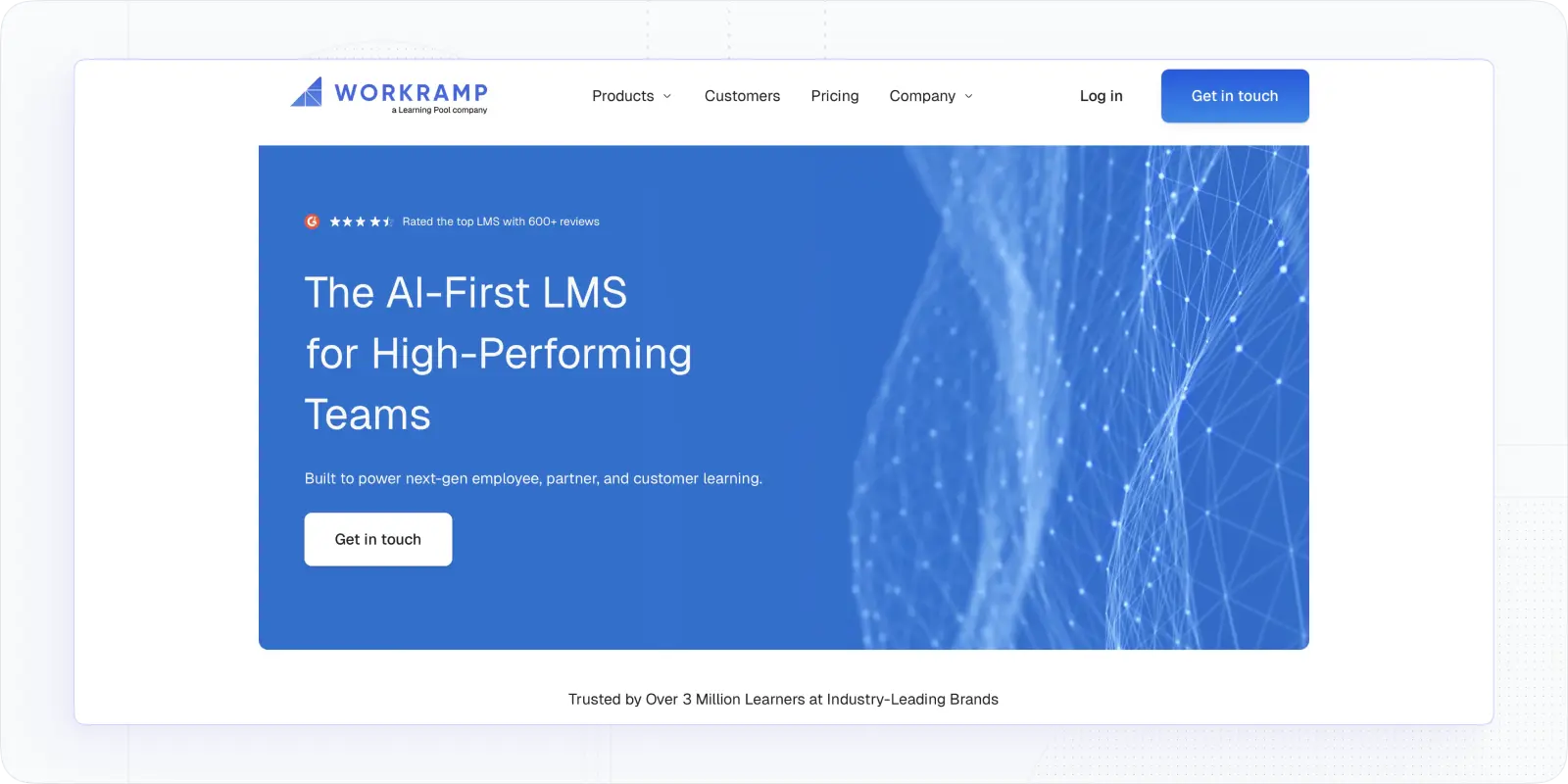
WorkRamp is the pick when your onboarding goal is measured in time-to-first-deal, not just course completions. Built with enablement teams in mind, it combines self-guided learning modules, certification paths, and blended learning — so new reps can move from product training to virtual classroom sessions to knowledge checks without switching tools. AI-powered guide creation turns your existing slide decks and docs into structured training in minutes, and HRIS integrations with tools like BambooHR, Workday, and Rippling trigger the right onboarding workflows automatically. The clean, intuitive interface means new hires spend day one learning, not learning the platform.
Key features & benefits
- AI Guide Creation. Upload slide decks, docs, or PDFs and turn them into structured onboarding modules in minutes.
- Certification Paths. Verify that new reps are truly ramped with quizzes, assessments, and verifiable certifications before they go live.
- Blended Learning. Combine self-paced courses with instructor-led sessions and virtual classroom events in one program.
- HRIS-Triggered Workflows. Sync with BambooHR, Workday, or Rippling so onboarding kicks off automatically when a new hire is added.
- Content Marketplace. Access thousands of off-the-shelf courses to cover skills training without building everything yourself.
WorkRamp Pricing: upon request.
How to Pick the Right Onboarding Platform
Choosing an employee onboarding tool isn’t about finding “the best” product in a vacuum, it’s about finding the best fit for your stage of growth, tech stack, and talent priorities. Use the quick guide below to zero-in on the platform that will deliver the highest return on effort (and budget):
| If your top priority is… | Look at this platform | Why it stands out |
|---|---|---|
| Turning onboarding into a fully automated, AI-driven process | EducateMe | AI built into every step: the AI Assistant creates courses from a prompt, URL, or file, auto-enrollment assigns role-based paths, automated reminders keep new hires moving, and the AI Roleplay Coach lets them practice real scenarios safely. |
| Hyper-personalized learning paths at enterprise scale | Docebo | AI recommendation engine plus deep gamification and social features keep thousands of learners engaged without manual curation. |
| Fast, affordable launch for a small or mid-sized team | TalentLMS | Transparent pricing, a free plan, 1,000+ ready-made TalentLibrary courses, and gamification get onboarding live without an L&D department. |
| Slashing ramp-up time for huge hiring waves | Absorb LMS | Automates learning paths, compliance workflows, and progress alerts — clients report cutting onboarding time by up to 40%. |
| Simple, stress-free onboarding with clear progress tracking | eLoomi | Batch assignments, ready-to-use courses, and real-time dashboards make onboarding friction-free for office and remote teams alike. |
| Delivering training inside the tools your team already uses | Continu | Slack, Zoom, and Google Workspace integrations bring assignments, nudges, and reminders into the flow of work — built for distributed teams of 500+. |
| Turning internal expertise into onboarding content | 360Learning | Subject-matter experts co-create courses with AI-assisted authoring, and in-lesson discussions mean no one onboards in isolation. |
- Map your pain points. Are you drowning in manual follow-ups, struggling to personalise learning at scale, or juggling paper forms? Match the platform to the bottleneck that costs you the most.
- Check ecosystem fit. Make sure the vendor’s APIs, HRIS connectors, and SSO options mesh with your existing stack, swivel-chair data entry is a silent productivity killer.
- Pilot, measure, iterate. Most tools (including EducateMe’s 14-day trial) let you run a small-scale rollout. Track time-to-productivity, completion rates, and admin hours saved before you commit.
For companies that crave hands-off automation and real-time visibility, EducateMe remains the front-runner. But if your organisation needs deep personalisation, iron-clad compliance, or a lightweight starter kit, one of the other nine platforms may be the perfect fit. Evaluate against your must-haves, run a focused pilot, and you’ll land on an onboarding engine that scales with your people and your ambitions.
Frequently asked questions
Employee onboarding software is a tool that helps companies smoothly integrate new hires into their teams. It usually includes features like training modules, document management, and task tracking to make the whole process easier and more organized. Basically, it’s like a digital welcome mat that helps new employees get up to speed and feel at home!
The 5 C's of onboarding are: Compliance: Ensuring new hires complete necessary paperwork and understand company policies and regulations. Clarification: Clearly defining roles, responsibilities, and expectations to help employees understand their job and the company's structure. Culture: Introducing new employees to the company culture, values, and mission, helping them feel connected to the organization. Connection: Facilitating relationships between new hires and their colleagues to foster a sense of belonging and teamwork. Career: Discussing career development opportunities and growth paths within the company, setting the stage for future advancement. These elements help create a comprehensive onboarding experience that supports new employees from day one!
The cost of onboarding software can vary widely depending on the provider and features included. Typically, it can range from about $1 to $10 per user per month for basic solutions, while more comprehensive systems can go up to $20 to $100 per user per month or more. Some providers also offer flat-rate pricing for small businesses, which might start around $1,000 to $5,000 annually. So, it really depends on your company’s needs and budget!
The length of an onboarding program can vary, but generally, it lasts anywhere from a few days to several months. A common approach is to have a structured onboarding process for about 90 days, allowing time for training, adjustments, and feedback. However, it can be tailored to fit the complexity of the role and the company culture—some companies prefer a shorter, intensive program, while others opt for a longer, more gradual integration.