
5 Best Retail Employee Training Software in 2026

By Sofia KondratSofia KondratCorporate Training Expert & Content EditorHey there! I’m Sofi Kondrat, your go-to corporate training advisor here at EducateMe. I’ve been navigating the highs…Read more
Corporate Training Expert & Content Editor
7 min read
Retail moves fast. Your training has to move faster.
With 60–70% employee turnover across the retail industry, most brands are constantly onboarding new associates, retraining seasonal hires, and rolling out new product knowledge to frontline teams. The right retail sales training software doesn’t just support growth, it enables it.
And if you’re here, you’re likely not looking for theory but practical training for store associates. You want the best retail employee training tools that actually work on the shop floor – tools that reduce ramp time, improve performance, and don’t overwhelm store managers.
This guide breaks down the 5 best retail employee training platforms in 2026, starting with the solution built for modern, high-turnover teams.
| Platform Name | Main Capabilities | Cons | Pricing |
|---|---|---|---|
| EducateMe | Fast and flexible onboarding, AI-powered content creation, mobile-first learning, multi-location tracking | Newer platform vs legacy LMS | Starts at $239/80 users ($2 per additional user) |
| TalentLMS | Easy course builder, branch management, compliance tracking, gamification tools | Limited AI features, less retail-specific | Tiered pricing from $149/month to custom pricing for Enterprise plan |
| Axonify | Microlearning for daily engagement, reinforcement learning, gamification, and frontline analytics to boost workforce engagement | Less suited for deep onboarding programs for training retail employees | Custom pricing (typically enterprise-level; quotes based on user count and modules) |
| Docebo | Advanced automation, AI recommendations, deep analytics, enterprise integrations, global support | Higher cost and longer implementation | Enterprise pricing (quote-based; usually higher cost for large organizations) |
| SAP Litmos | Compliance course libraries, certification tracking, audit reporting, and secure infrastructure for training retail employees | Traditional interface, less modern UX | Subscription pricing (mid-to-enterprise range; license counts based) |
Retail employee training software helps store teams onboard faster, maintain compliance, and build product knowledge across locations. EducateMe leads for AI-powered training with automated role-based enrollment. SC Training is the pick for mobile-first microlearning. TalentLMS offers budget-friendly setup. Key features to prioritize: mobile access, quick content creation, and real-time tracking.
EducateMe – Best Retail Employee Training LMS
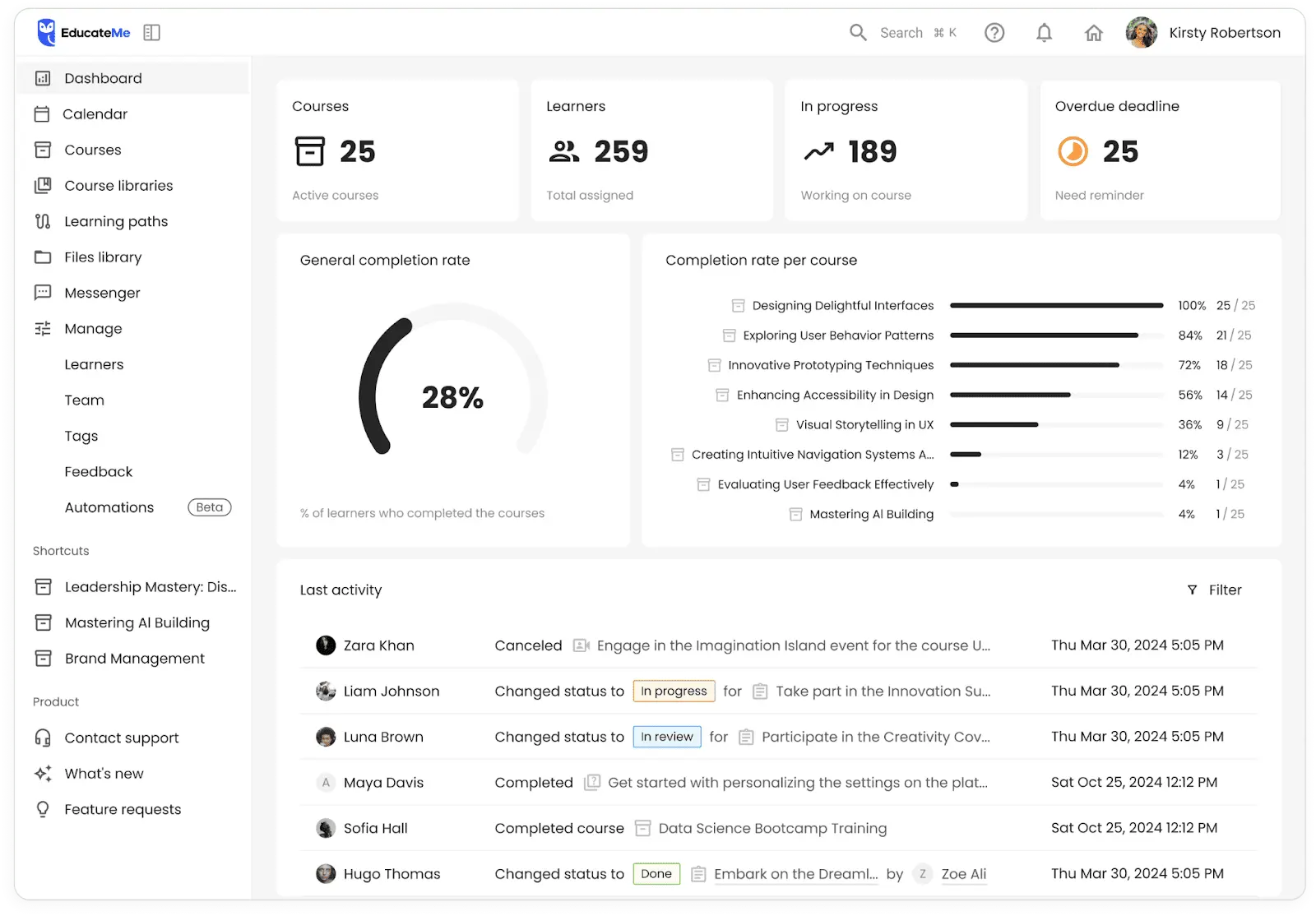
If you’re looking for a flexible, scalable retail employee training platform that works for both HQ and frontline teams, EducateMe is the strongest all-around AI-powered option.
Retail teams don’t sit at desks. They don’t have time for long, outdated LMS modules. They need bite-sized training, clear tracking, and fast onboarding, without complexity. That’s exactly where EducateMe shines.
Why EducateMe works for retail
- Fast onboarding for high-turnover teams. With structured learning paths, EducateMe lets you build clear onboarding flows for cashiers, associates, and managers in just a few clicks. New hires can follow step-by-step training programs that reduce confusion and help them become productive much faster.
- AI-powered training automation. If you're exploring retail employee training AI, EducateMe helps generate quizzes, assessments, and structured personalized training programs in minutes. This makes updating product knowledge or seasonal campaigns much easier.
- AI role play coach. This tool allows retail employees to practice real-world scenarios like handling objections, upselling products, or resolving customer complaints. Associates receive instant feedback on their responses, helping them build confidence and improve communication skills before interacting with real customers.
- Blended learning built for the shop floor. EducateMe combines video lessons, SOPs, live sessions, and knowledge checks into one streamlined experience for training retail employees. Teams can learn in short bursts during shifts while managers maintain consistent standards across every store location.
- Real progress tracking across locations. Managers and HQ teams can monitor completion rates, assessment results, and engagement levels across roles or store locations. This gives leadership clear visibility into performance gaps and training effectiveness at scale.
- Simple UX designed for busy retail teams. The platform feels clean and intuitive, even for first-time users. Store managers can assign courses, track progress, and update materials without technical friction or long setup processes.
Best for: Retail brands that need structured onboarding, AI-assisted course creation, and scalable training across multiple stores.
TalentLMS – Flexible LMS for Retail Teams
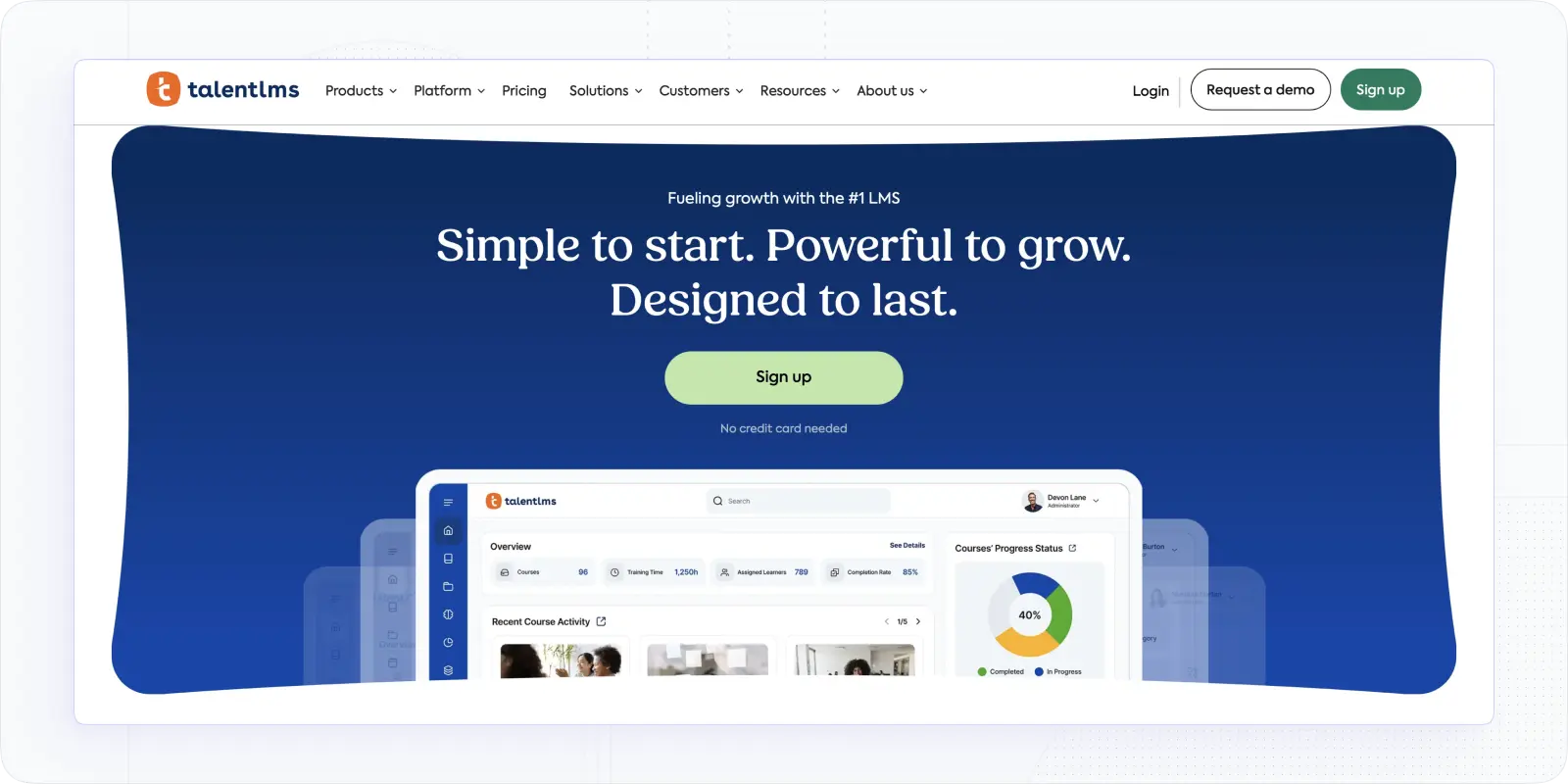
If you’re looking for a straightforward, flexible employee training software for retail, TalentLMS is a popular solution that offers a balanced mix of usability and control.
It doesn’t try to reinvent retail training – it simply gives teams the tools to build, assign, and track learning efficiently.
Why TalentLMS works for retail
- Simple course creation tools. TalentLMS allows you to upload SCORM files, videos, presentations, or build courses directly in the platform for comprehensive online training. This makes it easy to organize product knowledge, policy training, or customer service standards in one place.
- Branch-based multi-store management. Retail companies can create separate branches for different store locations while keeping centralized control. This structure helps manage regional variations without losing visibility across the organization.
- Gamification for engagement. Badges, points, and leaderboards encourage participation among frontline employees. These features help make compliance and product training feel less mandatory and more motivating, ultimately improving customer experience.
- Compliance tracking and reporting. Managers can track course completions, certifications, and assessment results through structured reporting dashboards. This makes audits and policy verification much easier to handle.
- Fast setup and implementation. TalentLMS is relatively quick to deploy compared to larger enterprise systems. Teams can get started without long onboarding cycles or heavy technical customization, ensuring swift training for store associates.
Best for: Mid-sized retail businesses that want a reliable LMS without enterprise-level complexity.
TalentLMS Pricing: From approximately US $149/month (billed annually) for smaller user counts.
Axonify – Microlearning for Frontline Retail Employees
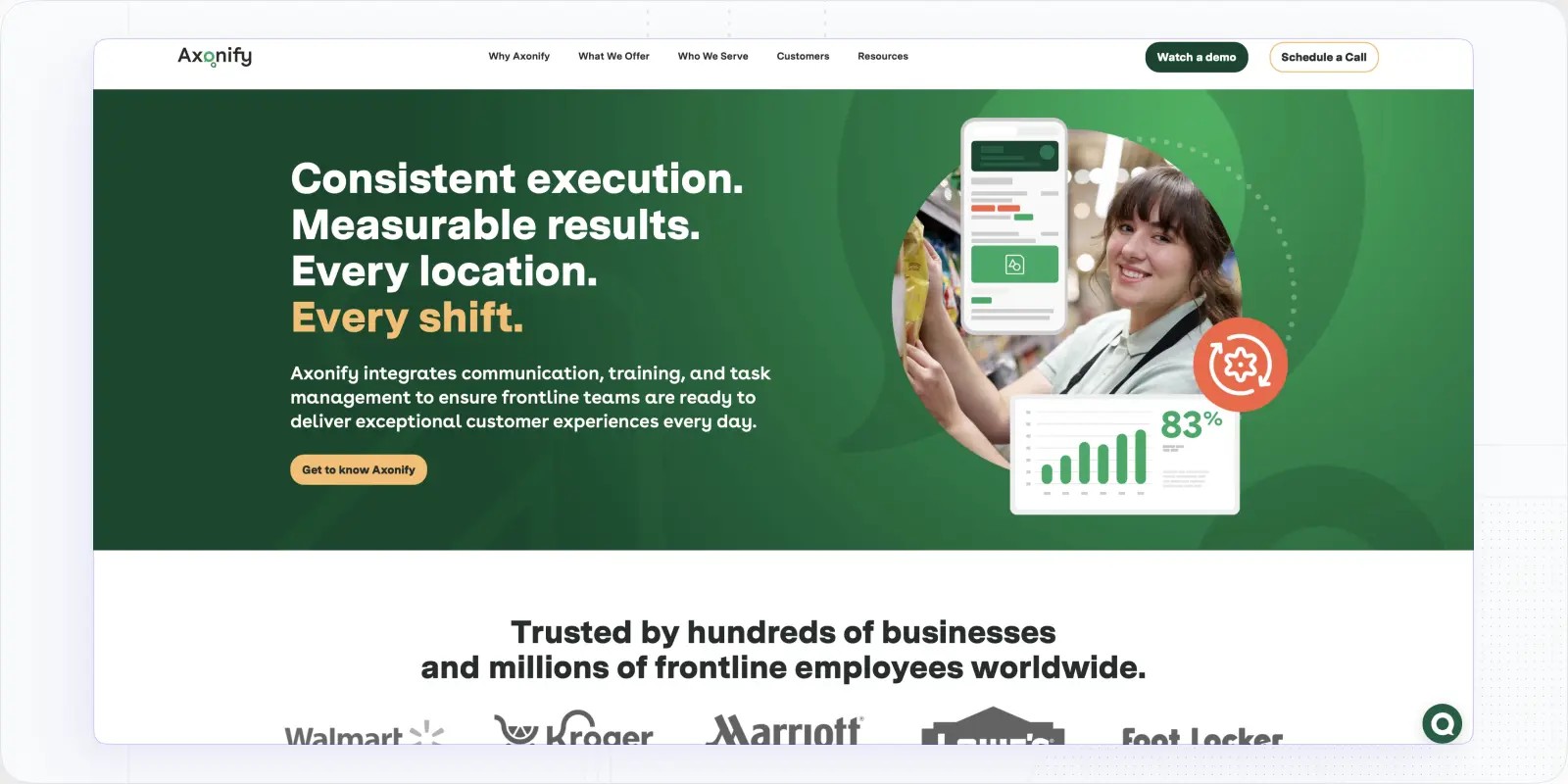
If your main priority is knowledge retention for frontline teams, Axonify focuses on daily microlearning rather than long-form courses.
It’s designed around short, repeated interactions that fit naturally into busy retail shifts.
Why Axonify works for retail
- Microlearning-based training model. Workforce complete short daily learning sessions that typically take just a few minutes. This makes training easier to fit between customer interactions or during slower store hours.
- Reinforcement-driven knowledge retention. The system uses repetition and adaptive questioning to strengthen memory over time. Important product details or safety procedures are reinforced consistently.
- Built-in gamification mechanics. Points, rewards, and competitive elements increase participation rates. This helps drive consistent engagement across large frontline teams.
- Mobile-first learning experience. Axonify is designed primarily for smartphones and tablets, which aligns well with retail environments where desk access is limited.
- Frontline-focused analytics. Managers can view performance trends and identify knowledge gaps across teams. This supports targeted retraining where needed.
Best for: Large retail chains that prioritize ongoing reinforcement and frontline engagement for their store associates.
Pricing: Quote-based, available on request
Docebo – Enterprise Retail Learning Platform
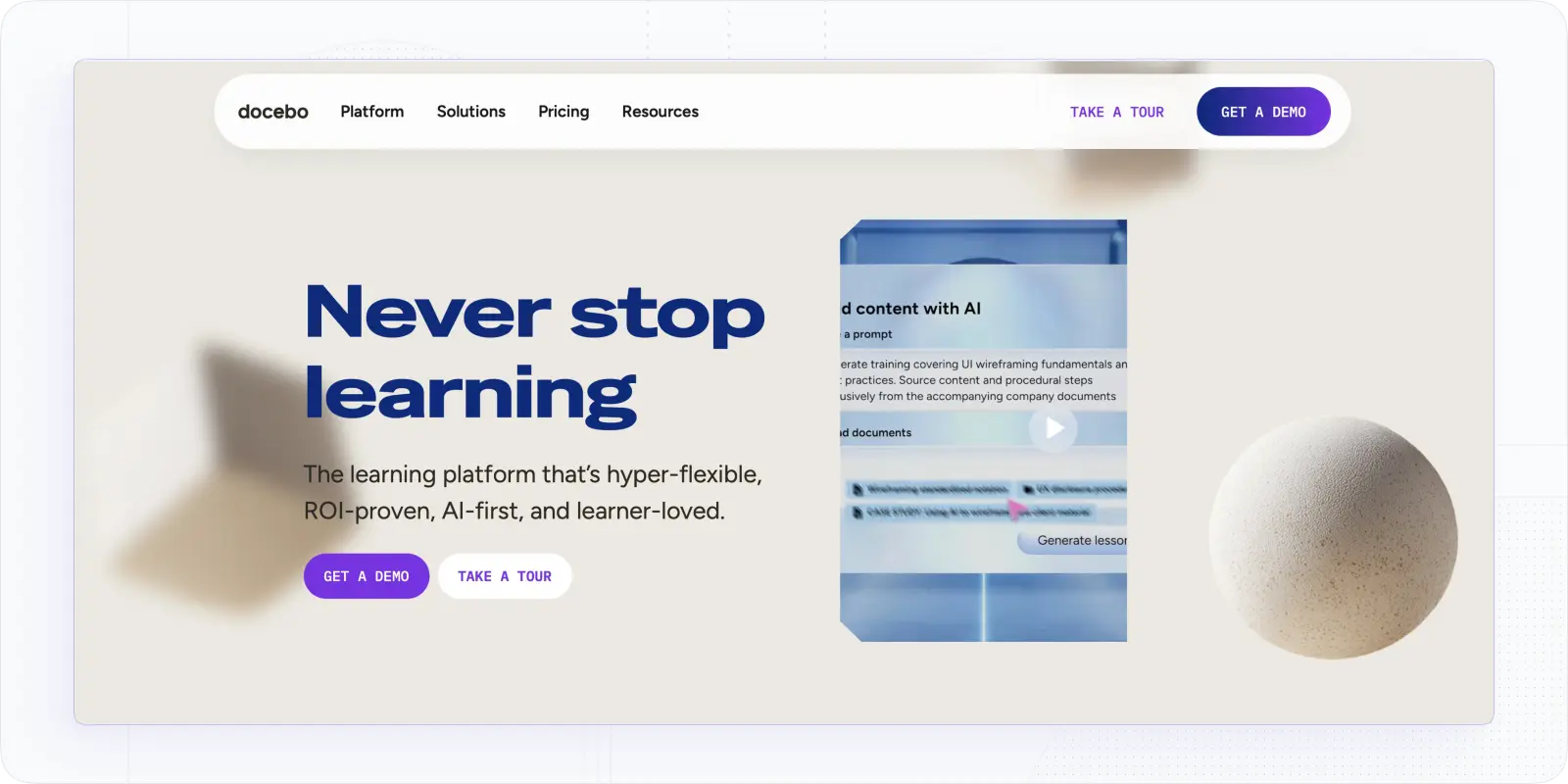
Docebo is built for complex organizations that require advanced automation and integrations across global operations.
It’s a powerful platform, though it may be more robust than smaller retailers need.
Why Docebo works for retail
- Advanced workflow automation. Docebo automates enrollments, course assignments, and certification renewals based on role or behavior. This reduces manual administrative work across large retail organizations.
- AI-driven content recommendations. The platform suggests relevant courses based on learner activity and performance data to enhance skill development. This helps personalize development paths at scale for sales associates.
- Deep reporting and custom dashboards. Leadership teams can build custom analytics dashboards to track performance metrics across regions and departments.
- Enterprise system integrations. Docebo connects with HR systems, CRM platforms, and other enterprise tools to centralize employee data and reporting workflows.
- Multi-language and global support. The system supports multiple languages and regional configurations, making it suitable for international retail brands.
Best for: Enterprise retailers operating across multiple countries or regions.
Docebo pricing: Quote-based, usually starts around $7-$10/user/mo
SAP Litmos – Compliance-Focused Retail LMS
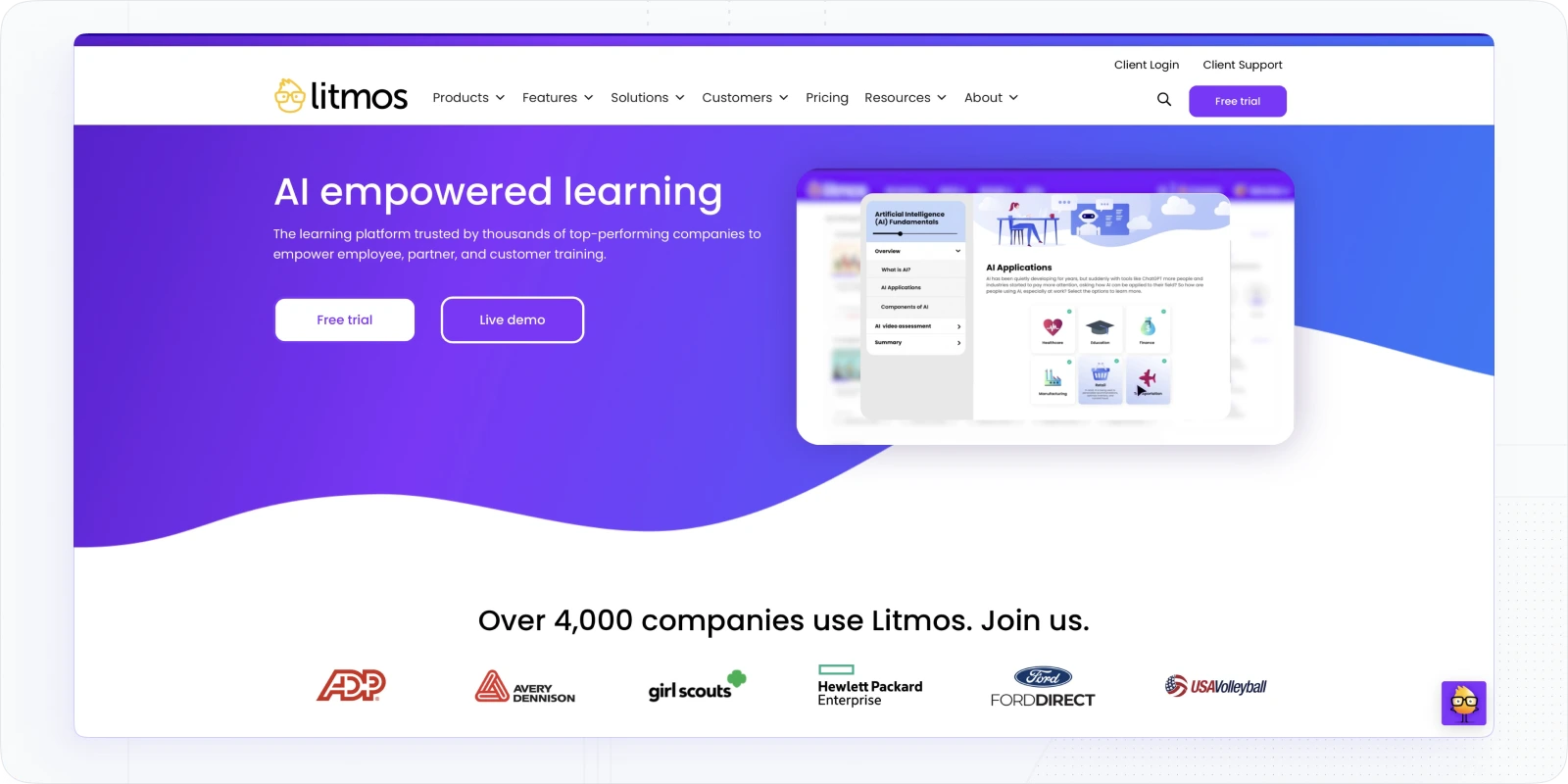
SAP Litmos is widely used for structured compliance and certification-heavy training environments.
Retailers with strict safety or regulatory requirements often consider this platform.
Why SAP Litmos works for retail
- Compliance-focused course library. Litmos offers ready-made compliance content that supports common regulatory and safety requirements in retail operations.
- Certification and renewal tracking. The system monitors employee certifications and sends reminders for required renewals, helping reduce compliance risks.
- Structured reporting tools. Managers can generate audit-ready reports that document completions and policy acknowledgments across teams.
- Secure enterprise infrastructure. Litmos provides enterprise-grade data protection and role-based access controls to safeguard employee information.
- Scalable user management. The platform supports large user bases and multi-location retail structures without compromising performance.
Best for: Retail businesses that prioritize compliance tracking and structured certification management.
SAP Litmos Pricing:Custom quotes per business.
Best Practices for Retail Employee Training
Good retail employee training isn’t about having more content. It’s about making sure people actually use it — and that it improves what happens on the sales floor.
Make onboarding clear and structured
Retail has constant new hires. If onboarding is messy, new employees either guess their way through shifts or rely too heavily on coworkers. Neither scales.
A solid onboarding flow should walk store associates through product knowledge, basic customer service training, company policies, and key in-store processes in a logical order. Not everything at once. Not scattered across PDFs. Clear steps, clear expectations.
💡 When onboarding feels organized, new hires settle in faster, and managers spend less time repeating the same instructions.
Train for real in-store situations
Effective retail training should reflect what actually happens during a shift. Handling returns. Recommending products. Dealing with frustrated shoppers. Upselling for retail customers without sounding pushy.
If your training curriculum doesn’t match real customer interactions, employees won’t take it seriously. Scenario-based practice, role-playing, and product-specific training make learning feel relevant, not theoretical.
💡The goal isn’t to “complete modules.” It’s to prepare people for the next customer.
Keep training short and ongoing
Long training sessions don’t work in busy retail stores. Associates are on their feet. Managers are juggling tasks. Attention is limited.
Short modules inside your LMS work better. Quick refreshers. Small knowledge checks. Short product updates before a launch. That’s how you build continuous learning without slowing down operations.
💡Over time, this approach improves employee engagement and retention because learning becomes part of the routine, not a disruption.
Tie training to actual results
If training isn’t connected to performance, it turns into a checkbox exercise.
Retail businesses should track how training impacts employee productivity, certification completion, customer satisfaction, and even employee turnover. If customer experience improves after a sales training program, that’s signal. If certain stores lag behind, that’s signal too.
💡Training should support business goals and keep employees engaged, not sit in a separate system nobody reviews.
Final Thoughts
Retail is unpredictable. Your training system shouldn’t be. The right retail employee training software can:
- Cut onboarding time
- Improve frontline consistency
- Increase product knowledge
- Reduce compliance risk
- Scale across locations
If you want a flexible, AI-powered platform built for modern retail teams, EducateMe offers the strongest balance of speed, usability, and scalability (you can discover it 14 days for free).
For large enterprises with complex needs, Docebo or SAP Litmos may fit better. If microlearning is your priority, Axonify is worth exploring.
Frequently asked questions
Structure it and sequence it. High turnover means you're onboarding constantly, so a clear step-by-step path — product knowledge, customer service basics, policies, then in-store processes — beats handing new hires scattered PDFs or letting them shadow a busy coworker. Break it into short modules they finish between shifts, not one overwhelming day. Role-based paths mean a cashier and a floor associate only see what's relevant. Clear steps get people productive faster and free managers from repeating themselves.
That's the core retail constraint, and it shapes your choice heavily. Associates are on their feet with limited desk time, so mobile access is often non-negotiable — a phone during a slow hour beats a scheduled session. Mobile-first, app-based platforms like Axonify are built for exactly this, with microlearning designed for phones. If your team trains almost entirely on the floor, prioritize genuine mobile experience and offline support over feature depth when shortlisting.
Reuse, don't rebuild. Seasonal waves hit the same way every year, so keep a ready-made onboarding path you re-run rather than recreating from scratch each peak. Focus seasonal training on what's actually new — this year's products, promotions, and policies — and skip re-teaching evergreen basics to returning staff. Short, scenario-based modules on real situations (returns, upselling, difficult customers) get temporary hires floor-ready fast without the depth a permanent hire needs.
Connect training data to what happens with customers, not just completions. Track completion and quiz scores inside the platform, then tie them to floor metrics — sales per associate, customer satisfaction, return handling, and turnover. If satisfaction rises after a service program, that's signal; if certain stores lag, that's signal too. Compare trained versus untrained cohorts over a season. Platforms like EducateMe surface completion and engagement data by store and role to support this.