
Continu Pricing in 2026: Plans, Real Costs & What Teams Pay

By Alexa BerezinaAlexa BerezinaL&D Specialist & CSM LeadMy name is Oleksandra (Alexa), and I’m a certified Learning & Development specialist focused on turning complex knowledge…Read more
L&D Specialist & CSM Lead
7 min read
Continu pricing is quote-only, so the number you actually pay depends on how the platform is scoped for your team. That opacity is exactly why "continu pricing" gets searched before a single demo is booked.
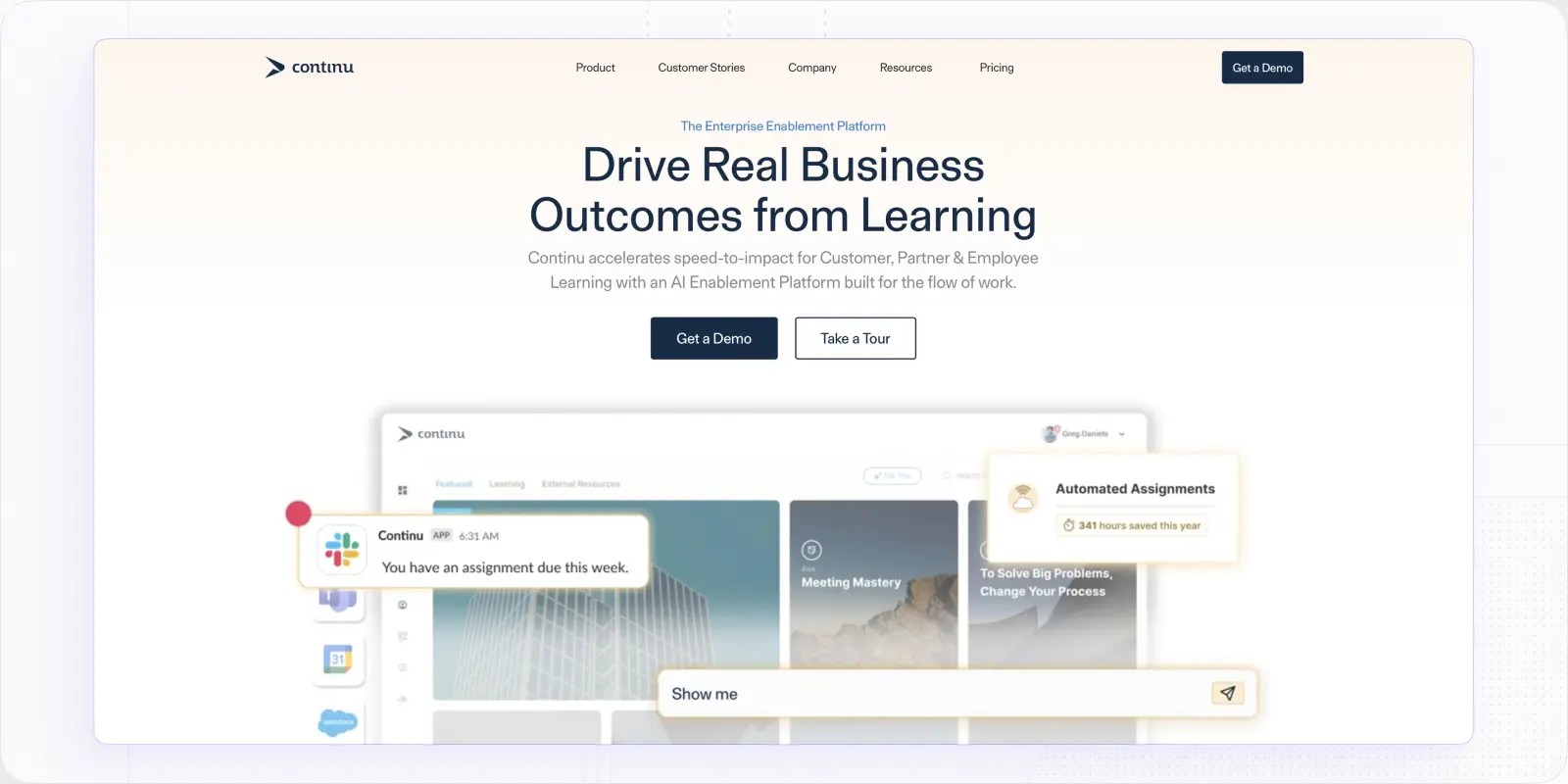
Below I break down Continu's plan tiers, how its monthly-active-user model works, the costs that expand a Continu budget beyond the subscription line, and where its AI features sit in the price ladder, so you can walk into a sales call already knowing what drives the quote.
Key takeaways: Continu uses monthly-active-user (MAU) pricing across three tiers (Growth, Professional, and Enterprise) with no public dollar figures. Implementation runs about 10% of first-year contract value, and Continu AI is gated to the Professional tier and above. Budget for the platform, the rollout, and the add-ons together, not the subscription alone.
How Does Continu Pricing Work in Practice?
Continu pricing works on a monthly-active-user model billed annually, quoted per organization rather than published on a rate card. You pay for learners who actually log in and use the platform in a given month, not for every seat you provision — a distinction that changes the math for teams with seasonal or occasional learners.
Four levers set the final figure, and knowing them ahead of the call is how you avoid a quote that reads higher than it should.
1. Monthly active users, not seats
Continu meters on monthly active users (MAU). A 4,000-employee company where only 1,200 people train in a typical month is priced closer to that 1,200 than to the full headcount. When I scope MAU-based platforms, I always pull the real monthly-login pattern first — buying against total headcount is the most common way teams overpay on this model.
2. Three plan tiers by user band
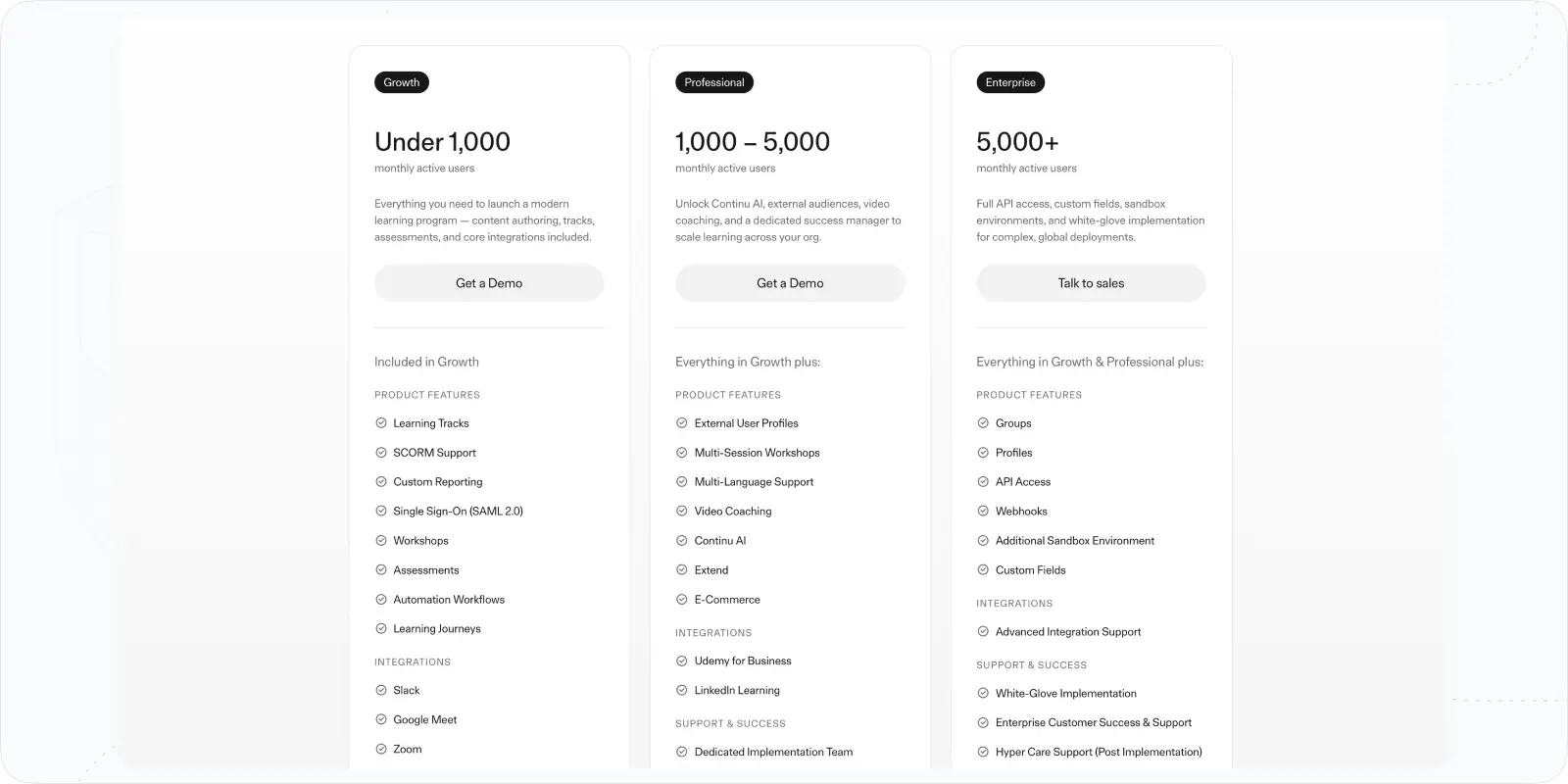
Continu sorts every account into one of three tiers based on MAU volume: Growth (under 1,000 MAU), Professional (1,000–5,000 MAU), and Enterprise (5,000+ MAU). The tier sets both your price band and which features you can access — several capabilities, including Continu AI, only unlock at Professional and above.
3. Annual billing and contract length
Continu contracts are billed yearly, and multi-year terms are where discounting usually lives. Longer commitments lower the effective annual rate but reduce your flexibility to renegotiate if your active-user count drops. For a platform you expect to grow into, that trade can be worth it; for an evolving program, a single-year term keeps leverage on your side.
4. Implementation as a percentage of contract
Continu prices implementation at roughly 10% of first-year contract value, per its published plan page. On a mid-market deployment that is a real, one-time line you should model from day one — not a rounding error. It buys configuration, data migration, and launch support, and it scales with the size of your contract.
Continu Pricing Plans: What Each Tier Includes
Each Continu tier bundles a different feature set, and the jump from Growth to Professional is the one most buyers feel — it's where AI, external audiences, and commerce switch on. Here's how the three plans line up, based on Continu's published plan page as of August 2026.
| Plan | MAU band | Key inclusions | Best for |
|---|---|---|---|
| Growth | Under 1,000 MAU | Learning tracks, SCORM, workshops, assessments, SSO, automation, Slack/Teams/Zoom integrations | Single-audience employee training at a smaller scale |
| Professional | 1,000–5,000 MAU | Everything in Growth + Continu AI, external user profiles, multi-language, video coaching, e-commerce, Udemy & LinkedIn Learning | Blended employee + customer + partner training with AI |
| Enterprise | 5,000+ MAU | Everything in Professional + API access, webhooks, extra sandbox, custom fields, white-glove implementation | Large, integration-heavy organizations with governance needs |
The takeaway: if AI-assisted authoring or external-audience training is on your must-have list, your realistic entry point is Professional, not Growth — factor that into the tier you price against.
Continu LMS Pricing: Realistic Cost Ranges
Because Continu doesn't publish figures, the honest answer to "what does Continu cost" is a range shaped by MAU volume, tier, and contract length. The estimates below reflect typical enterprise-LXP market pricing for a platform in Continu's class — treat them as planning brackets to sanity-check a quote against, not official Continu numbers.
| Deployment size | Estimated annual subscription | One-time implementation (~10%) | Typical profile |
|---|---|---|---|
| Small (under 1,000 MAU) | Low-to-mid five figures | Low four figures | A single team standardizing employee training |
| Mid (1,000–5,000 MAU) | Mid-five to low-six figures | Mid four to low five figures | Blended employee + customer education across departments |
| Large (5,000+ MAU) | Six figures and up | Five figures | Enterprise rollouts with API integrations and SLAs |
If a quote you receive lands far outside the bracket for your MAU band, that's your signal to ask which add-ons, audiences, or service tiers are inflating it. Enterprise LMS pricing rewards buyers who itemize; our guide to LMS pricing models walks through the same cost drivers across the wider market.
Continu's AI Features and Where They Sit in Pricing
Continu AI is the platform's headline 2026 differentiator, and it is a paid-tier capability, not a universal one — it activates at the Professional plan. Understanding what the AI actually does helps you judge whether the tier jump earns its cost.
Continu's AI layer centers on delivering and building learning faster:
- Conversational AI agent — learners ask questions and get answers in the flow of work, inside Slack and Microsoft Teams, instead of hunting through a catalog.
- Semantic search and recommendations — the platform surfaces relevant content by meaning rather than exact keyword matches, aiding discovery across large libraries.
- AI-assisted authoring — admins draft courses and generate assessments with AI help, cutting the manual build time that usually eats L&D hours.
- Natural-language reporting — administrators query learning data in plain English rather than assembling reports by hand.
That set is genuinely useful for large content libraries and customer-education programs. The catch for budget-conscious buyers is the gating: a sub-1,000-MAU team on Growth doesn't get Continu AI at all, so if AI is the reason you're evaluating Continu, you're pricing Professional from the start.
This is where the market has split. Newer platforms treat AI as native across every plan rather than a tier unlock.
EducateMe, an AI-native LMS for modern training teams that launches fully branded training in hours, builds AI into course creation, assessment, and practice on every plan, with published prices you can read before a call.
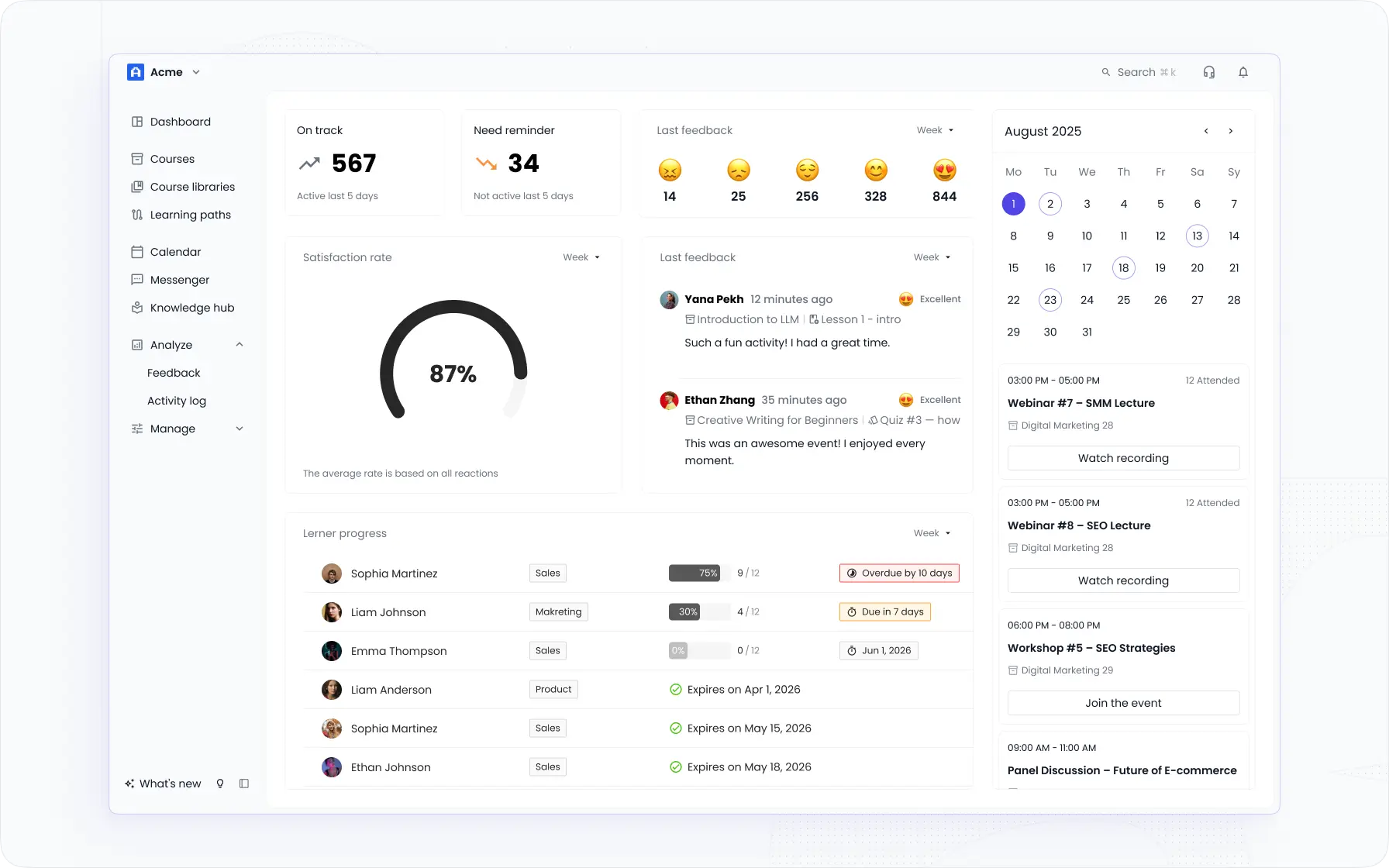
Its AI Roleplay Coach lets learners rehearse real conversations with scored, rubric-based feedback, a practice layer Continu's content-delivery AI doesn't replicate. The honest trade-off: EducateMe has no dedicated mobile app and no pre-built course library, so content is AI-generated or built by your team. For teams weighing AI value against price, though, native-everywhere versus tier-gated is the comparison that matters.
Continu Pricing vs Transparent-Price Alternatives
The single biggest complaint about Continu pricing isn't the amount — it's not knowing the amount until you're deep in a sales cycle. That's a structural choice, and it's worth understanding what you trade for it. Quote-based models like Continu's flex to your exact scope, which can favor large, complex deployments; published-price models let you budget in an afternoon and compare vendors on a spreadsheet.
| Pricing question | Continu | Published-price LMS (e.g. EducateMe) |
|---|---|---|
| See a price without sales | No — quote only | Yes — plans listed publicly |
| Metering | Monthly active users | Flat plan tiers |
| AI included | Professional tier and up | Every plan |
| Time to first quote | A demo and scoping call | Zero — it's on the page |
For a mid-market team that knows its requirements, the published-price route removes weeks of back-and-forth. For a 6,000-learner enterprise with heavy integration needs, a scoped Continu quote may still land closer to what you actually need. The right question isn't "which is cheaper" but "which model matches how my team buys."
Additional Costs That Commonly Expand Continu Budgets
The subscription is the anchor, not the total. Across enterprise LMS deals, the same four line items reliably push the real spend above the quoted rate, and Continu is no exception.
Implementation and onboarding
At roughly 10% of first-year contract value, implementation is Continu's largest predictable add-on. Larger, more integrated rollouts sit at the top of that band because they involve more configuration, migration, and stakeholder training before launch.
Integrations and content
Continu integrates with tools like Udemy and LinkedIn Learning and supports e-commerce for selling courses — but third-party content libraries carry their own licensing fees on top of the platform. If curated external courses are core to your program, price those catalogs separately.
Higher-tier feature unlocks
Several capabilities — Continu AI, external user profiles, multi-language, video coaching, e-commerce — live at Professional or above. If your must-haves cross that line, the tier upgrade, not the base plan, is your true starting price.
Growth in active users
MAU pricing scales with adoption, which is the model working as intended: succeed at driving engagement and your active-user count climbs into the next band. Build that trajectory into a multi-year forecast so a successful rollout doesn't produce a surprise renewal.
Is Continu Worth the Price in 2026?
Continu is worth its price for organizations that need a polished, unified platform for employee, customer, and partner learning at scale — and that value usability enough to pay for it. It is consistently recognized for enterprise usability and earned G2 Momentum Leader and Easiest Admin awards in 2026, and its multi-audience design genuinely reduces tool sprawl for companies running internal and external academies side by side.
It reads as expensive, or over-scoped, for smaller teams that only need employee training, want AI without a tier jump, or prefer to see a price before a sales cycle. Continu's own materials note the platform can be more robust than a small organization requires. If pricing transparency and speed-to-launch rank above breadth of features, a lighter, published-price alternative will feel less like overpaying for capacity you won't use.
The Bottom Line on Continu Pricing
Continu pricing rewards buyers who arrive prepared: know your real monthly-active-user count, identify which tier holds your must-have features, and model implementation and content licensing alongside the subscription. Do that, and the quote stops being a black box. Continu is a strong fit for mid-market and enterprise teams unifying multi-audience learning who accept a quote-based, MAU-metered model in exchange for a highly usable platform.
Teams that want AI on every plan, transparent published pricing, and a launch measured in hours should compare it against an AI-native option like EducateMe before committing — and either way, you'll negotiate a better Continu deal knowing exactly what moves the number.
Frequently asked questions
Continu pricing is quote-only, with no public rates. Costs are based on monthly active users across three tiers — Growth, Professional, and Enterprise — so a realistic budget runs from low five figures for small teams to six figures for large enterprise rollouts, plus roughly 10% of the contract value for implementation.
Continu is priced per monthly active user (MAU), not per registered seat. You pay for learners who actually log in during a given month, so occasional or seasonal learners cost less than a full-headcount seat model would. Your MAU volume also determines which of the three plan tiers your account lands in.
Continu doesn't advertise a public free trial or free plan; access starts with a demo and a custom quote from its sales team. If you want to test a platform before committing, some alternatives such as EducateMe offer a 14-day free trial with published pricing you can review upfront.
For teams that want to see a price before a sales call, EducateMe publishes its plans — Pro at $239, Premium at $399, and Scale at $999 per month — with AI included on every tier. It's an AI-native LMS for modern training teams, suited to buyers who prefer transparent pricing over a quote-based, monthly-active-user model.