
10 iSpring Alternatives Worth Attention in 2026

By Sofia KondratSofia KondratCorporate Training Expert & Content EditorHey there! I’m Sofi Kondrat, your go-to corporate training advisor here at EducateMe. I’ve been navigating the highs…Read more
Corporate Training Expert & Content Editor
9 min read
I've spent a lot of time evaluating LMS and authoring tool combinations over the years, and iSpring comes up constantly, especially from teams who started with PowerPoint-based content and built their whole workflow around it. It's not a bad tool. But it has a ceiling. The pricing model rewards Microsoft-heavy stacks, the LMS side is functional but thin, and if your needs have grown past "upload SCORM, track completions," you'll start feeling the friction fast.
If you're looking for an iSpring alternative (whether because you've outgrown the authoring side, need a stronger LMS, or want AI built into the workflow) here are 10 platforms I'd actually point you toward in 2026.
1. EducateMe
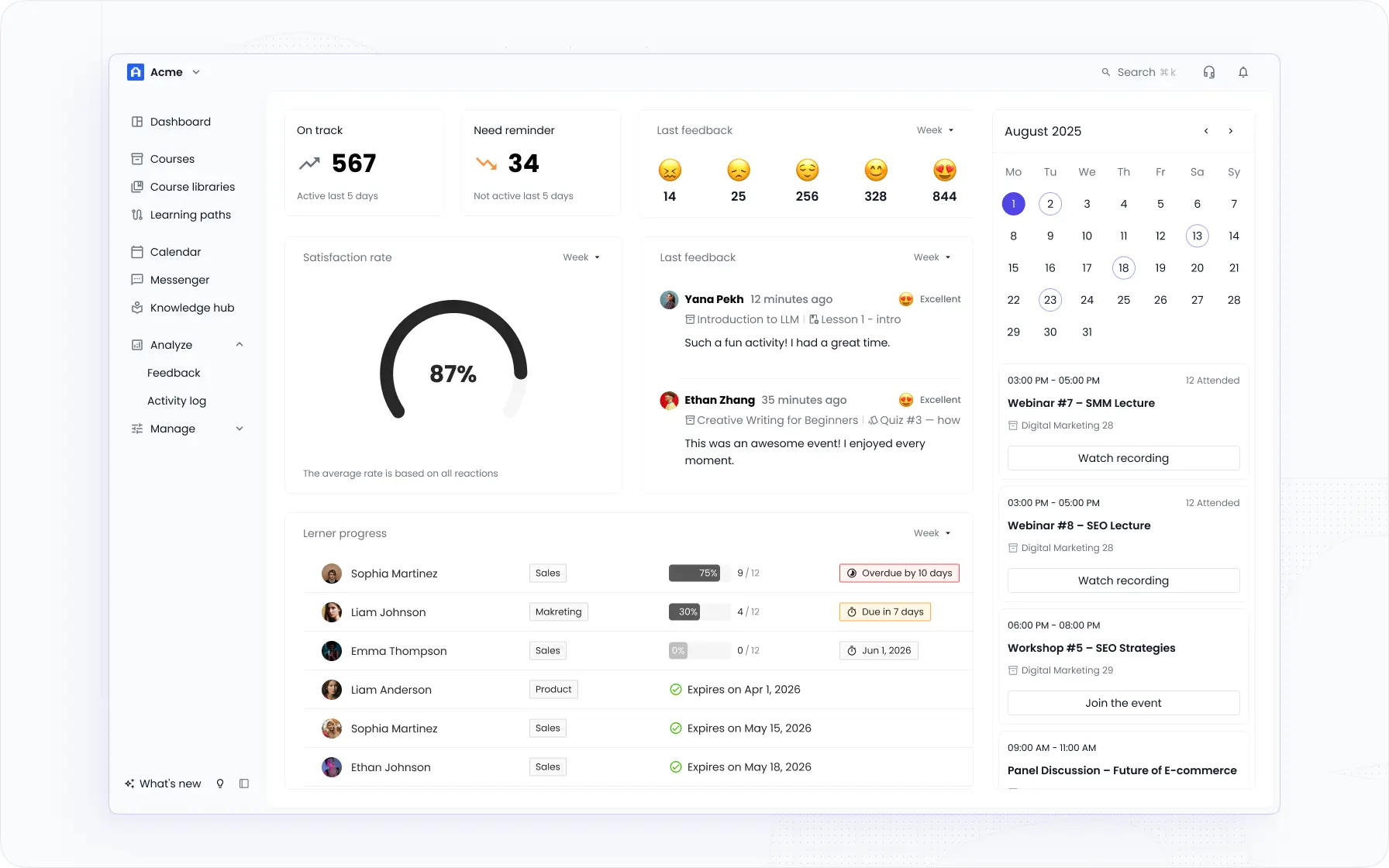
EducateMe is an AI-powered corporate LMS built for teams that run structured training across multiple audiences (onboarding, upskilling, compliance training, sales enablement, and customer education) all from one platform. I'd recommend it first for any team that wants AI baked into course creation and delivery, not added as an afterthought. It's particularly strong for companies blending cohort-based and self-paced learning in the same programme, which is something most iSpring alternatives don't handle cleanly.
- AI Course Builder. Generate full courses from a prompt, URL, or uploaded file in minutes; reduces initial build time by up to 3x compared to manual authoring
- AI Roleplay Coach. Simulates real conversations for sales, support, or onboarding practice with rubric-based feedback; no social risk for learners
- Deep white-labelling. Fully branded training portals per client, department, or partner — custom domain, colours, logo, and login page, all under one account with no EducateMe branding visible
- Skill gap analytics. AI-powered gap detection across your org with per-manager dashboards and 10+ completion metrics
- Multi-audience portals. Separate training environments per department, client, or partner under one account; manage them all from a single admin view
Best for: Mid-sized companies (100–1,000 employees) running structured training across multiple audiences; teams wanting AI-native tools without complex setup; training agencies running customer or partner education.
2. Articulate 360
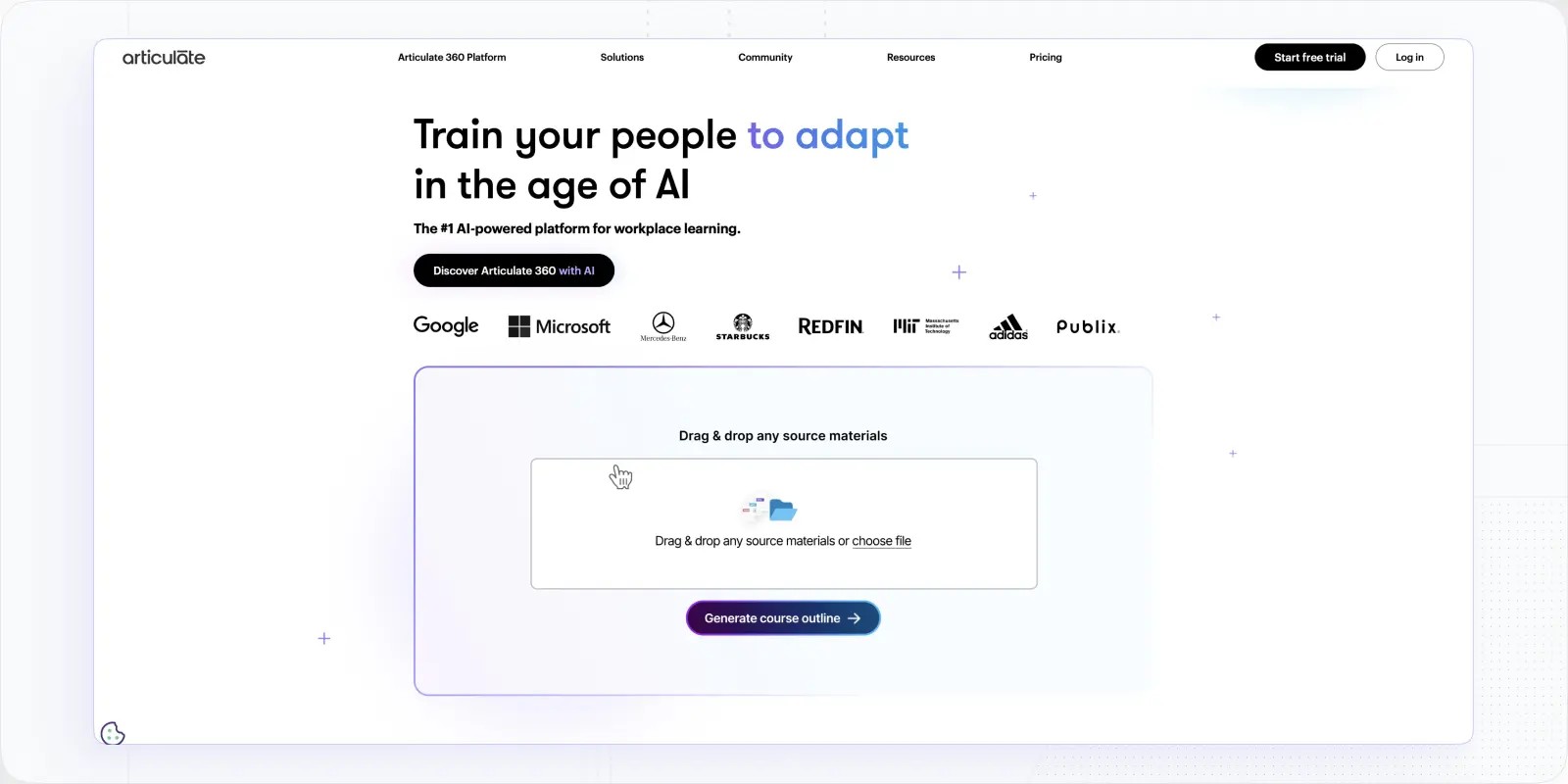
Articulate 360 is the authoring benchmark most L&D teams measure everything else against, and for good reason — Storyline and Rise together cover almost every content format you'd need. Where it falls short is the delivery side: Reach 360 (its LMS component) is basic, and you'll likely need a separate platform for anything beyond basic course hosting. It's a strong iSpring Suite alternative if authoring quality is your primary concern.
- Storyline 360. Deep interactive authoring with branching, triggers, and custom animations; steep but worthwhile learning curve
- Rise 360. Fast, responsive web-based course builder; ideal for content that needs to look polished quickly
- Review 360. Stakeholder feedback tool that keeps version control sane during content reviews
- Content Library 360. 13M+ stock assets, templates, and characters to speed up production
- Reach 360. Lightweight LMS for distribution; works fine for simple use cases, limited on analytics
Best for: L&D teams with dedicated instructional designers who prioritise authoring sophistication over LMS depth.
Pricing: Starts at $1,599/user/year for the full suite; Reach 360 included.
3. TalentLMS
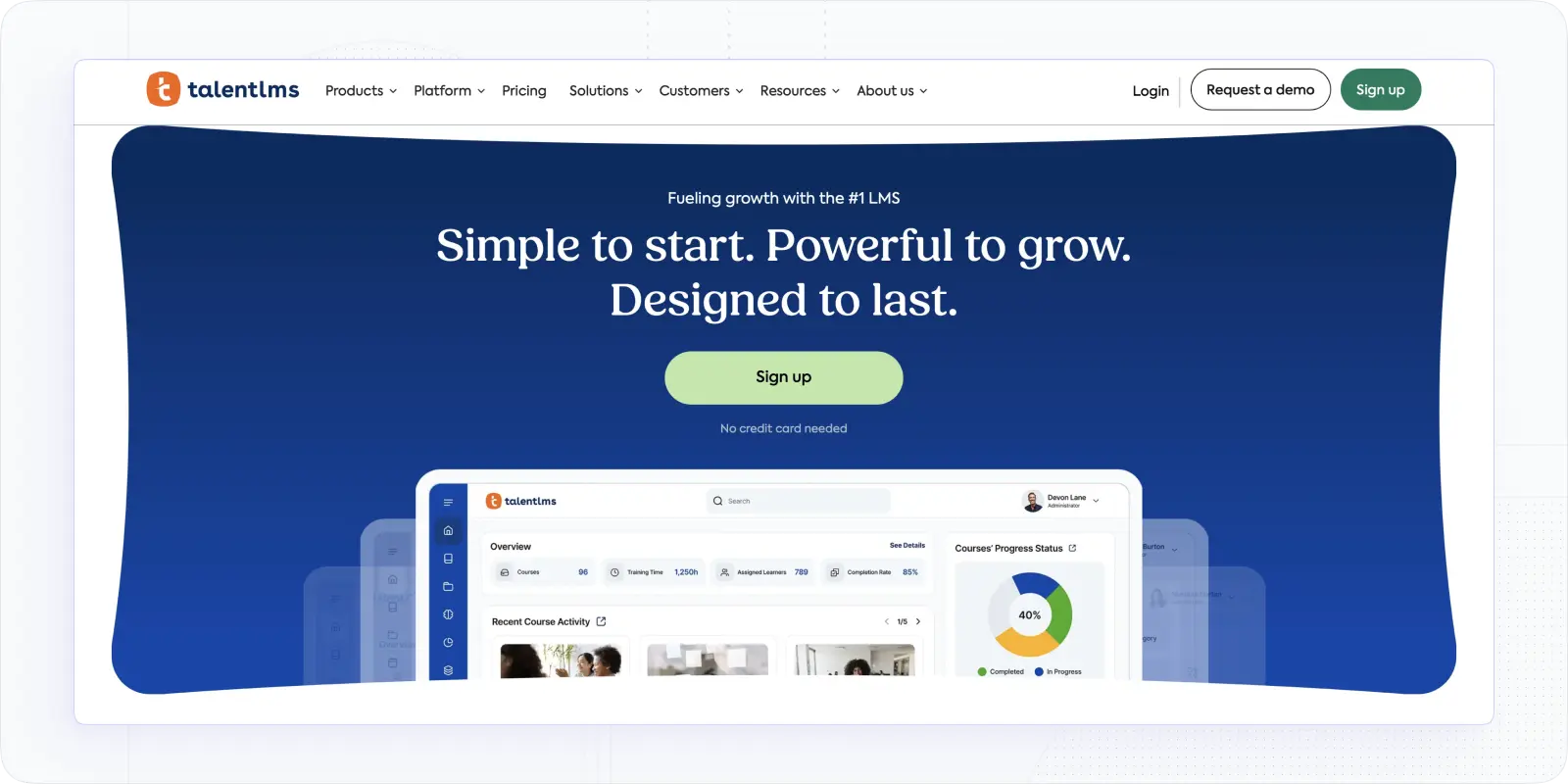
TalentLMS is one of the more honest "mid-market LMS" options — it doesn't oversell itself, and for what it is (a clean, reliable delivery platform with decent authoring via TalentCraft), it delivers. I'd call it a solid iSpring LMS alternative for teams that want something up and running fast without a six-week implementation. The AI features are still maturing, but TalentCraft's AI-assisted course generation is genuinely useful for teams without a dedicated ID.
- TalentCraft AI. AI authoring tool for generating course content from text prompts; good for quick builds, less suited for complex interactivity
- Branches. Separate training environments per department or client; cleaner than most mid-market solutions
- Gamification. Points, badges, and leaderboards; more developed than many competitors in this tier
- Custom reports. Decent reporting depth with export options; not as granular as enterprise tools
- SCORM/xAPI support. Accepts content from any major authoring tool, including iSpring outputs
Best for: SMBs and mid-market teams that need a reliable, no-fuss delivery platform with light authoring built in.
Pricing: Free plan up to 5 users; paid plans from $149/month for up to 40 users.
4. Docebo
Docebo is squarely enterprise — if you're running training for thousands of users across multiple regions, it's one of the more capable platforms on the market. The AI-powered content discovery and personalised learning paths are genuinely useful at scale. The downside is the pricing and implementation time, which make it overkill for most teams exploring iSpring alternatives.
- AI-powered learning paths. Personalised content recommendations based on learner behaviour and role
- Content marketplace. Integrated access to third-party content providers (LinkedIn Learning, Go1, and others)
- Shape authoring tool. Basic AI-assisted course creation built into the platform
- Extended enterprise. Multi-portal setup for external audiences (customers, partners, resellers)
- Deep integrations. Salesforce, Workday, BambooHR, and 400+ connectors
Best for: Large enterprises (1,000+ employees) running global training programmes with complex integration requirements.
Pricing: Custom pricing; typically starts around $25,000/year.
5. Absorb LMS
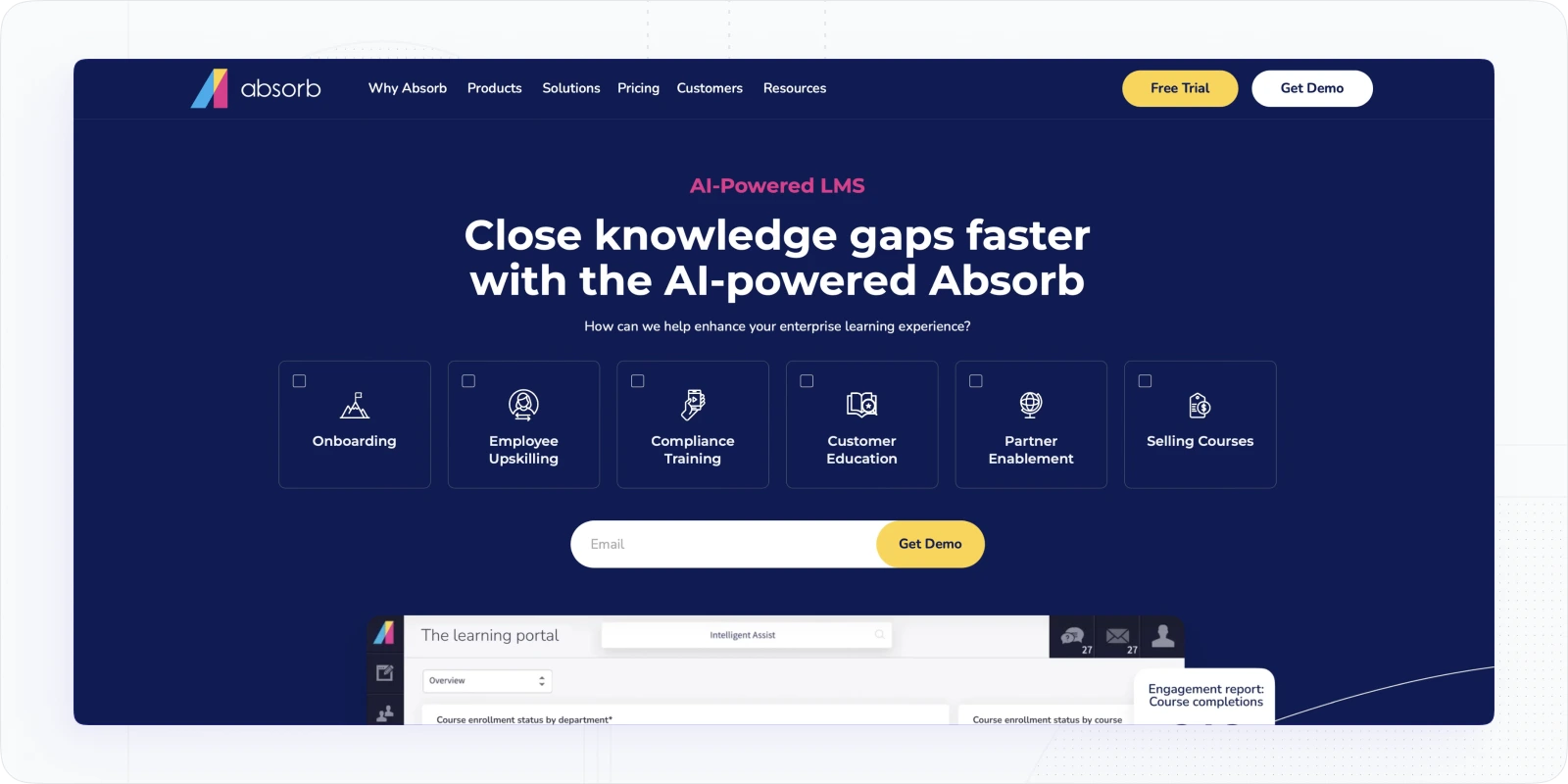
Absorb LMS is one of those platforms that doesn't make headlines but consistently ranks well in user satisfaction surveys — it's reliable, the UX is clean, and the admin experience is noticeably better than most platforms at this price point. I'd flag it as a strong alternative to iSpring solutions for compliance-heavy industries where audit trails and automated re-enrollment matter.
- Absorb Amplify. Curated off-the-shelf content library included with select plans
- Intelligent Assist. AI-powered learner support that answers questions without L&D team intervention
- Automated enrollment rules. Role-, department-, and date-based triggers; good for compliance workflows
- Observation checklists. Manager-assigned practical skill verification; useful for frontline training
- Mobile app. Native iOS and Android apps with offline access
Best for: Compliance-driven organisations and mid-to-large companies needing strong admin UX and mobile access.
Pricing: Custom pricing; generally positions in the $15,000–$40,000/year range depending on user count.
6. Cornerstone OnDemand
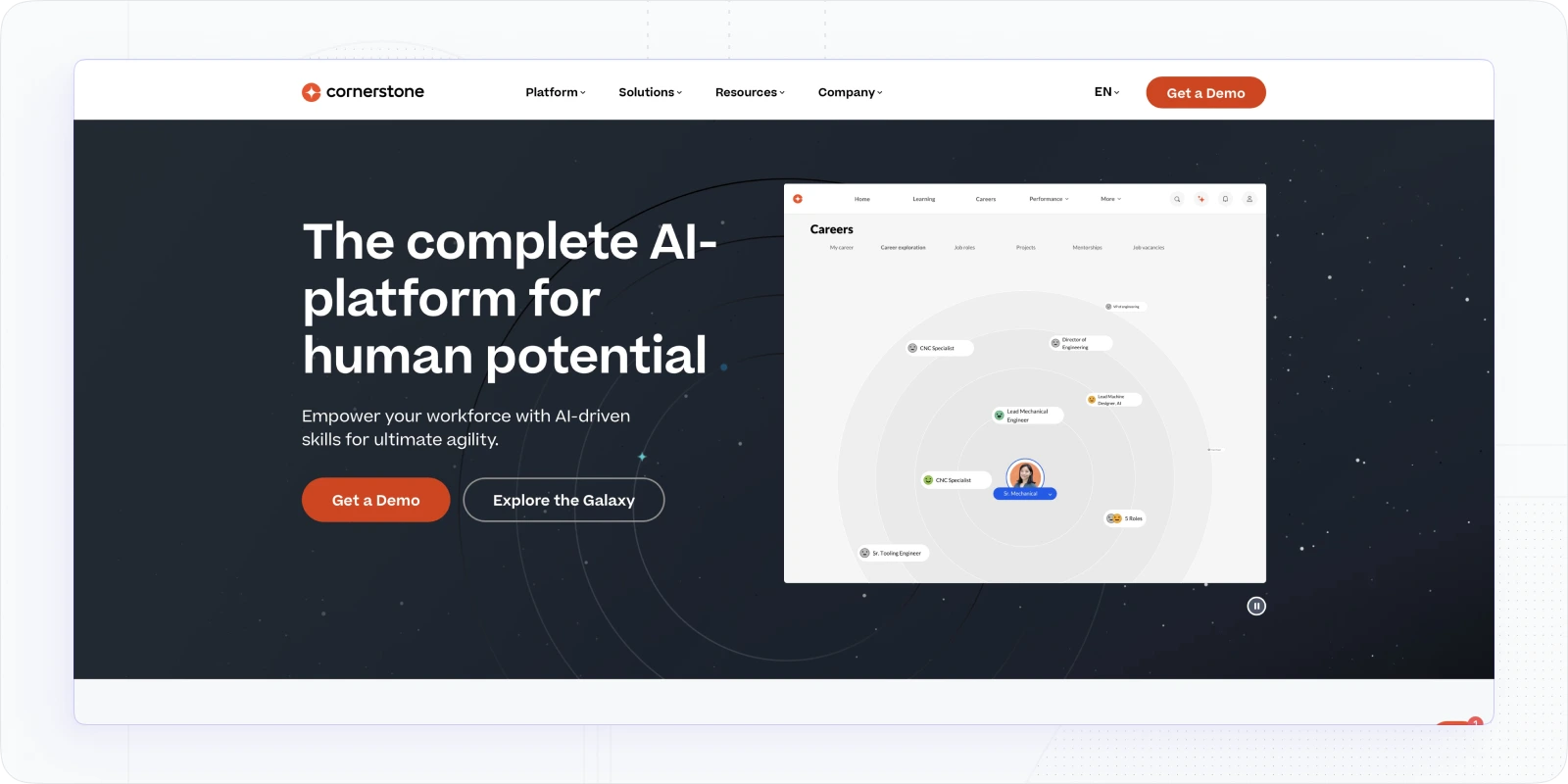
Cornerstone is a heavyweight — HCM suite depth, skills ontology, succession planning — and if you're evaluating it as an iSpring alternative, you're probably not replacing an authoring tool, you're replacing an entire HR tech stack. The learning module is strong, but it's hard to separate from the broader suite, and the implementation is measured in months, not days.
- Skills graph. AI-driven skills mapping across your organisation with automated gap identification
- Content subscriptions. Cornerstone Content Anytime gives access to thousands of third-party courses
- Performance + learning integration. Development plans tied directly to performance reviews
- Compliance management. Automated re-enrollment, attestation capture, and audit-ready reporting
- Mobile-first design. Responsive experience across devices with Cornerstone's mobile app
Best for: Enterprise organisations that need learning tightly integrated with performance management and HR workflows.
Pricing: Custom only; enterprise contract, typically $200,000+/year for large deployments.
7. Adobe Learning Manager
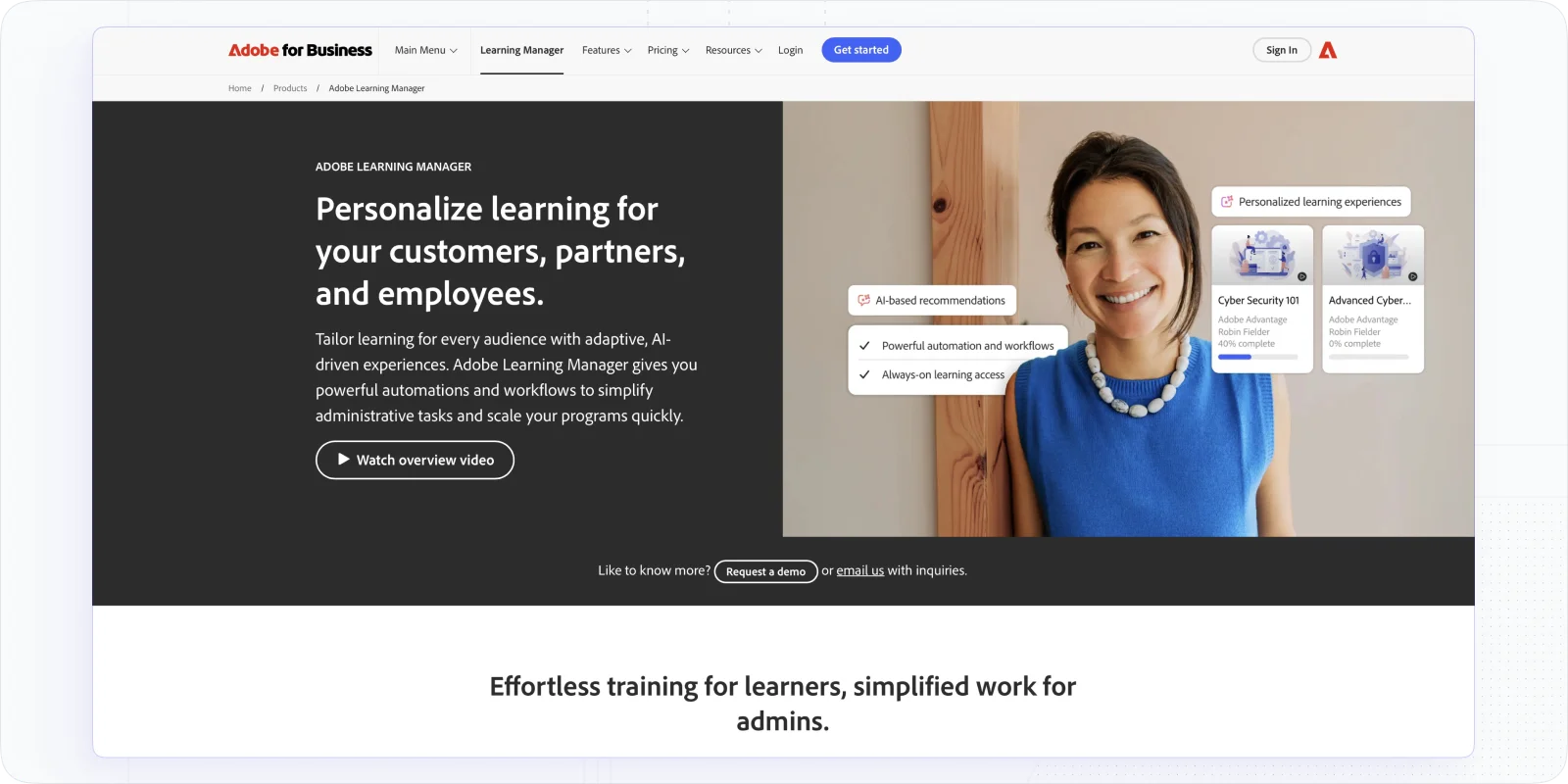
Adobe Learning Manager (formerly Captivate Prime) makes the most sense if you're already deep in the Adobe ecosystem — Captivate for authoring, Creative Cloud for assets, and AEM for content management. On its own as a standalone LMS, I find it harder to justify than competitors at similar price points. But the AI-powered personalisation and fluidic player (which handles almost any content format natively) are genuine differentiators.
- Fluidic player. Plays SCORM, xAPI, PDF, video, and audio without format conversion headaches
- AI-powered recommendations. Personalised learning feeds based on role and past behaviour
- Social learning. Discussion boards, peer content sharing, and curated feeds built into the learner experience
- Headless LMS option. API-first architecture for teams building custom learning experiences
- Adobe Analytics integration. Deeper reporting for teams already using Adobe's analytics stack
Best for: Adobe ecosystem shops and organisations that need flexible content format support and social learning features.
Pricing: Starts at approximately $4/user/month; custom pricing for enterprise.
8. Moodle
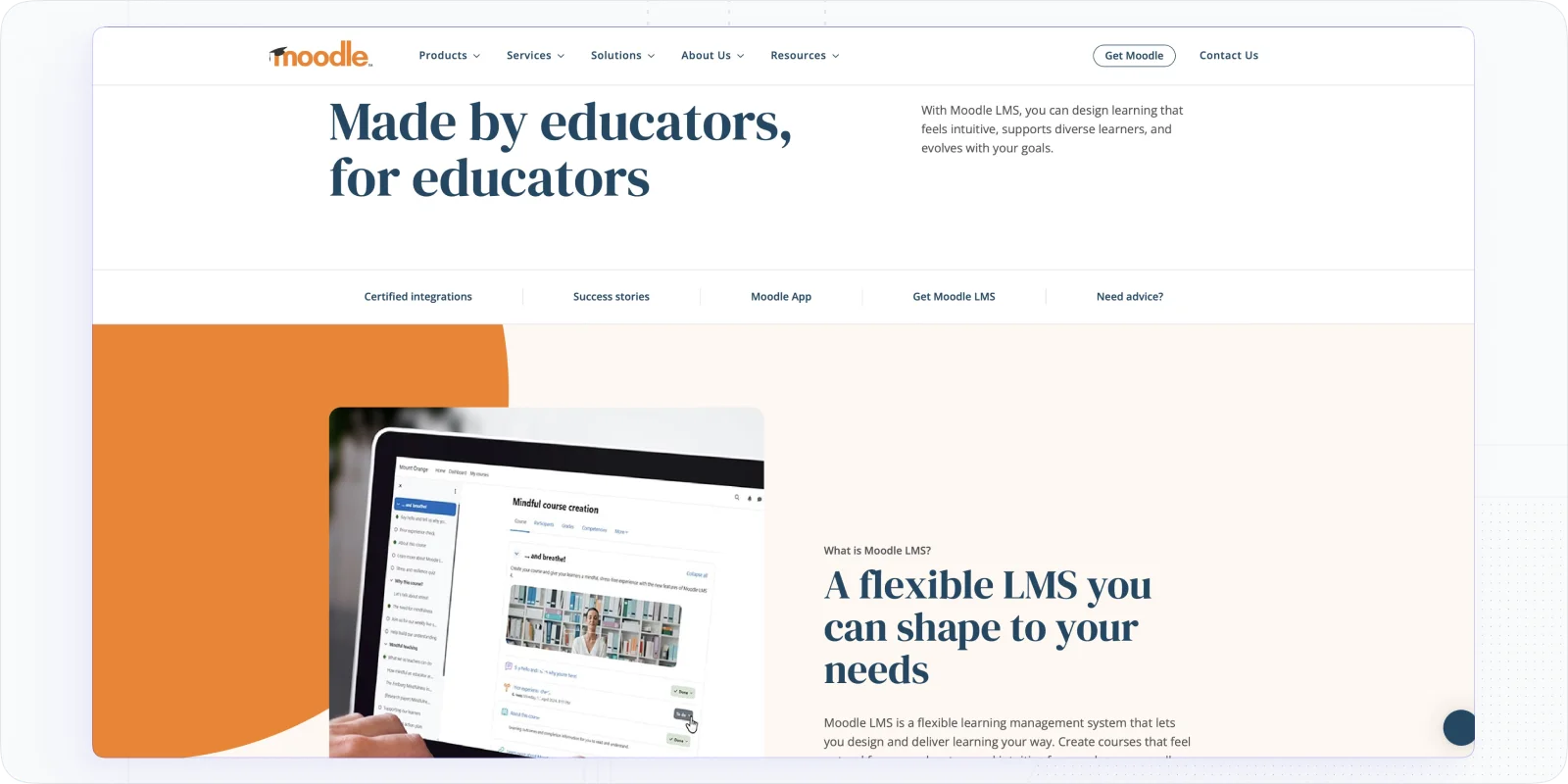
Moodle is the answer when budget is the constraint and customisation is the priority. I won't pretend the out-of-the-box experience is elegant — it isn't. But for organisations with developer resources or a managed hosting partner, it's genuinely powerful. It's the most common iSpring alternative I see in education-adjacent corporate settings and nonprofits.
- Open source. Full code access; customise anything if you have the dev resource
- Plugin ecosystem. 2,000+ plugins covering gamification, HR integration, content formats, and more
- MoodleCloud. Hosted version for teams that don't want to manage infrastructure
- SCORM/xAPI/cmi5 support. Accepts outputs from iSpring, Articulate, Lectora, and most authoring tools
- Multilingual. Available in 160+ languages; strong for global rollouts on tight budgets
Best for: Educational institutions, nonprofits, and budget-constrained organisations with IT resources to manage configuration.
Pricing: Open source (free self-hosted); MoodleCloud from $110/year for up to 50 users.
9. Litmos
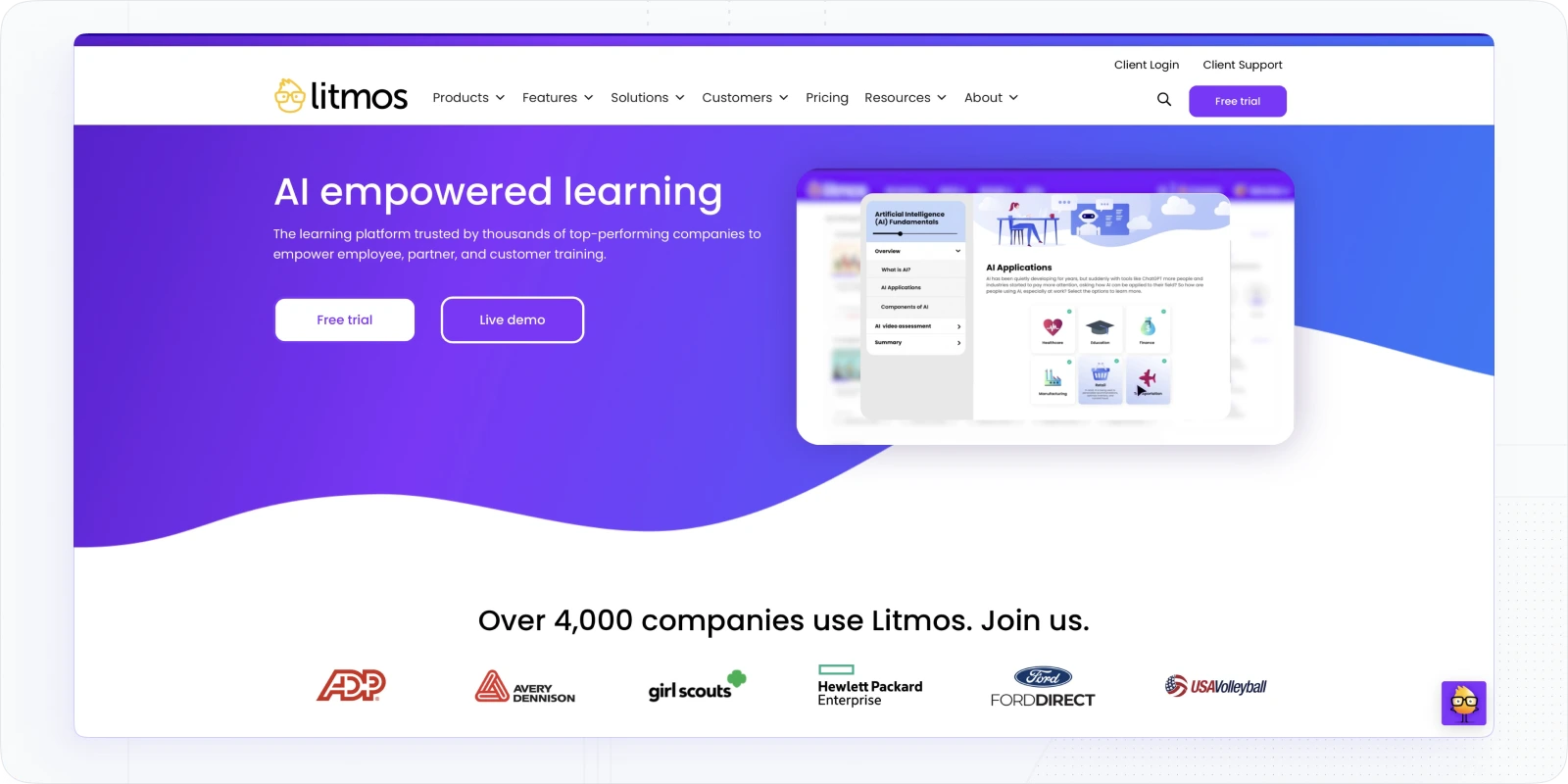
Litmos (SAP Litmos) is built for speed — if your primary goal is getting training in front of frontline or external learners fast, it's one of the quicker platforms to deploy. The content library (Litmos Heroes) is a genuine differentiator for teams that don't want to build everything from scratch. It's not the deepest platform on this list, but depth isn't always what you need.
- Litmos Heroes content. 2,000+ pre-built courses on compliance, safety, soft skills, and leadership
- Fast deployment. Customers regularly report going from contract to live in under two weeks
- Salesforce integration. Native sync; useful for sales training tied to CRM data
- Automated learning paths. Rule-based assignment triggered by role, location, or completion status
- Video assessment. Learners record video responses; managers review asynchronously
Best for: Sales teams, frontline workforce training, and organisations that want pre-built content alongside a delivery platform.
Pricing: Custom pricing; typically ranges from $3–$6/user/month.
10. 360Learning
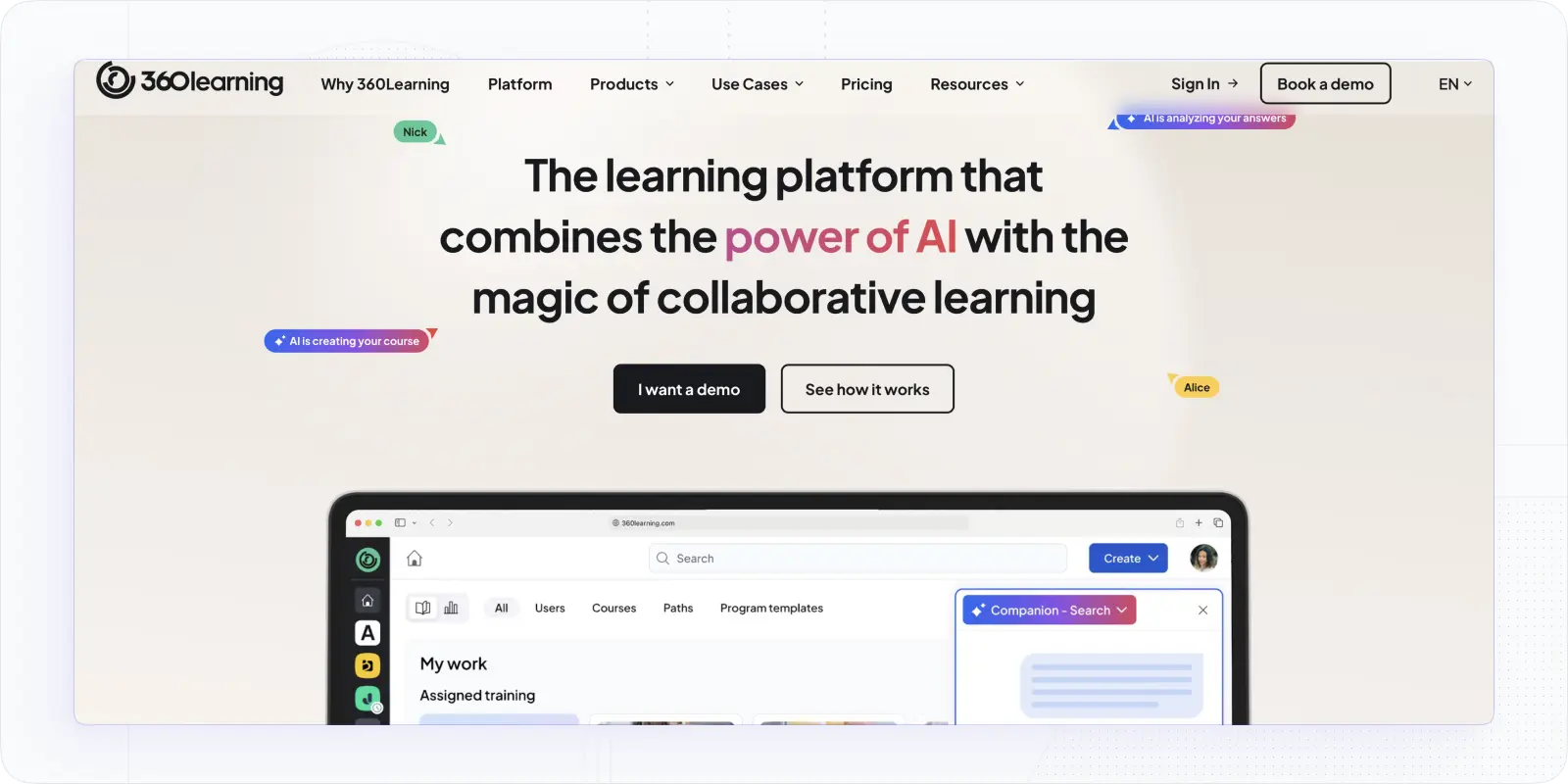
360Learning sits in a different category from most platforms on this list — it's built around collaborative learning, where subject matter experts inside your company author content and learners give feedback in real time. I'd recommend it specifically for teams that have a knowledge-sharing problem, not just a course delivery problem. If your best salespeople or senior engineers hold expertise that never makes it into formal training, 360Learning is the tool designed to fix that.
- Collaborative authoring. Internal experts build courses directly in the platform; no instructional design background required, average course creation time under 17 minutes
- AI course creation. Generate course outlines and content from prompts or existing documents; keeps SME-authored content moving fast
- Reactions and peer feedback. Learners flag confusing content, rate modules, and discuss in-course; L&D teams see exactly where content breaks down
- Skills-based learning paths. Competency mapping tied to roles and business goals; paths adapt as skills are verified
- Deep integrations. Native connectors for Salesforce, Workday, BambooHR, Slack, and Teams; API access on higher tiers
Best for: Mid-sized to enterprise teams with strong internal expertise that needs to be captured and scaled; companies moving away from top-down course libraries toward peer-generated content.
Pricing: From $8/user/month (minimum 100 users); custom enterprise pricing available.
iSpring Alternatives Comparison Table
| Platform | Pros | Cons | Pricing |
|---|---|---|---|
| EducateMe | AI-native course creation and roleplay coaching; deep white-labelling with custom domains per portal; multi-audience management from one account; fast setup | No dedicated mobile app (mobile-responsive); limited gamification | Free trial available; starts from $239/mo |
| Articulate 360 | Best-in-class authoring with Storyline + Rise; large asset library; strong community | Reach 360 LMS is thin; high per-user cost for teams | From $1,599/user/year |
| TalentLMS | Fast setup; gamification; TalentCraft AI authoring; free tier available | Reporting depth limited on lower tiers; AI features still maturing | Free up to 5 users; from $149/month |
| Docebo | Enterprise scale; AI personalisation; deep integrations; content marketplace | Expensive; long implementation; overkill for SMBs | Custom; typically $25,000+/year |
| Absorb LMS | Clean admin UX; native mobile app; compliance workflow automation; good support | Custom pricing opacity; less suited for agile content teams | Custom; ~$15,000–$40,000/year |
| Cornerstone OnDemand | HCM-depth skills graph; performance + learning integration; content subscriptions | Very long implementation; expensive; complex for L&D-only needs | Custom; enterprise contract |
| Adobe Learning Manager | Fluidic player for any content format; Adobe ecosystem integration; headless LMS option | Standalone value is weaker; UI can feel dated | From ~$4/user/month |
Which iSpring Alternative Is Right for You?
The honest answer is: it depends on why you're leaving iSpring. If the authoring tool is the problem, Articulate 360 or Lectora are the serious replacements. If the LMS is the bottleneck — and I'd argue that's where most teams feel the friction — you need to look at EducateMe, TalentLMS, or Absorb, depending on your scale and budget. If you're running training for external audiences or multiple client groups, EducateMe's white-label portal structure is the one I'd point to first.
The iSpring Suite alternative question is really two questions: what are you building, and where are you delivering it? Answer both honestly before you start a trial.
Frequently asked questions
TalentLMS and EducateMe are both worth trialling for smaller teams. TalentLMS has a free tier up to 5 users and is quick to configure. EducateMe suits teams that have outgrown basic delivery and want AI-assisted course creation without hiring a full instructional design team, the setup time is measured in hours, not weeks.
Moodle is the main free option — it's open source and genuinely powerful, but it requires technical resource to configure and maintain. TalentLMS also has a limited free plan. For teams that want a full-featured platform without a long-term commitment, EducateMe offers a free trial that includes the AI authoring and delivery features.
Articulate 360 (Storyline + Rise) is the most direct iSpring Suite alternative for authoring quality and format flexibility. Lectora is the better call if accessibility compliance is a hard requirement. Both produce SCORM and xAPI outputs that work with any LMS.
Yes — any content published as SCORM or xAPI from iSpring can be uploaded to any LMS that supports those formats, which includes all 10 platforms on this list. The migration itself is straightforward. The harder part is deciding whether to rebuild content in the new tool's native format (which usually gives better analytics) or simply re-upload existing packages.