
7 Best HealthStream Competitors and Alternatives in 2026

By Sofia KondratSofia KondratCorporate Training Expert & Content EditorHey there! I’m Sofi Kondrat, your go-to corporate training advisor here at EducateMe. I’ve been navigating the highs…Read more
Corporate Training Expert & Content Editor
8 min read
We've spoken to enough healthcare L&D managers to know exactly when the HealthStream conversation starts: three months before contract renewal. That's when the frustrations that have been building – the clunky interface, the admin overhead, the total absence of anything resembling modern AI – suddenly feel worth doing something about.
Healthcare is one of the most demanding training environments that exists. Regulatory requirements are non-negotiable. Frontline staff (nurses, clinical technicians, support workers) turn over at a rate that makes onboarding a constant operational problem, not a quarterly event. And compliance isn't a checkbox exercise; it's what keeps patients safe and organisations out of trouble with the Joint Commission and CMS.
HealthStream was built for this world. But it was built for it circa 2010. The platform is dominant because it got there first and made switching feel painful. Contract renewals are the moment that calculation flips. We put this comparison together for exactly that moment.
Why Healthcare Teams Are Leaving HealthStream
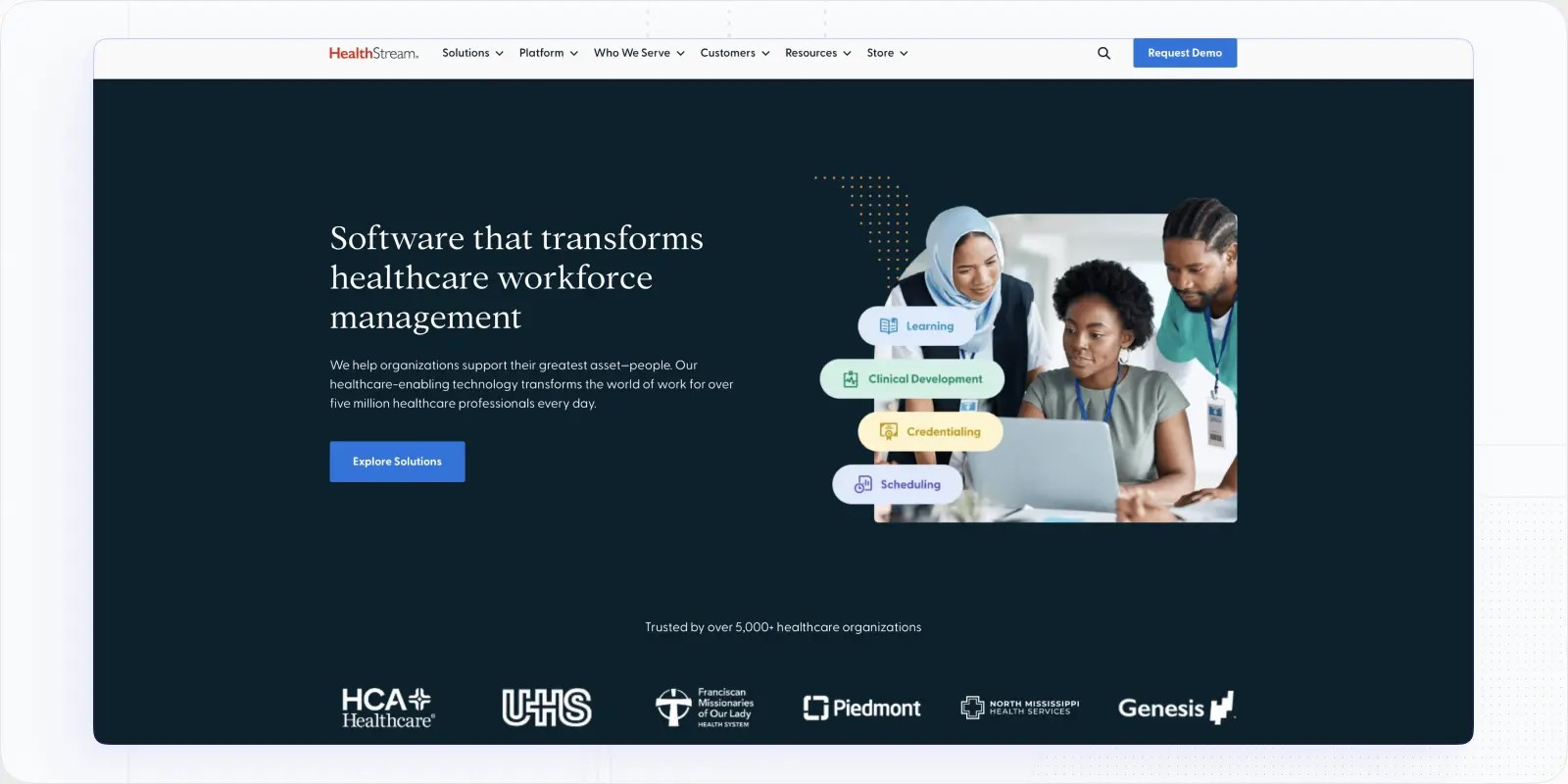
HealthStream's case is strongest in one place: credentialing and mandatory compliance delivery for large hospital systems. Outside that specific use case (or at contract renewal, when pricing gets scrutinised) the same four complaints come up:
- Interface that learners avoid. Engagement on a platform that looks and feels outdated is structurally lower. Nurses completing mandatory training on a system that feels like a hospital EMR from 2012 will do the minimum and leave. That's a completion rate problem that no amount of nudge emails fixes.
- No real AI. HealthStream has added AI-adjacent features in recent years, but nothing that meaningfully changes how long it takes to build a course, identify knowledge gaps across a clinical team, or train frontline staff on complex scenarios. Those problems are still solved manually.
- Pricing opacity and contract lock-in. Multi-year contracts with limited flexibility are the norm. Renewal pricing rarely goes down. Teams that grew significantly during the contract period often find themselves negotiating from a weak position.
- Content creation stays slow. Creating or updating a compliance module when a regulation changes is a project, not an afternoon. At organisations where clinical protocols shift frequently, that lag creates real risk.
The good news - the HealthSteam competitors have closed the gap. Several platforms now offer genuine compliance tracking, better interfaces, and AI that handles a meaningful share of the content creation workload.
| Platform | Key features for healthcare | Best for | Pricing |
|---|---|---|---|
| EducateMe | Compliance delivery with automated re-enrollment and audit-ready reporting; AI agent builds courses from PDFs, URLs, or briefs; AI Roleplay Coach trains frontline staff on clinical scenarios with rubric scoring; AI Assessment maps knowledge gaps by team and role; white-label multi-tenant portals; 83% average course completion rate | Healthcare organisations of 50–1,000 staff replacing HealthStream; teams needing AI-powered compliance and frontline training in one platform | 14-day free trial; Starts from $239/mo |
| Docebo | AI-powered content recommendations; extended enterprise training (patients, partners, external clinical networks); advanced compliance reporting; multi-tenant architecture at enterprise scale; deep integration with major HCM systems | Large hospital systems and health networks with enterprise-level reporting needs and dedicated L&D teams | From ~$25,000/year; custom enterprise quote |
| TalentLMS | Mandatory training delivery; basic compliance tracking; SCORM support; clean learner interface; quick course deployment; published pricing | Small clinics and practices under 100 staff with straightforward compliance requirements and limited L&D budget | From $149/month |
| Cornerstone OnDemand | Deep HCM integration (Workday, SAP SuccessFactors, Oracle); Skills Intelligence for competency mapping across clinical departments; compliance and credentialing management; enterprise-grade reporting | Large health enterprises already running major HCM platforms that need LMS tightly integrated with HR data | Custom enterprise quote |
| 360Learning | Collaborative course creation by clinical SMEs; AI authoring assistance; peer learning and content flagging by learners; structured knowledge capture from subject-matter experts; per-user pricing | Healthcare organisations with engaged clinical SMEs willing to create and maintain content | From $8/user/month |
| Absorb LMS | Multi-site portal management under one admin account; white-labelling per facility or department; Absorb Amplify content library for compliance modules; eCommerce module for accredited CPD programmes | Regional health networks and multi-site hospital groups that need separate facility portals with centralised administration | Custom quote |
| Litmos | Mandatory training delivery; mobile app for staff on personal devices; basic compliance tracking; quick deployment with no lengthy setup; pre-built content library on higher tiers | Small practices needing fast, low-cost mandatory training delivery with minimal configuration | Custom pricing |
EducateMe – Best AI-Powered HealthStream Alternative
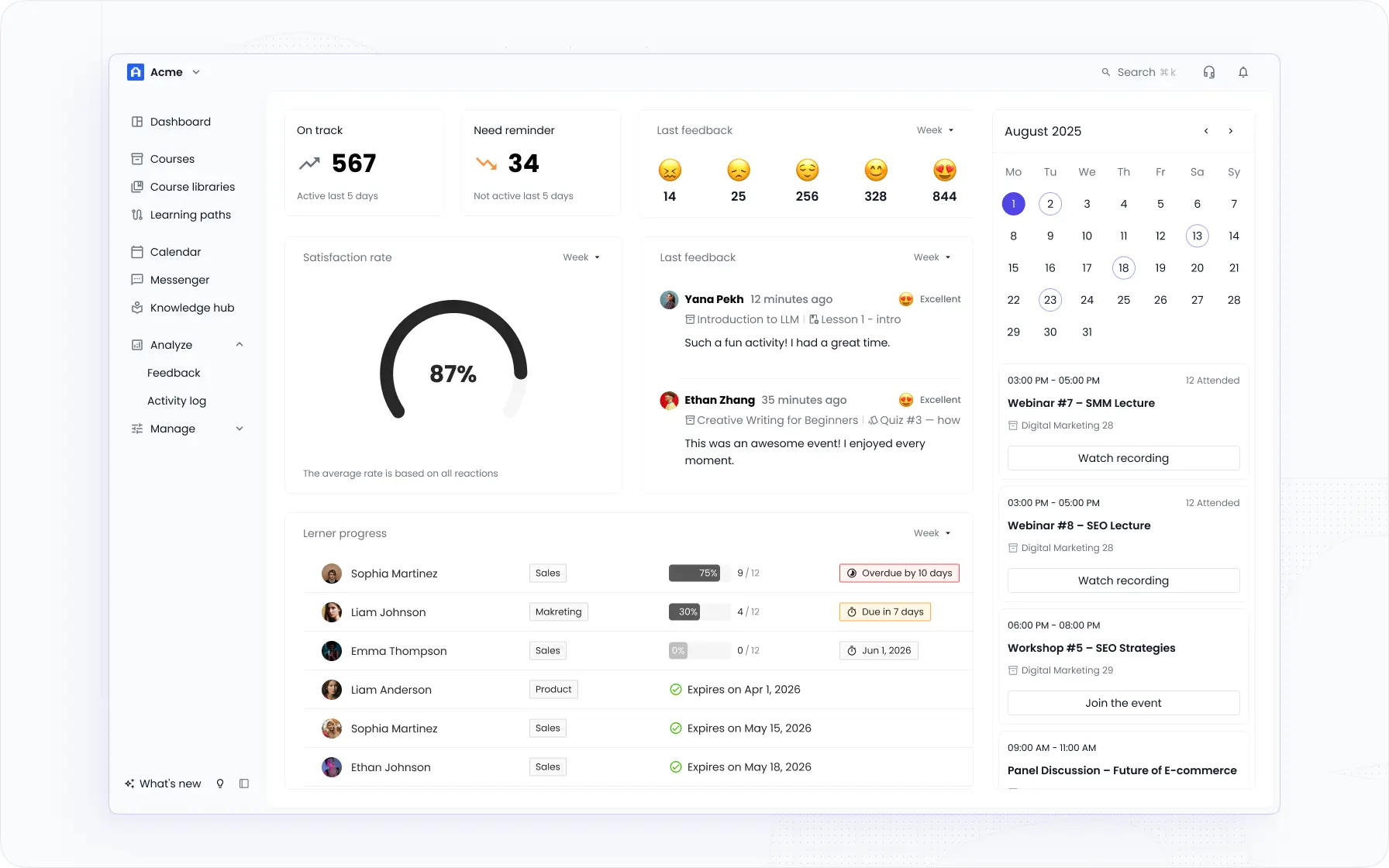
If you're reading this at contract renewal, EducateMe is the HealthSteam competitor I'd spend the most time on. It was built as a modern AI-powered LMS for organisations that need serious compliance tracking and an interface that clinical staff will actually use without prompting — two requirements that HealthStream treats as mutually exclusive.
The compliance infrastructure is really good: mandatory delivery, automated re-enrollment when policies change, attestation capture, and audit-ready reporting that doesn't require an IT ticket to pull. That's the table-stakes requirement for any healthcare LMS. Where EducateMe separates itself is what happens beyond compliance delivery.
- AI Agent for Course Creation. EducateMe's AI agent automates roughly 80% of the course creation workload. Feed it a URL, a PDF of a clinical protocol, or a plain-text brief, and it builds a structured course — ready to review, not ready to ignore. For teams updating content every time a regulation or clinical guideline shifts, this is the feature that changes the economics of L&D.
- AI Roleplay Coach for Frontline Staff. Nurses and clinical staff work through real scenarios (patient communication, protocol adherence, difficult conversations) against an AI that responds dynamically and scores against a rubric. It replaces the human roleplay sessions that most teams can't schedule consistently, and it scales without a facilitator in the room. I'd argue this is the most underrated feature in healthcare training right now.
- AI Assessment for Knowledge Gap Detection. Rather than waiting for a failed audit or a post-incident review to surface a training gap, EducateMe's AI Assessment maps where knowledge is weak across teams, roles, and departments — before it becomes a compliance event. For clinical managers responsible for 50+ staff across rotating shifts, that visibility is genuinely useful.
The interface is the other argument. EducateMe's UI is designed for learners who didn't choose to be in a training system, which describes most frontline clinical staff. Clean navigation, intuitive course flow, and a learner experience that doesn't feel like filing paperwork.
Best for: Healthcare organisations of 50–1,000 staff that need compliance tracking, frontline staff training, and AI-powered content creation in one platform
What I'd flag honestly: there's no native iOS/Android app. The platform is mobile-responsive and works well in a browser on any device, but if your clinical staff need offline access in areas with no connectivity, that's a real constraint worth checking. Deep gamification (points leagues, badge systems) is also not a current strength, if that's load-bearing for your engagement strategy, note it.
Try EducateMe free or book a demo to see the AI features live
Docebo – Best for Large Health Systems with Enterprise Reporting Needs
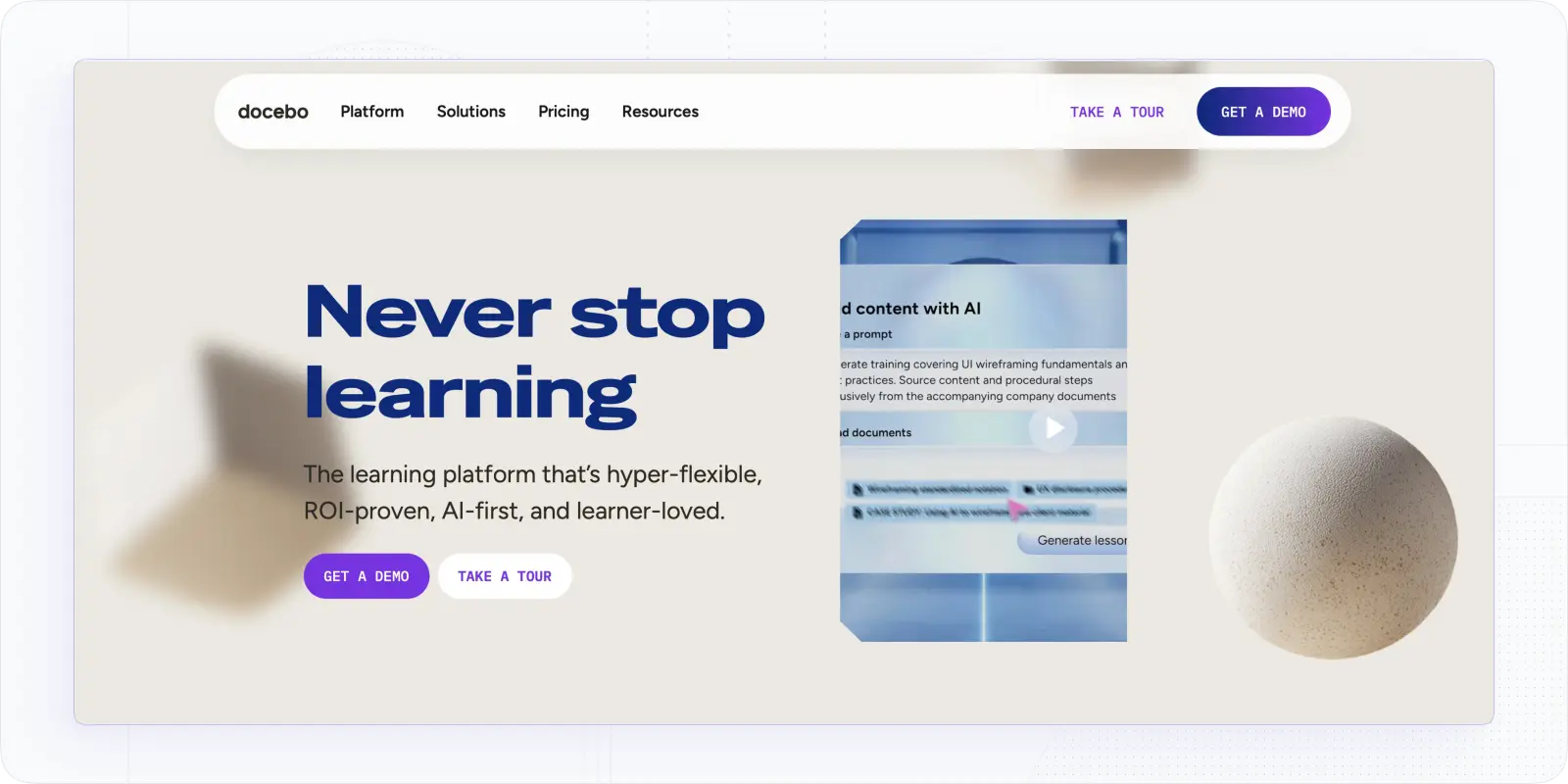
Docebo is the platform I'd point a 5,000-person health system to, particularly if you're running extended enterprise training — educating patients, partners, or external clinical networks alongside internal staff. The AI-powered content recommendations are among the more mature implementations in the category, and the reporting suite handles complexity that mid-market platforms don't.
The honest trade-off is cost and timeline. Enterprise contracts typically start north of $25,000 a year, and implementations run long. For a hospital network with a dedicated L&D function and an IT team that can support a complex rollout, it's a credible HealthStream alternative at scale. For a regional clinic group with a two-person HR team, it's probably too much.
- AI-powered content recommendations that surface relevant material based on learner behaviour, not just admin-assigned paths
- Reporting suite built for multi-layered compliance data across large clinical populations
- Extended enterprise portals for training patients, partners, or external clinical networks alongside internal staff
Best for: Large hospital systems and health networks with enterprise-level reporting requirements and budget to match
What I'd flag honestly: the Docebo pricing and implementation timeline is real — most hospital networks should budget three to six months before the platform is fully operational. Customer support response times draw consistent criticism in G2 reviews, which matters when you have a compliance deadline. And the UI, while functional, isn't something frontline staff find intuitive without training on the platform itself.
TalentLMS – Best for Small Clinics That Need to Move Fast
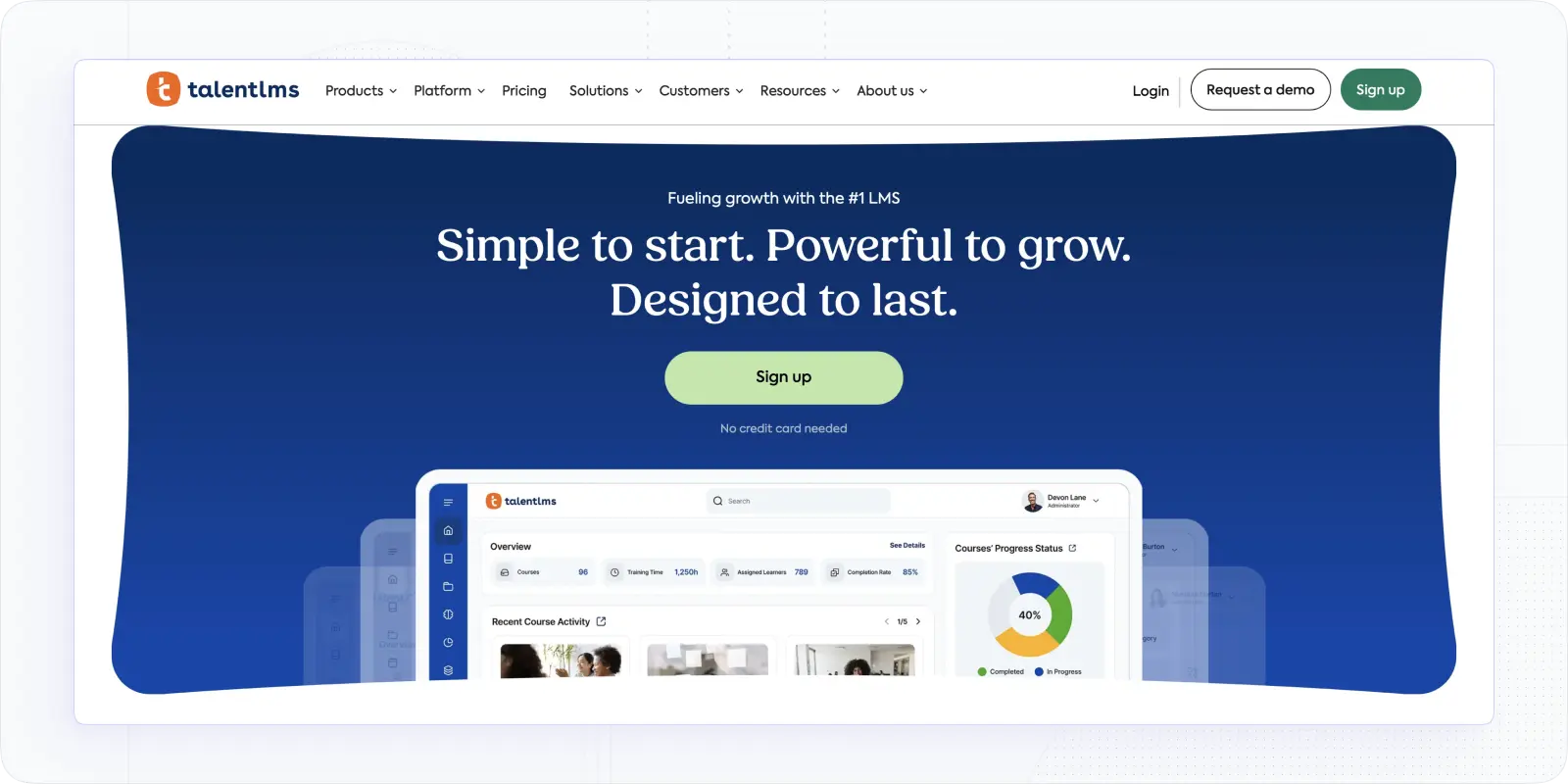
TalentLMS wins on speed and price transparency — two things HealthStream deliberately obscures. You can have a compliance course live in a day. The UI is clean enough that staff navigate it without a tutorial. And pricing is published, which matters when you're trying to get L&D budget approved by a practice manager who wants a number, not a call.
The ceiling arrives quickly. AI features are limited to basic content suggestions, compliance reporting is functional but not deep, and multi-site or multi-audience management gets complicated fast. It's a strong starting point, not a long-term infrastructure for a serious healthcare training function.
- Published pricing with no sales call required, and fast course deployment, a compliance module can go live in under a day
- Clean learner interface that requires no onboarding for clinical staff to navigate
- SCORM support and basic compliance tracking for straightforward mandatory training delivery
Best for: Small practices and clinics under 100 staff with straightforward compliance needs and limited L&D budget
What I'd flag honestly: the compliance reporting is functional but shallow – a serious audit will expose its limits quickly. There's no meaningful AI for course creation or gap detection, so content workload stays manual. And multi-site management gets messy fast; if you run more than two or three locations with separate compliance requirements, you'll feel the ceiling within the first quarter.
Cornerstone OnDemand – Best for Health Enterprises Integrating with HCM Systems
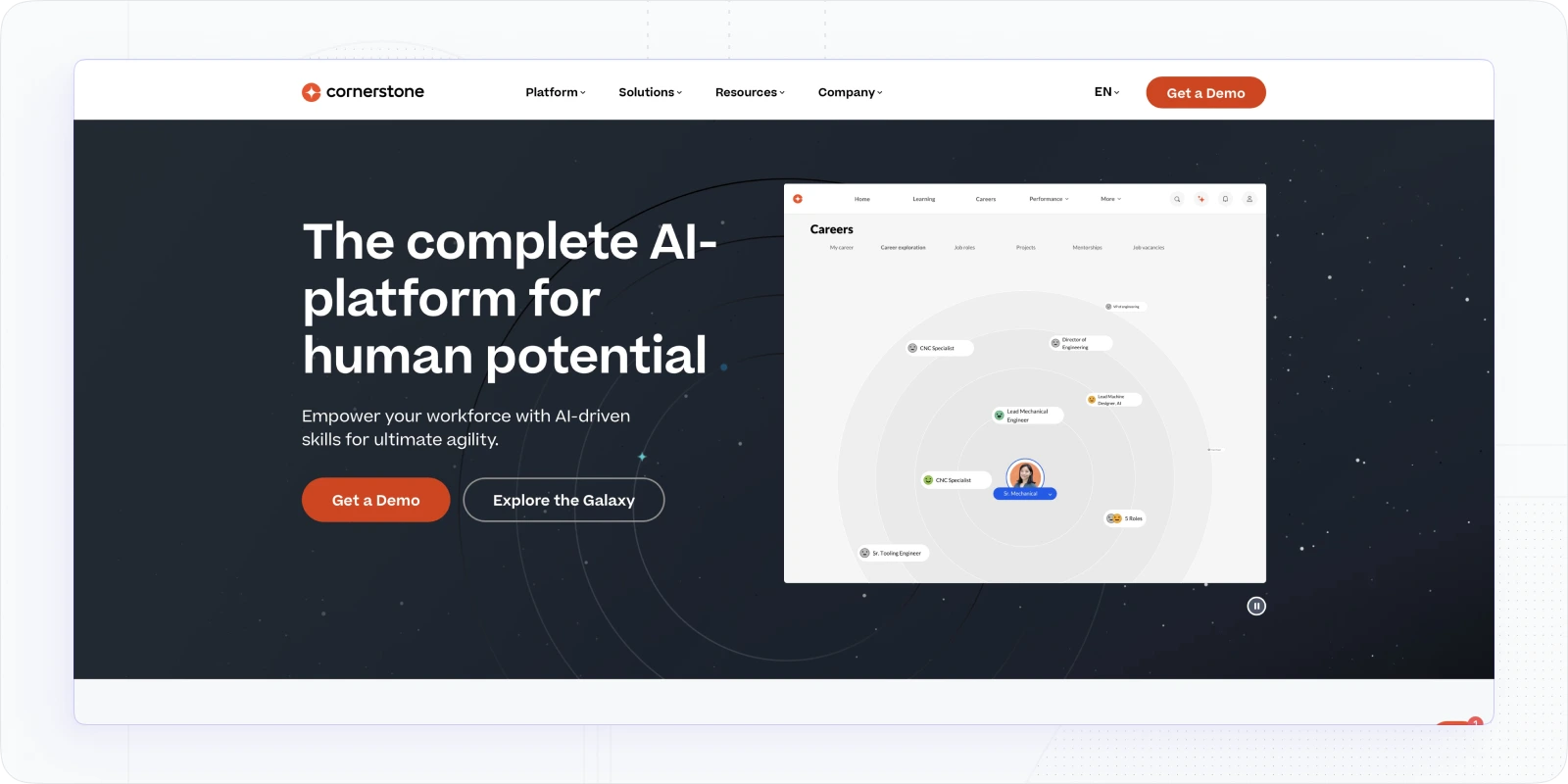
Cornerstone argument in healthcare is depth of integration. If your organisation runs Workday, SAP SuccessFactors, or Oracle HCM, and you need the LMS to talk to your HR data in a meaningful way, pulling role information, feeding completion data back into talent profiles, Cornerstone is one of the few platforms that does this without a middleware workaround.
The Skills Intelligence layer is genuinely useful for large clinical organisations trying to map competencies across departments. The realistic downside: implementation is a multi-month project. Budget for a dedicated implementation partner and a longer time-to-value than any other platform on this list.
- Deep HCM integration with Workday, SAP SuccessFactors, and Oracle HCM without middleware workarounds
- Skills Intelligence that maps clinical competencies across departments to actual learning activity
- Enterprise-grade compliance reporting built for organisations where audit trails need to satisfy multiple regulatory bodies simultaneously
Best for: Large health enterprises with HCM system integration requirements and dedicated L&D and IT resources
What I'd flag honestly: this is not a platform you deploy in weeks. Most implementations run four to nine months and require a dedicated partner, which means real cost beyond the licence fee. The admin interface is complex enough that smaller L&D teams without dedicated system administrators find it genuinely difficult to manage. If your organisation is under 1,000 staff, the overhead rarely justifies the depth.
360Learning – Best for Healthcare Teams with Active Clinical SMEs
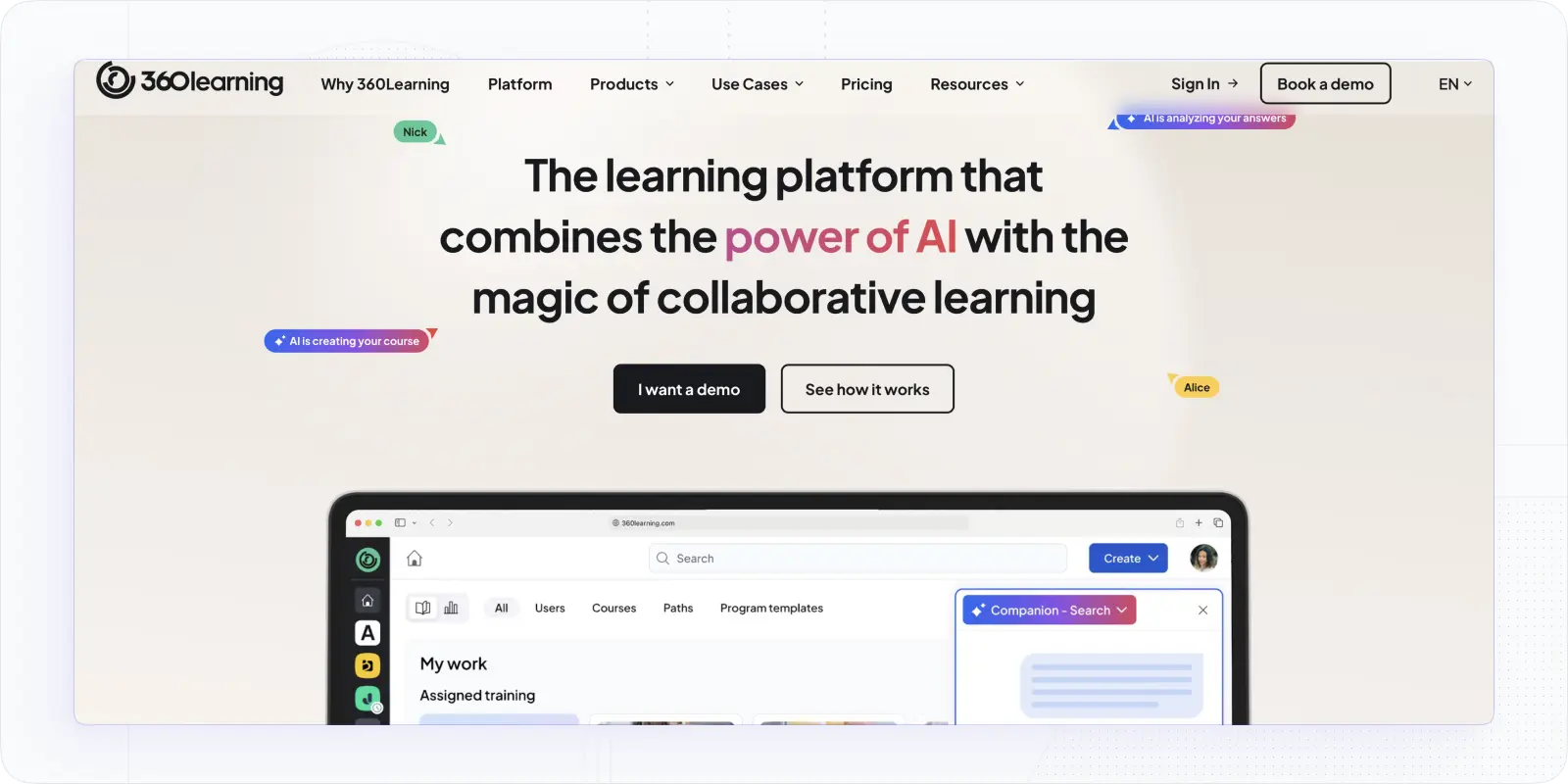
360Learning model is genuinely different from everything else on this list. The platform is built around collaborative course creation — your clinical subject-matter experts build and maintain content, learners flag outdated material, and knowledge moves laterally through the organisation rather than flowing only top-down from L&D.
In healthcare, that matters. Clinical protocols evolve faster than most L&D teams can rewrite courses. If your senior nurses or pharmacists are willing to own content in their areas, 360Learning makes that possible in a structured way. The caveat is real: if your SMEs won't engage, the model collapses into a standard LMS with a higher price tag. Cultural buy-in is a prerequisite, not a bonus.
- Structured collaborative authoring that lets clinical SMEs build and maintain content in their own specialist areas
- Peer learning features that allow learners to flag outdated material before it becomes a compliance risk
- Per-user pricing that scales accessibly without a long procurement cycle
Best for: Healthcare organisations with engaged clinical SMEs willing to create and maintain content, peer-learning cultures
What I'd flag honestly: the collaborative model is the product – if your clinical SMEs won't engage with content creation, you're paying for infrastructure you won't use. Compliance workflow automation is limited compared to platforms built specifically for regulatory environments; mandatory re-enrollment and attestation tracking require more manual management than HealthStream users are used to. Cultural fit matters here more than it does with any other platform on this list.
Absorb LMS – Best HealthStream Competitor for Multi-Site Networks
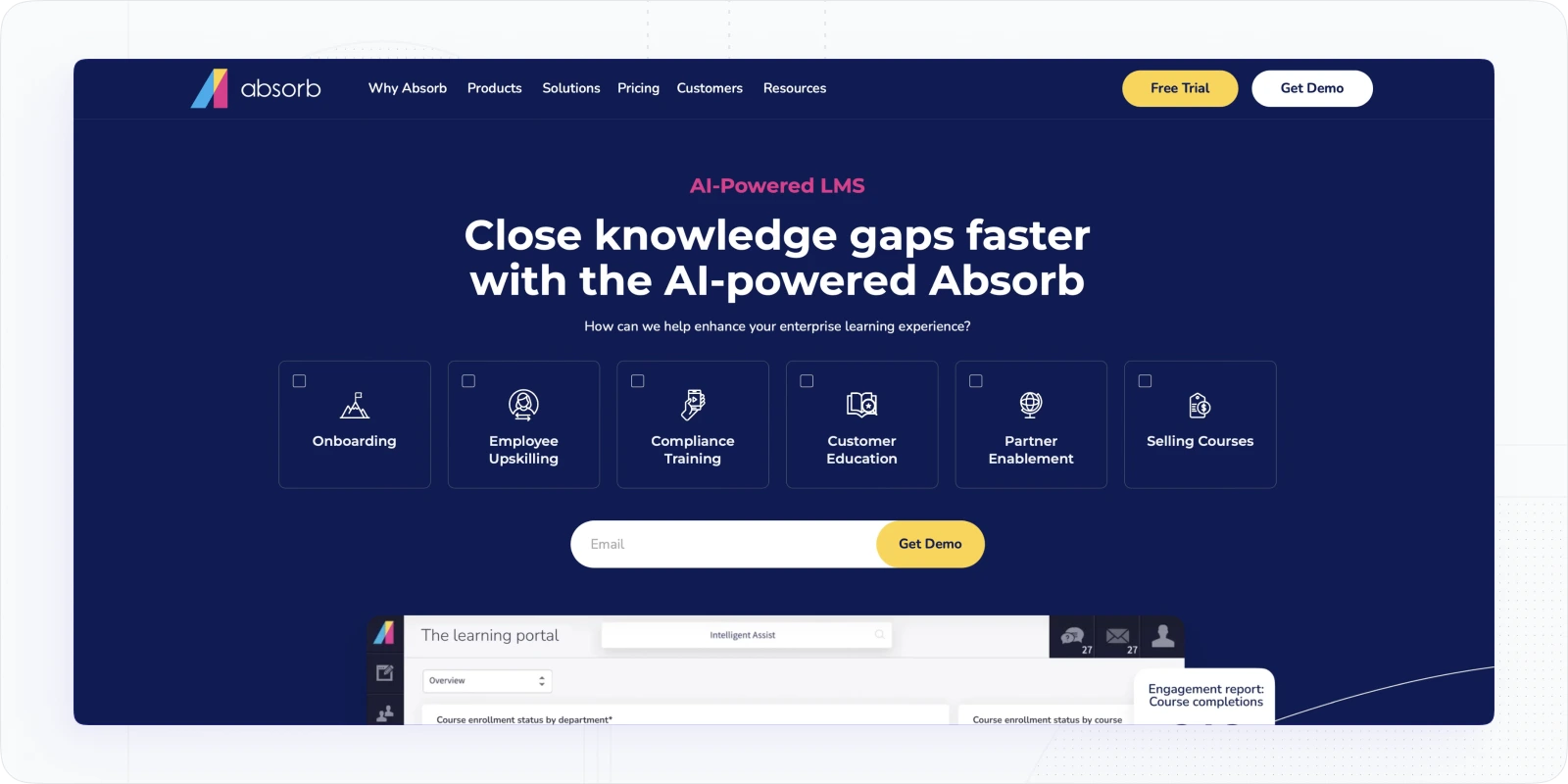
Absorb handles multi-site training management well. Separate branded portals for different facilities, departments, or partner networks — all under one admin account. For regional health networks where each hospital site has its own compliance requirements and staff pools, that architecture solves a real operational headache.
Absorb Amplify adds a content library to pull from, which accelerates compliance course builds for common regulatory requirements. The eCommerce module is also worth noting if your network trains external partners or provides accredited CPD programmes. It's not the strongest choice for deep AI content creation, but the operational management layer is solid.
- Multi-site portal management with separate branded environments per facility or department under one admin account
- Absorb Amplify content library that accelerates compliance course builds for common regulatory requirements
- eCommerce module for networks running accredited CPD programmes or external partner training
Best for: Multi-site health networks and regional hospital groups that need separate facility portals under centralised administration/
What I'd flag honestly: Absorb LMS pricing sits at the higher end of the mid-market, and the value case weakens if you're not actively using the multi-site architecture to justify it. AI course creation is underdeveloped relative to what EducateMe or even Docebo offer — content build is still largely manual. And if your primary use case is internal employee training rather than multi-audience management, there are platforms that do it better for less.
Litmos – Best for Fast Compliance Delivery on a Minimal Budget
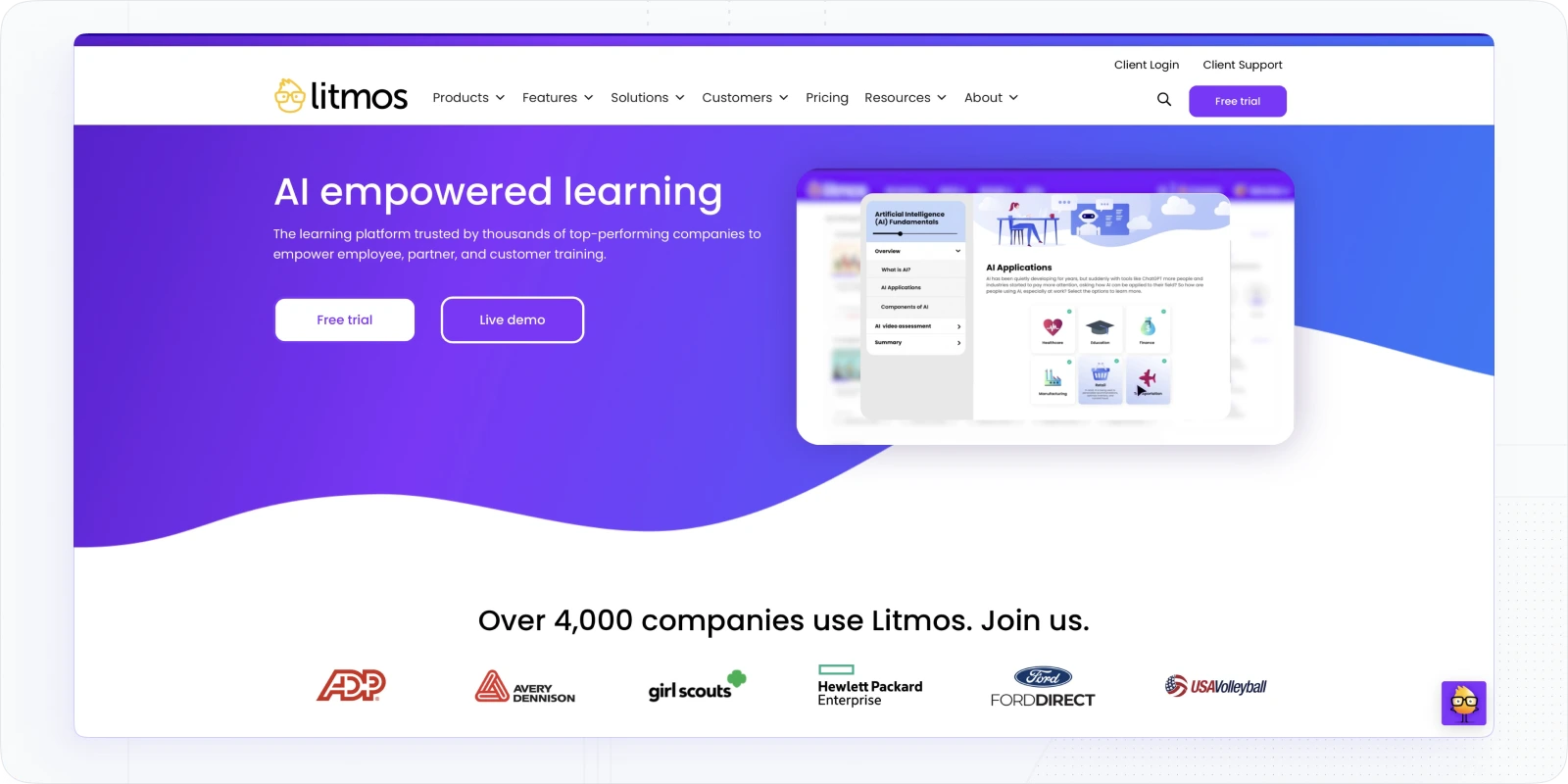
Litmos has one argument in healthcare: speed and price. If a practice needs mandatory training deployed by Friday, Litmos can do it. The mobile app works well for staff checking training on their own devices, and the per-user pricing is low enough to pass through most budget approval processes without a formal procurement cycle.
The AI features are thin, the analytics won't satisfy a compliance officer doing a serious audit, and the platform won't grow with an organisation that wants to build a real L&D function. I'd use it as a short-term fix or a secondary platform for a specific training type — not as a HealthStream replacement for a medium or large healthcare organisation.
- Fast deployment with minimal configuration — mandatory training can go live within a day
- Mobile app that works reliably for staff completing training on personal devices
- Per-user pricing low enough to clear most practice-level budget approvals without a formal procurement process
Best for: Small practices needing quick, low-cost mandatory training delivery
What I'd flag honestly: the analytics are too shallow for any compliance officer running a serious audit – you'll get completion data, not the depth of reporting a regulatory review requires. AI features are surface-level at best; content creation and knowledge gap detection stay manual. And the platform doesn't grow well – teams that start on Litmos and develop a real L&D function typically find themselves migrating within two years.
How to Choose the Right Platform
I'll give you the direct version rather than a matrix you have to decode yourself:
- Choose EducateMe if you're a healthcare organisation of 200–1,000 staff at or approaching HealthStream contract renewal. Particularly if you need AI to cut content creation time, want AI-powered frontline training scenarios, or need knowledge gap visibility before your next compliance audit.
- Choose Docebo if you're a large health system (2,000+ staff) with enterprise reporting requirements, extended enterprise training needs, and budget for a multi-month implementation.
- Choose TalentLMS if you're a small clinic under 100 staff, need something live within days, and your compliance requirements are relatively straightforward.
- Choose Cornerstone if your organisation runs a major HCM platform and needs the LMS deeply integrated into your HR data architecture. Plan for a long procurement and implementation cycle.
- Choose 360Learning if your clinical SMEs are willing to own content creation and you want that institutional knowledge captured systematically rather than sitting in people's heads.
- Choose Absorb if you manage multiple hospital sites or facilities and need separate portals with centralised oversight.
- Choose Litmos if you need something deployed fast on a minimal budget and your training requirements are basic mandatory delivery.
- Stick with HealthStream if you're a large hospital system where credentialing and Joint Commission compliance are the primary (and genuinely only) use cases, and your IT team is deeply embedded in the platform.
Book a 30-minute demo and we'll show you exactly how EducateMe handles compliance tracking, frontline training, and course creation in a healthcare workflow.
Frequently asked questions
Contract renewal is the single biggest trigger — the moment when pricing gets scrutinised and the accumulated frustrations (dated interface, slow content creation, lack of AI features) suddenly justify the switching cost. The second most common trigger is a failed compliance audit or a new regulatory requirement that reveals how long it takes to update and redeploy content in the existing system.
Yes. EducateMe supports mandatory training delivery, automated re-enrollment when policies change, attestation capture, and audit-ready reporting. For healthcare L&D teams, the additional value is the AI layer on top: the AI agent cuts course creation time by around 80%, the AI Assessment surfaces knowledge gaps before they become compliance events, and the AI Roleplay Coach trains clinical staff on scenarios at a scale that manual role-play can't match. Book a demo to see the compliance reporting in a healthcare workflow context.
HealthStream sits at 3.8 on G2. EducateMe is rated 4.8, though ratings should always be checked for recency before citing them in internal decisions. The consistent themes in HealthStream's negative reviews are interface quality, slow customer support, and content authoring limitations — which maps directly to the areas where modern alternatives have invested most heavily in the last three years.
For most mid-size healthcare organisations, four to eight weeks with a dedicated person managing the migration. SCORM content exports and re-imports in days. The time goes into rebuilding user groups, learning paths, and compliance reporting structures in the new platform. EducateMe's onboarding team supports this process, and the AI agent can accelerate rebuilding any content that's worth updating rather than just re-importing.