
Top eLearning Companies in 2026: LMS, Content Agencies & Authoring Tools

By Sofia KondratSofia KondratCorporate Training Expert & Content EditorHey there! I’m Sofi Kondrat, your go-to corporate training advisor here at EducateMe. I’ve been navigating the highs…Read more
Corporate Training Expert & Content Editor
10 min read
The most expensive mistake in L&D procurement isn't picking the wrong platform. It's picking the wrong category of vendor. I've seen companies buy an LMS when they needed a content agency, and commission bespoke courseware when a configurable platform would have done it in a week. Both errors show up the same way on the surface: the training doesn't work. The causes (and the fixes) are completely different.
This article does something most lists in this category don't: it tells you which type of company each entry actually is. Read the taxonomy section first. Then use the list.
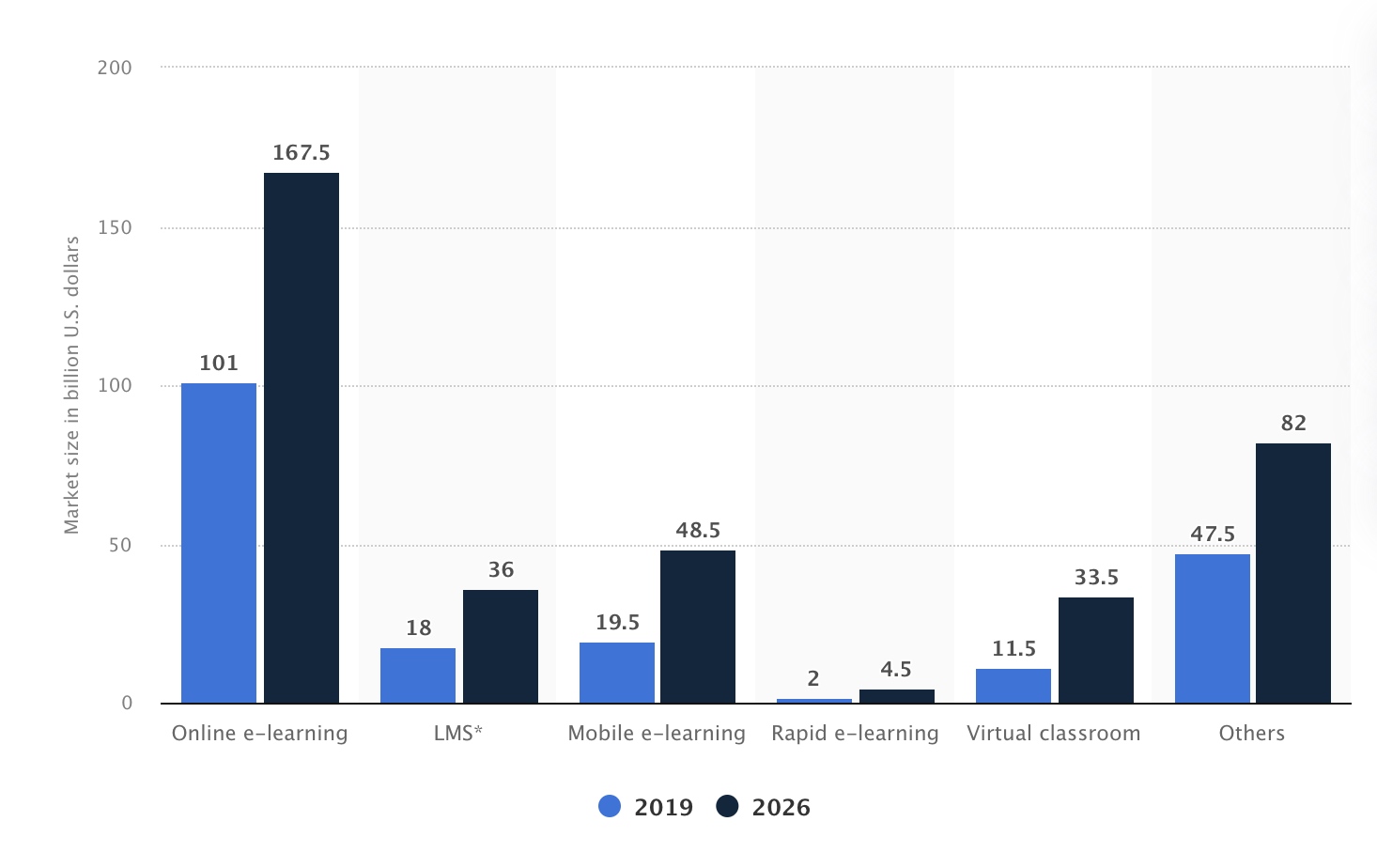
The 4 Types of eLearning Companies (and Why the Difference Matters)
These categories are genuinely distinct. Mixing them up is how companies end up buying an LMS when they needed a content agency, or commissioning custom courseware when a configurable platform would have covered it.
LMS platforms
Software for delivering, managing, and tracking training programmes. You bring the content (or build it inside the platform); the LMS handles enrolment, completion tracking, reporting, and learner experience. Examples: EducateMe, Docebo, TalentLMS.
Content development agencies
They build custom elearning courses for you. You provide the subject matter expertise and sign off on the content; they produce the modules, interactions, and SCORM packages. You still need an LMS to host and deliver what they build.
Rapid authoring tools
Software your in-house L&D team uses to build courses themselves, without coding. Output is usually SCORM or xAPI files that load into an LMS. Examples: Articulate 360, Adobe Captivate, Lectora.
Managed training providers
End-to-end: they design the curriculum, develop the content, host it, and sometimes deliver instructor-led components. You hand over the brief and get a running programme. Higher cost, lower internal resource requirement.
Most companies need one or two of these, not all four. The section below will help you figure out which.
How to Choose the Right Type of eLearning Partner
I'd run every procurement decision through these four questions before talking to a single vendor.
1. Do you need content built for you, or a platform to host content you already have? If you have subject matter experts and want to turn their knowledge into structured training, you need an authoring tool or an LMS with built-in course creation. If you don't have the internal capacity to create content at all, you need a content development agency, and then an LMS to deliver what they build.
2. What's your compliance or industry context? Heavily regulated industries (healthcare, financial services, manufacturing) often need content that's been specifically developed for their compliance framework. A generic LMS with off-the-shelf courses won't cover this. A content development agency with sector experience, or a managed training provider, is a better fit.
3. Do you have in-house L&D staff? A team with instructional designers and L&D managers can use an authoring tool and an LMS independently. A company without that capacity needs more support, either a managed provider or an LMS with strong AI-assisted course creation so non-specialists can build content without a learning curve.
4. What does the pricing model mean for your headcount? LMS platforms typically price per user per month — manageable at 50–500 learners, worth scrutinising at 5,000+. Content development agencies price per project or per hour. Managed providers usually charge a programme fee. Model each against your actual learner count before shortlisting.
Top eLearning Companies in 2026
Each entry below is labelled by company type. Use the taxonomy to find what's relevant to your situation — not every platform here is a direct alternative to the others.
LMS Platforms
#1. EducateMe
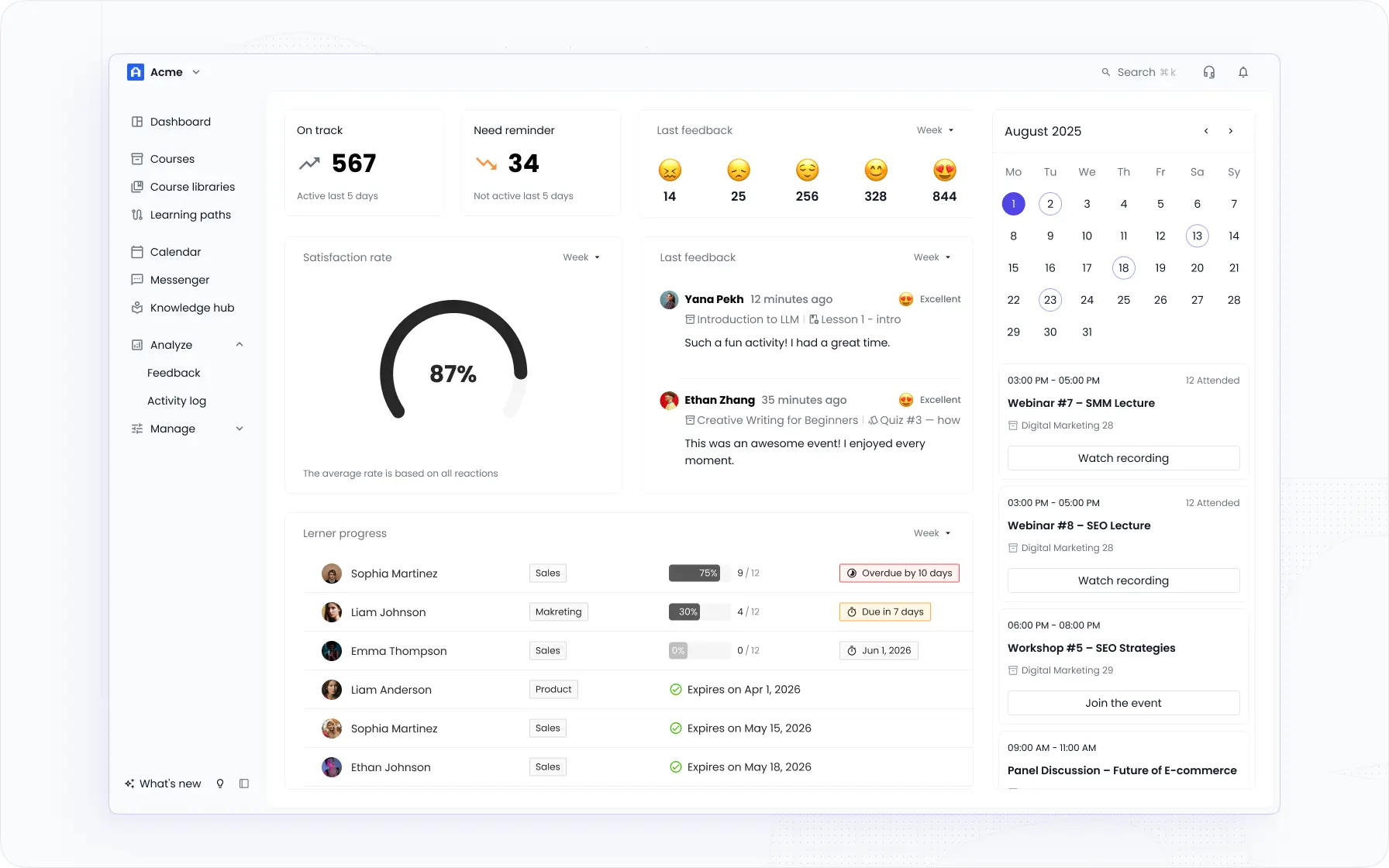
EducateMe is an AI-powered corporate LMS for mid-sized companies (50–1,000 employees) running structured training across employees, customers, and partners. It belongs in this list as an LMS — if you need a platform to deliver and track training your team creates, it fits here. If you need someone to build the content from scratch, you're looking for a content development agency, not an LMS.
What separates it from other corporate e learning companies is where the AI sits: inside the core product, not bolted on as an add-on. The AI Course Builder generates structured courses from a text prompt, URL, or uploaded document, which matters for teams without dedicated instructional designers. The AI Roleplay Coach runs practice scenarios for sales and customer-facing roles with rubric-scored feedback, at whatever volume you need.
Multi-tenant white-label portals let companies run branded environments for different audiences (employees, customers, partners) separately from one admin account.
For more on what the corporate training platform covers, that page breaks down the full feature set by use case.
EducateMe in brief:
- AI Course Builder. Generate structured courses from a text prompt, URL, or uploaded document. AI builds module content and quizzes, not just outlines — customer data shows 3x faster course creation versus manual builds.
- AI Roleplay Coach. Practice-based skill development for sales, onboarding, and customer-facing roles. Runs scored scenarios with rubric feedback at whatever volume you need, without social risk to the learner.
- White-label multi-tenancy. Separate branded portals per department, client, or partner, each with its own curriculum and access controls, all managed from one admin account.
- Role-based learning paths. Assign training by role, department, or seniority level. Auto-enrolment triggers on hire or role change.
- Reporting and analytics. 10+ metrics, including completion rates, skill gap detection, and per-manager dashboards across every portal.
#2. Docebo
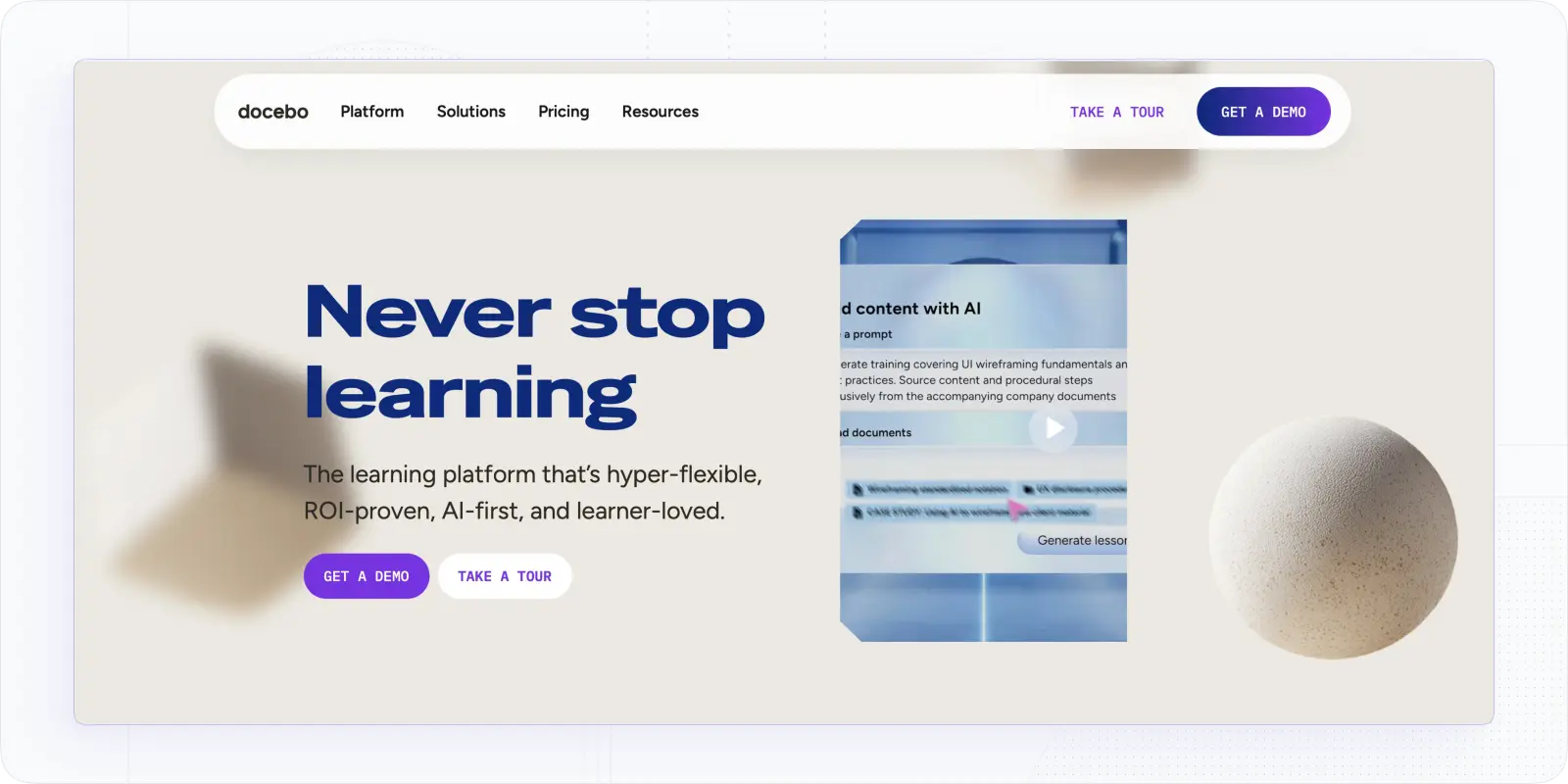
Docebo is a well-established LMS for mid-to-large enterprises, combining formal, social, and experiential learning with skills management. Its AI personalisation layer surfaces relevant content to learners based on behaviour and role. The role-based portal customisation, where employees, managers, and admins each see a differently configured interface, is a genuine strength for large, complex organisations.
Docebo in brief
- AI-powered personalisation. Surfaces relevant content to learners based on behaviour, role, and learning history. Reduces time spent searching for the right course.
- Skills management. Map training to competency frameworks, track development over time, and identify gaps across teams or departments.
- Role-based portal views. Employees, managers, and admins each see a differently configured interface — adjustable per role by the administrator.
- Social and experiential learning. Combines formal courses with social learning features: shared playlists, peer recommendations, and collaborative content.
- Enterprise integrations. Native connectors for Salesforce, major HCM platforms, and a REST API for custom integration work.
Docebo pricing starts at approximately $25,000/year, with the Elevate plan typically ranging from $30,000–$50,000 and the Enterprise plan starting at $60,000+, all based on custom quotes tailored to user volume and add-ons.
#3. TalentLMS
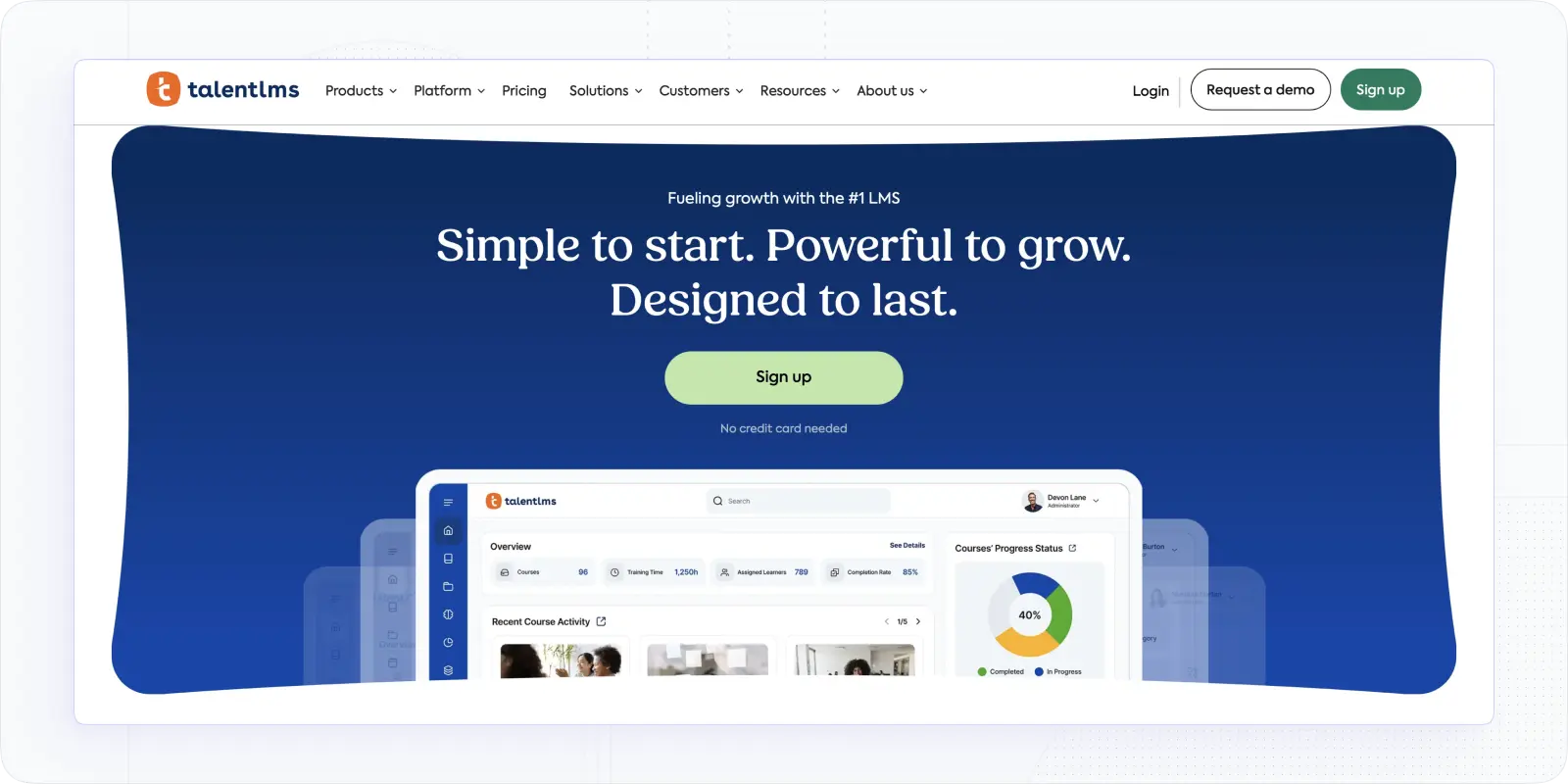
TalentLMS is a configurable cloud-based LMS with a low barrier to setup. Multi-tenancy, SSO, custom learning paths, and 1,000+ integrations via Zapier are available across standard plans. It's a practical choice for SMB teams that need more than basic course hosting but don't have the budget for enterprise platforms.
TalentLMS in brief
- White-label customisation. Custom domain, logo, colours, and fonts per portal. CSS and JavaScript overrides are available for teams that need deeper visual control.
- Multi-tenancy. Create isolated training environments for different audiences within one account, each with its own branding and curriculum.
- Custom learning paths. Automated journeys that guide learners based on role, group, and progress. Rules trigger enrolment and advancement without manual intervention.
- SSO and domain mapping. Single Sign-On support with custom domain configuration for secure, branded access using existing credentials.
- Integration ecosystem. REST API plus 1,000+ integrations via Zapier and native connectors for tools your team already uses.
Free trial; Start plan from $149/month; Premium at $579/month
#4. Tovuti LMS
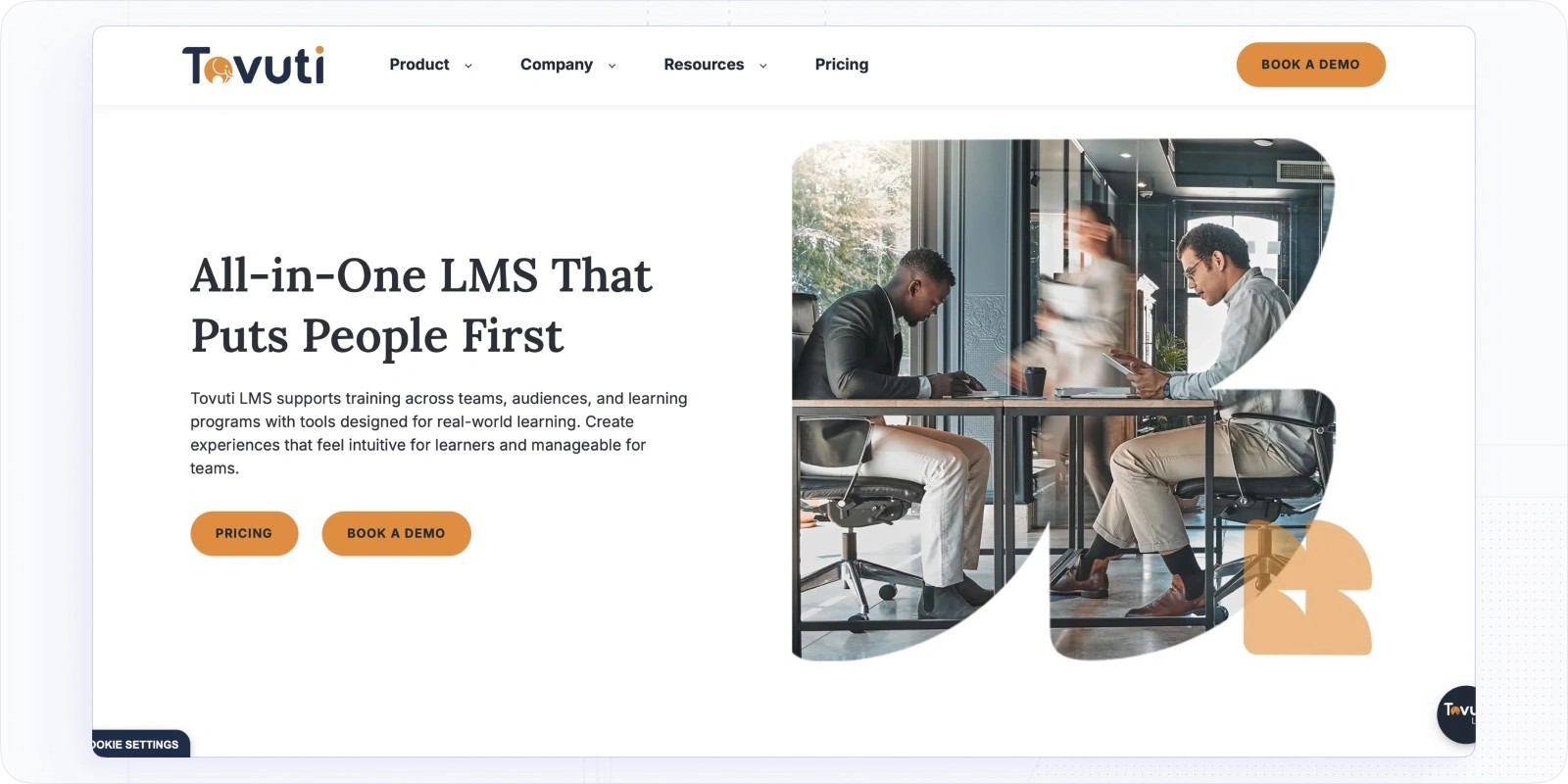
Tovuti learning management system is a comprehensive e-learning platform that empowers businesses and individuals to reach their full intellectual potential. The cloud-based solution equips users with the tools necessary to develop high-quality eLearning programs for the purpose of training their staff, partners, or customers. Tovuti’s key services include corporate training, elearning, learning, and training management.
Tovuti in brief
- Interactive course authoring. Build courses with multimedia content, branching scenarios, and interactive modules directly in the platform.
- Gamification and engagement. Badges, leaderboards, and points systems built into the core product, not added as an afterthought.
- User and group management. Assign roles, manage permissions, and organise learners into groups with granular administrative controls.
- Reporting and analytics. Track learner progress, course completion, and programme effectiveness with detailed, exportable reports.
Tovuti Pricing is custom; contact sales
#5. AcademyOcean
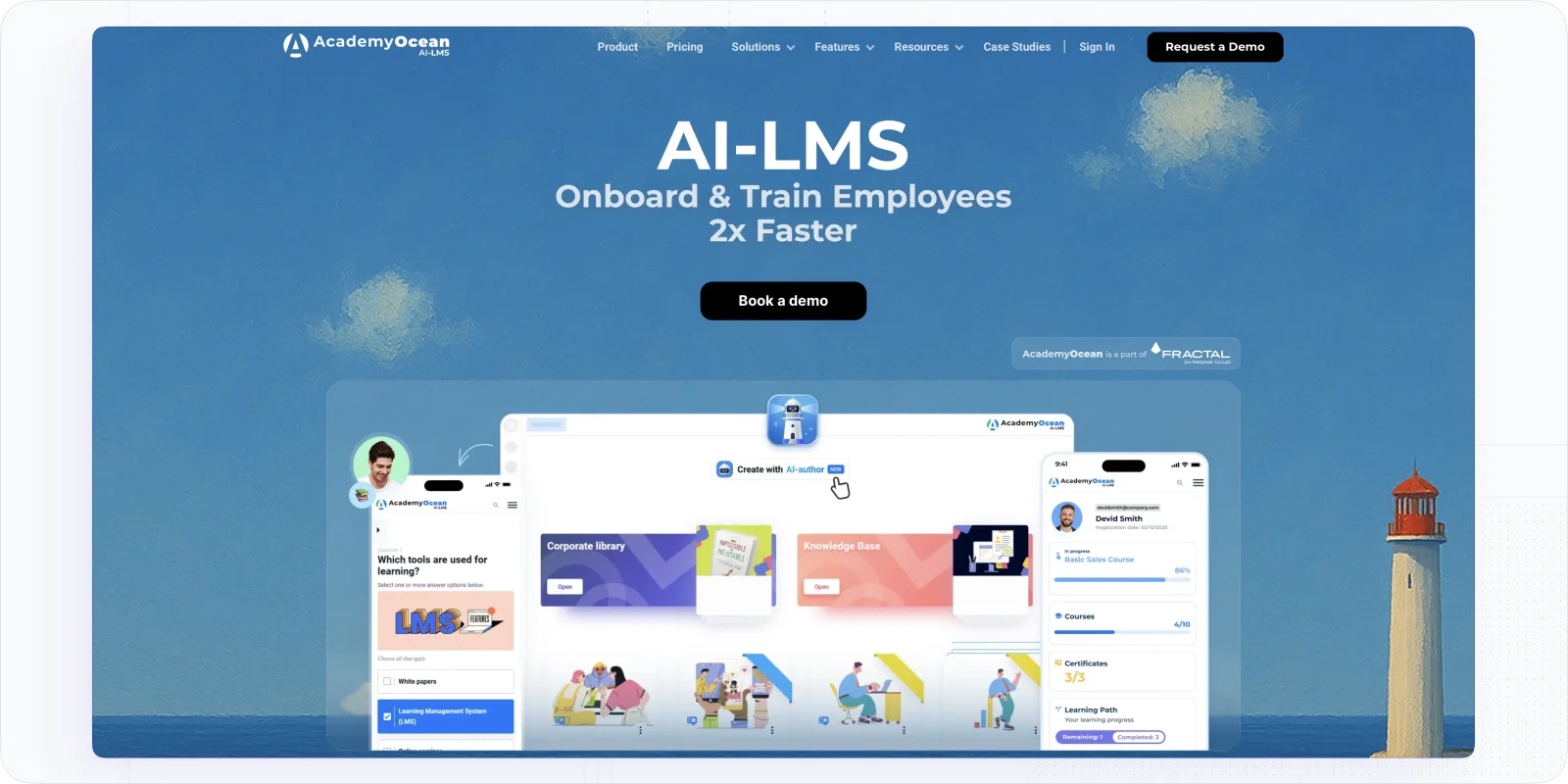
AcademyOcean is an LMS oriented around customer, partner, and employee training, particularly for companies that need to onboard external audiences at scale. The platform's automation tools handle learning path progression without manual admin work, and the white-label layer means each audience gets a branded experience. It's a practical option for mid-sized companies running customer education or partner enablement alongside internal training.
AcademyOcean in brief
- Drag-and-drop course builder. Create courses with multimedia content, quizzes, and interactive elements without technical expertise.
- Automated learning paths. Rule-based sequences that guide learners through training based on role, progress, or completion triggers.
- Custom branding. White-label the platform with your logo, colours, and domain for a consistent learner experience across audiences.
- Certificates and gamification. Issue completion certificates and add gamification elements to increase learner motivation and course finish rates.
Pricing available on request
Rapid Authoring Tools
#6. Articulate 360
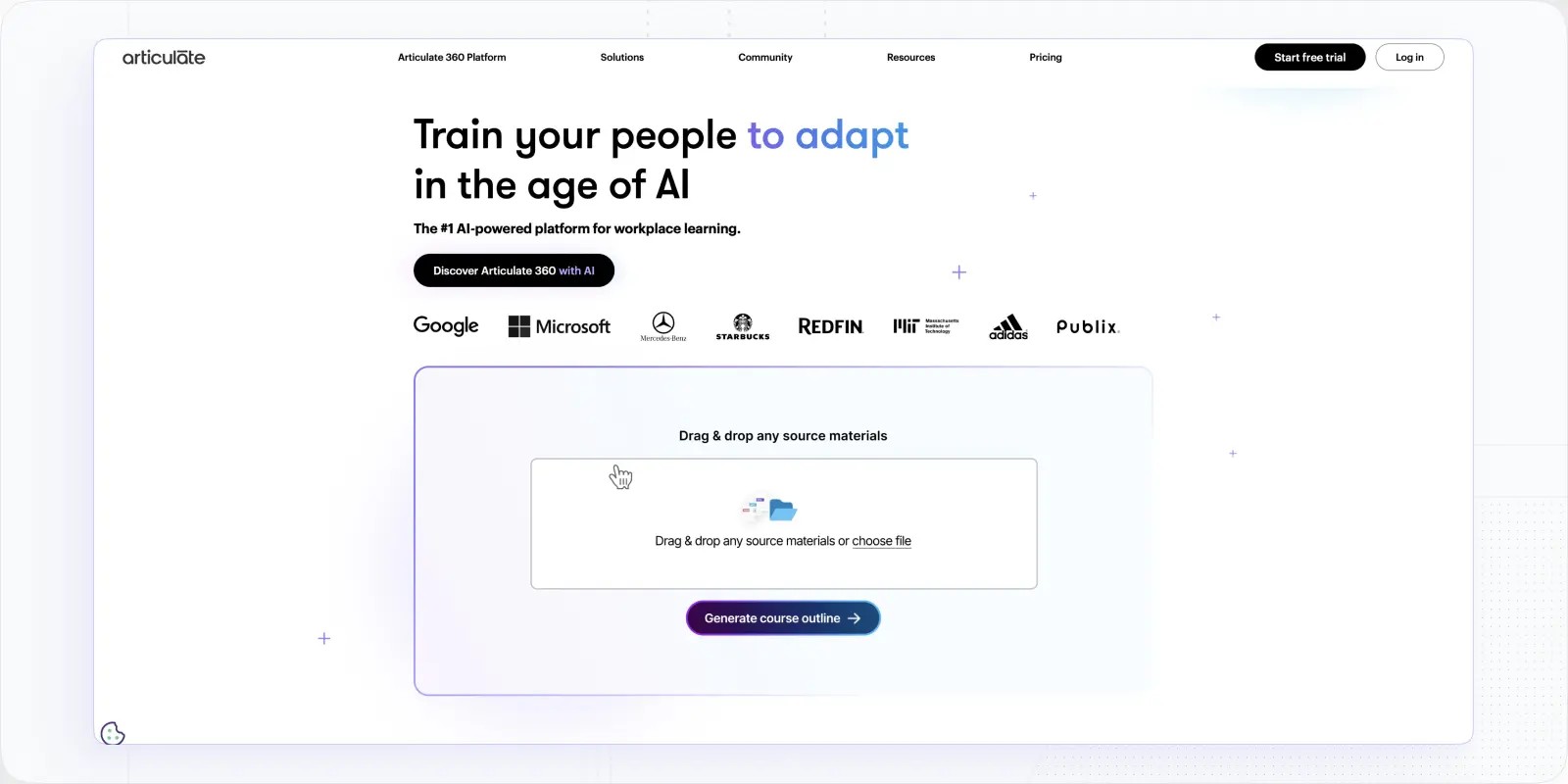
Articulate 360 is the industry-standard rapid authoring suite for L&D teams building courses in-house. It includes Storyline 360 for custom interactive courseware and Rise 360 for responsive, web-based modules that build faster. Output is SCORM or xAPI, which loads into any LMS. Most L&D professionals have used it, which means hiring, onboarding, and freelance support are all easier than with less common tools.
Articulate 360 in brief:
- Storyline 360. Build fully custom interactive courses with branching scenarios, variables, and animations. The closest thing to a standard in corporate elearning authoring.
- Rise 360. Responsive web-based course builder using pre-built blocks. Faster to produce than Storyline; works well for straightforward informational content.
- Content Library 360. Pre-built assets, templates, and characters to speed up course production without starting from scratch.
- Review 360. Stakeholder review and feedback tool built into the workflow. Consolidates comments without email chains.
- SCORM and xAPI output. Exports to formats that load into any LMS, including completion tracking and assessment data.
Pricing starts from $1,299/user/year for individuals; team plans available.
#7. Adobe Captivate
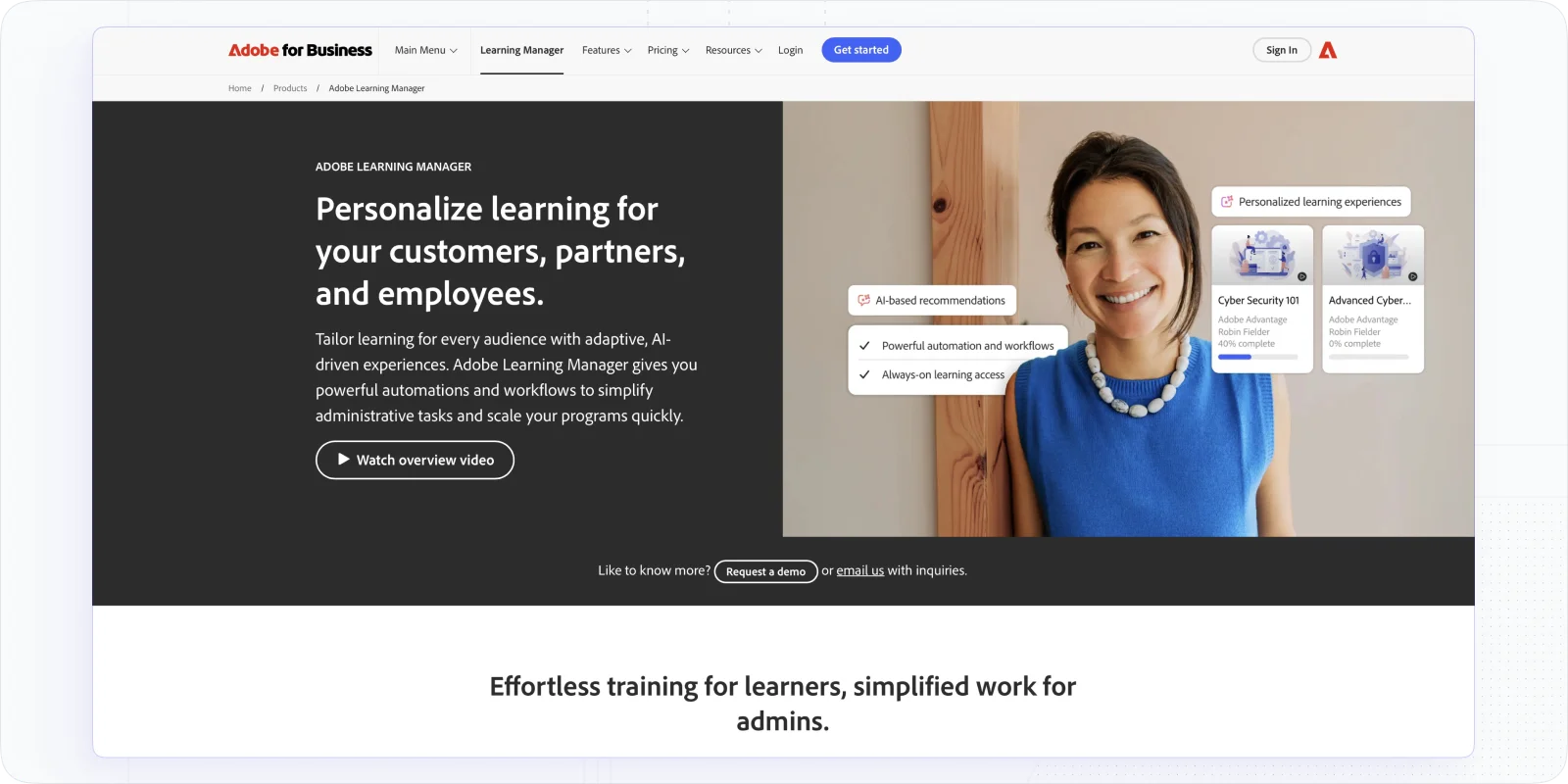
Adobe Captivate is a rapid authoring tool with particular strength in software simulations and compliance training. If your training involves walking learners through a software interface (click-by-click, with branched responses) Captivate handles it better than most alternatives. The learning curve is steeper than Articulate, but the output flexibility is higher, particularly for technical training content.
Adobe Captivate in brief:
- Software simulations. Record and reproduce software workflows for training purposes, with branched response options. Stronger in this area than any other authoring tool.
- VR and immersive learning. Build 360-degree learning experiences and basic VR scenarios without a developer.
- Responsive design. Fluid boxes layout adapts courses automatically to different screen sizes without building separate mobile versions.
- SCORM and xAPI output. Standard export formats compatible with any LMS, including detailed interaction tracking.
- Adobe ecosystem integration. Connects with Adobe Experience Manager and other Adobe tools for teams already in that environment.
Pricing starts from $33.99/month as part of Adobe Creative Cloud; standalone plans available.
#8. iSpring Suite
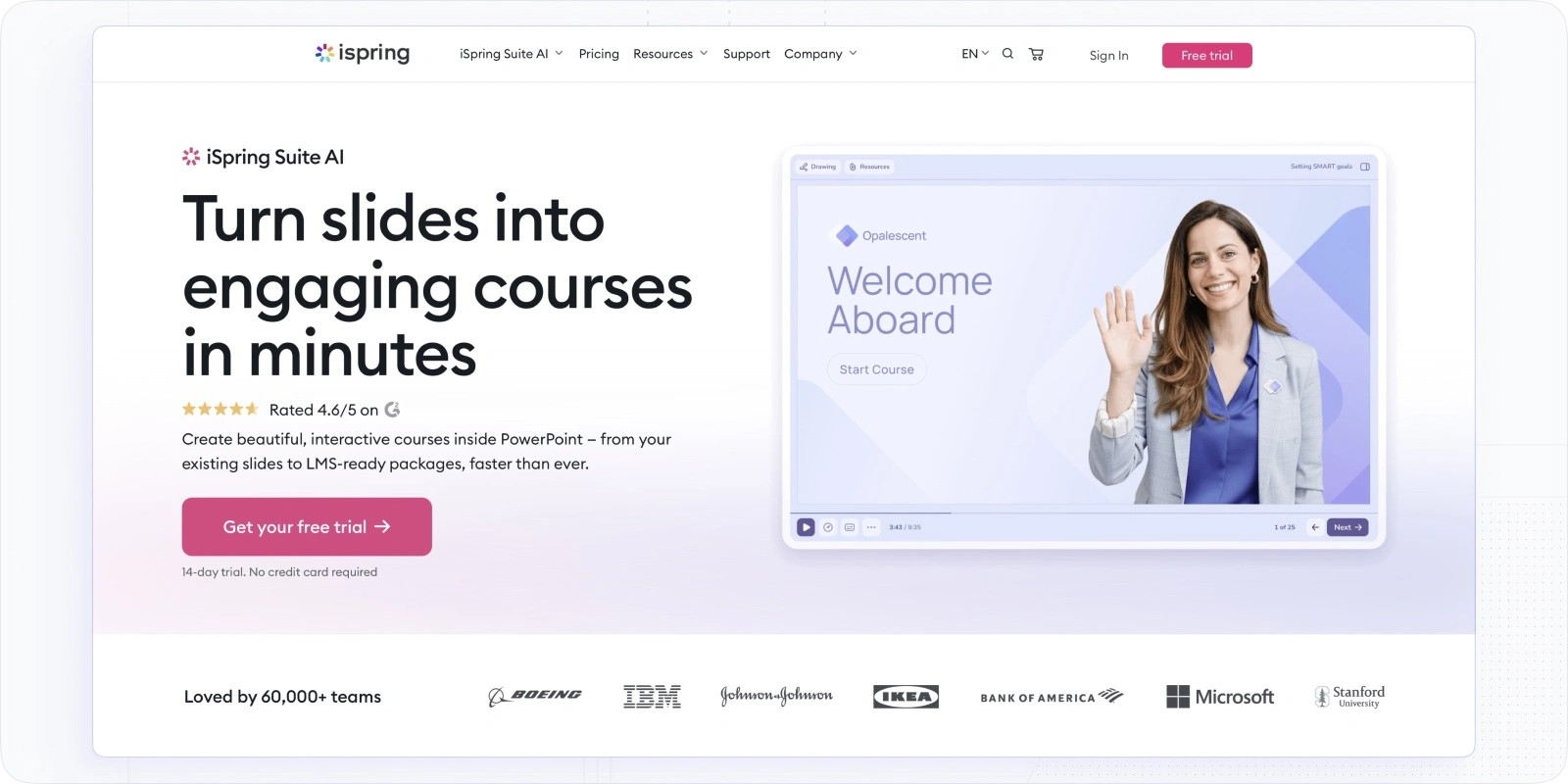
iSpring Suite is a PowerPoint-native authoring tool — it runs inside PowerPoint as an add-in, which means L&D teams and subject matter experts already comfortable in Office can build SCORM-compliant courses without learning new software. The output quality is higher than a standard PowerPoint export, and the barrier to entry is lower than Articulate or Captivate. For teams where subject matter experts are doing the authoring themselves, it's often the practical choice.
iSpring Suite in brief:
- PowerPoint integration. Build courses directly inside PowerPoint with iSpring running as an add-in. No new interface to learn for teams already in Office.
- Quiz and assessment builder. 14 question types including drag-and-drop, hotspot, and sequence questions, all exportable as SCORM.
- Dialogue simulations. Build branched conversation simulations for soft skills and sales training without specialist authoring knowledge.
- SCORM and xAPI output. Standard export formats compatible with any LMS, with full completion and assessment tracking.
- iSpring Space. Cloud-based collaboration and review tool for sharing course drafts with stakeholders before publishing.
$770/user/year; team plans available.
Content Development Agencies
#9. Kineo
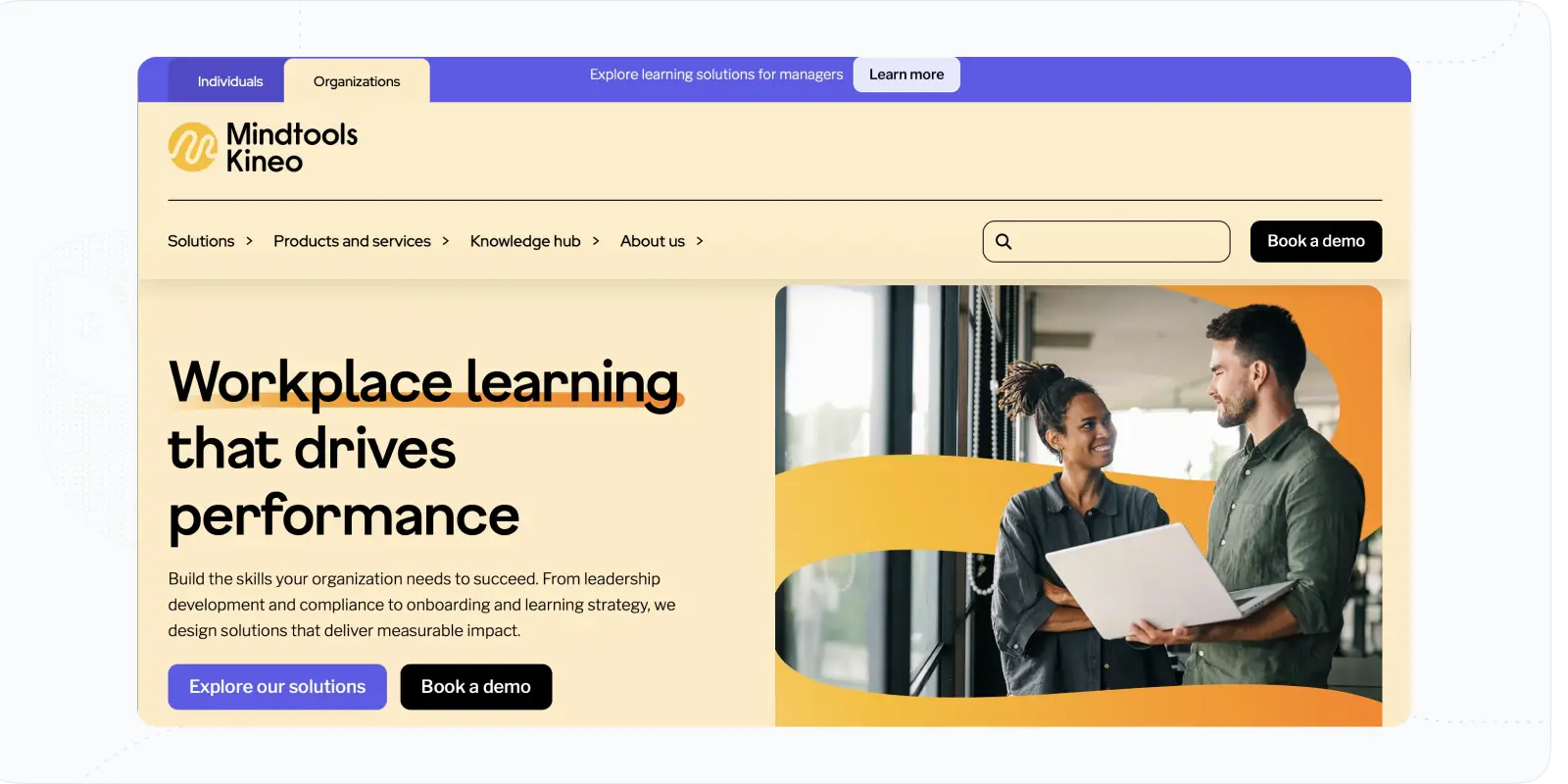
Kineo is one of the larger global elearning content development agencies, building custom SCORM courseware, blended learning programmes, and compliance content for enterprise clients. Unlike the LMS platforms and authoring tools on this list, Kineo doesn't give you software — they build the courses for you. You provide subject matter expertise and sign off on the content; they handle instructional design, visual production, and delivery-ready SCORM packages. You still need an LMS to host what they produce.
Kineo in brief:
- Custom courseware development. Instructional designers and visual producers build SCORM-compliant courses to your brief, from storyboard through to final output.
- Blended learning design. Combines digital modules with live session design, job aids, and manager guides into a coherent programme architecture.
- Compliance content. Specialist experience in regulated industries; content built to meet specific compliance and attestation requirements.
- Learning consultancy. Needs analysis, learning strategy, and programme design before any content is produced.
- Platform agnostic. Output loads into any LMS; Kineo doesn't require you to use a specific platform to deliver what they build.
Project-based pricing; contact for a quote.
Managed Training Providers
#10. AffinitySpace
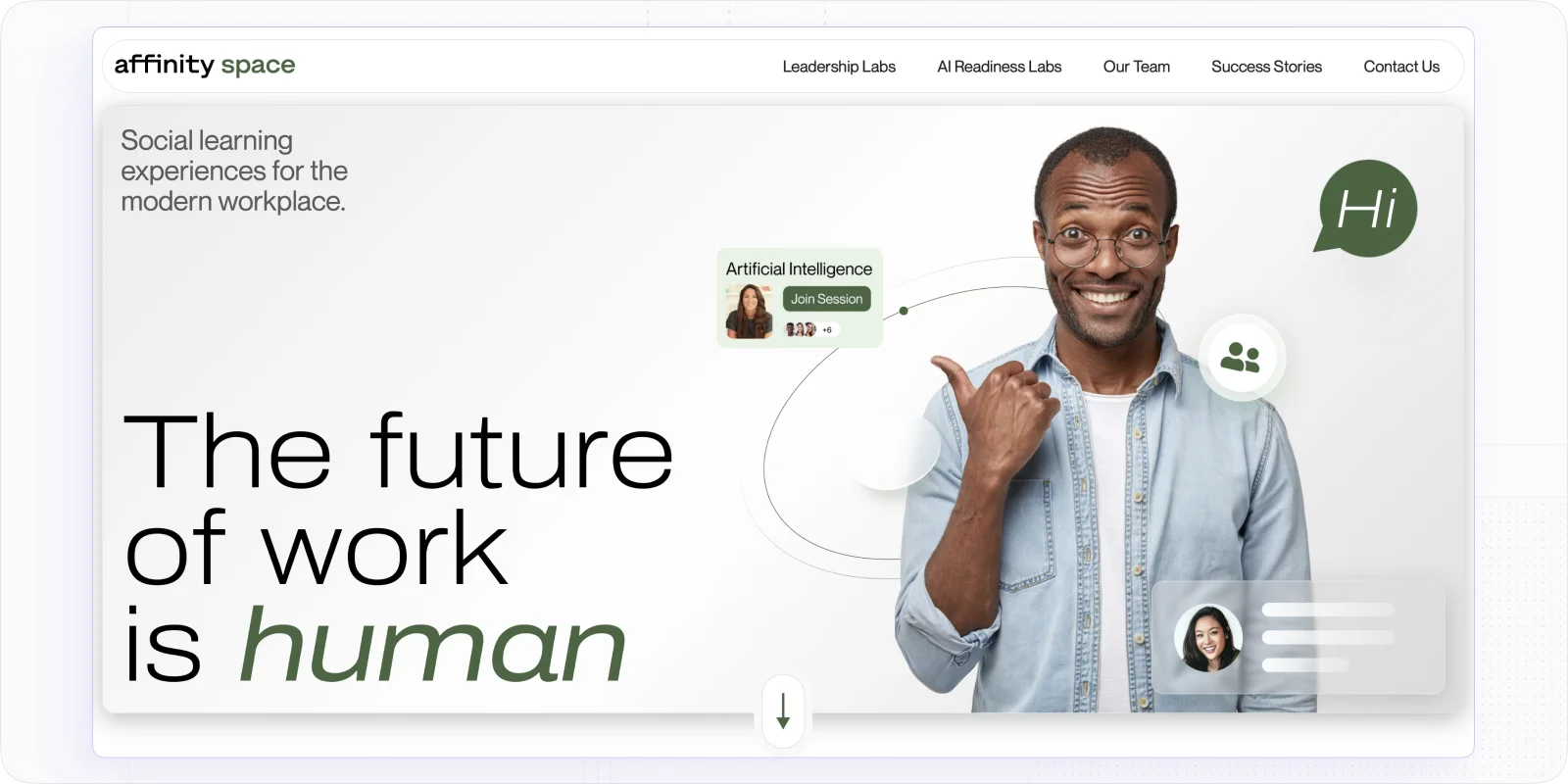
AffinitySpace is a managed training provider, not a platform. It designs and delivers cohort learning experiences around leadership, wellbeing, and human skills built on neuroscience-backed content and led by external facilitators. You're buying a running programme, not software. That's a different procurement conversation to LMS or authoring tool evaluation — higher cost, lower internal resource requirement, and a fixed curriculum rather than something you configure yourself.
AffinitySpace in brief:
- Cohort programmes. Multi-week social learning journeys with live sessions led by external facilitators, designed around leadership, wellbeing, and human skills.
- Affinity Experiences. Two-hour online learning sessions built for immediate application — interactive, neuroscience-backed, and designed to fit into a working day.
- Peer collaboration. Structured peer interaction is built into programme design throughout, not an optional community feature.
- Expert facilitation. Sessions delivered by external industry experts and thought leaders, not internal trainers.
Programme-based pricing; contact for a quote.
#11. GP Strategies
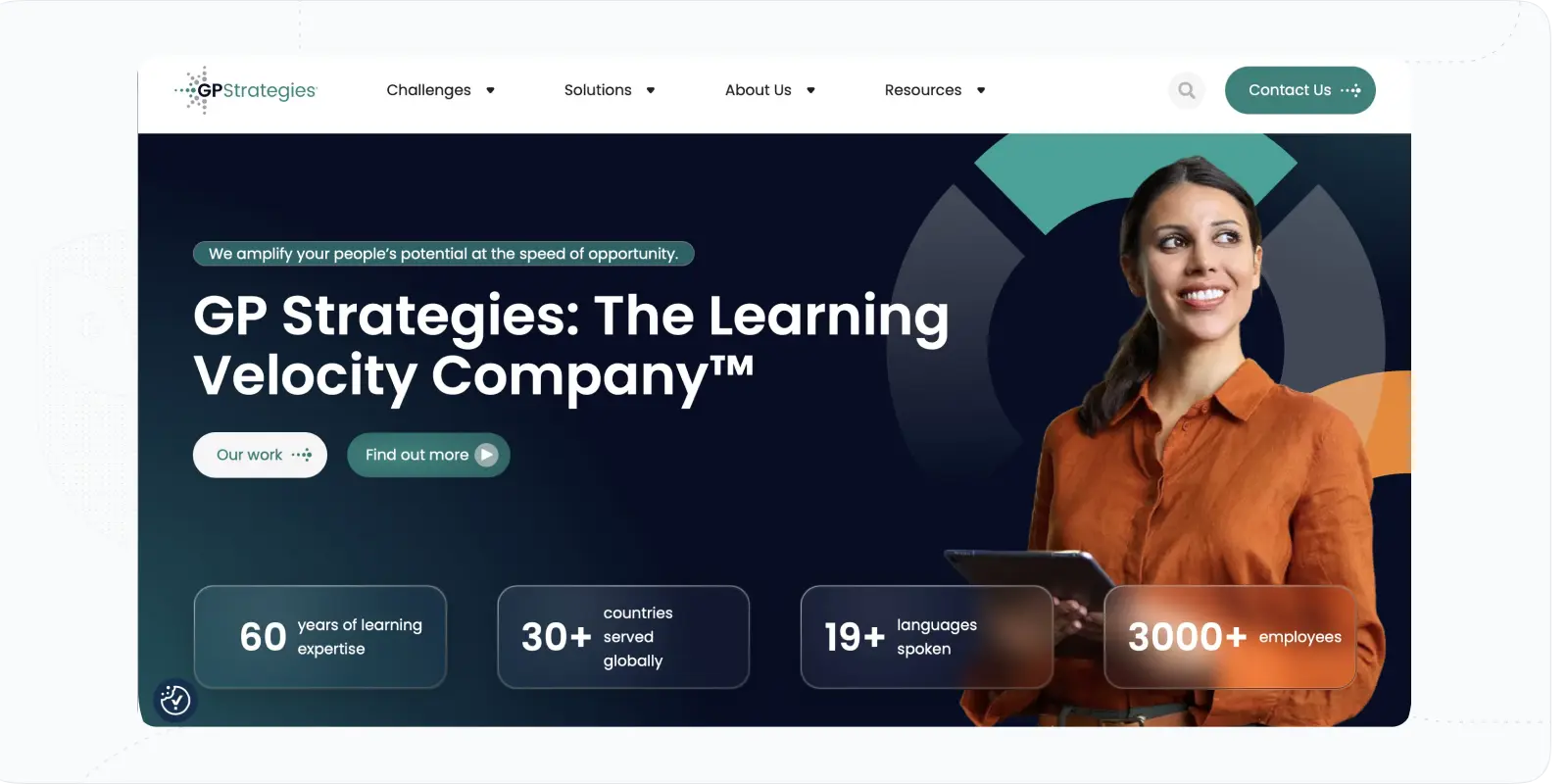
GP Strategies is a large managed training provider covering instructional design, content development, technology implementation, and programme delivery end-to-end. It sits at the fully outsourced end of the spectrum: companies hand over the training brief and GP Strategies handles the rest, including platform selection, content build, and ongoing programme management. It's the right category for organisations without internal L&D capacity that need a complete training function, not just a tool.
GP Strategies in brief:
- End-to-end programme delivery. Covers needs analysis, instructional design, content development, technology implementation, and ongoing programme management from one provider.
- Managed learning services. Outsourced L&D function for organisations that need a complete training operation rather than software to run one themselves.
- Technology consulting. Platform selection, LMS implementation, and systems integration as part of the managed service.
- Global delivery. Programme delivery across multiple regions and languages for multinational organisations.
- Measurement and analytics. Programme effectiveness reporting tied to business outcomes, not just completion rates.
Contract-based pricing; contact for a quote
Making the Decision
Three questions close most of this down pretty quickly.
Do you have content already? If yes, you need an LMS. If no, you need an authoring tool or an agency first — then an LMS to deliver what gets built.
Do you have L&D staff who can build courses? If yes, an authoring tool like Articulate or iSpring gives them the horsepower. If no, either hire a content agency or pick an LMS with strong AI course creation so non-specialists can build without the learning curve.
Do you have the internal capacity to run a training programme at all? If no, a managed provider like GP Strategies or AffinitySpace takes the whole thing off your plate. More expensive, but the comparison isn't platform vs. platform, it's platform plus your time vs. someone else's team.
Frequently asked questions
An LMS platform is software — it hosts, delivers, and tracks training content. An eLearning company is a broader term that covers LMS providers, content development agencies, authoring tool vendors, and managed training providers. They're not the same thing, and the difference matters when you're deciding what to buy. An LMS gives you the infrastructure; a content development agency gives you the courses. Most organisations need both.
It depends on the type. LMS platforms provide software for delivering and tracking training. Content development agencies build custom courses on your behalf. Rapid authoring tool vendors provide software your team uses to build courses in-house. Managed training providers design, build, and deliver entire programmes end-to-end. Before evaluating any vendor, decide which of these four things you're actually buying.
Start with two questions: do you need content built for you, or do you have in-house L&D capacity to create it? And do you need a platform to host and deliver training, or a partner to manage the whole programme? The answers determine whether you're looking at an LMS, a content agency, or a managed provider. EducateMe, for example, is an LMS — it's the right fit if your team is creating and managing training and needs a platform to deliver it at scale.
There's no single answer — it depends on company size, training audience, and internal L&D capacity. For mid-sized companies (50–1,000 employees) running training across employees, customers, or partners without a large L&D team, EducateMe LMS handles content creation and delivery in one place. For large enterprises with structured competency frameworks and complex integrations, enterprise platforms like Docebo are worth evaluating. For teams buying off-the-shelf skills content, Udemy Business is a straightforward option.