
EducateMe vs Trainual: Which One Actually Trains Your Team?

By Sofia KondratSofia KondratCorporate Training Expert & Content EditorHey there! I’m Sofi Kondrat, your go-to corporate training advisor here at EducateMe. I’ve been navigating the highs…Read more
Corporate Training Expert & Content Editor
8 min read
Most teams comparing these two are at a specific moment: Trainual is working, but something isn't. New hires are skipping steps. Analytics stop at "completed." You're trying to train a partner or a customer and realise the platform wasn't designed for that. Or someone on the team asks for roleplay practice before a sales call and there's genuinely nothing in the tool to offer them.
That's the gap this comparison is about, not whether Trainual is bad (it isn't), but whether it's still the right tool when your training needs have grown past what a documentation platform can handle.
We make EducateMe, so this comparison isn't neutral — you should know that going in. What I can promise is that I've tried to write the version I'd want to read if I were evaluating both platforms: honest about where Trainual wins, specific about where it doesn't, and clear about which type of team each one is actually built for.
How These Two Platforms Are Different at Their Core
Trainual started as a way to document company knowledge — processes, SOPs, onboarding checklists. It's still fundamentally that. The 2025 release of Training Paths added more structure: you can now build multi-stage onboarding sequences and apply them automatically to anyone joining a given role. A May 2026 update went further still, launching an Operations suite that adds meetings, goals, scorecards, and team check-ins. Trainual is no longer just a documentation tool — it's building toward a lightweight operations platform.
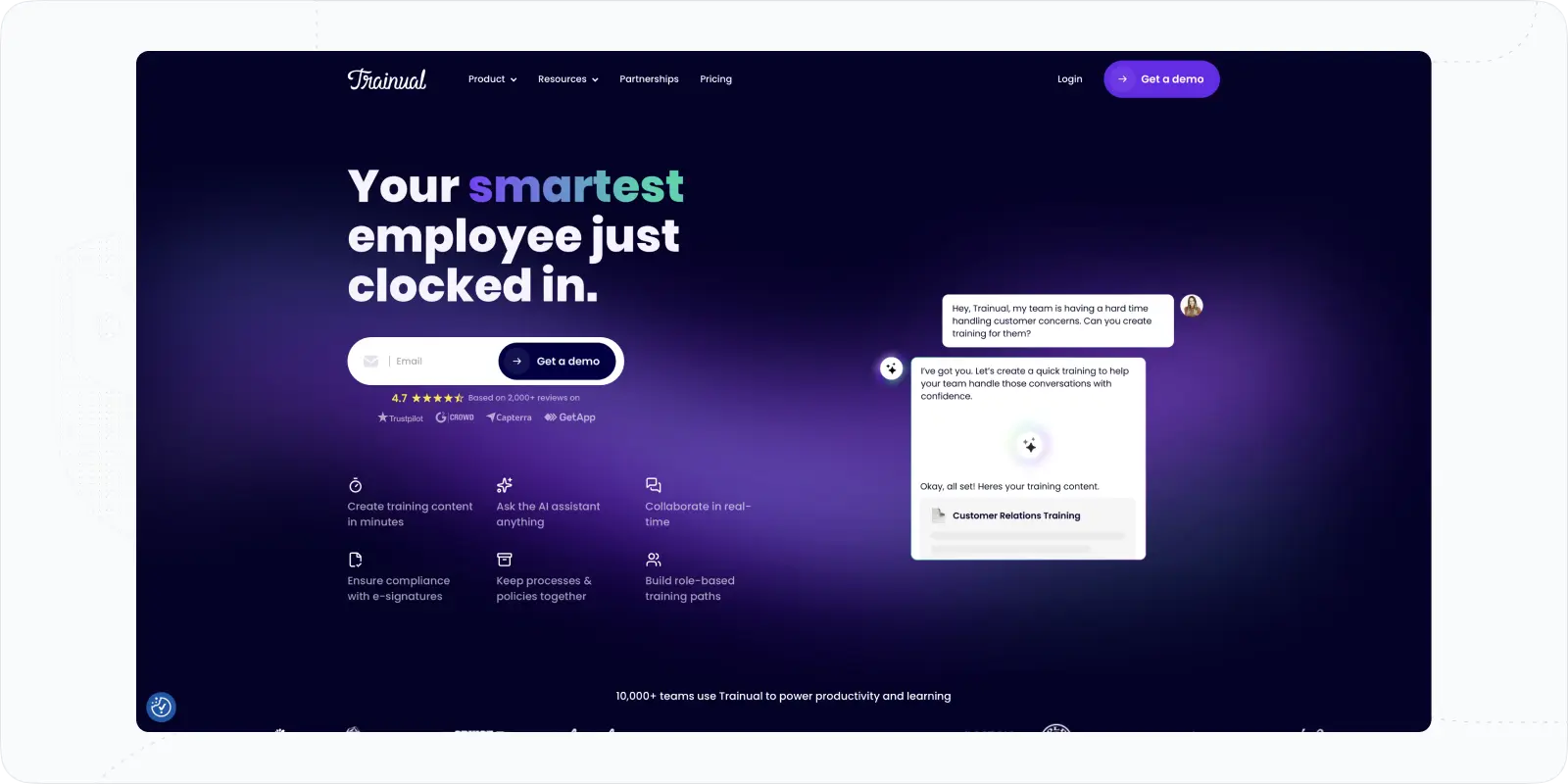
But the underlying training model hasn't changed as much as the product announcements might suggest. Content still lives in a single-scroll format, and the quiz layer sits on top rather than being built into a structured learning experience.
The navigation difference matters here more than it might seem. Trainual uses a single-scroll view — learners move through content linearly without a persistent view of what's in the module or what they've already completed. In a 2024 UI update, the sidebar that showed learners the full module outline was removed. Without it, new hires scroll through content, skip steps they don't realise are required, and miss documents that matter — payroll forms, compliance acknowledgments, required readings. Managers catch it weeks later.
One of our customers caught this exactly. Her team had been missing required onboarding documents for weeks before she traced it back to the navigation change. She flagged visible course structure with sequential unlocking as a non-negotiable during her demo, not a preference, a baseline requirement.
EducateMe displays a persistent course outline alongside lesson content, with each module unlocking only after the previous one is complete. Learners always know where they are, what's next, and what they can't skip.
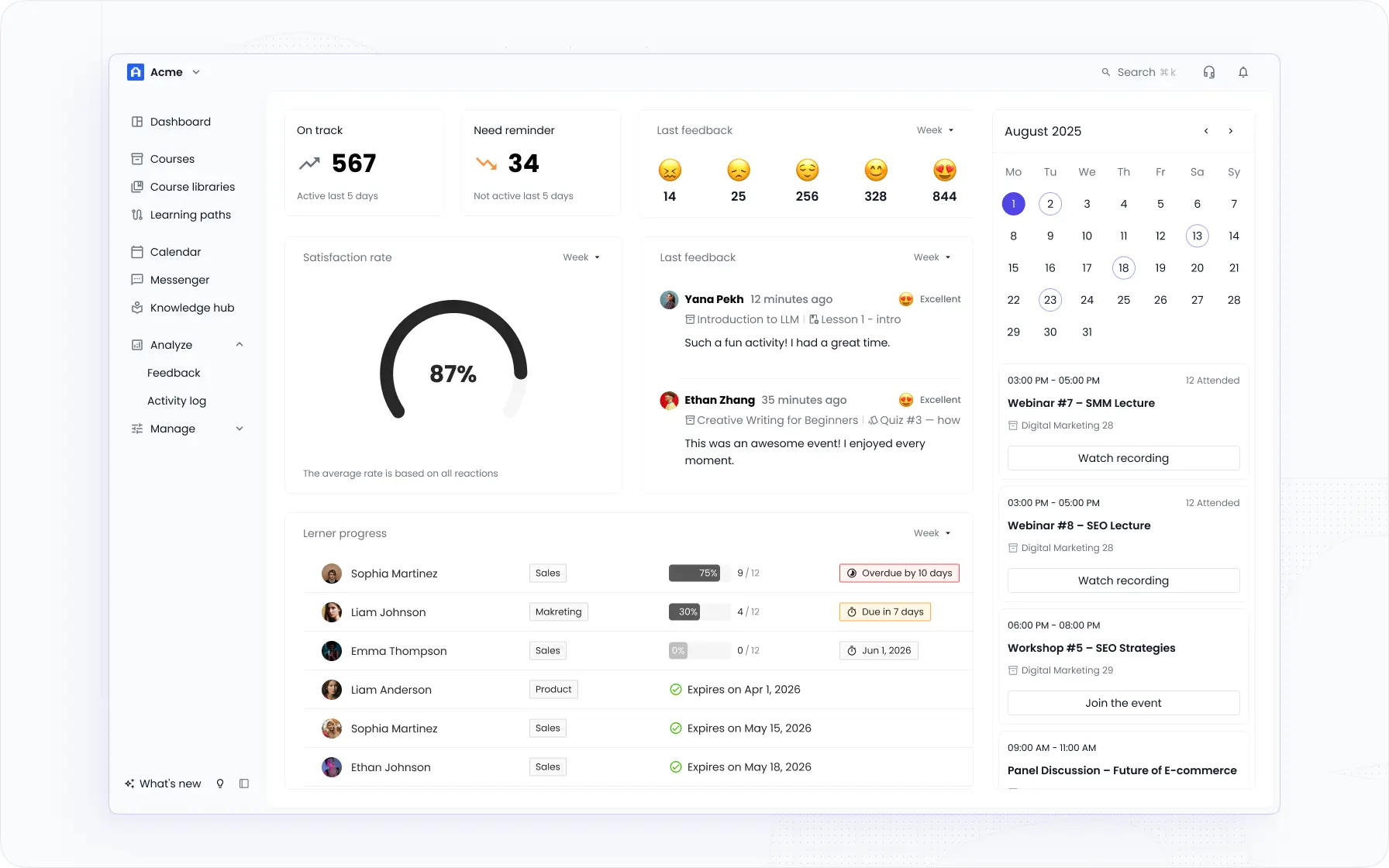
⚡️The deeper difference: Trainual is a knowledge base with a quiz layer and, now, an operations management layer on top. EducateMe is a full corporate LMS with AI built into the product from the start. Course creation, learner support, assessment review, roleplay coaching, and analytics are all native.
Trainual: Where It's Genuinely Strong
SOP and process documentation
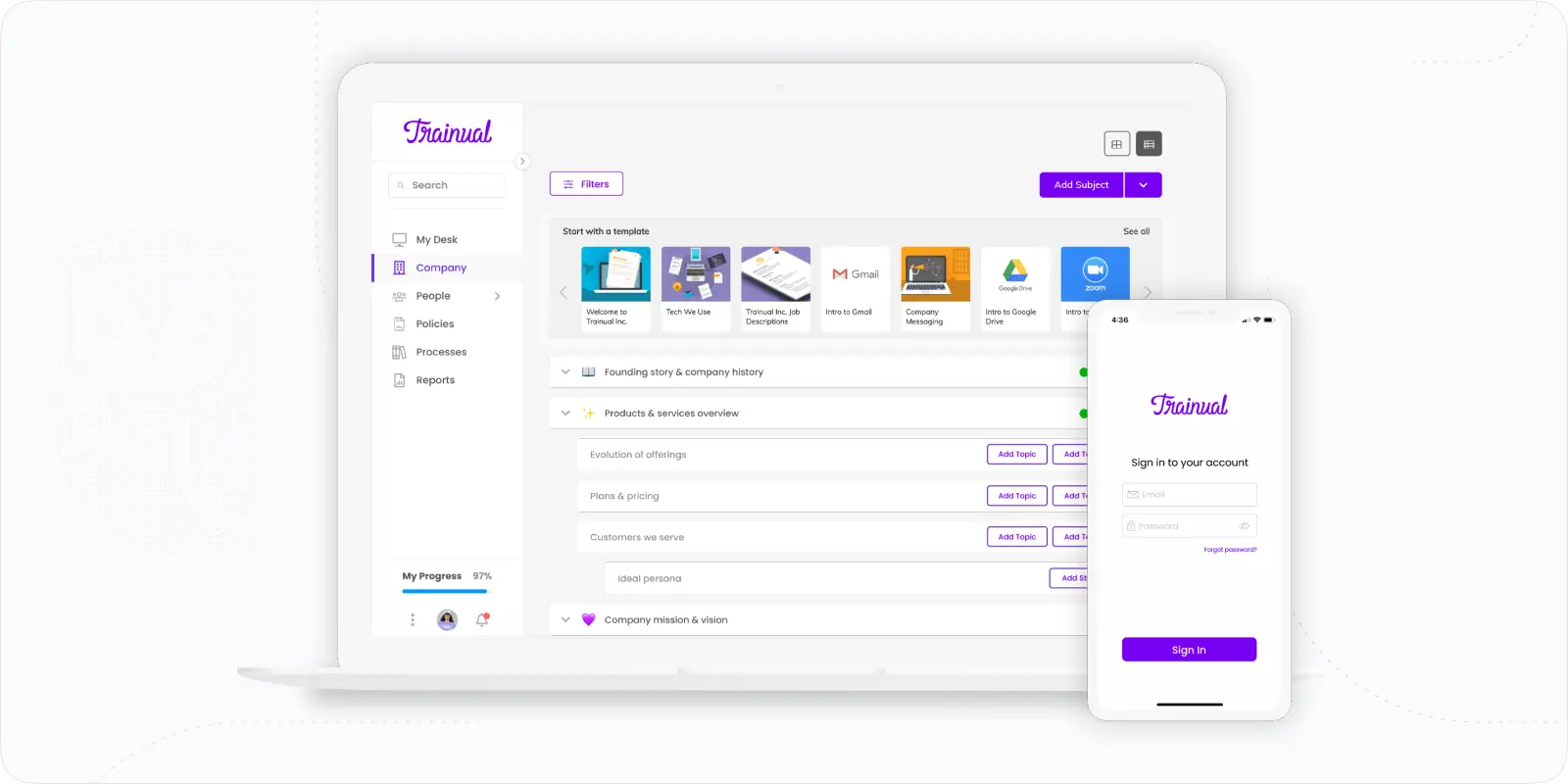
This is what Trainual was built for and where it's still best-in-class. If you need to capture how your business works — step-by-step processes, onboarding checklists, policy documents — the interface is clean and fast. Subject matter experts can contribute without training. That simplicity has real value for small teams with a lot of undocumented knowledge.
Training Paths (launched 2025)
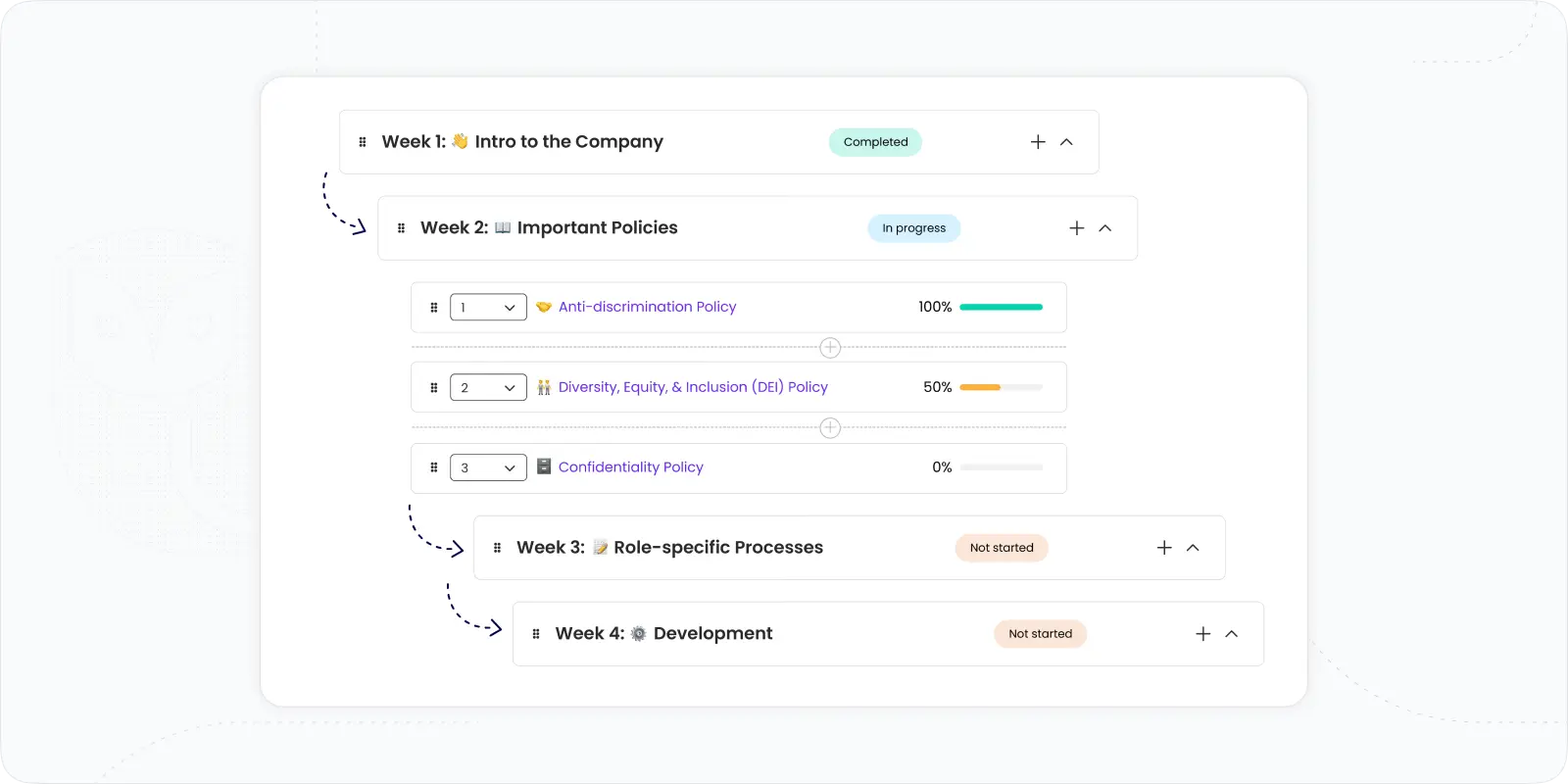
Trainual now supports structured multi-stage learning sequences. Build the path once, assign it to a role, and every new hire in that role gets the right content in the right order automatically. When a process changes, update once and Trainual notifies everyone who previously completed that subject. It's a meaningful architectural step toward what a proper LMS offers — though still without the analytics depth or learner experience controls a full LMS provides.
Operations suite (launched May 2026)
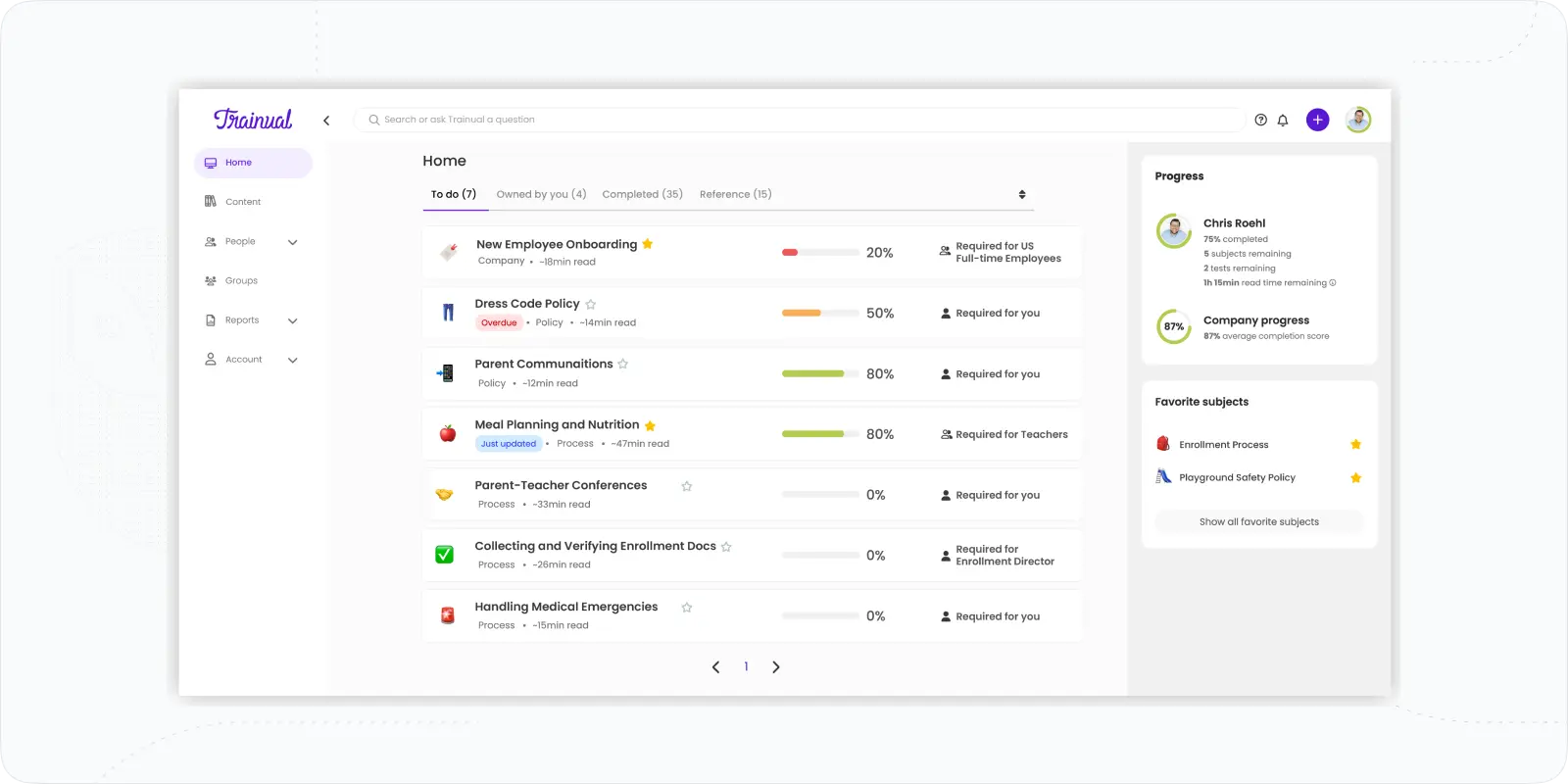
Trainual has expanded well beyond documentation. The new Operations suite adds structured meetings with agendas and action items, goal tracking visible to the whole team, scorecards for key metrics, async team check-ins, and an AI layer that surfaces what's off before you think to check. The Training suite and Operations suite now work together — the idea being that you document how work should happen, then track whether it actually does. For small operations-led teams that want one tool for process documentation, onboarding, and day-to-day execution, this is a meaningful expansion.
AI Assist for content generation
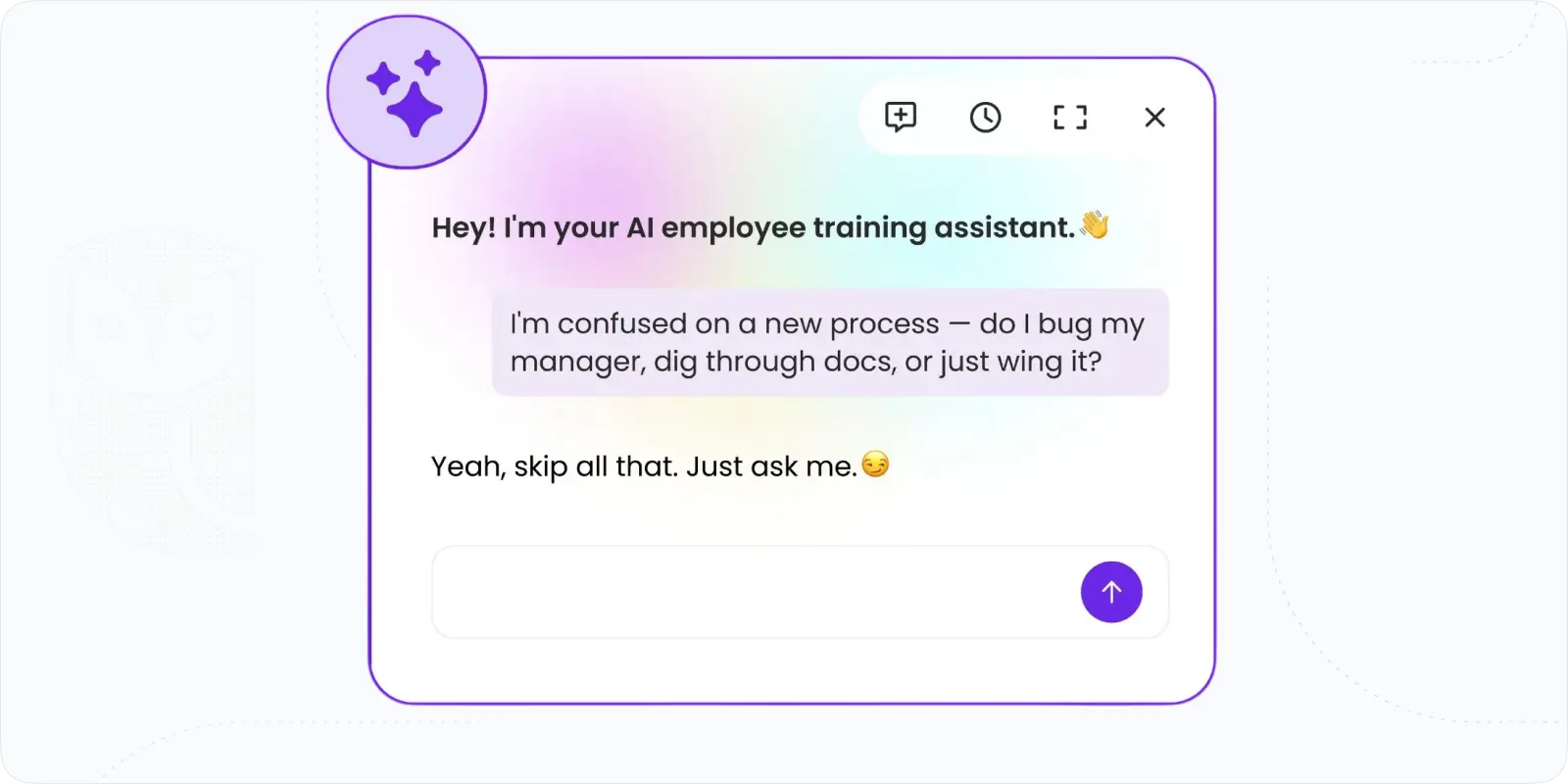
Trainual's AI generates SOPs, quizzes, and workflows from a prompt. 200+ templates for common business processes mean you're rarely starting from scratch.
Where Trainual Isn't the Answer
- Analytics stop at completion. Trainual tells you who finished a module and whether they passed a quiz. It doesn't tell you where learners dropped off, which questions were consistently answered wrong, how long was spent on each section, or whether completion correlated with any performance outcome.
- No multi-audience delivery. Trainual is built for internal teams. Training customers, partners, or contractors in separate branded environments isn't something the platform handles. If your training needs extend beyond your own employees, you're looking at a separate tool.
- No AI assessment or coaching. Trainual's AI generates content and, via the Operations suite, surfaces operational patterns. It doesn't evaluate whether learners understood training through adaptive conversation, assess open-ended submissions against defined criteria, or coach sales reps through practice conversations with structured feedback.
- Sequential navigation is still a problem. Despite the Training Paths update, the single-scroll view remains. Learners can still move through content without seeing the full module outline or being locked out of future steps. For structured onboarding where skipping a step has compliance or operational consequences, this is an architectural gap that content improvements haven't closed.
- The Operations suite expansion is also worth flagging as context. Trainual is moving toward being a full operations platform (meetings, goals, KPIs, accountability), not just a training tool. If your evaluation is purely about training capability (structured learning, AI assessment, multi-audience delivery), the comparison still holds. But the product's strategic direction is toward operational management, not deeper learning functionality.
EducateMe: Where It's Genuinely Strong
AI built into the product, not layered on
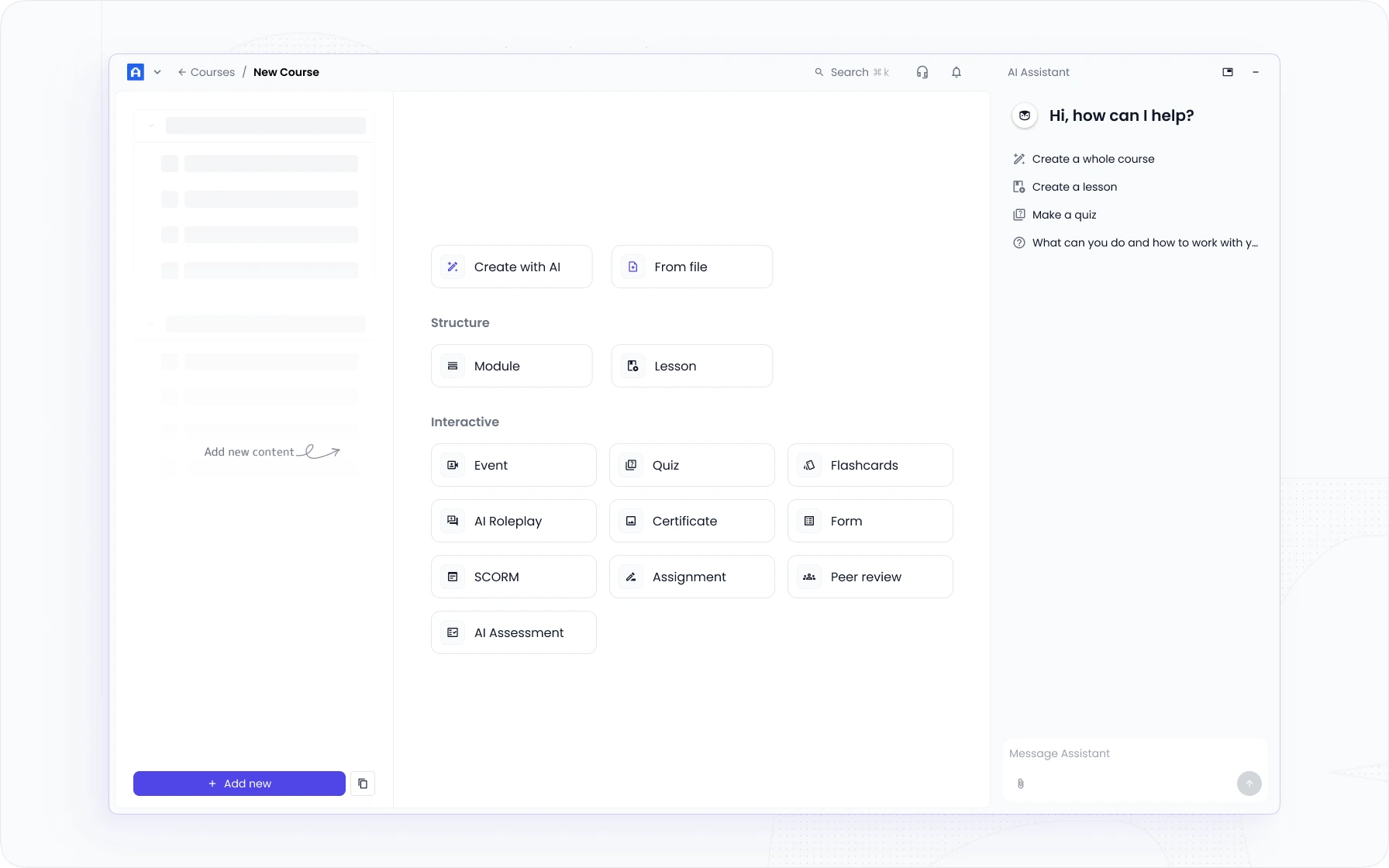
EducateMe's AI Assistant builds courses from a prompt, URL, PDF, or uploaded file. Recent updates extend this further: the AI Assistant now generates images automatically as part of content creation, searches public video sources to embed relevant clips directly into lessons, and can create charts and graphs (bar, pie, line) directly inside course content via an April 2026 canvas update. These aren't integrations, they're part of the same authoring workflow.
AI Roleplay Coach — the feature Trainual can't match
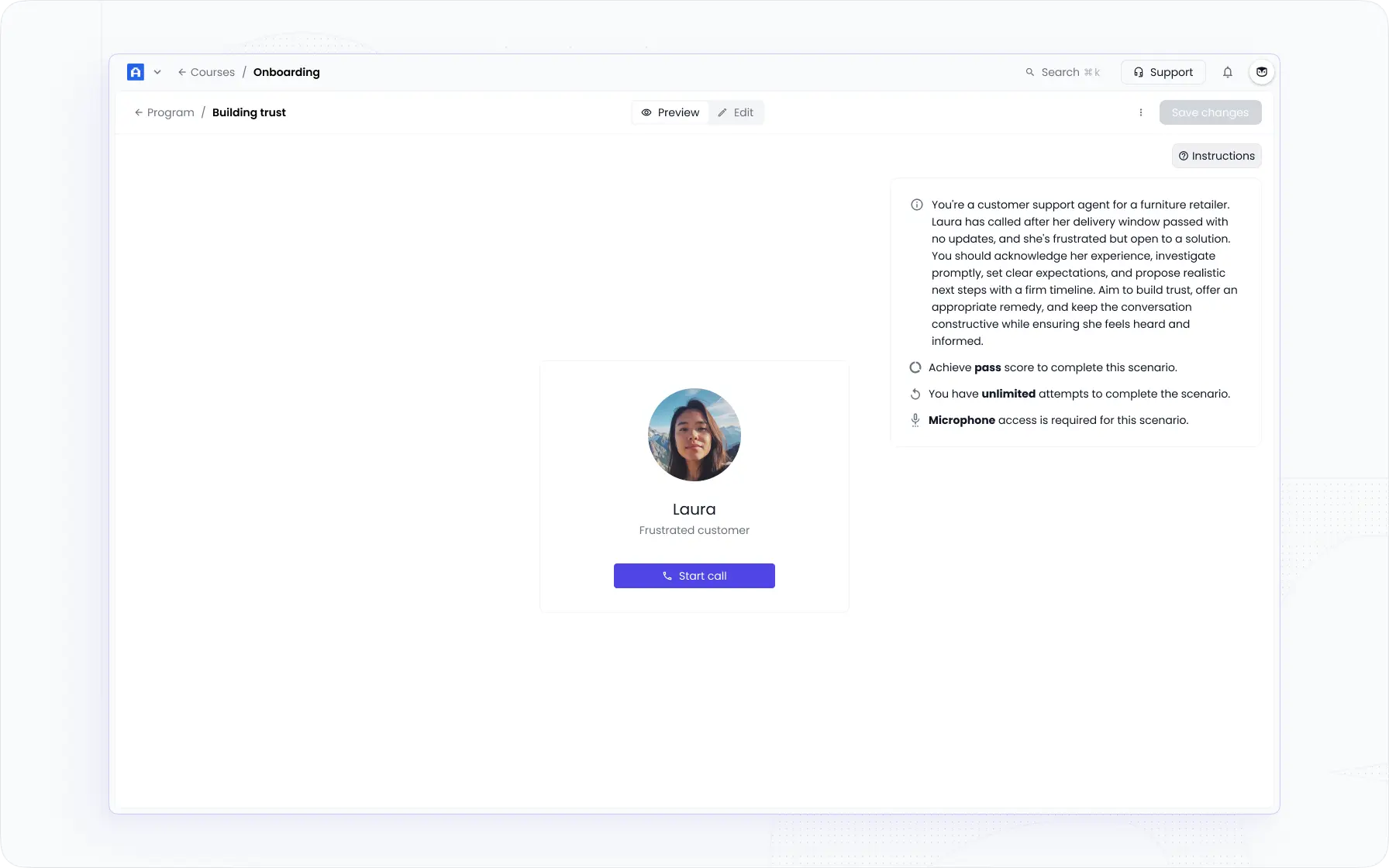
The AI Roleplay Coach lets learners practice real conversations with AI personas and receive structured feedback scored against a rubric. A May 2026 update added percentage scoring (0–100) instead of pass/fail, with configurable minimum scores learners must reach before a scenario is marked complete. A March 2026 update added chat mode for text-based conversation practice alongside the existing voice format. Multilingual support covers English, Spanish, Portuguese, German, Italian, French, and Ukrainian — global teams can practise in their own language.
Analyze with AI
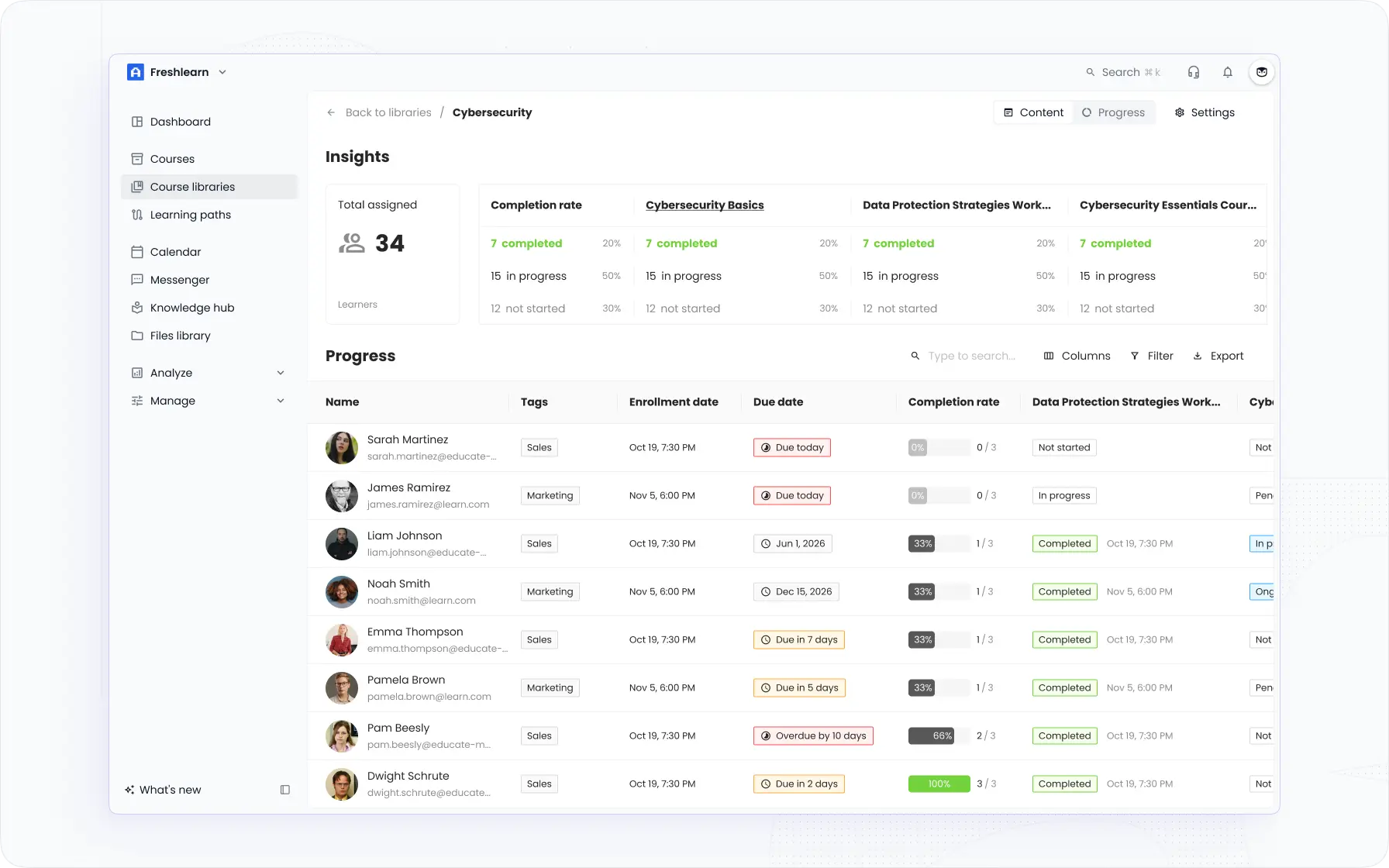
An April 2026 update lets admins run AI analysis across quiz data, forms, AI Roleplay results, and AI Assessment results to surface knowledge gaps, learner struggles, and key performance patterns. Instead of exporting data to interpret manually, the analysis comes to you.
Structured navigation with visible course outline
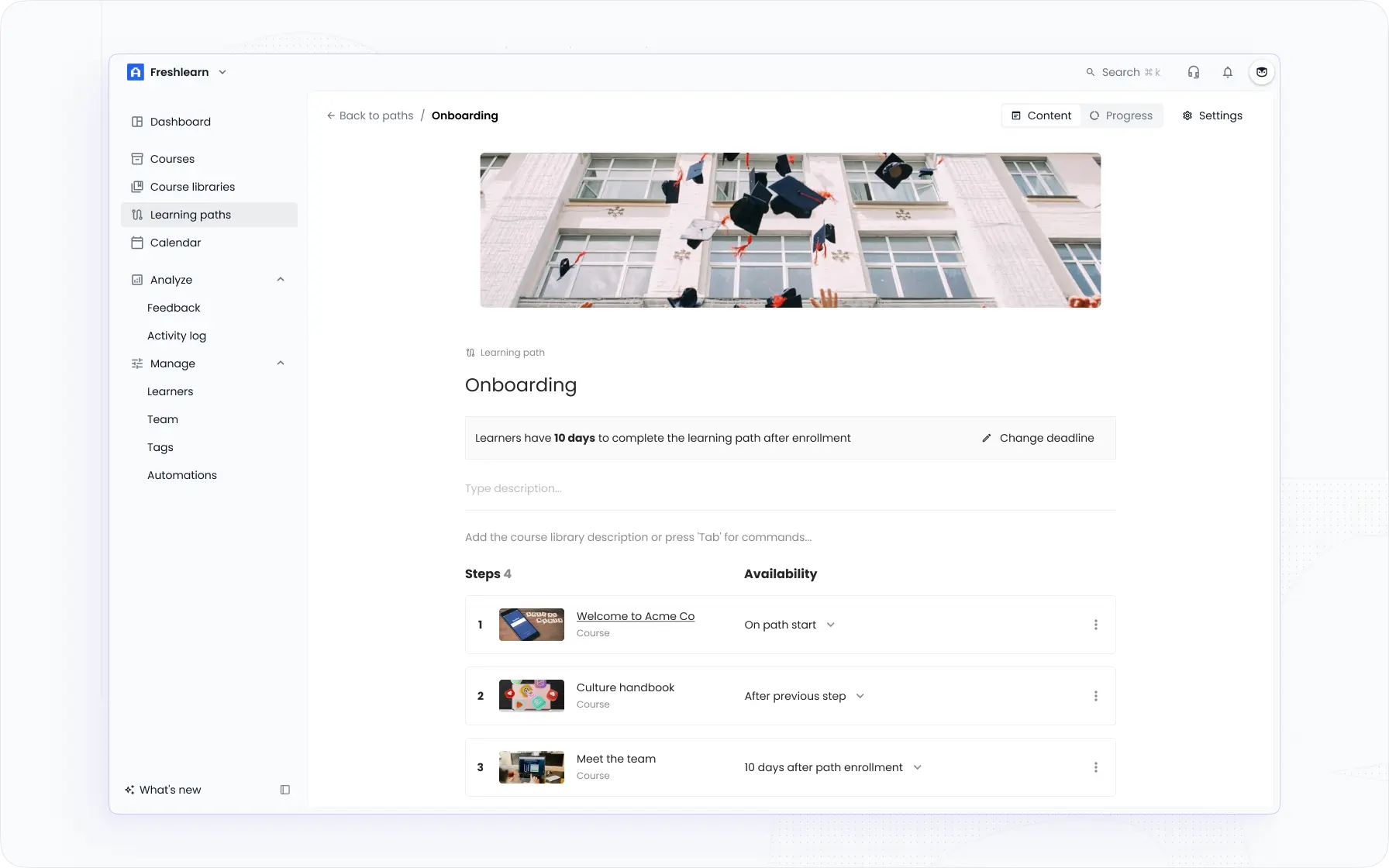
Every EducateMe course displays a persistent outline alongside lesson content. Sequential unlocking is configurable — you decide whether learners must complete each module before the next one unlocks. For onboarding programmes where skipping steps has real consequences, this is the baseline Trainual's current UI can't deliver.
Transparent pricing, high-touch support on every plan
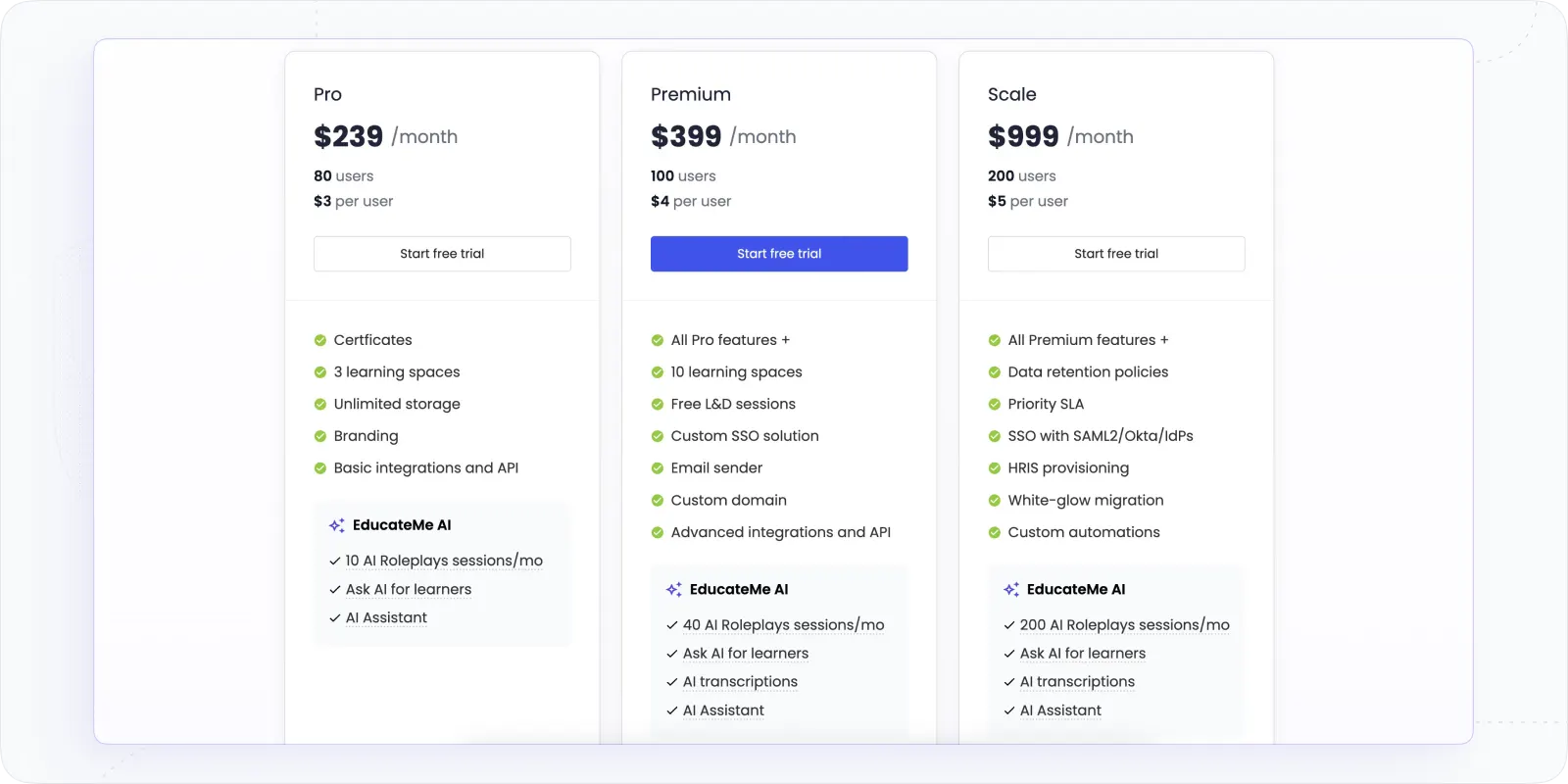
Pro at $239/mo, Premium at $399/mo, Scale at $999/mo — published, no sales call required. Most platforms reserve dedicated customer success for enterprise tiers. EducateMe offers it across all plans, which matters for small L&D teams without a dedicated LMS admin.
Where EducateMe Isn't the Answer
- No native iOS/Android app. The platform is mobile-responsive, but if your workforce is frontline or deskless and needs offline mobile access, this is a real gap.
- Gamification is limited. Badges and leaderboards aren't a current strength. If completion motivation in your team depends on points and rankings, other platforms serve that need better.
- EducateMe is build-first. There's no built-in content library. The AI tools make building fast, but you're creating your own content rather than deploying off-the-shelf courses.
- No operations management layer. Trainual's new Operations suite covers meetings, goals, scorecards, and check-ins. EducateMe doesn't — it's a training platform, not an operational management tool. If you're looking for one system that connects process documentation to day-to-day execution, Trainual's expanded scope is worth considering.
Trainual vs EducateMe: Feature Comparison
| Feature | EducateMe | Trainual |
|---|---|---|
| Course structure | Structured paths, persistent outline, sequential unlocking | Single-scroll, Training Paths (2025), no sequential locking |
| AI course creation | Yes — prompt, URL, file, auto-images, video embed, charts | Yes — AI Assist for SOPs, quizzes, workflows |
| AI roleplay coaching | Yes — voice and chat mode, % scoring, multilingual | No |
| AI assessment | Yes — adaptive conversation, final score with feedback | No |
| AI assignment review | Yes — auto-evaluation against instructor criteria | No |
| Analyze with AI | Yes — surfaces gaps across quizzes, roleplays, assessments | No |
| MCP integration | Yes — connects to Claude, ChatGPT, and other AI tools | No |
Who Should Choose EducateMe
- Teams that have outgrown Trainual's documentation model and need actual training delivery — structured paths, visible navigation, completion enforcement, AI coaching, and analytics that go beyond "finished / not finished."
- Organisations running onboarding, upskilling, compliance, or sales training across 50–1,000 employees where new hire completion rates and training quality directly affect business outcomes.
- Companies training multiple audiences (employees, customers, partners) who need separate branded environments without managing multiple platforms.
- L&D teams of one or two people who need high-touch support without paying enterprise prices for it.
- Sales and support teams who want AI-powered practice built into training paths, not as a standalone tool.
- Teams already using Claude, ChatGPT, or other AI tools who want their LMS data accessible from those environments via MCP.
Who Should Choose Trainual
- Very small teams (under 25 people) who need to document their processes, SOPs, and policies quickly without building a full training programme.
- Operations-led companies where the primary use case is capturing how things get done, tracking whether they're being done, and making that knowledge searchable and assignable by role.
- Teams that want one platform connecting process documentation, onboarding, and day-to-day operational execution (meetings, goals, and scorecards) without managing separate tools for each.
- Teams that need in-context training via browser extension, surfacing process documentation inside the tools employees are already using.
- Businesses that don't train external audiences and don't anticipate needing to.
The Honest Summary
Trainual has moved meaningfully in 2025–2026. Training Paths, hosted video with watch requirements, AI Assist, and now the Operations suite have taken it from a documentation tool with quizzes into something closer to a lightweight operations platform. That's genuinely useful for small, ops-led teams. The gap in learner experience, AI assessment depth, and multi-audience capability remains, but the product is no longer standing still. It's just heading in a different direction than EducateMe.
EducateMe is a full corporate LMS. The comparison becomes relevant when your training needs grow past what a documentation tool can handle, which, in my experience, happens around the time you're onboarding faster than you can manually verify completion, trying to run training for an external audience, or asking why people are passing quizzes but still making the same mistakes on the job.
Frequently asked questions
Yes, and it's faster than it sounds. EducateMe's AI Assistant can rebuild modules directly from uploaded PDFs or document exports, so if your Trainual content lives in documents, much of the migration is automated. Quizzes and branching logic need manual rebuilding — they rarely transfer cleanly between platforms. Most teams with 20–30 active courses are fully migrated and live within a few days. EducateMe includes content migration assistance in every plan at no extra cost.
EducateMe's Pro plan starts at $239/month and is publicly listed. Trainual doesn't publish pricing; you need a demo conversation to find out what you'll pay, which makes direct comparison harder than it should be. The real cost question is what you're getting: Trainual covers documentation, basic quizzes, and now an Operations suite for meetings and goals; EducateMe covers structured learning paths, AI course creation, AI Roleplay Coach, AI Assessment, multi-audience portals, and analytics with AI-generated insights. For pure training capability, EducateMe is typically the more transparent and cost-predictable option.
Honestly, it depends on what you're training for. If you need SOP documentation and basic onboarding quizzes, Trainual is the simpler, cheaper option at that size. EducateMe starts to justify itself when you're running structured onboarding with compliance requirements, training external audiences like customers or partners, or want AI roleplay coaching for sales or support teams. If any of those apply, the platform size doesn't change the value. If none of them do, Trainual is probably the right call until your needs grow.
Yes. EducateMe's rule-based automation covers auto-enrollment by role, department, seniority, or region, so new hires inherit the right training automatically, the same way Trainual's role architecture works. When content changes, you can trigger re-enrollment or notifications to anyone who previously completed that module. The difference is that EducateMe adds sequential locking, analytics depth, and AI assessment on top of that structure — things Trainual's onboarding model doesn't offer.