
Why Corporate Training Fails: 4 Reasons and How to Fix Them

By Alexa BerezinaAlexa BerezinaL&D Specialist & CSM LeadMy name is Oleksandra (Alexa), and I’m a certified Learning & Development specialist focused on turning complex knowledge…Read more
L&D Specialist & CSM Lead
8 min read
Afew years back, I sat in a debrief with a sales enablement manager at a mid-sized SaaS company. They'd just run a full-day product training for their 40-person sales team. New features, updated positioning, three guest speakers. Cost them roughly $12,000 in time and lost selling hours. Six weeks later, their sales ops team pulled the data: win rates were flat. Deal velocity hadn't moved. When managers listened back to call recordings, reps were still leading with the old messaging.
The enablement manager wasn't surprised. "We knew it wasn't working," she told me. "We just didn't know what to do instead."
I've heard versions of that sentence more times than I can count. Corporate training fails — not occasionally, not in edge cases — routinely, predictably, and expensively. And the frustrating part is that it rarely fails because the content was wrong or the people were disengaged. It fails because of how it was built, when it was delivered, and what happened (or didn't) once it was over.
Four structural problems account for most of it. Here's what they are and what actually fixes them.
| Problem | What It Looks Like in Practice | Root Cause | Design Fix |
|---|---|---|---|
| Too theoretical | Reps pass the quiz but can't handle a live objection | No practice or application built into the flow | Scenario-based exercises, AI roleplay, skill simulations |
| Wrong timing | New hires forget 80% of week-one onboarding by week two | Content delivered before it's relevant | Spaced delivery tied to role milestones; just-in-time modules |
| No reinforcement | Knowledge fades within 6 days (Ebbinghaus forgetting curve) | One-and-done session with no follow-up designed in | Spaced repetition, retrieval quizzes, manager check-ins at 30/60/90 days |
| No perceived relevance | Employees click through mandatory modules without engaging | Training framed as compliance, not personal development | Role-specific paths, visible career goals, personal progress milestones |
The common thread: none of these problems are hard to see once you know what to look for. They're design failures, not people failures.
Corporate training fails for four predictable reasons: it's too theoretical, timed wrong, never reinforced, and doesn't feel personally relevant. The fix for each requires intentional design — scenario-based practice, spaced delivery, built-in reinforcement, and learning paths tied to individual goals.
1. Training is Too Theoretical to Stick
Sit through slides. Watch a video. Answer a quiz. Go back to your desk.
That's the training cycle at most companies, and it's why knowledge evaporates. 60% of employees say they forget training content within a week without immediate application.The gap between "covered in training" and "used on the job" is enormous — and it's not a motivation problem, it's a design problem.
I see this most sharply in sales training. A rep sits through a two-hour product update session. She's told the new features, shown a demo, asked three questions in a quiz. Then she's back on calls the next morning, and when a prospect asks a tricky question about the integration, she either wings it or goes quiet. The training didn't prepare her for that moment because it never made her practice that moment.
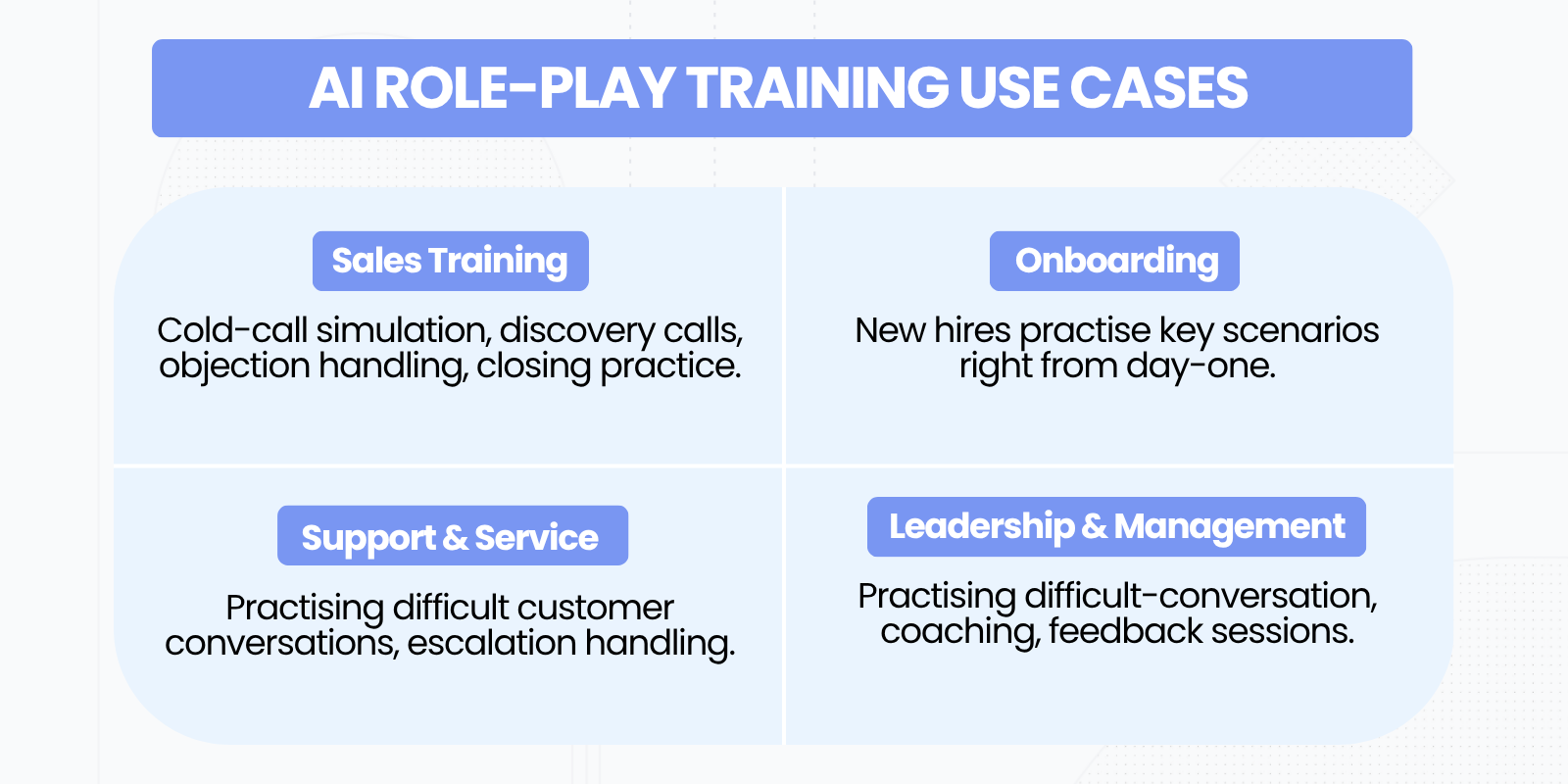
The fix isn't more content — it's more application. Scenario-based practice, real objection handling, role-specific simulations. The Role of Digital Simulation in Employee Training research supports this clearly: lecture-based training produces roughly 5% retention. Practising by doing gets you to 75%.
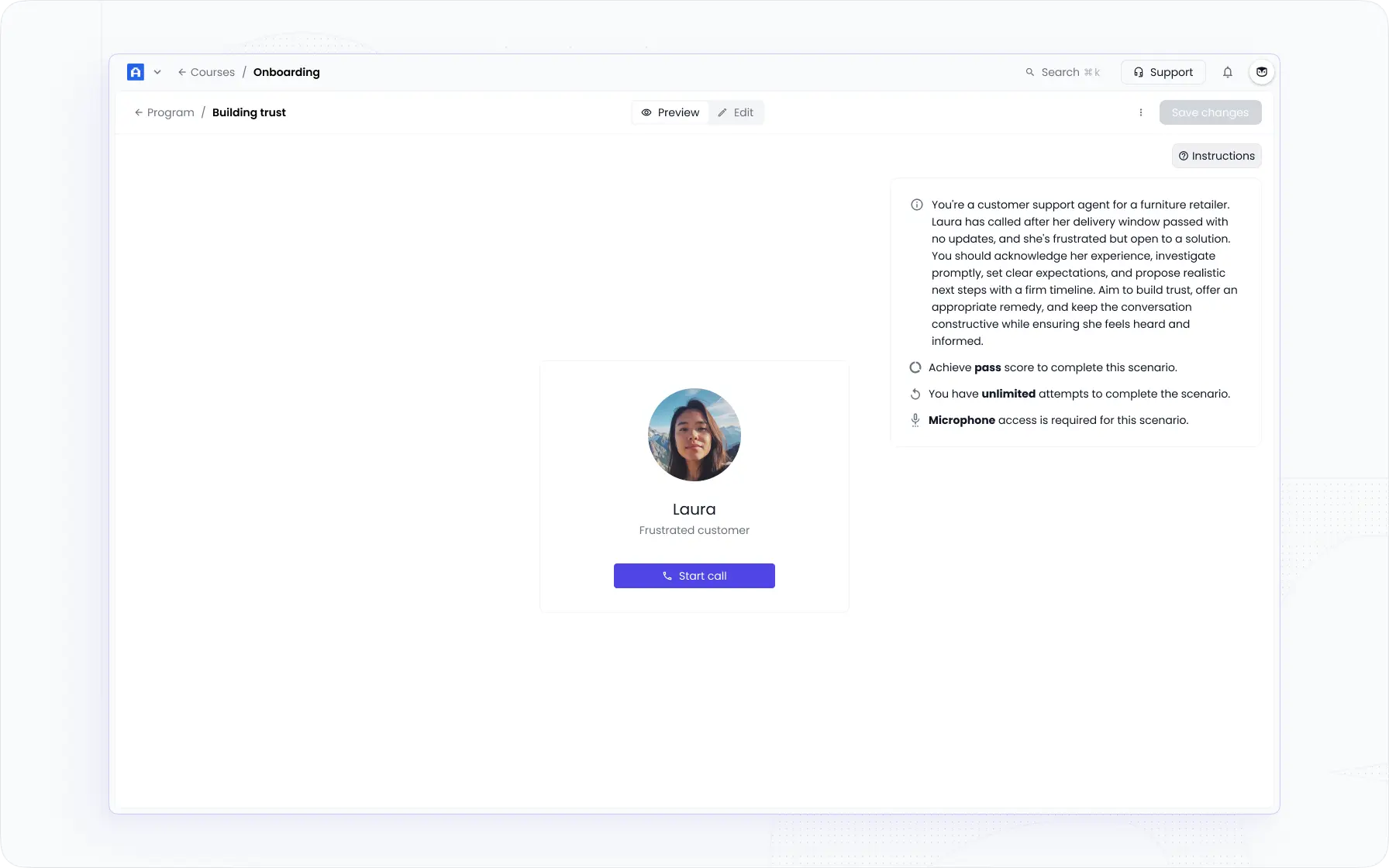
💡 EducateMe's AI Roleplay Coach exists precisely for this gap. Sales reps can practice live discovery calls, objection handling, and pricing conversations with an AI persona before they ever face a real prospect. The feedback is immediate, the stakes are low, and the repetition is scalable in a way human coaching simply isn't.
2. The Timing is Almost Always Wrong
Here's something I've noticed: companies don't just train people the wrong way. They train people at the wrong time.
The classic scenario: onboarding overload. A new hire joins, spends their first three days absorbing everything from company values to GDPR compliance to the full product suite. They remember maybe 20% of it. The rest disappears under the weight of actual work starting on day four.
Or the opposite: a team gets a product update training delivered four weeks before the feature launches, then another version again at launch. Twice the effort, no compounding of knowledge.
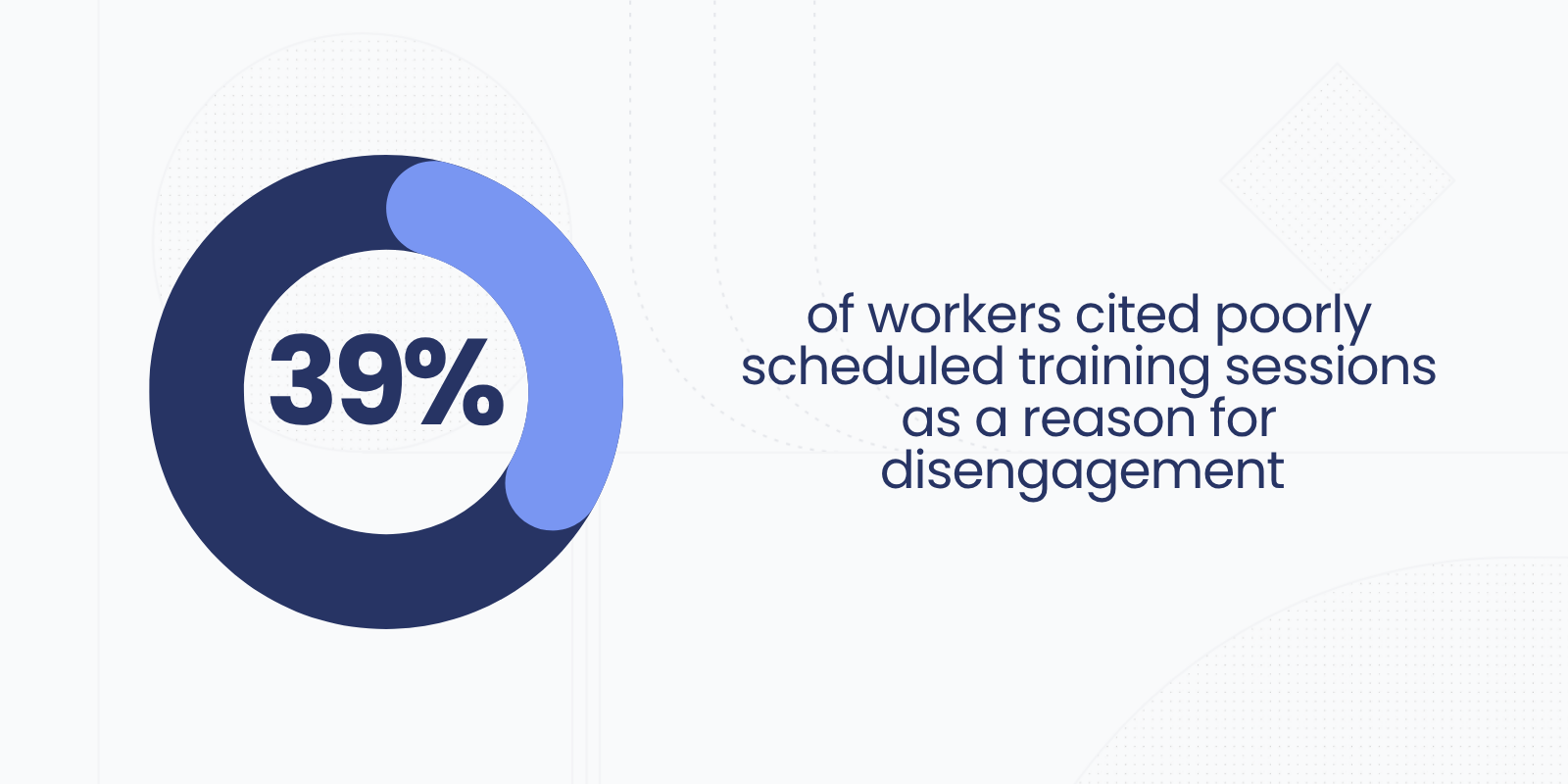
Those numbers shouldn't surprise anyone in L&D, but they should prompt a harder look at how training calendars get built.
Learning needs to connect to the moment where it's relevant. For a new hire, that means spreading onboarding across weeks — not front-loading everything into day one. For a sales team, that means delivering product training in the week before a feature goes live, not a month ahead. For a rep mid-deal, that means a two-minute reference resource in the moment, not a 45-minute module they'll never revisit.
3. There's no Reinforcement After the Session Ends
One session and a completion tick. That's how most corporate training ends, and that's why the knowledge doesn't last.
Hermann Ebbinghaus mapped this out in the 1880s — we forget around 75% of new information within six days without reinforcement. That was true in 1885 and it's just as true now. The forgetting curve isn't a mystery; it's a design problem. We know it happens. We just rarely build training to counter it.
What reinforcement actually looks like in practice: a follow-up quiz three days after a session. A short scenario in week two. A manager check-in at the 30-day mark. None of this is complicated, but it requires intent from the start, and that's where most programmes fall short.
I'd also add feedback to this. Reinforcement without feedback is just repetition. People need to know what they're getting right, where they're falling short, and specifically what to fix. In sales training especially, this matters — a rep who's been confidently pitching the wrong message for four weeks is harder to correct than one who got feedback on day three.
The knowledge retention strategies that actually work all share a common structure: spaced repetition, active recall, and practical application woven throughout — not layered on at the end as an afterthought.
4. Employees Don't Understand Why it Matters to Them
This is the one L&D teams underestimate most. If someone doesn't see a personal reason to engage with training, they won't — not really. They'll click through. They'll pass the quiz. But they won't retain anything, and they definitely won't change behaviour.
Recent workplace learning data shows that 36% of L&D teams rely on performance reviews to assess training impact, while 34% track productivity. What's notable there is what's missing: almost no one is measuring whether training felt personally relevant to the learner at the time they took it.
The "mandatory training from HR" framing is a conversion killer. The moment an employee sees that label, engagement drops. Compare that to training that's tied directly to their next career step, or framed around a problem they're actively trying to solve. Same content, completely different result.
This shows up clearly in sales onboarding. A new rep who understands that this module will help her close her first deal in 60 days, not 90, will engage with it differently than one who was just told it's required. The training hasn't changed. The perceived relevance has.
Tying training to individual goals, role-based paths, and visible progress milestones makes a measurable difference. It's also why competency-mapped learning paths outperform generic catalogues every time — the learner can see exactly where they're going, not just what they're supposed to complete.
How to Build Corporate Training That Actually Works
The four problems above aren't inevitable. They're design choices — or the absence of them.
Training works when it's built around practice, not just exposure. It works when it arrives at the moment people need it, not when the calendar says it's due. It works when reinforcement is built into the sequence from the start. And it works when learners can see, specifically, what's in it for them.
I'd start with any new programme by asking one question: after this training, what will a learner be able to do that they couldn't before? If the honest answer is "nothing specific," redesign before you build.
If you're evaluating platforms that actually support this kind of design, the 19 best LMS Platforms for Corporate Training covers the options worth considering, including what to look for beyond feature checklists and pricing pages.
Corporate training doesn't fail because people don't want to learn. It fails because the system isn't designed to make learning stick. Fix the system, and the results follow.
Frequently asked questions
The most common reason is a gap between what's taught and what employees can immediately apply. Most corporate training delivers information — slides, videos, quizzes — without enough practice or scenario work. When there's no clear connection to day-to-day tasks, knowledge fades within days. The fix is building application into the design from the start, not adding it as an optional follow-up.
Completion rates don't measure effectiveness — they measure activity. The metrics that matter are behaviour change, performance improvement, and business outcomes tied to the training goal. Practically, that means tracking assessment scores over time, manager feedback at 30/60/90 days, and (for sales training specifically) deal conversion rates before and after the programme. EducateMe's analytics dashboard tracks 15+ metrics per learner, making it easier to connect training data to actual performance.
Sales environments move fast and change constantly — product updates, new objections, new verticals. Training that's built once and delivered annually can't keep up. Sales reps also need repetition and feedback more than most roles, because the skill is conversational, not just informational. One-off sessions don't build pitch confidence. EducateMe's AI Roleplay Coach addresses this directly — reps can practice real calls, objection scenarios, and discovery conversations repeatedly, with rubric-based feedback after each session.
The issue is rarely volume — it's density and timing. Overloading a new hire in their first week, or piling three mandatory modules into a busy quarter, causes disengagement regardless of content quality. The general principle: no more than one new concept or skill per session, spaced at least a few days apart, with a short retrieval exercise between each. If you're running onboarding, spread it across 30–60 days rather than compressing it into the first week. Quality and spacing beat volume every time.