
What Is a Corporate LMS, and How to Choose the Right One

By Roman ShaukRoman ShaukCorporate Training & AI Expert, FounderRoman Shauk is the Founder of EducateMe.Read more
Corporate Training & AI Expert, Founder
8 min read
Most companies don't realise they need a corporate LMS until something breaks. A compliance audit comes back with gaps. A new hire cohort finishes onboarding and still can't do the job. A product update goes out and half the support team finds out from a customer complaint. We've seen all three, and in each case the root cause was the same: no structured system for getting knowledge to the right people at the right time.
A corporate learning management system is the infrastructure that stops those things from happening. It's a software platform that lets companies create, deliver, and track employee training at scale — where you build courses, assign them to the right people, set deadlines, capture completions, and pull reports for auditors or leadership.
The practical definition: it's what replaces the spreadsheet, the shared Google Drive folder, and the email thread that currently passes for your training programme. A well-set-up corporate LMS means you stop chasing people for completion screenshots and start having actual visibility into whether your workforce knows what it needs to know.
Modern platforms go further than storing and delivering courses. AI now does real work across the training cycle:
- Gap detection. Ident files which employees are missing knowledge before a manager notices a problem.
- Course creation. Generates a full course from a document, URL, or prompt in minutes, not days.
- Roleplay coaching. Lets sales reps, frontline employees or support staff practise difficult conversations with structured feedback, without the social risk of getting it wrong in front of a colleague.
- Smart search. Surfaces the right piece of knowledge at the moment someone needs it, not after they've gone looking.
Choosing an LMS is supposed to be a strategic decision. In practice, it usually turns into a feature comparison where the best demo wins the room. Six months later, adoption is low, IT is frustrated, and L&D is getting complaints. It doesn't have to go that way. — Oleksandra Berezina, L&D Specialist, EducateMe
Corporate LMS vs. a Standard LMS: What's the Difference?
Not all LMS platforms are built for corporate use. Academic LMS tools (the kind universities use) are designed for a semester-based model with a fixed cohort of students. Corporate training doesn't work like that.
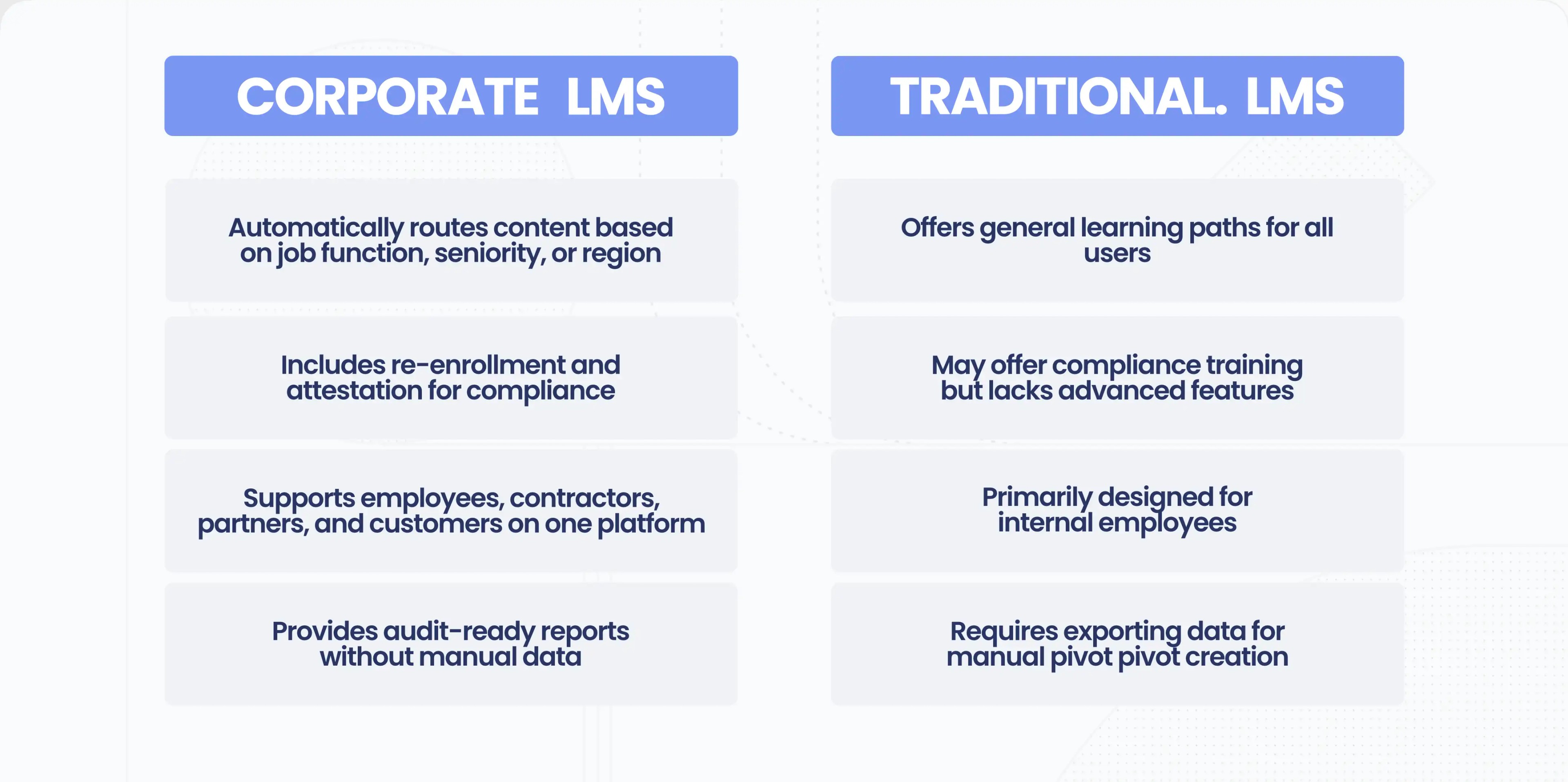
In a business context, you're dealing with multiple departments, ongoing compliance cycles, new hire waves, and different content for different roles — often all at the same time. A corporate LMS is built for that. It handles:
- Role-based learning paths — automatically routing content based on job function, seniority, or region
- Mandatory compliance training with re-enrollment and attestation
- Multi-audience delivery — employees, contractors, partners, and customers on the same platform
- Audit-ready reporting that doesn't require you to export a CSV and build a pivot table
If you're trying to decide between platform types, our LMS platform guide covers the broader landscape.
The ROI Case for a Corporate LMS
If you're the person who has to justify this purchase to a CFO, the ROI conversation is usually the hardest part. Here's what actually moves the needle.
Reduced time-to-productivity for new hires
Onboarding is expensive. A poor onboarding experience costs roughly 1.5–2x the employee's salary in lost productivity and replacement risk. Structured, auto-enrolled onboarding paths cut ramp time measurably — EducateMe customers, for example, report 1.8x faster onboarding compared to unstructured programmes.
Compliance risk reduction
In regulated industries (healthcare especially) a missed compliance training isn't just an HR problem. It's a liability. An LMS with automated re-enrollment, completion tracking, and attestation capture turns compliance from a manual headache into something that mostly runs itself. The audit trail alone justifies the cost for most healthcare and financial services teams.
Faster course creation
L&D teams are small. Most companies I've spoken to have one or two people responsible for training across hundreds of employees. AI-native platforms have changed the economics here: EducateMe's AI course creation tools reduce course creation time by roughly 3x compared to building from scratch.
Key Features to Look for in a Corporate LMS
Feature lists on vendor websites are almost universally useless. Everything claims to be intuitive. Every platform promises analytics. Here's what actually matters — and what to verify, not just check a box on.
Compliance tracking and audit readiness
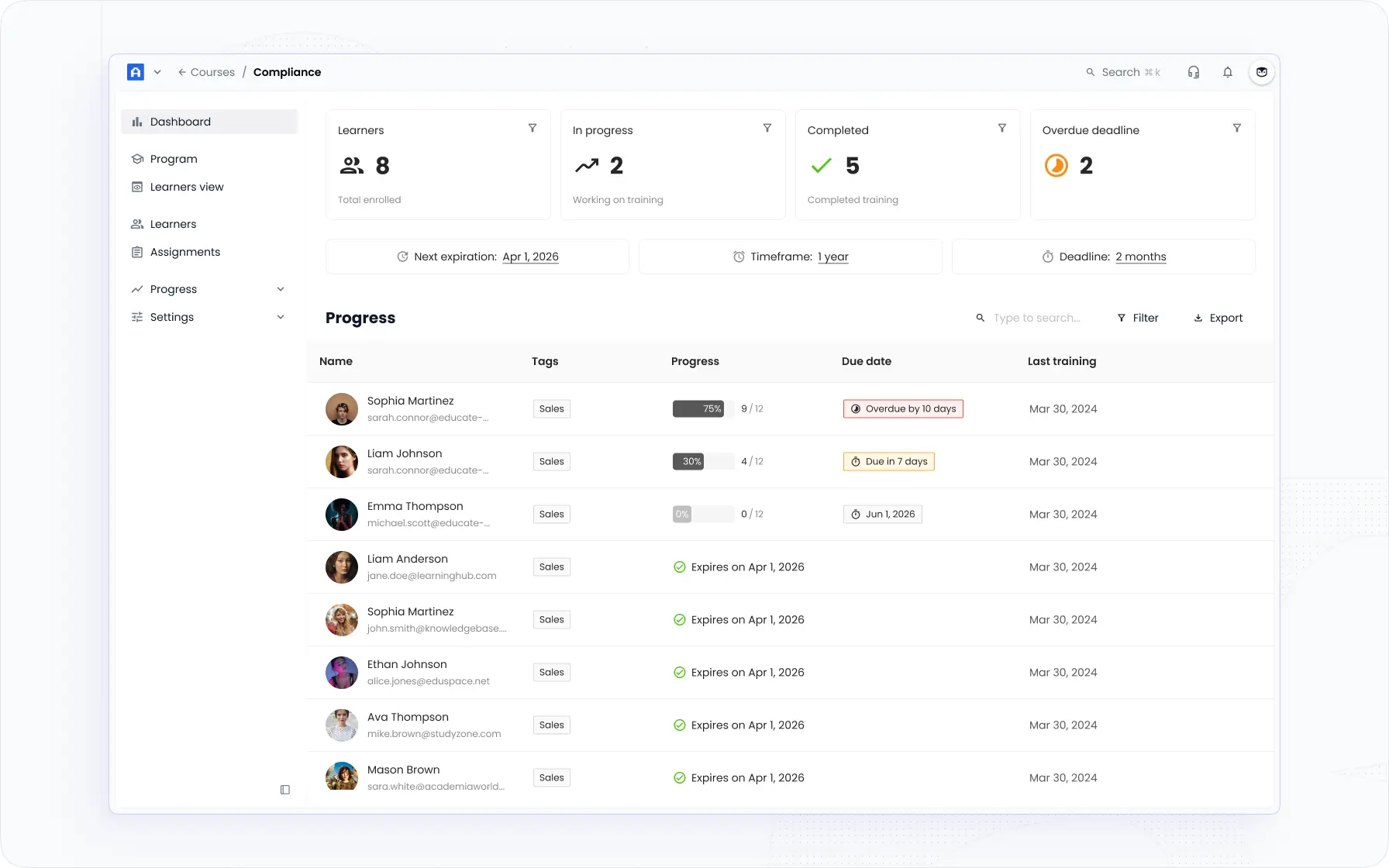
Ask to see the compliance report before you buy. Not a screenshot — a live demo of how completions are tracked, what happens when someone misses a deadline, and how the re-enrollment logic works. If this takes more than three clicks to show you, that's your answer.
AI-native tools — not bolted-on features
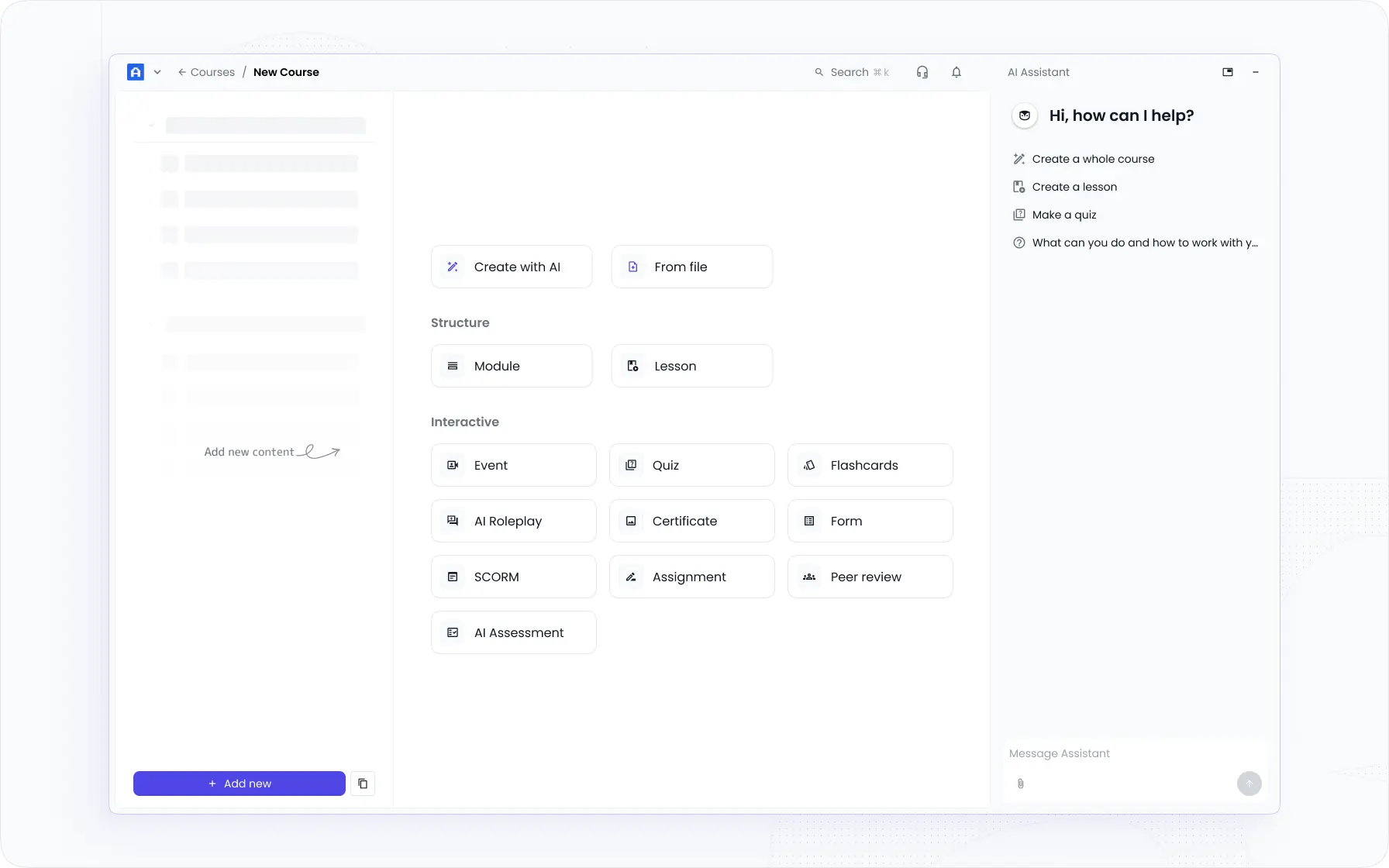
There's a meaningful difference between an LMS that added an AI chatbot last quarter and one where AI is built into the core workflow. Look for AI that does real work: generating courses from source material, identifying knowledge gaps, providing roleplay coaching for frontline staff.
Multi-audience delivery
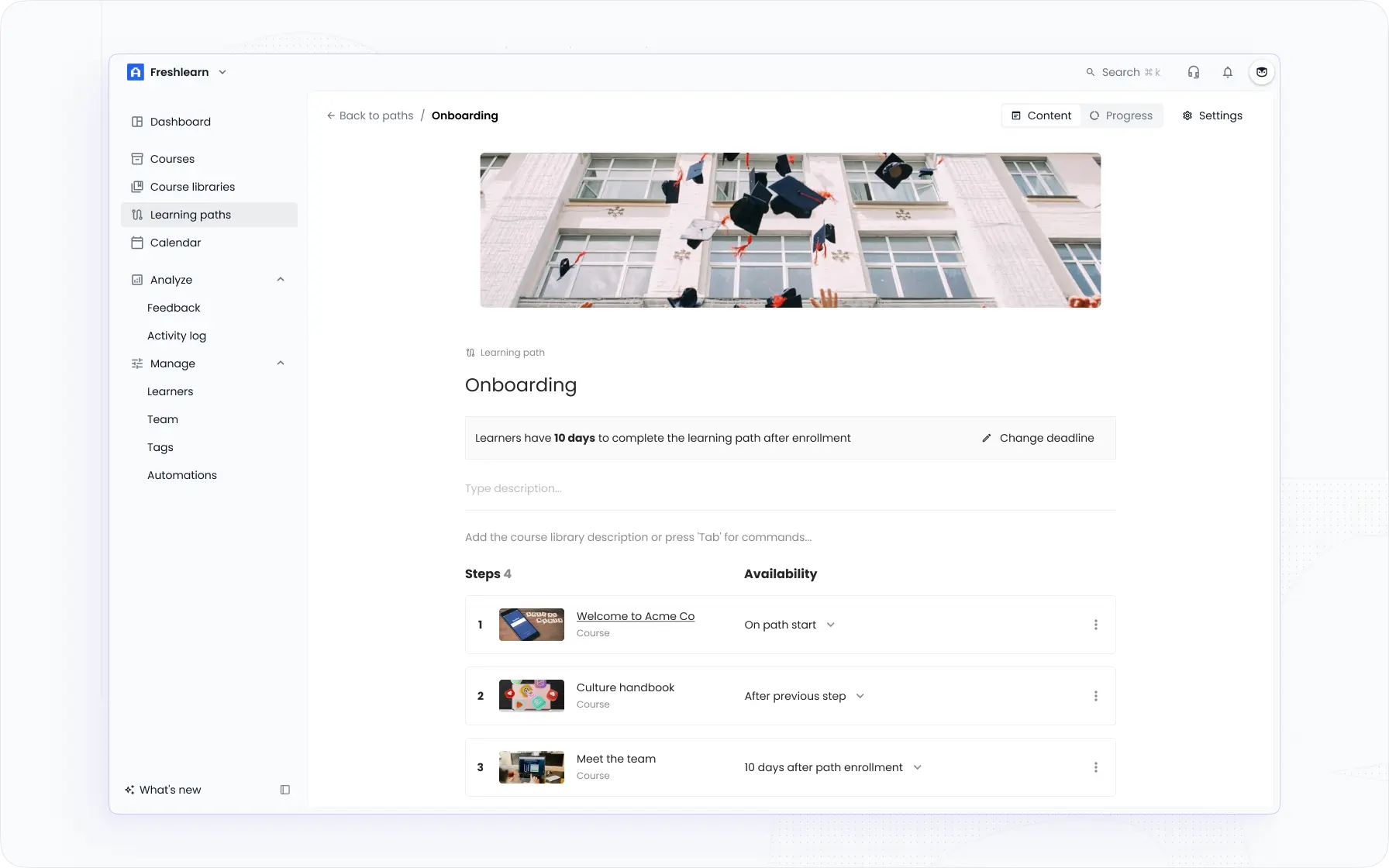
Most mid-sized companies train more than just employees. Partners need product knowledge. Customers need onboarding. If you're buying a platform today, check whether it can handle external audiences without requiring a separate contract or a custom integration project.
Reporting that non-technical managers can use
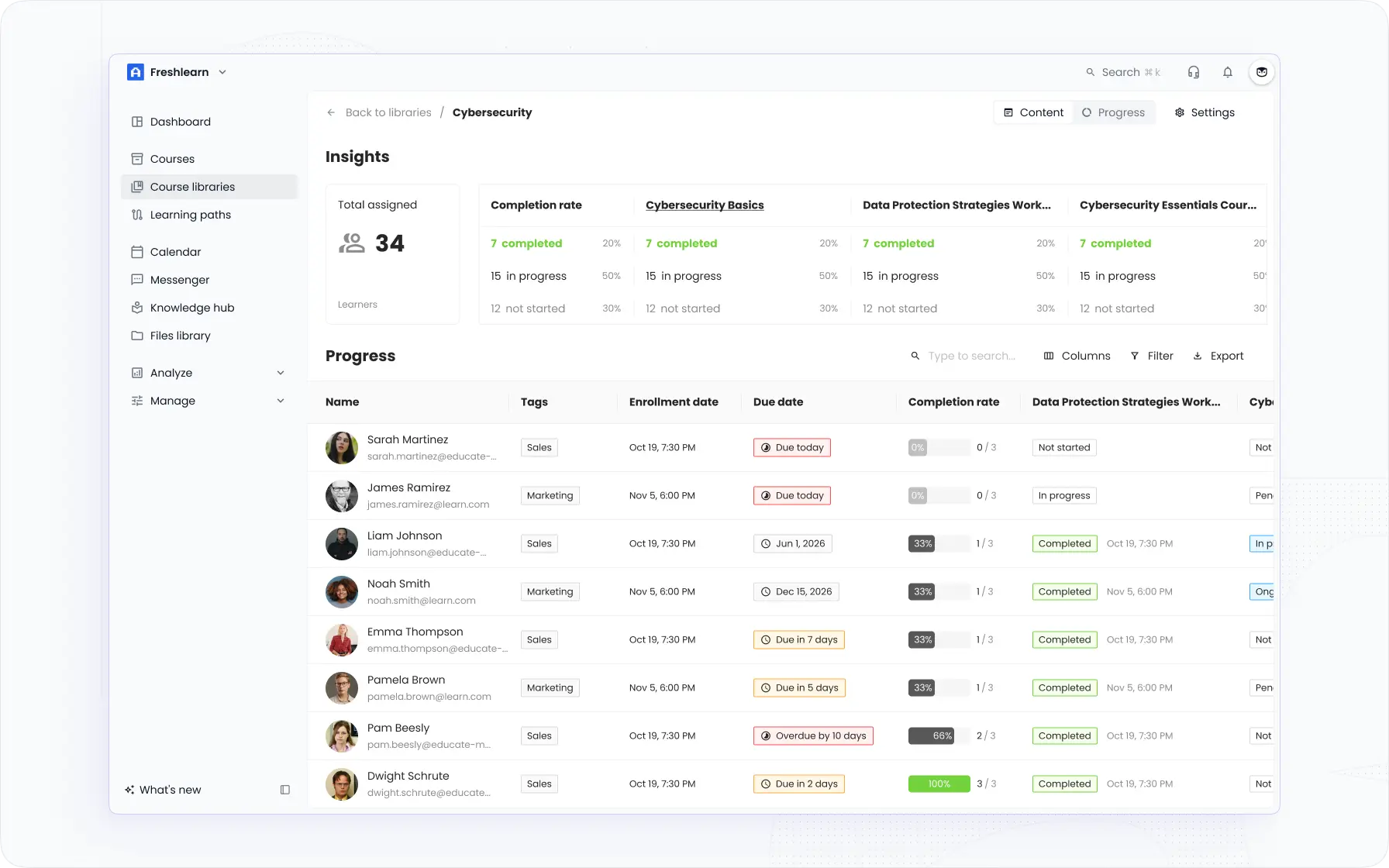
L&D teams love dashboards. The real test is whether the department manager who doesn't log in every day can pull a report themselves in under two minutes. If it requires an L&D admin to run every report, you'll spend half your time being a reporting service.
White-label and multi-tenancy
Not every company needs this — but if you run training for partners, clients, or separate business units, white-labelling in LMS matters. It's the difference between a branded experience and learners landing on a page that says a vendor's name in the top corner.
How to Choose a Corporate LMS: A Practical Framework
Most LMS decisions don't need a formal request for proposal. They need a clear use case, a short shortlist, and a real pilot. The spreadsheet-heavy evaluation process takes months and usually rewards the vendor with the best demo, not the best product. Here's a faster approach
1. Start with your must-have use case, not a feature wishlist. What's the one training problem that, if you solved it, would make this purchase obviously worth it? Compliance tracking? Faster onboarding? Sales training at scale? That use case should be the primary evaluation criterion. Everything else is secondary.
2. Shortlist to 3 platforms maximum. Evaluating more than three platforms simultaneously is how decisions stall for six months. Pick two established players and one newer AI-native option. Run them in parallel over 1-3 weeks.
3. Run a real pilot — not a sandbox demo. Ask each vendor for a 30-day trial with real users, real content, and real reporting. Build one actual course. Assign it to ten real learners. See what the completion report looks like. This surfaces implementation friction that no demo will show you.
Once you're in demo mode, go past the polished walkthrough. Ask vendors to show you the admin side, not just what learners see. Bring your own content and test it. Talk to their current customers, especially ones in a similar industry or size. — Oleksandra Berezina
4. Ask about renewal cycles, not just sticker price. Enterprise LMS contracts have a way of getting expensive after the first renewal, especially if you've added users or integrations. Ask specifically: what happens to our price if we grow from 200 to 500 users in year two?
5. Check the support model. When something breaks at 9am before a compliance deadline, how fast do you get a real person? This is worth testing during the trial period — not taking a vendor's word for it.
Corporate LMS Comparison: 6 Platforms Worth Looking At
Here's an honest comparison of best corporate LMS platforms worth shortlisting for corporate training use cases. Pricing is indicative — always verify directly with vendors as it changes.
| Platform | Key Features | Best For | Pricing (indicative) |
|---|---|---|---|
| EducateMe | AI Roleplay Coach, AI Assessment, AI course builder, compliance tracking, white-label portals | Employee onboarding and upskilling, compliance training, mid-market teams | From $79/mo ($2/user/mo) |
| Docebo | Learning suite, skill mapping, integrations | Large enterprise | Custom pricing, typically $25k+/yr |
| TalentLMS | SCORM, gamification, eCommerce | SMBs, simple training needs | From $149/month (up to 40 users) |
| Cornerstone | Talent management suite, deep compliance | Large regulated industries | Custom/enterprise pricing |
| Sana Labs | AI-native LMS/LXP, personalised learning paths, virtual classroom, smart search, collaborative authoring | Mid-to-large enterprise, AI-forward L&D teams | From ~$13/user/month; 300-user minimum (~$47k+/yr) |
| Absorb LMS | Automation, eCommerce, reporting | Mid-market, customer training | Custom pricing |
No platform is perfect. Every LMS has trade-offs. The goal isn't to find the one with the most features — it's to find the one that fits how your teams actually work, that your admins can manage without constant help, and that learners will genuinely use." — Oleksandra Berezina
Is EducateMe the Right Corporate LMS for You?
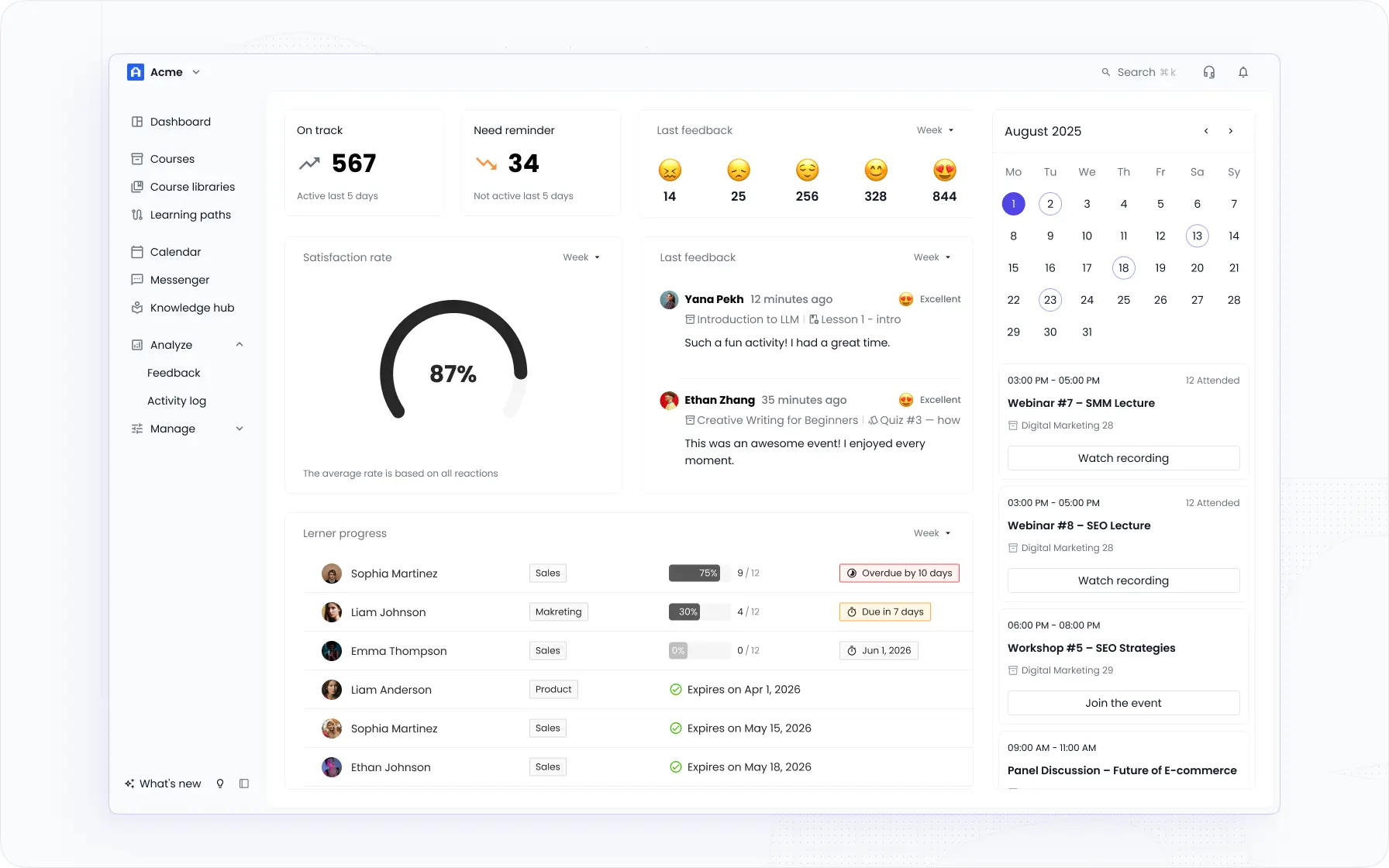
EducateMe is particularly strong for mid-sized companies (200–1,000 employees) that need to train across multiple audiences (employees, partners, or customers) and want AI built into the actual workflow, not added as a chatbot sidebar.
Teams that prioritise compliance tracking, clinical or frontline staff training (the AI Roleplay Coach is genuinely differentiated here), and fast course creation time tend to get the most from it.
It's not the right fit if you need a native mobile app for offline access, or if deep gamification is core to your learning strategy. I'd rather tell you that upfront than have you discover it during implementation.
If you're comparing options side-by-side, our top corporate LMS comparison covers a wider set of platforms.
Frequently asked questions
Academic LMS platforms are designed for semester-based courses with enrolled student cohorts — Canvas and Blackboard are the classic examples. A corporate LMS is built for continuous, role-based training across a workforce that changes constantly. Corporate platforms prioritise compliance tracking, automated re-enrollment, multi-audience delivery, and reporting that non-technical managers can actually use. The use cases are different enough that borrowing an academic tool for corporate training almost always creates friction.
Pricing varies significantly by platform and model. SMB-focused tools like TalentLMS start around $149/month for small teams, while enterprise platforms like Cornerstone or Docebo typically run $25,000+ per year on custom contracts. Mid-market options like EducateMe start from $2 per user per month with AI features included. The real cost question to ask any vendor is what happens to the price when you grow — per-user models scale predictably, but custom enterprise contracts can hide significant renewal increases.
Implementation timelines depend almost entirely on how much existing content you're migrating and how complex your user structure is. Modern cloud-based platforms like EducateMe can have you running your first course within hours. Full rollout — with SSO integration, migrated SCORM content, and manager dashboards configured — typically takes two to eight weeks for a mid-sized team. Enterprise deployments with legacy system integrations can take longer.
Yes — and this is increasingly where companies get strong ROI from an LMS. External training programmes (customer onboarding academies, partner certification portals) often have higher completion rates and clearer business impact than internal training. EducateMe supports customer and partner training with white-label portals and branded learning experiences. One EducateMe customer, Oboard.io, reported an 80% increase in customer product knowledge after launching a structured training programme on the platform.