
How to Build a Sales Training Program That Actually Changes Rep Behavior

By Alexa BerezinaAlexa BerezinaL&D Specialist & CSM LeadMy name is Oleksandra (Alexa), and I’m a certified Learning & Development specialist focused on turning complex knowledge…Read more
L&D Specialist & CSM Lead
8 min read
Most sales training programs don't fail because of bad content. They fail because they stop at content. A rep watches three videos, passes a quiz, and goes back to their pipelines, and nothing changes. I've seen this pattern repeat across companies of every size.
Building a sales training program that sticks means treating it as a behavior change project, not a content delivery project. Here's how I'd approach it.
What a Sales Training Program Actually Needs to Do
Before you start building anything, get honest about what "good" looks like. A sales training program has one job: make reps more effective in real conversations with real buyers. Everything else (the modules, the assessments, the completion rates) is a means to that end.
The clearest sign a program is failing isn't low completion. It's reps who complete the training and still can't handle a pricing objection without freezing.
The programs that actually work share three traits: they're grounded in real skill gaps (not assumptions), they include repeated practice opportunities, and they connect directly to the way your team sells. Not generic sales theory — your motion, your ICP, your objections.
Step 1: Start with a Skills Gap Analysis, Not a Content List
The most common mistake when creating a sales training program is jumping straight to modules. Someone in leadership says "reps need to get better at discovery," and within two weeks there's a six-module discovery course. But "better at discovery" isn't a training brief. It's a symptom.
Start by identifying exactly where deals are breaking down. Pull your CRM data. Where do opportunities go dark — after first call, after demo, after proposal? Talk to your top three reps and your bottom three. The gap between what they do differently is your actual training brief.
Once you have real data, map it to specific skills: objection handling, demo storytelling, multi-threading, negotiation, competitive positioning. Now you have a foundation for developing a sales training program that's actually tied to revenue.
Step 2: Define the Learning Path by Role and Seniority
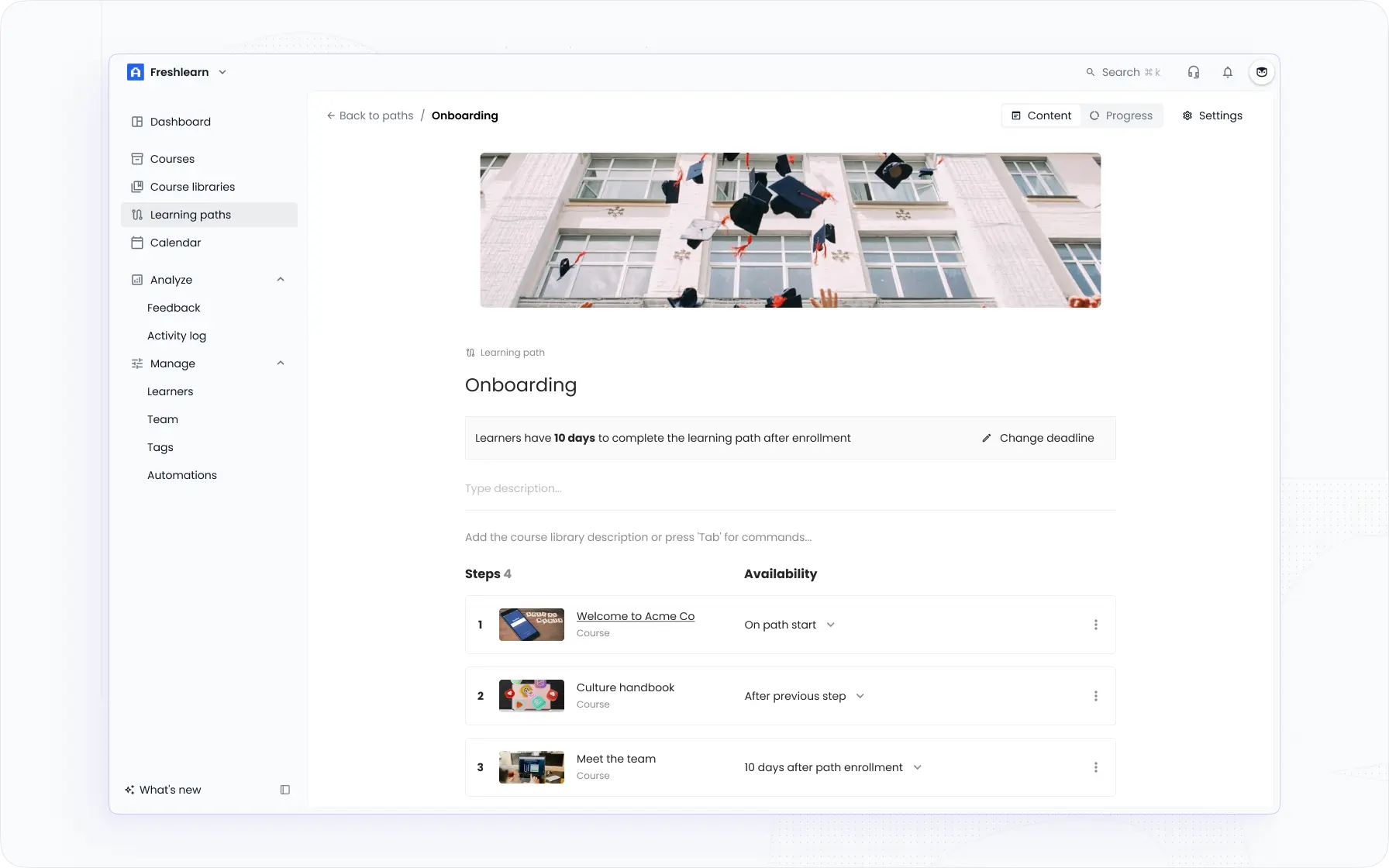
A new SDR and a senior AE don't need the same program. One needs to learn your product, your ICP, and how to handle a cold call brush-off. The other needs to get sharper at multi-stakeholder deals and late-stage negotiation. Treating them the same is a waste of both their time.
When building a sales training program, segment your paths from the start:
- New hire onboarding path — product fundamentals, ICP, buyer personas, objection handling basics, CRM workflow
- SDR development path — cold outreach sequences, discovery call structure, handoff to AE
- AE advancement path — demo mastery, deal strategy, negotiation, executive conversations
- Sales manager track — coaching frameworks, call review methodology, pipeline analysis
Each path gets its own sequence. Within that sequence, the order matters — don't put negotiation training before reps have mastered discovery.
EducateMe handles this through role-based learning paths that auto-enroll reps based on seniority and function. That alone removes a significant coordination burden from sales enablement teams.
Step 3: Build the Core Modules — Concrete Beats Comprehensive
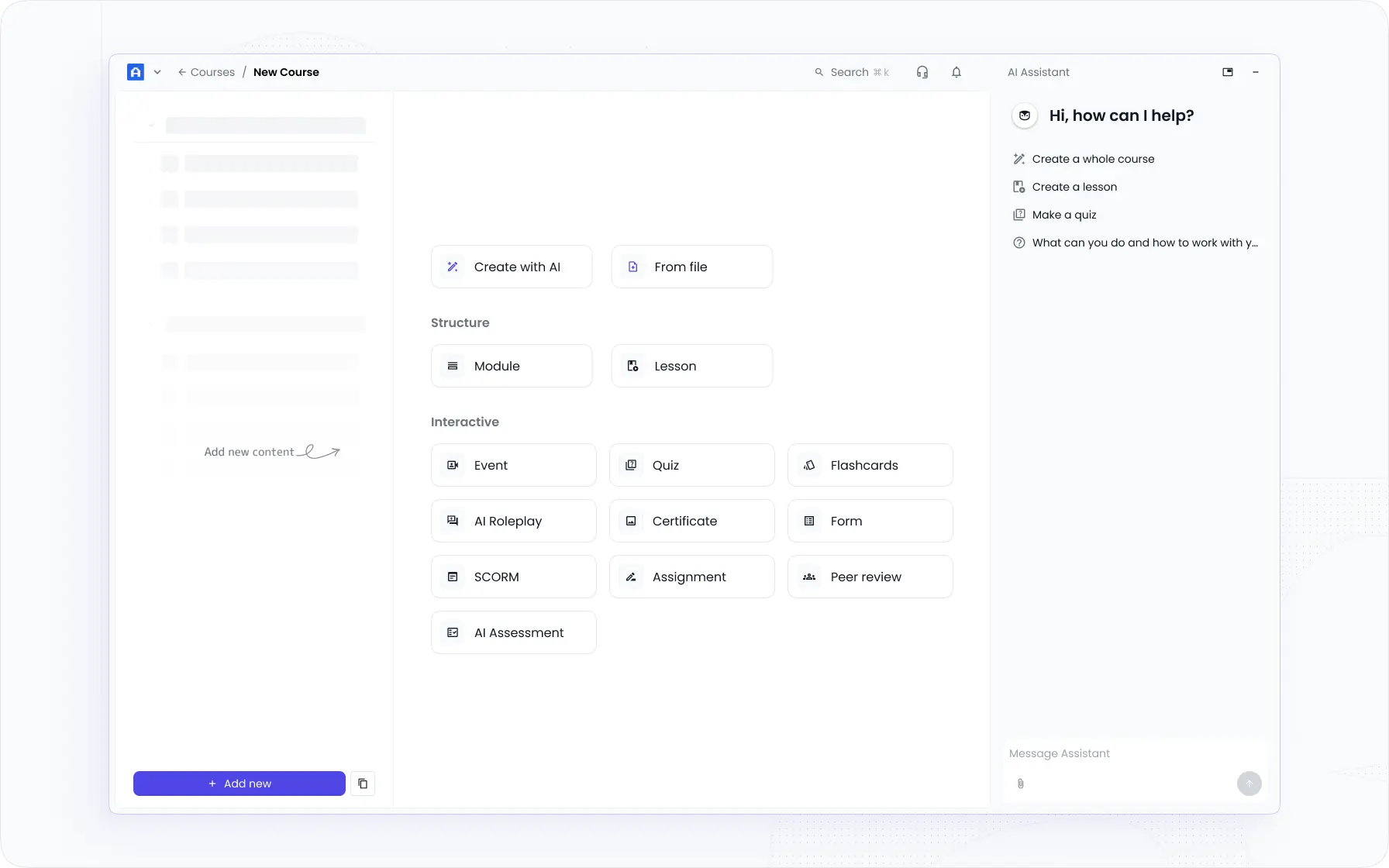
A sales training program example that works almost never tries to cover everything. Focus on the six to eight skills that move your numbers most. For most B2B teams, that's some version of:
- Discovery and qualification (MEDDIC, SPIN, or your own framework)
- Demo and product storytelling
- Objection handling — specific to your actual objections, not generic ones
- Competitive positioning
- Negotiation and close
- Handoffs and CRM hygiene
Each module should end with a scenario, not a quiz. A multiple-choice question about objection handling doesn't tell you anything useful. A recorded roleplay does.
Keep modules short. I'd set a hard cap of 15–20 minutes per module. If you can't teach something useful in that window, break it into two modules. Reps won't complete a 45-minute module between calls — that's not a motivation problem, it's a design problem.
Step 4: Make Practice Non-Optional with AI Roleplay
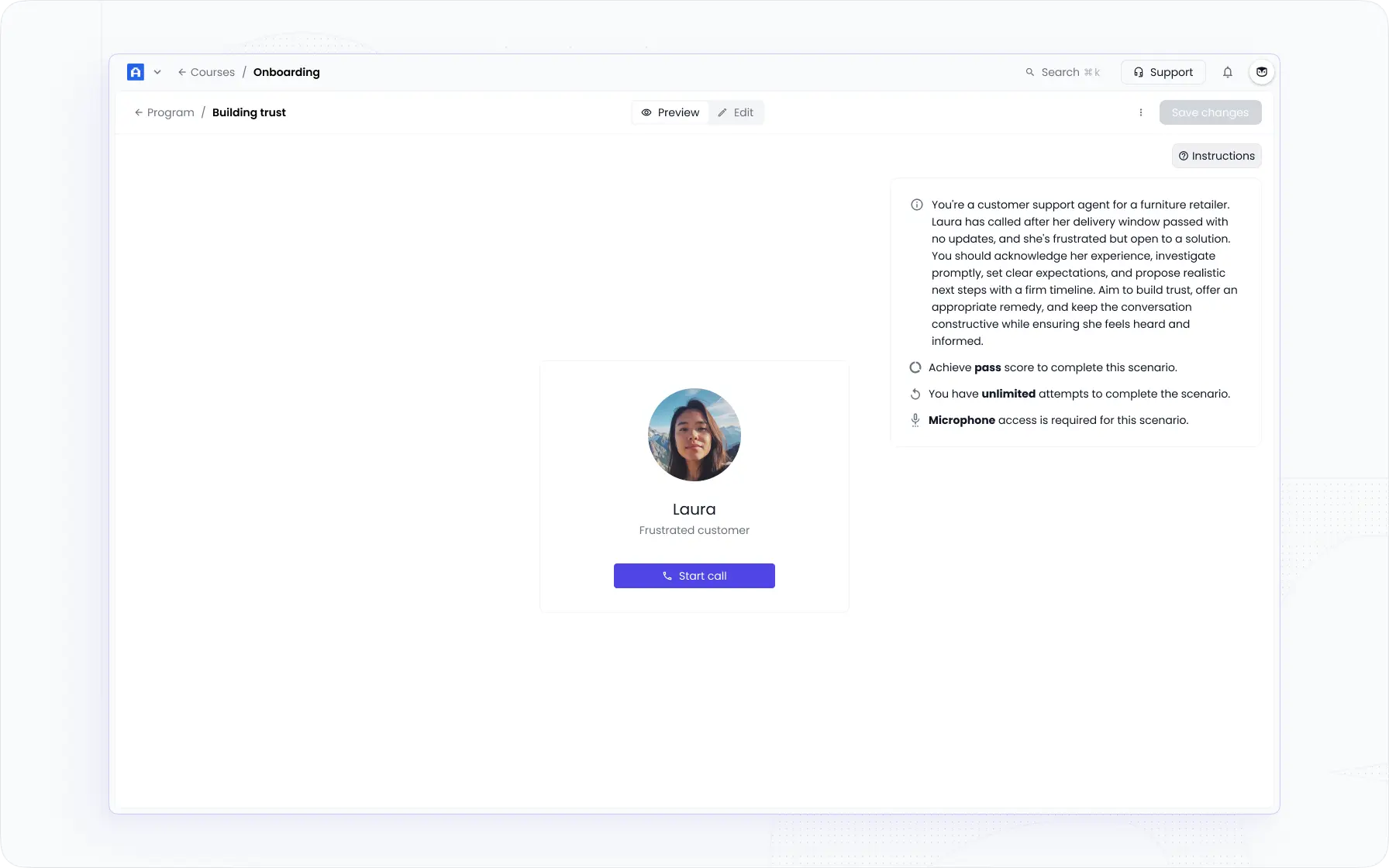
This is the step most programs skip entirely, and it's the most important one.
Reps learn to sell by selling. But in traditional programs, the first time they practice a skill under pressure is on a real call with a real prospect. That's backwards. You wouldn't put a surgeon in the OR before they've simulated the procedure. The same logic applies here.
The reason practice gets skipped isn't lack of belief in its value — it's logistics. Manager-led roleplay is expensive, inconsistent, and hard to scale. Not every manager is a good coach. Not every rep gets equal reps. And the feedback quality varies wildly.
EducateMe's AI Roleplay Coach changes this equation entirely. I'd rate it as the most practically useful feature in the platform for sales teams. Reps practice specific scenarios — a cold call opener, a pricing objection, a competitive comparison — with an AI that responds dynamically and then scores their performance against a rubric you define. The rubric can reflect your actual sales methodology: did they lead with the business problem? Did they avoid discounting before understanding the objection?
⚡ Three things make this approach worth building into your program: scale (every rep gets unlimited practice reps), consistency (the feedback criteria don't change based on who's reviewing), and psychological safety (reps are more likely to try something new when there's no social risk of failing in front of a manager).
For sales enablement teams, this isn't a nice-to-have. It's the difference between a program that transfers knowledge and one that actually changes behavior.
Step 5: Sequence Delivery So Learning Doesn't Compete with Quota
The biggest adoption killer for any sales training program is asking reps to learn during their selling week without any structural support. They'll deprioritize it every time. And they're not wrong to — quota is the primary objective.
The sequencing approach I'd recommend: anchor heavy learning to onboarding and ramp periods, then move to short reinforcement bursts (10–15 minutes, one topic) during low-pipeline weeks or after specific trigger events — a rep loses three deals to the same competitor, they get assigned a competitive positioning module that week.
This is what sales enablement practitioners call "just-in-time" training — and it works. Learning something the day before you need it is far more effective than learning it eight weeks before.
In EducateMe, you can pair cohort-based sessions for new hire programs with self-paced modules for ongoing development, all in one platform. That blend matters: new hires need structure and community, tenured reps need autonomy and efficiency.
Step 6: Measure What Actually Matters
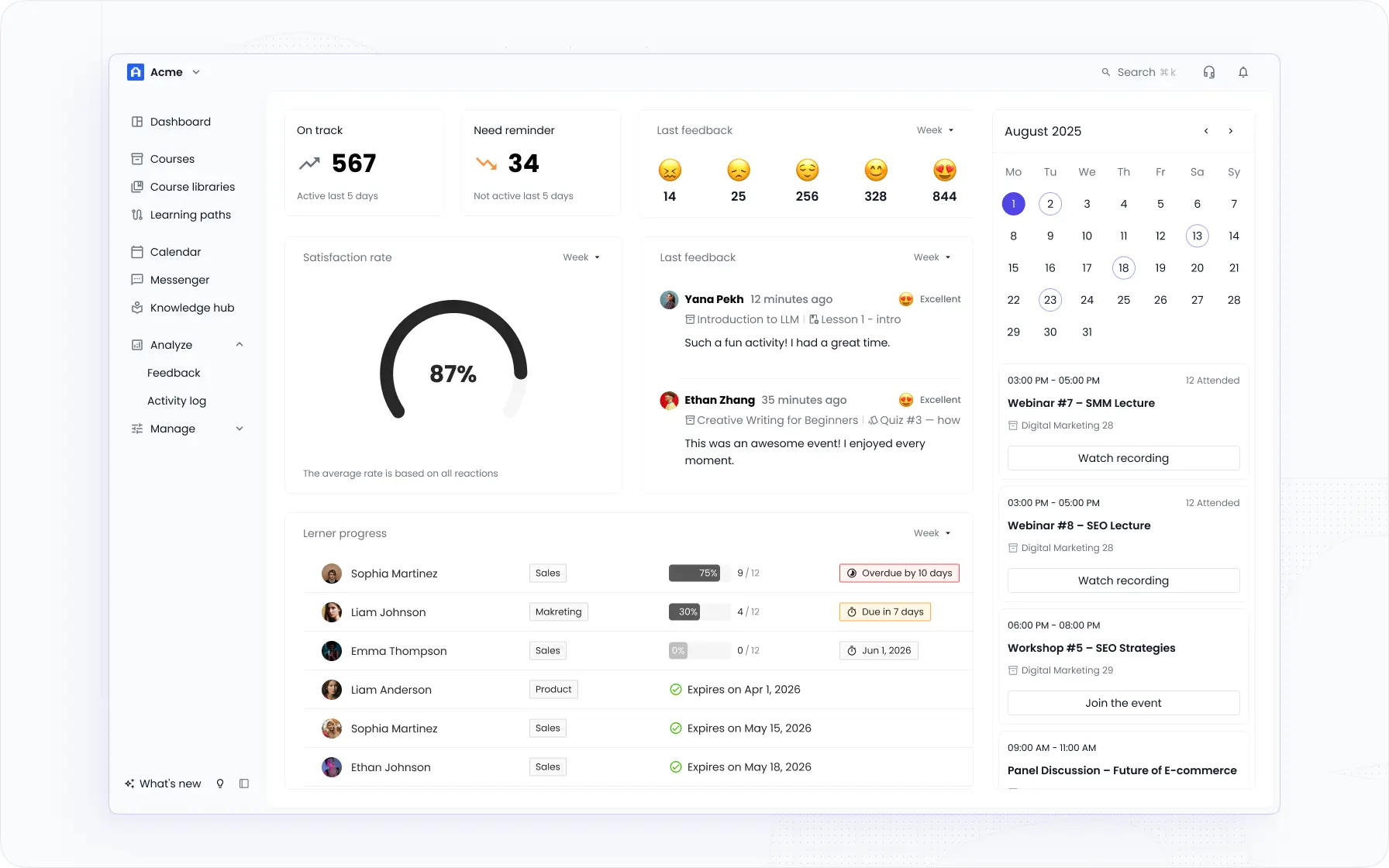
How to calculate ROI of a sales training program is a question most L&D teams answer badly. Completion rates are not ROI. They're an input metric, not an outcome metric.
The indicators worth tracking:
- Ramp time — how many weeks until new hires hit their first quota?
- Win rate by stage — are specific objections being handled better post-training?
- Roleplay scores over time — are reps improving across repeat practice sessions?
- Deal velocity — is average sales cycle length decreasing?
- Manager coaching time — is the team spending less time on basic skill remediation?
If your platform can't connect training activity to these outputs, you're flying blind. EducateMe's analytics surface completion data alongside skill progression — and when you combine that with AI Roleplay Coach scoring trends, you get a reasonably clear picture of where the program is working and where it isn't.
A Simple Sales Training Program Example to Build From
If I were starting from scratch at a 100-person B2B SaaS company, here's roughly how I'd structure the first version:
Week 1–2 (onboarding): Product deep-dive, ICP and buyer personas, CRM setup and process, company methodology overview. Cohort-based delivery — new hires go through this together.
Week 3–4: Core skills modules (discovery, demo, objection handling). Each module followed by an AI Roleplay Coach scenario. Reps don't advance without completing the practice component.
Week 5–8: Shadow calls, first solo calls, manager debrief. Reinforcement modules triggered by deal stage activity — rep reaches proposal stage for the first time, they get a negotiation module.
Ongoing: Monthly skill-specific content drops. Quarterly competitive positioning updates. Roleplay practice remains available and encouraged, not just mandated during onboarding.
That's a sales training program example that's actually deployable, not theoretical.
Summary
Building a sales training program that works means: starting with skill gaps not content lists, segmenting paths by role, building in mandatory practice via AI roleplay, sequencing delivery to fit how reps actually work, and measuring outcomes not activities. The technology to do all of this at scale now exists — the bottleneck is usually the willingness to design it properly from the start.
EducateMe lets your reps practice real sales scenarios with an AI Roleplay Coach that scores every response against your methodology. Start your free trial and run your first AI roleplay session today.
Frequently asked questions
A sales training program should include role-specific learning paths, skill-based modules covering discovery, objection handling, demo delivery, and negotiation, and — critically — repeated practice opportunities. Most programs skip practice. That's why most programs don't change behavior. Include assessments that involve realistic scenarios, not just knowledge recall. EducateMe structures this through modular paths paired with AI roleplay practice sessions.
A functional first version takes four to six weeks to build: one to two weeks for skills gap analysis and path design, two to three weeks for module development, and one week for LMS setup and testing. Creating a sales training program doesn't require perfection at launch — a smaller, well-designed program beats a comprehensive one that never gets used.
Track ramp time to first quota, win rate changes by deal stage, and deal velocity before and after training. Completion rates tell you about participation, not impact. To calculate ROI of your sales training program, compare the cost of building and running it against measurable improvements in revenue-per-rep or shortened ramp time — even a two-week reduction in ramp for 20 new hires per year is significant.
Not entirely — but AI roleplay can handle the high-volume, repetitive practice that managers don't have time for. EducateMe's AI Roleplay Coach lets reps practice specific scenarios with dynamic AI responses scored against a custom rubric. Managers stay focused on deal strategy and complex coaching conversations. The combination is more effective than either approach alone.