
5 Best Real Estate LMS (Tested & Compared in 2026)

By Sofia KondratSofia KondratCorporate Training Expert & Content EditorHey there! I’m Sofi Kondrat, your go-to corporate training advisor here at EducateMe. I’ve been navigating the highs…Read more
Corporate Training Expert & Content Editor
7 min read
After more than 3 years researching and reviewing LMS platforms, I’ve learned one thing: real estate training breaks most learning systems.
You need to onboard fast, train at scale, simulate real client conversations, and keep agents compliant - all while your team is constantly growing and changing. Over the last year alone, I’ve reviewed dozens of LMS demos specifically for real estate companies, brokerages, and agencies. Many were solid. Only a few truly stood out.
Below are the 5 best LMS platforms for real estate training in 2026, ranked based on:
- Speed of onboarding new agents
- Scalability across teams and regions
- AI and role-play capabilities
- Automation, reporting, and real-world usability
Let’s start with the clear winner.
The best LMS for real estate training handles agent onboarding, compliance certification, and ongoing product knowledge. EducateMe stands out with AI roleplay coaching for practicing client conversations, automated enrollment paths by role, and white-label portals for brokerages. TalentLMS offers the fastest setup for small agencies. Absorb LMS suits larger firms needing compliance at scale.
EducateMe – Best Overall Real Estate LMS
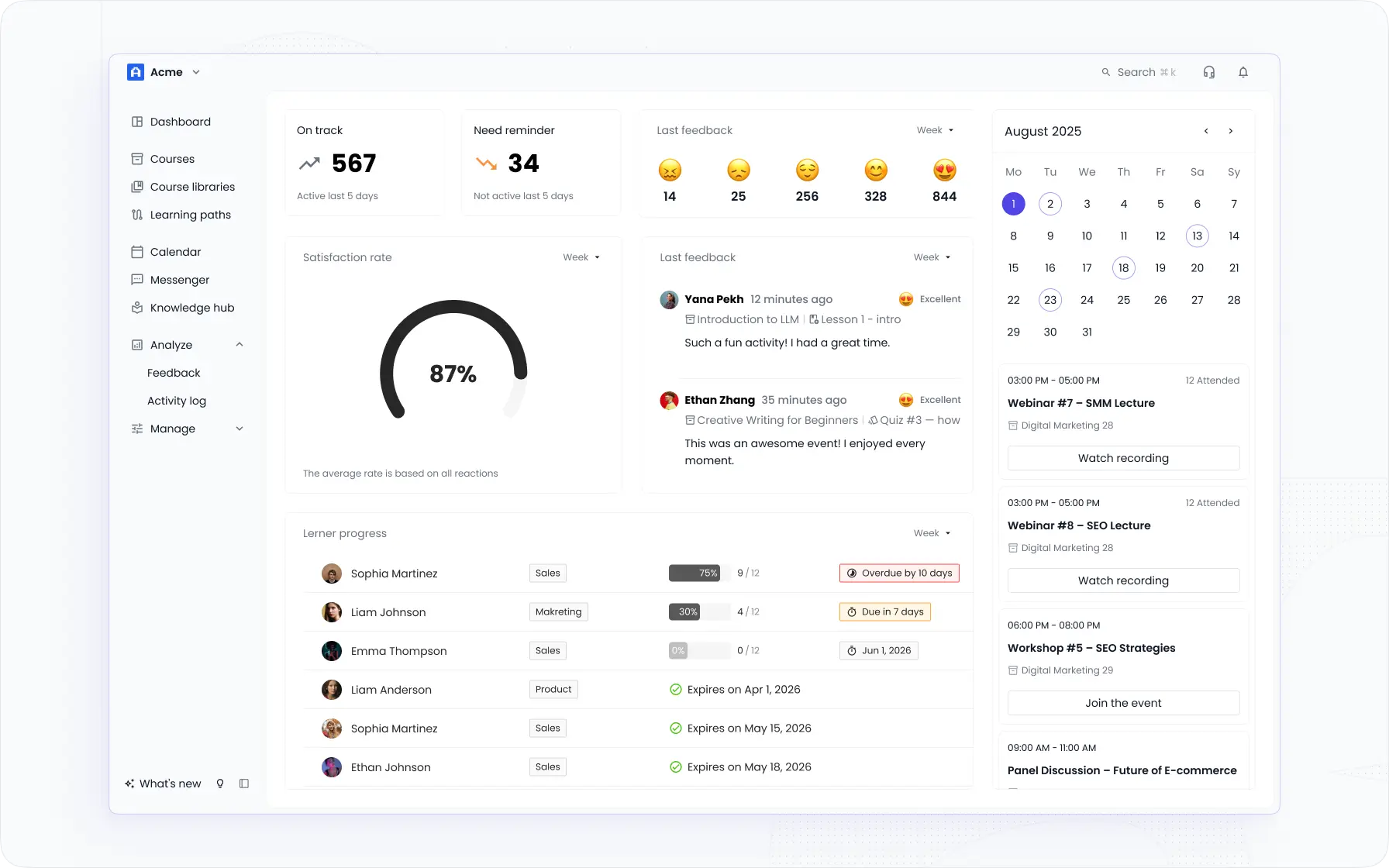
EducateMe is the most modern and innovative LMS I’ve tested for real estate teams, and it’s not even close. It’s incredibly easy to launch, fully white-label, and powerful enough to train hundreds (or thousands) of agents without operational chaos. What truly sets it apart is AI-powered role play, which allows new agents to practice real client conversations before talking to actual buyers or sellers.
This is the pattern real estate operators keep describing: they want a two-week, self-paced onboarding program new hires can complete without eating the team’s time — and a way to know a rep is actually ready before they touch a live lead. EducateMe is built around exactly that workflow. The AI Assistant turns the materials you already have — call scripts, YouTube videos, playbooks, PDFs — into a structured course with quizzes, and progression can be gated so nobody moves forward without passing. The same goes for conversations: teams feed their own scripts and objection sheets into the AI roleplay, and reps must pass a scored practice call — price anchoring, hesitant sellers, hard objections — before they’re cleared for real ones.
From onboarding new hires to advanced sales simulations — for brokerages, wholesaling and investment teams, and property managers alike — EducateMe feels built for fast-moving, people-first industries like real estate.
Best for: Real estate agencies, brokerages, and proptech companies that want to onboard fast, train smarter, and scale without friction.
- AI Role-Play Training: Simulate buyer, seller, and objection-handling conversations so agents can practice safely before real client interactions.
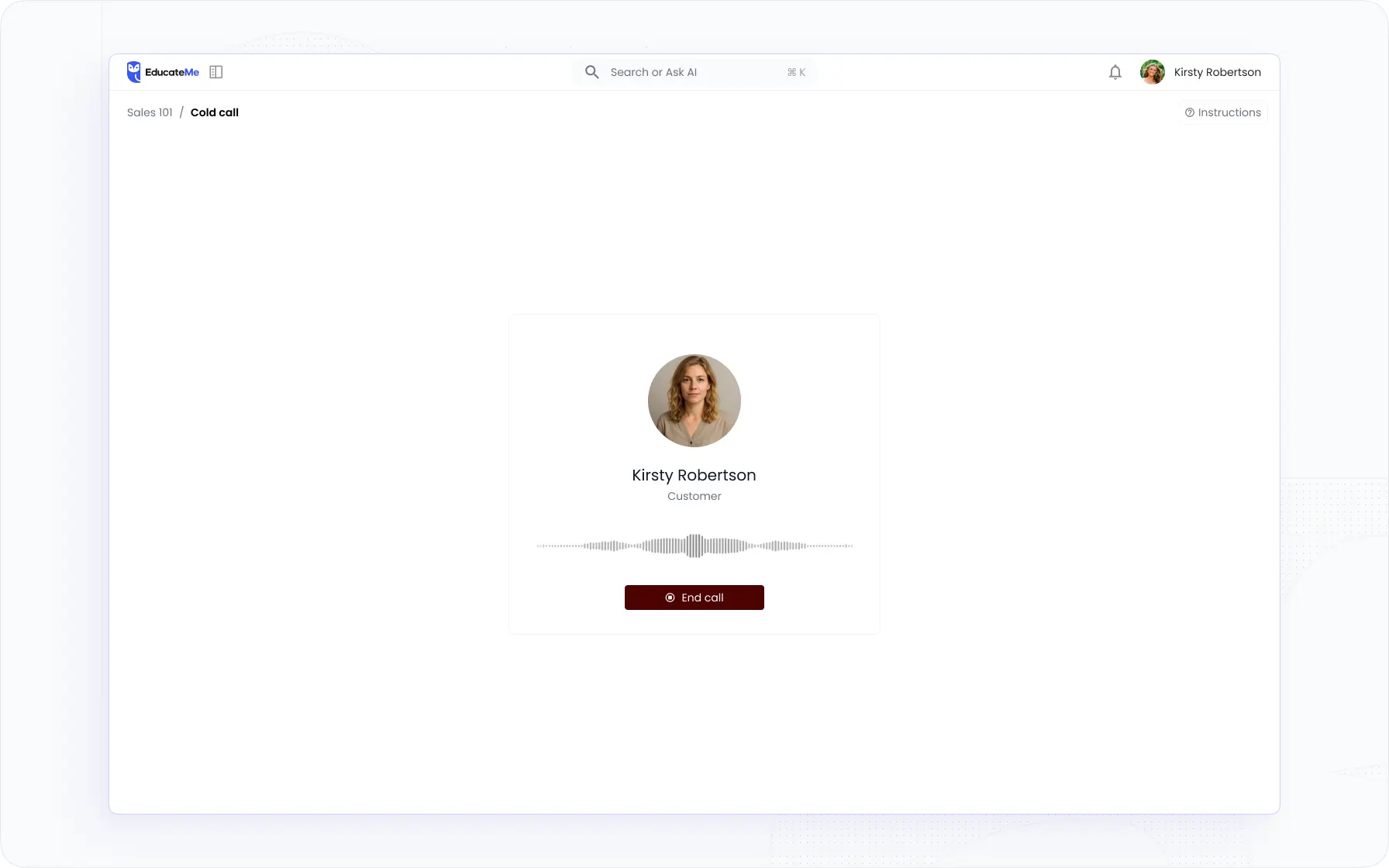
- Real-Time Training Analytics: Monitor agent progress with 10+ live metrics to quickly identify skill gaps and performance trends.
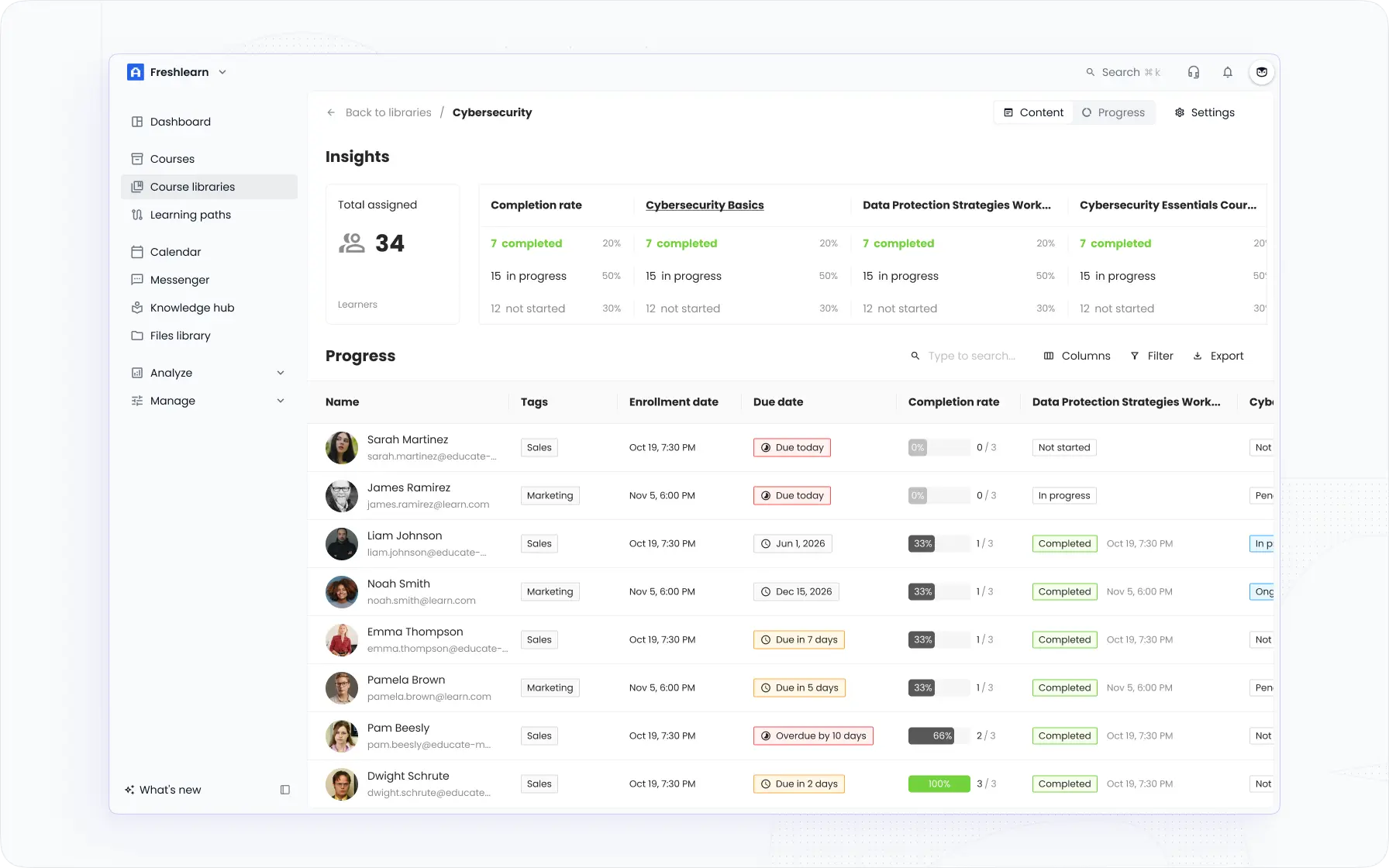
- Multi-Tenant Management: Easily manage training across multiple offices, franchises, or regions from one centralized dashboard.
- AI-Powered Automation: Use AI to automate enrollments, certifications, reminders, and learning workflows as your team grows.
- Adaptable & Scalable Pricing: I really appreciate how the pricing adjusts to changing business needs, so you’re never boxed in or forced to overcommit as your team grows.
- Effortless Training Scalability: Easily scale training initiatives as the team expands using tagging, AI support, automation, and advanced reporting to manage growth without friction.
It also changes what sales training for real estate agents looks like in practice. Most teams train with content — videos, scripts, shadowing — and hope it transfers to the phone. Practice is the missing layer: ISAs and acquisition reps rehearse cold calls and seller conversations against a realistic AI persona, get scored feedback on every attempt, and managers review transcripts instead of running every roleplay themselves.
💡Case Study: In practice, EducateMe LMS has helped companies like Sincere Home Buyers, a U.S.-based real estate investment firm with 200+ learners, scale sales onboarding 3× faster by using AI role-play.
Limitations
- No dedicated mobile app (browser-based mobile experience instead)
- Limited gamification (no advanced leaderboards or badge systems yet)
- Some advanced integrations require initial setup time
TalentLMS – Simple & Reliable for Compliance Training
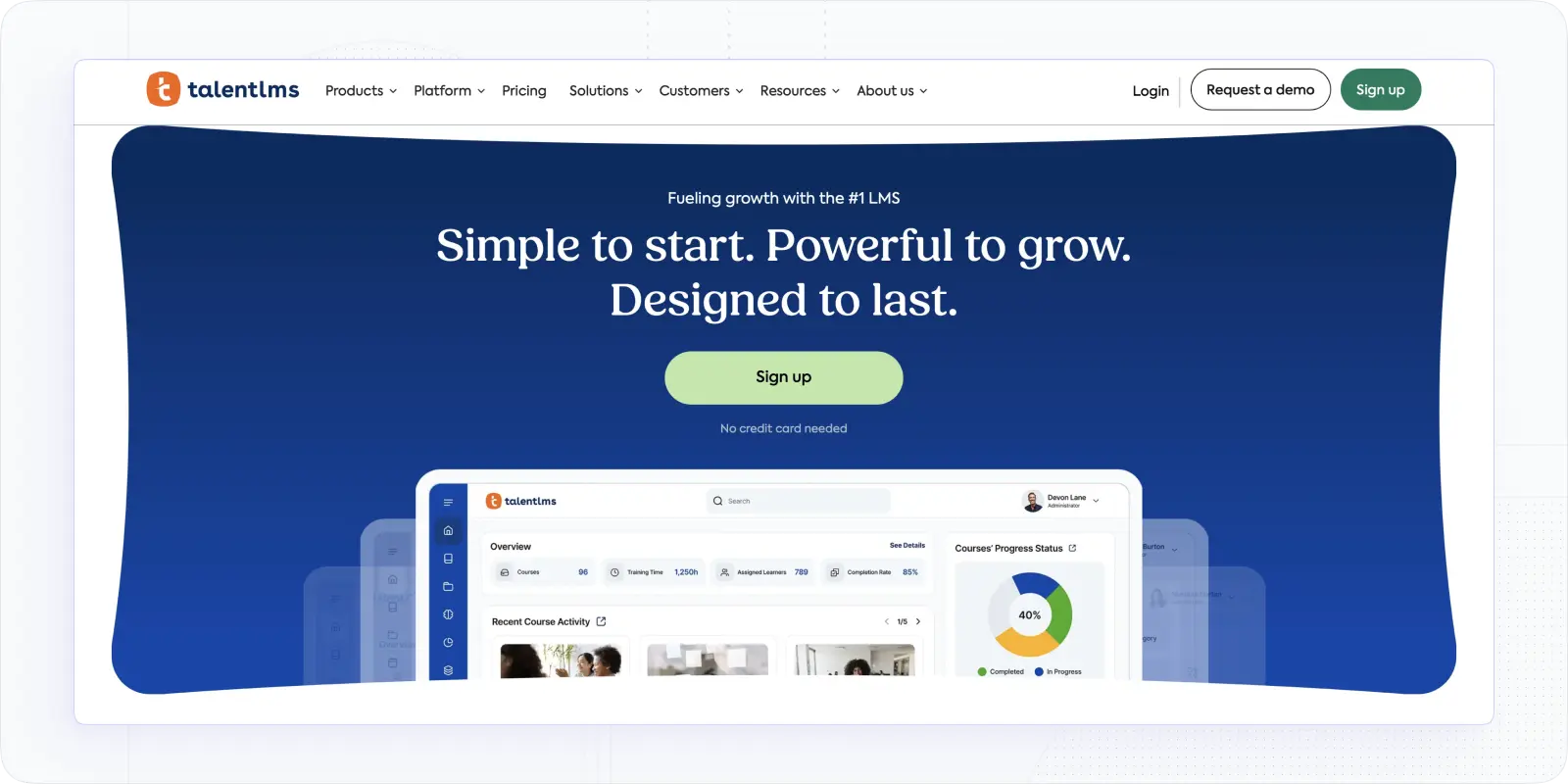
TalentLMS is a well-known platform that works reliably for structured training programs. It’s easy to use and quick to set up, making it a decent option for compliance-heavy real estate environments. However, it lacks the advanced AI and simulation tools modern agencies increasingly need.
Main Features Useful for Real Estate Agents
- Straightforward Course Creation: Build and organize real estate training content with an intuitive interface that’s easy for non-tech teams to use.
- Compliance & Certification Tracking: Monitor compliance training and automatically issue certificates to agents who complete required courses.
- Role-Based Access Controls: Assign roles and permissions for agents, managers, and regional admins to keep training organized.
- Standard Reporting & Insights: Review course completions and basic engagement metrics to ensure training effectiveness.
Best For: Brokerages focused mainly on compliance, policies, and standardized training.
Limitations
- No AI role play or sales simulations
- Limited personalization and automation
- Feels dated compared to newer LMS platforms
Pricing: Talent LMS pricing is subscription-based and starts from $69/mo (Core), with AI features reserved for higher tiers.
LearnUpon – Strong for Large Brokerages
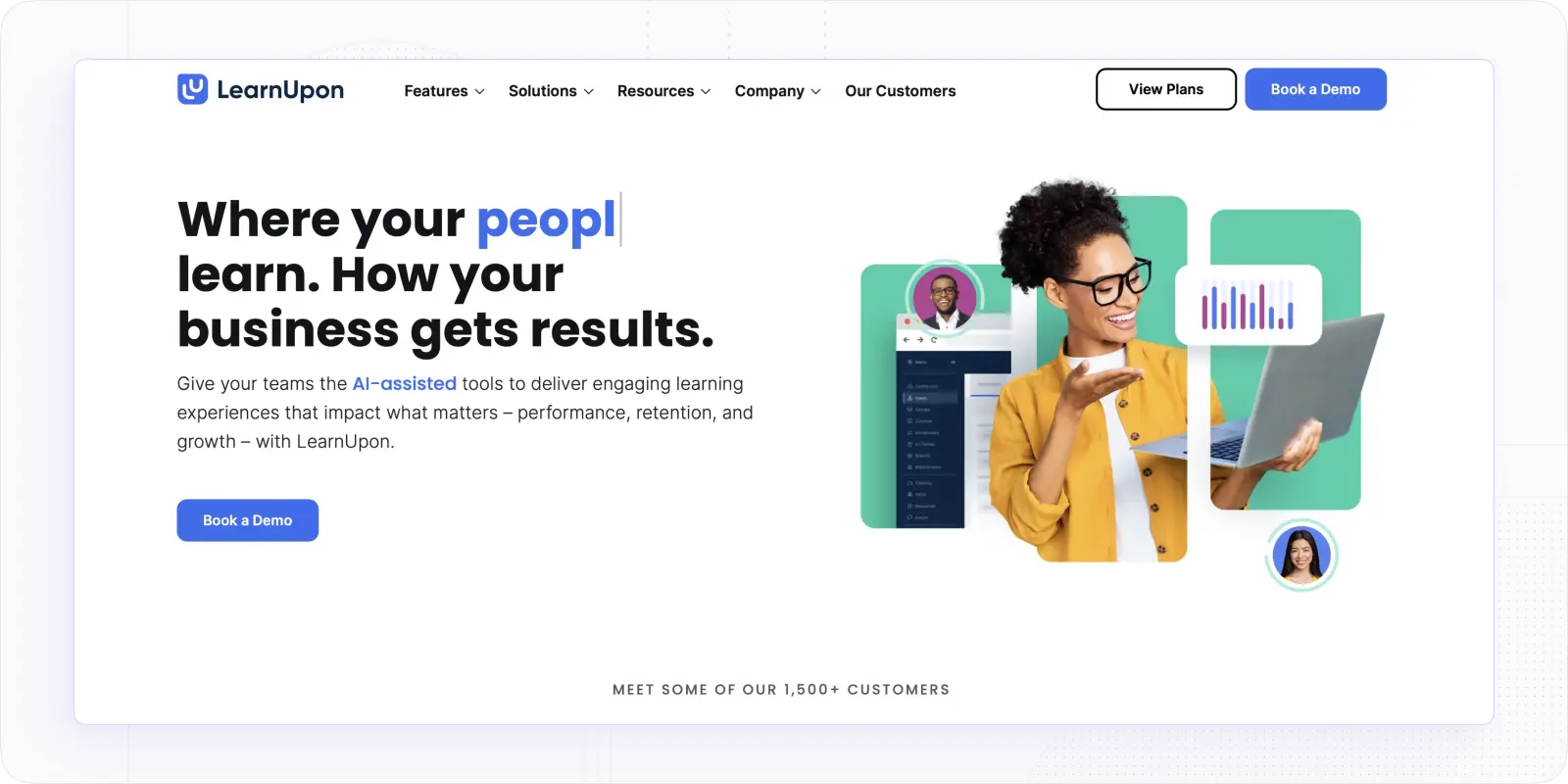
LearnUpon offers powerful enterprise-level learning management tools with robust structure and detailed reporting. It performs well when training is managed by a dedicated L&D team and scales across large brokerages with complex hierarchies. However, its user experience feels dated and the platform requires more time and resources to set up compared to newer, more agile LMS options.
Key Features Useful for Real Estate
- Structured Learning Paths: Tailor training journeys based on agent role, market experience, or certification level.
- Robust Analytics Dashboard: Access detailed performance and engagement insights to understand learning trends.
- CRM & HR Integrations: Sync with key systems to streamline workflows and data exchange.
- Centralized Multi-Site Management: Manage training for multiple offices or regions from one central admin hub.
Best For: Large real estate networks with internal L&D resources and complex training needs.
Limitations
- Implementation is slower and often requires professional services.
- No built-in AI role play or conversational training tools.
- The interface is less intuitive, which can slow adoption among agent users.
Pricing: LearnUpon pricing is quote-based, starts around $10,000/year/150 users.
Docebo – AI Capable LMS for Real Estate Industry
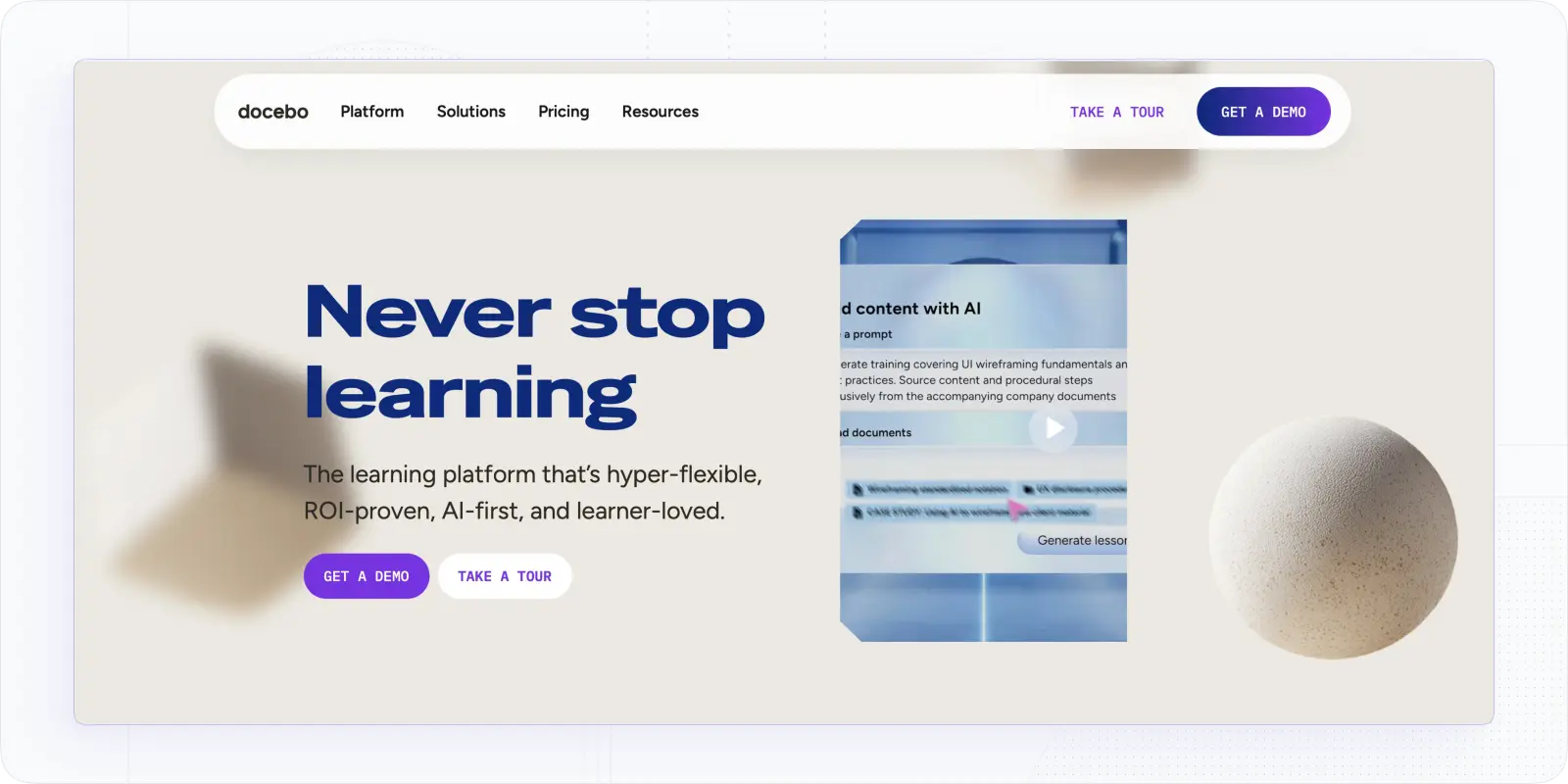
Docebo offers advanced AI recommendations, adaptive learning tools, and — as of its 2026 releases — its own AI roleplay (“AI Virtual Coaching”) with rubric-based scoring. It’s a genuinely AI-capable platform. The catch for real estate teams is weight: the personalization and deep analytics come wrapped in an enterprise engine that needs real configuration, and the AI sits in enterprise-tier packages. If you’re primarily focused on agent onboarding and sales readiness, it’s a lot of machine for the job.
Key Features Useful for Real Estate
- AI-Powered Learning Suggestions: Recommend personalized content based on agent behavior and performance.
- Advanced Reporting & KPIs: Analyze deep learning metrics to refine and optimize training programs.
- Adaptive Learning Paths: Build customized learning experiences that evolve with agent skill levels.
- Enterprise Integrations: Seamlessly connect with CRM, HR, and business systems for unified workflows.
- AI Virtual Coaching: Conversation practice with rubric-based scoring (added in 2026), aimed at enterprise rollouts.
Best For: Large enterprises with complex training ecosystems that need adaptive learning at scale.
Limitations
- Steep learning curve and often underutilized by smaller training teams.
- Requires significant configuration to see value.
- Not designed for quick start-up or rapid onboarding workflows.
Pricing: Docebo pricing is quote-based, usually starts around $7-$10/user/mo
Absorb LMS – Powerful & Adaptable LMS for Real Estate Teams
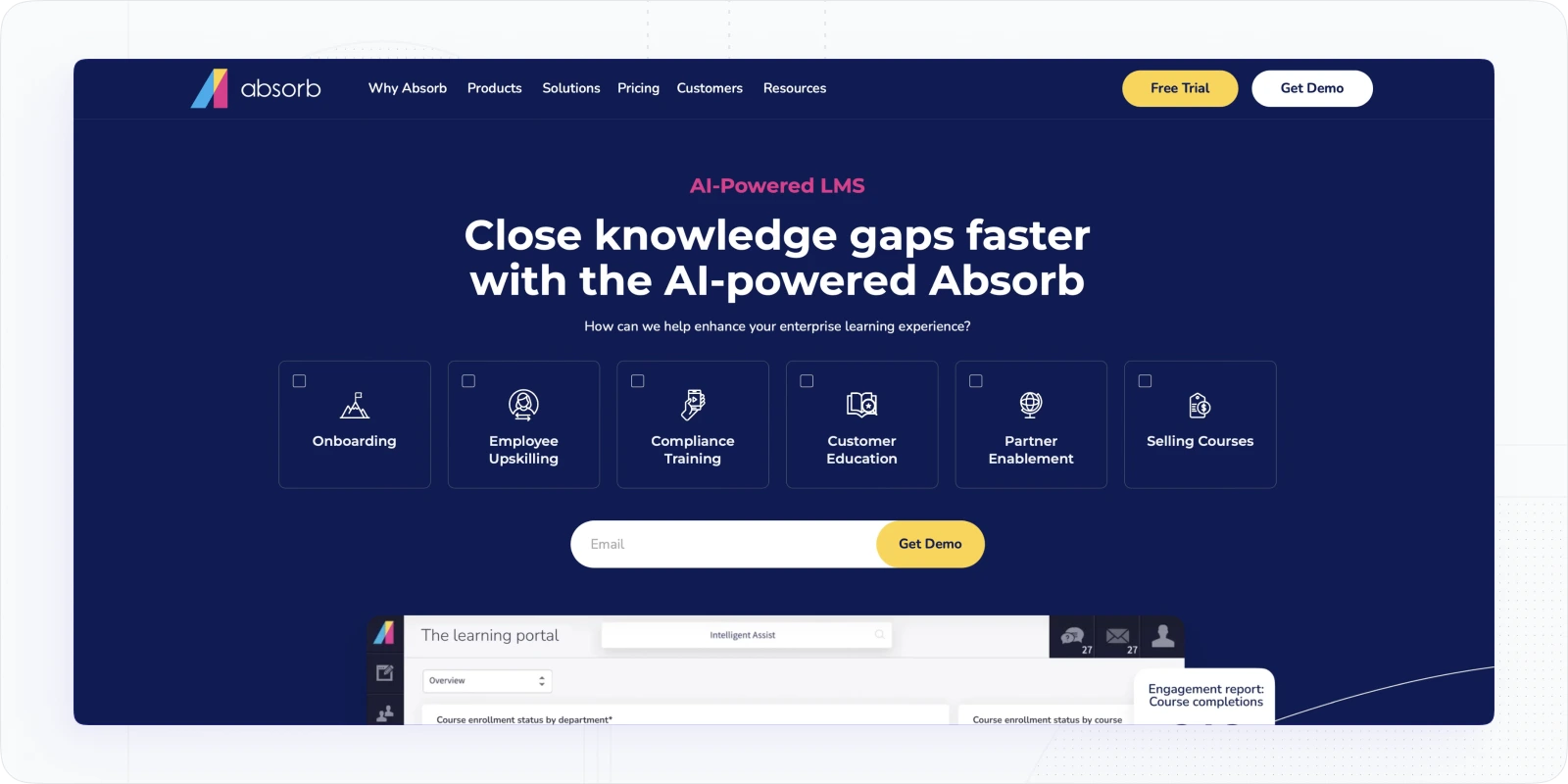
Absorb LMS is a comprehensive, enterprise-grade learning management system that combines intuitive design with robust features for training programs of all sizes. It supports everything from agent onboarding and continuing education to competency tracking, compliance workflows, and skills development — all within a platform optimized for business learning continuity. Real estate teams will appreciate its balance of simplicity for daily use and depth for long-term growth.
Key Features Useful for Real Estate Agents
- Intuitive Course Builder: Easily create and organize training content with a visual, drag-and-drop interface that suits beginner and advanced course designers alike.
- Learner Engagement Tools: Boost agent participation with interactive modules, quizzes, and automated reminders that drive completion.
- Advanced Reporting & Insights: Access detailed dashboards and analytics on agent progress, course performance, and skills development trends.
- Flexible Certification Workflows: Automate certification issuance and expiration tracking to keep agents compliant and up to date.
Best For: Mid-sized to large real estate agencies and brokerages that need a comprehensive, scalable training system with strong analytics and flexible learning paths.
Limitations
- Some advanced customization and workflows may require help from an IT or L&D specialist.
- AI-first features are less developed compared to newer, purpose-built platforms.
- Pricing brackets and add-ons can be less transparent without a demo.
Pricing: Custom pricing based on users and features (typically starts from $8-$10/user/mo).
Which LMS for property management teams?
Not every “real estate LMS” search is about agents. Property management companies have their own version of the problem: leasing consultants, maintenance techs, and resident-facing staff spread across buildings, all needing consistent training on leasing workflows, safety basics, and resident communication. The same shortlist applies — but weight your pick toward role-based paths, mobile-friendly delivery, and per-property completion tracking. EducateMe covers this out of the box with role-based paths per property and team, and TalentLMS is a reasonable budget alternative for smaller portfolios.
Final Verdict: Selecting the Ideal LMS for Real Estate Training
| LMS Platform | Short Features Overview | Best For | Pricing |
|---|---|---|---|
| EducateMe | AI-powered LMS with role-play simulations, real-time analytics, AI automation, multi-tenancy, and full white-labeling. Built to launch fast and scale effortlessly. | Real estate agencies, brokerages, and proptech teams that need fast onboarding, AI training, and scalable operations. | From $239 / 80 users / month |
| TalentLMS | Easy-to-use LMS focused on course delivery, certifications, and compliance tracking with basic reporting. | Brokerages mainly focused on compliance and standardized training programs. | From $149 / month |
| LearnUpon | Enterprise LMS with structured learning paths, strong reporting, and CRM/HR integrations, but slower to implement. | Large real estate networks with dedicated L&D teams and complex hierarchies. | From ~$10,000 / year |
| Docebo | Enterprise-grade LMS with AI-driven content recommendations, advanced analytics, and deep integrations. | Large enterprises needing highly customizable and data-driven training ecosystems. | From $7–10 / user / month |
| Absorb LMS | Robust corporate LMS with strong reporting, certification workflows, and learner engagement tools. | Mid-to-large real estate agencies looking for scalable, traditional corporate training. | From $8–10 / user / month |
After evaluating numerous LMS platforms and participating in multiple demos tailored to real estate needs, it becomes evident that not all systems are designed to excel in areas like swift onboarding, sales preparation, and continuous agent development. While many platforms adequately handle courses and compliance, fewer successfully address practical training challenges such as conversation simulations, scalability across multiple branches, and automation.
The most effective platforms for real estate environments, where rapid team expansion and consistency are crucial, combine advanced training tools with adaptability and scalability. Solutions that integrate features like AI simulated practice, performance monitoring, and centralized oversight offer agencies a solid framework for achieving long-term training success.
If you want to explore how this approach works in practice, you can book a demo or try EducateMe for free to evaluate whether it fits your real estate training needs.
Frequently asked questions
A real estate LMS is a learning management system designed to onboard, train, and upskill real estate agents. It helps agencies deliver structured training, track progress, ensure compliance, and scale learning across teams and offices.
A strong real estate LMS should support fast onboarding, progress tracking, automation, integrations with CRM tools, and scalable training across multiple offices. Advanced platforms also include AI-powered tools and role-play simulations to prepare agents for real client interactions.
An LMS centralizes onboarding content, automates enrollments and certifications, and provides clear learning paths for new agents. This allows agencies to reduce manual work while ensuring every agent receives consistent training from day one.
Yes — an LMS fits both. Small agencies and property management companies use it to standardize onboarding, leasing and safety training, and compliance basics without adding admin staff, while larger brokerages rely on it to keep training consistent across offices, regions, and properties. Every platform on this list scales down to small teams; what matters is role-based paths and per-team completion tracking.