
Docebo vs Litmos: Which LMS Should You Choose?

By Alexa BerezinaAlexa BerezinaL&D Specialist & CSM LeadMy name is Oleksandra (Alexa), and I’m a certified Learning & Development specialist focused on turning complex knowledge…Read more
L&D Specialist & CSM Lead
13 min read
If you’re comparing LMS platforms for corporate training, chances are Docebo and Litmos are already on your shortlist. Both are well-established learning management systems, widely used by companies for employee training, compliance, and professional development.
But while they often get mentioned together, they’re actually built for very different types of organizations.
In this guide, we’ll break down Docebo vs Litmos, covering features, pricing, usability, integrations, and real-world use cases, so you can confidently decide which LMS makes the most sense for your team.
| Feature | Docebo | SAP Litmos |
|---|---|---|
| Best for | Mid-market & enterprise | SMBs & growing teams |
| Setup speed | Moderate | Very fast |
| Customization | High | Limited |
| Ease of use | Powerful but complex | Extremely user-friendly |
| Pricing | Custom, enterprise-level | Tiered, predictable |
| Built-in content | Add-on | Included |
What Is Docebo?
Docebo is a feature-rich, AI-powered LMS designed for organizations that need flexibility, scalability, and control. It’s commonly used by larger companies with complex training programs, multiple learner audiences, and long-term learning strategies.
What Docebo Is Known For
- AI-driven learning recommendations
- Modular features you can add as you grow
- Support for employee, partner, and customer training
- Strong reporting and analytics
That said, Docebo isn’t the simplest LMS out there. It offers a lot of power, but that power comes with a learning curve.
⚡ You may also be interested in: Top 10 Docebo Alternatives and Competitors
What Is SAP Litmos?
SAP Litmos takes a very different approach. It’s designed to be easy to set up, easy to use, and easy to manage, even without a dedicated LMS admin. Litmos is especially popular for compliance training, employee onboarding and sales enablement.
What Litmos Is Known For
- Clean, intuitive interface
- Built-in course library
- Fast implementation
- Strong compliance tools
If Docebo is a customizable learning ecosystem, Litmos is more of a ready-to-go training solution.
⚡ You may also be interested in: Top 10 Litmos Competitors & Alternatives for Corporate Training
Docebo vs Litmos: Feature Breakdown
Course Creation & Content Management
Both platforms support modern digital learning, but they approach course creation very differently. Docebo prioritizes flexibility and scalability, while SAP Litmos emphasizes speed and simplicity.
| Feature | Docebo | SAP Litmos |
|---|---|---|
| Supported content formats | SCORM, xAPI, AICC, videos, documents | SCORM, videos, documents |
| Instructor-led training (ILT) | Fully supported with scheduling and tracking | Supported with simpler scheduling |
| User-generated content | Strong support with moderation tools | Limited, mostly admin-created |
| Built-in course authoring | Basic; often requires third-party tools | Yes, built-in course builder |
| Pre-built course library | Available as paid add-ons | Included with many plans |
| Time to launch new course | Moderate to slow (depends on setup) | Very fast |
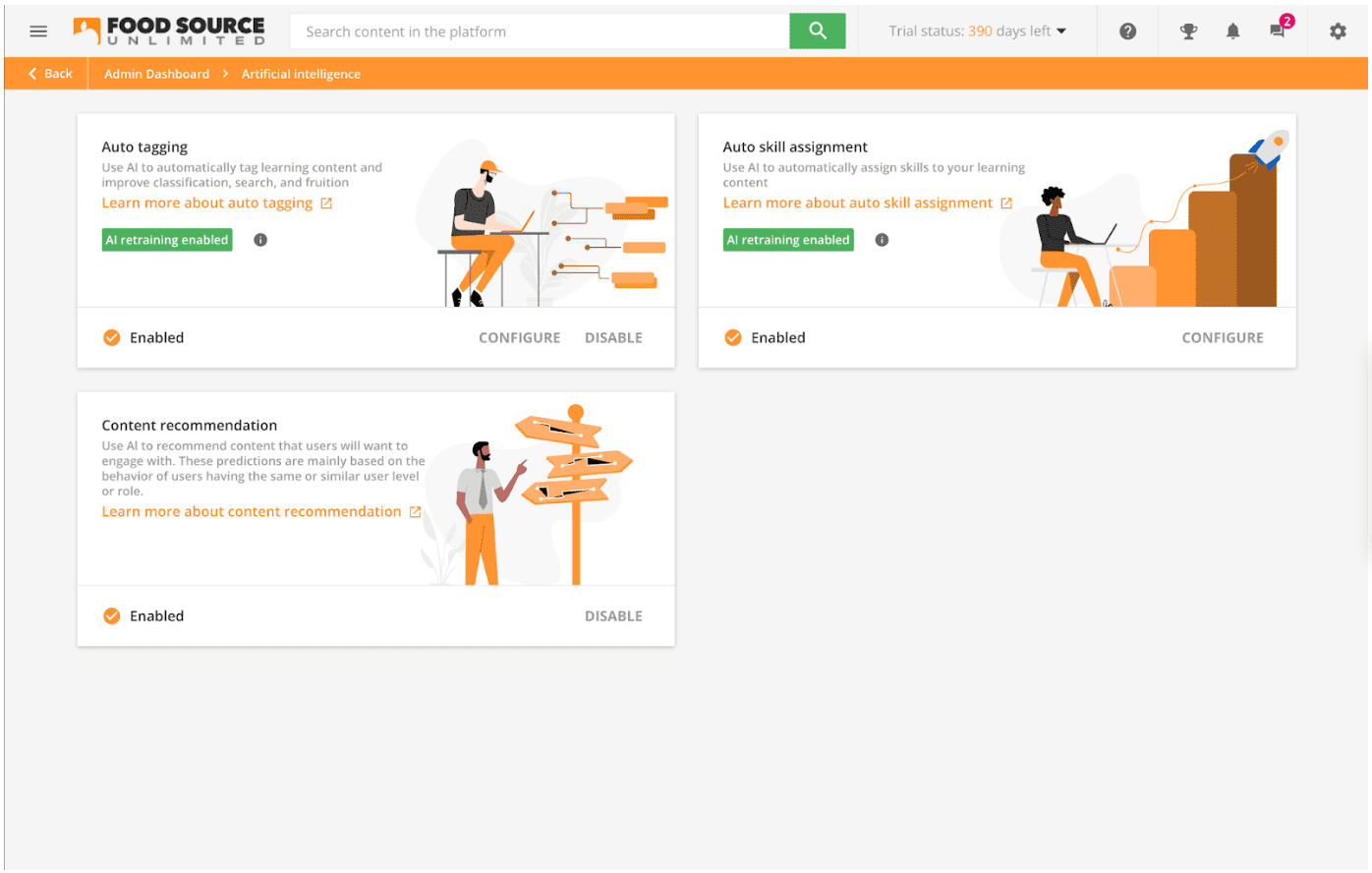
Docebo supports virtually every enterprise learning format, including SCORM, xAPI, and AICC. It excels when organizations already use professional authoring tools such as Articulate or Captivate. This flexibility is powerful, but it introduces extra steps, higher costs, and longer setup times.
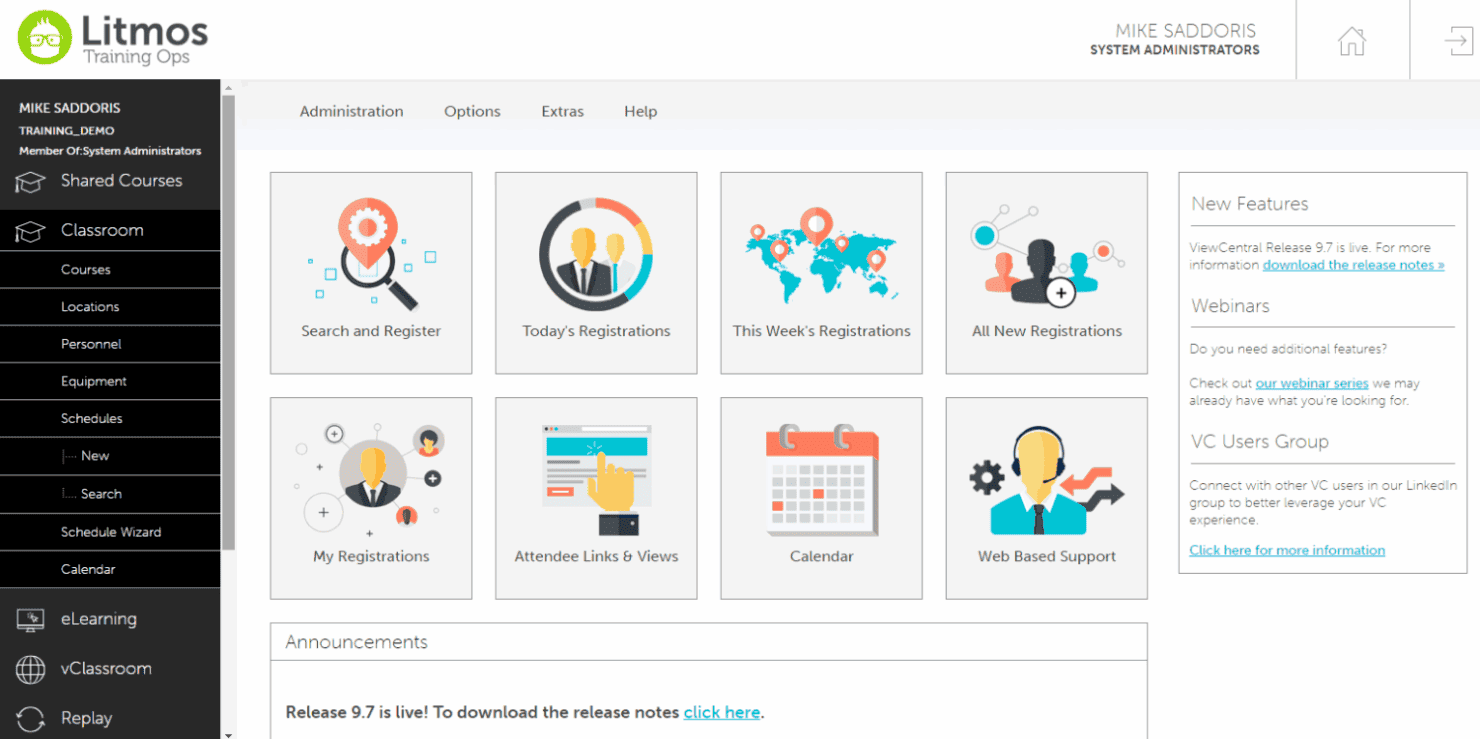
SAP Litmos, by contrast, is designed for teams that want to build and publish training quickly. Its native course builder, quizzes, and video hosting allow admins to create content without relying on external tools. The included content library is especially valuable for compliance, onboarding, and basic skills training.
User Experience & Ease of Use
User experience is one of the biggest differentiators between these platforms, both for learners and administrators.
| Aspect | Docebo | SAP Litmos |
|---|---|---|
| Interface design | Modern and highly customizable | Clean and minimal |
| Admin learning curve | Steep; training often required | Very low |
| Personalized learning paths | Advanced automation and AI-driven paths | Basic learning paths |
| Social learning features | Yes (coaching, sharing, comments) | Limited |
| Mobile experience | Strong, with branded apps | Excellent out-of-the-box |
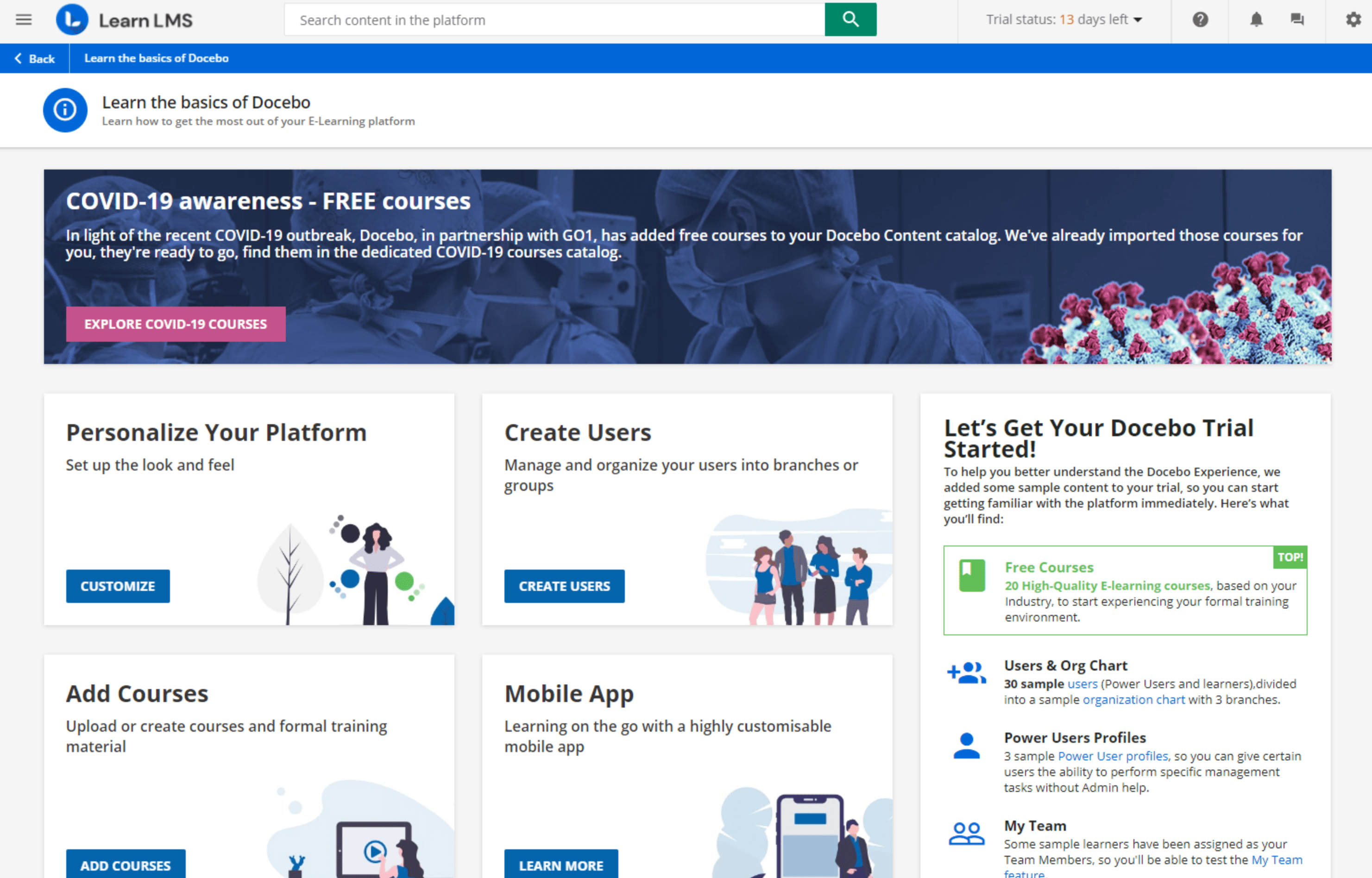
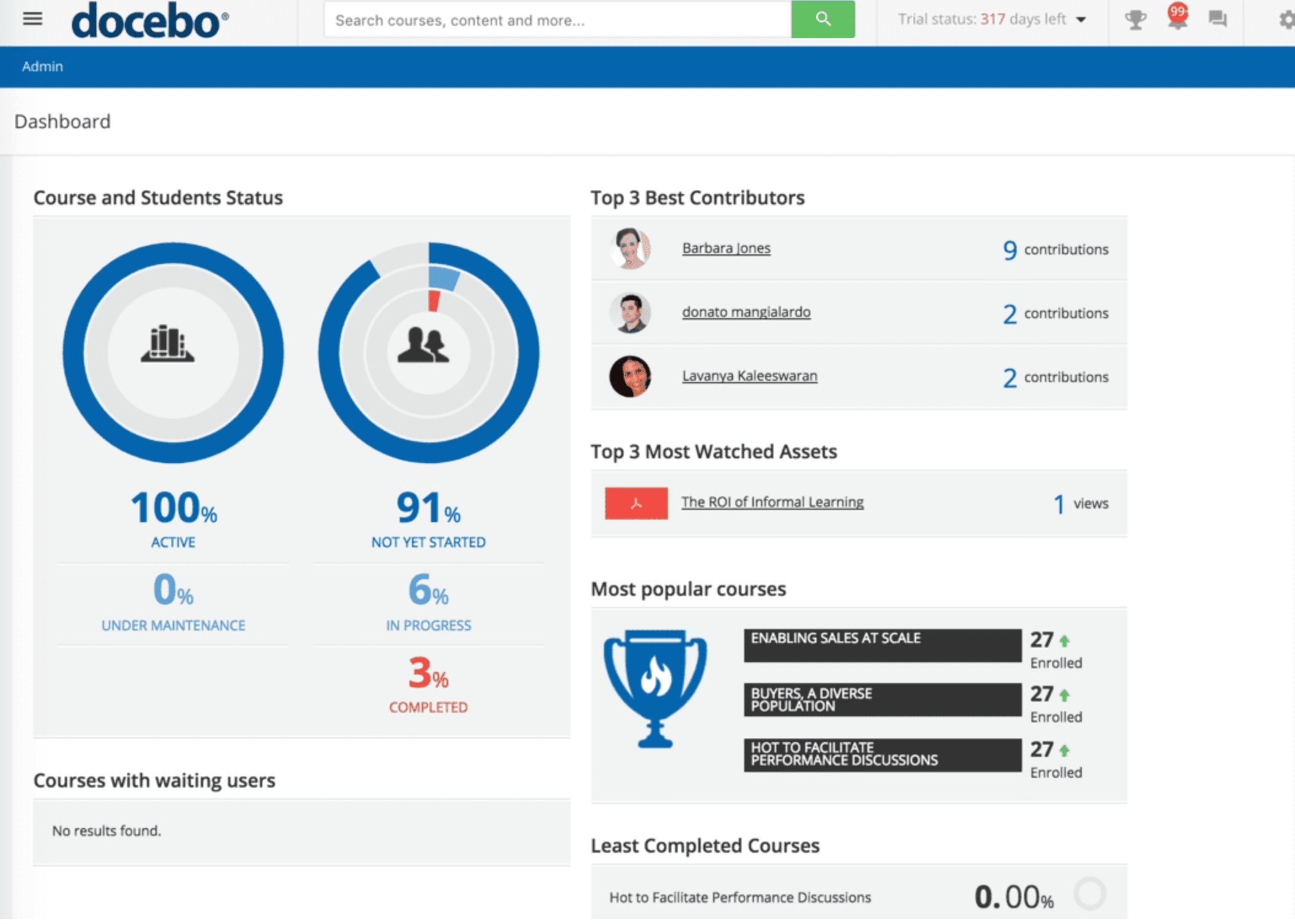
Docebo offers a visually polished, customizable interface with advanced options such as AI-powered recommendations, social learning, and coaching features. However, the richness of features can overwhelm new administrators, and onboarding or professional services are often needed.
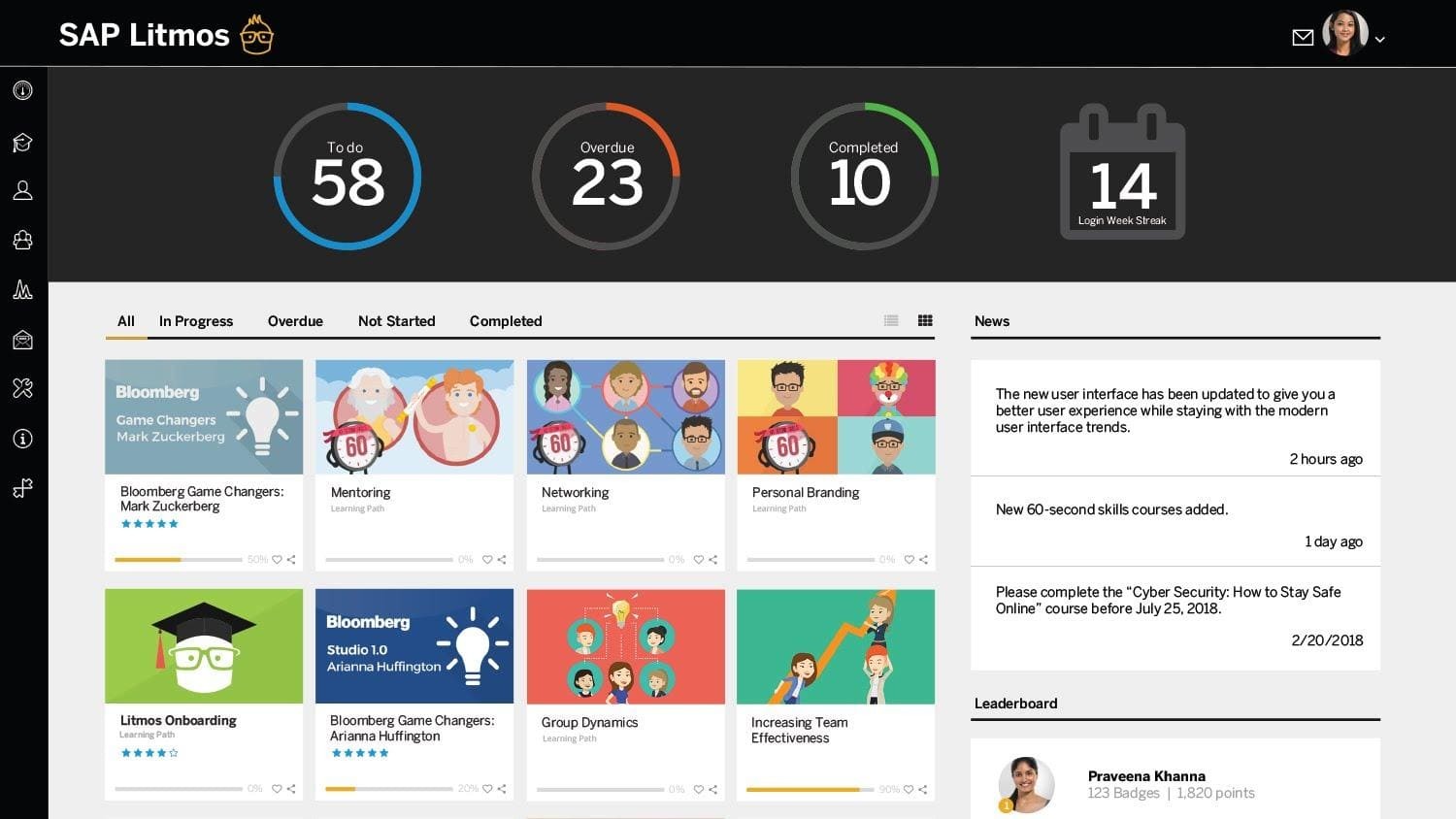
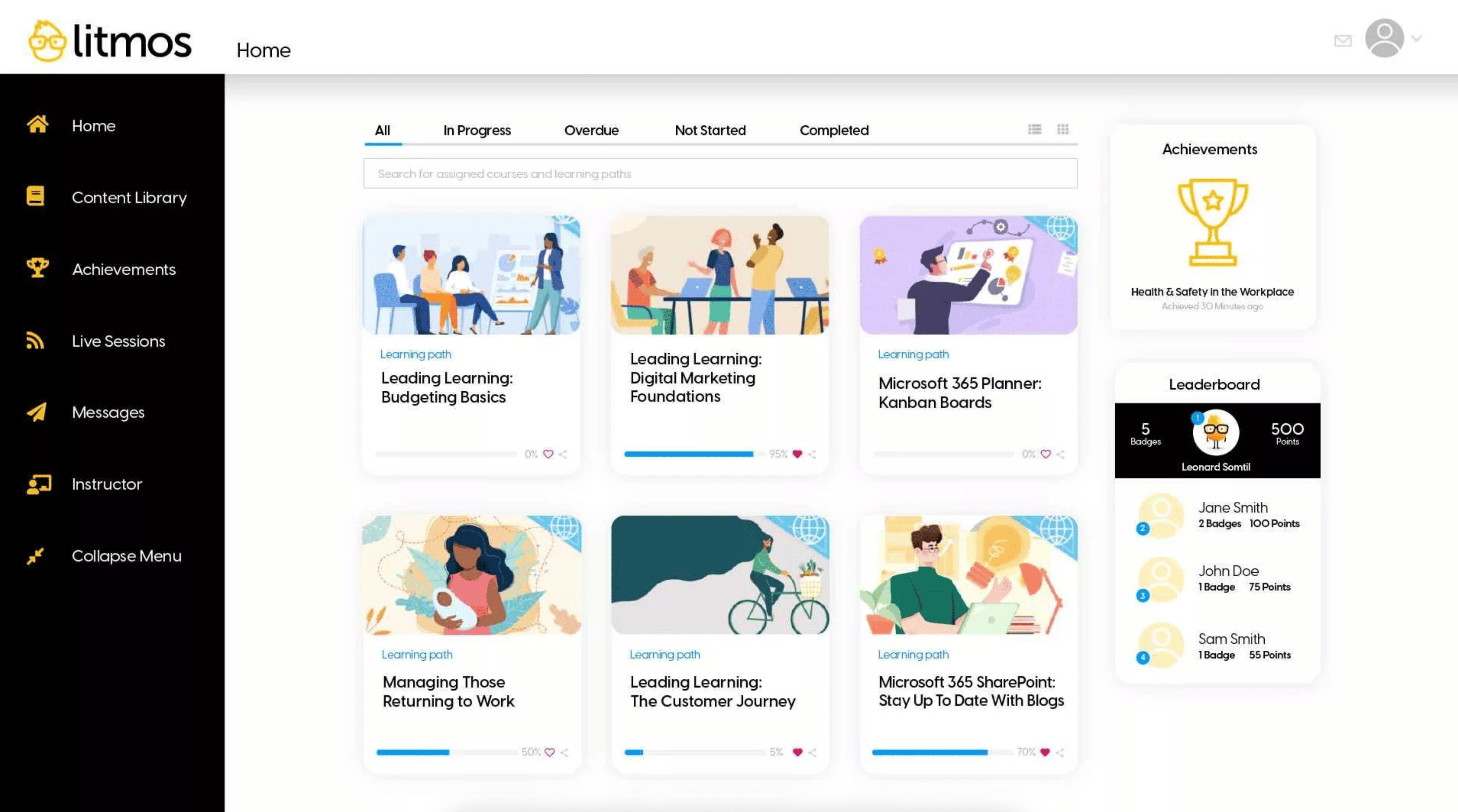
SAP Litmos focuses on removing friction. Learners can start courses in just a few clicks, and admins can manage training with minimal configuration. This ease of use is why Litmos consistently receives strong usability ratings.
AI Features Overview
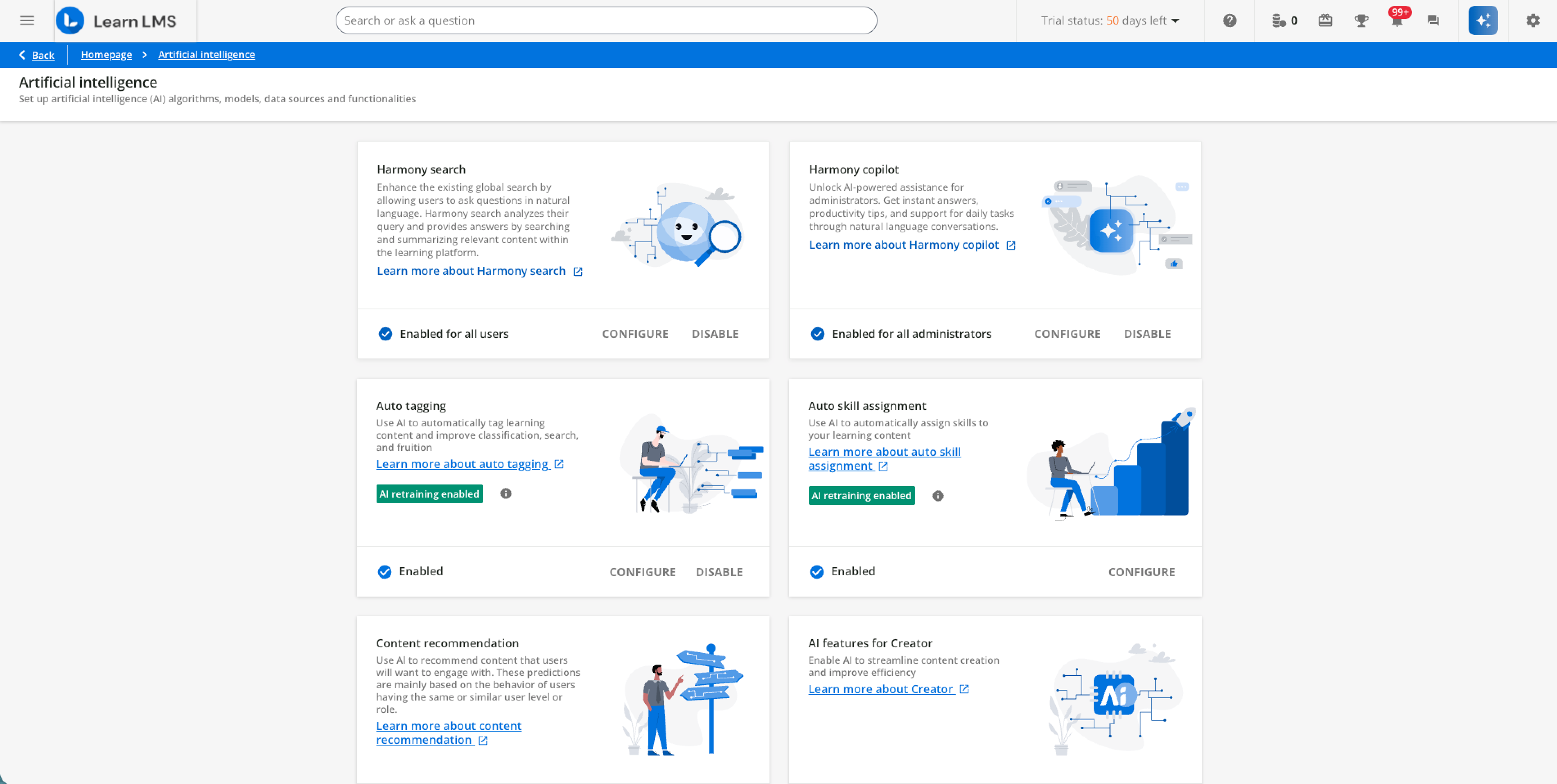
Both platforms use artificial intelligence to enhance learning experiences, but they apply AI in different ways. Docebo leans heavily into AI-driven personalization and automation, while SAP Litmos uses AI more selectively to simplify administration and improve content discovery.
| AI Feature | Docebo | SAP Litmos |
|---|---|---|
| AI-powered content recommendations | Advanced, personalized recommendations based on role, behavior, and skills | Basic recommendations based on assigned courses |
| Automated learning paths | Dynamic paths driven by AI and user data | Rule-based paths with limited automation |
| Skills management | AI-based skills taxonomy and gap analysis | Basic skill tracking |
| Content tagging and categorization | AI-assisted auto-tagging | Mostly manual tagging |
| Learning analytics and insights | Predictive insights and performance trends | Descriptive analytics only |
| Automation of admin tasks | High (enrollments, suggestions, workflows) | Moderate (assignments and notifications) |
Docebo’s AI capabilities are designed for large organizations that want to personalize learning at scale. The platform uses AI to recommend content, map skills, automate learning paths, and surface insights about learner behavior and performance. This makes it especially valuable for enterprises focused on upskilling, reskilling, and long-term workforce development. However, these advanced features often require careful configuration and ongoing optimization to deliver full value.
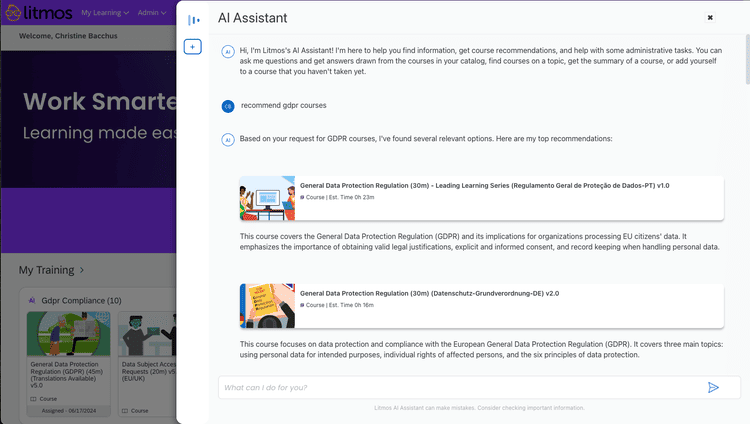
SAP Litmos takes a more practical approach to AI. Rather than deep personalization, it uses lighter automation to streamline administrative tasks and improve the learner experience. AI features in Litmos help reduce manual work and make training easier to manage, but they do not fundamentally reshape learning journeys. This approach works well for teams that want efficiency without complexity, particularly for compliance training, onboarding, and standardized learning programs.
Reporting & Analytics
Reporting is a critical area for compliance-driven organizations and data-focused enterprises.
| Reporting Capability | Docebo | SAP Litmos |
|---|---|---|
| Standard reports | Yes | Yes |
| Custom report builder | Advanced and highly configurable | Limited |
| Compliance tracking | Yes | Yes |
| Learning impact & ROI | Strong analytics and dashboards | Basic insights |
| API / BI tool integration | Yes | Limited |
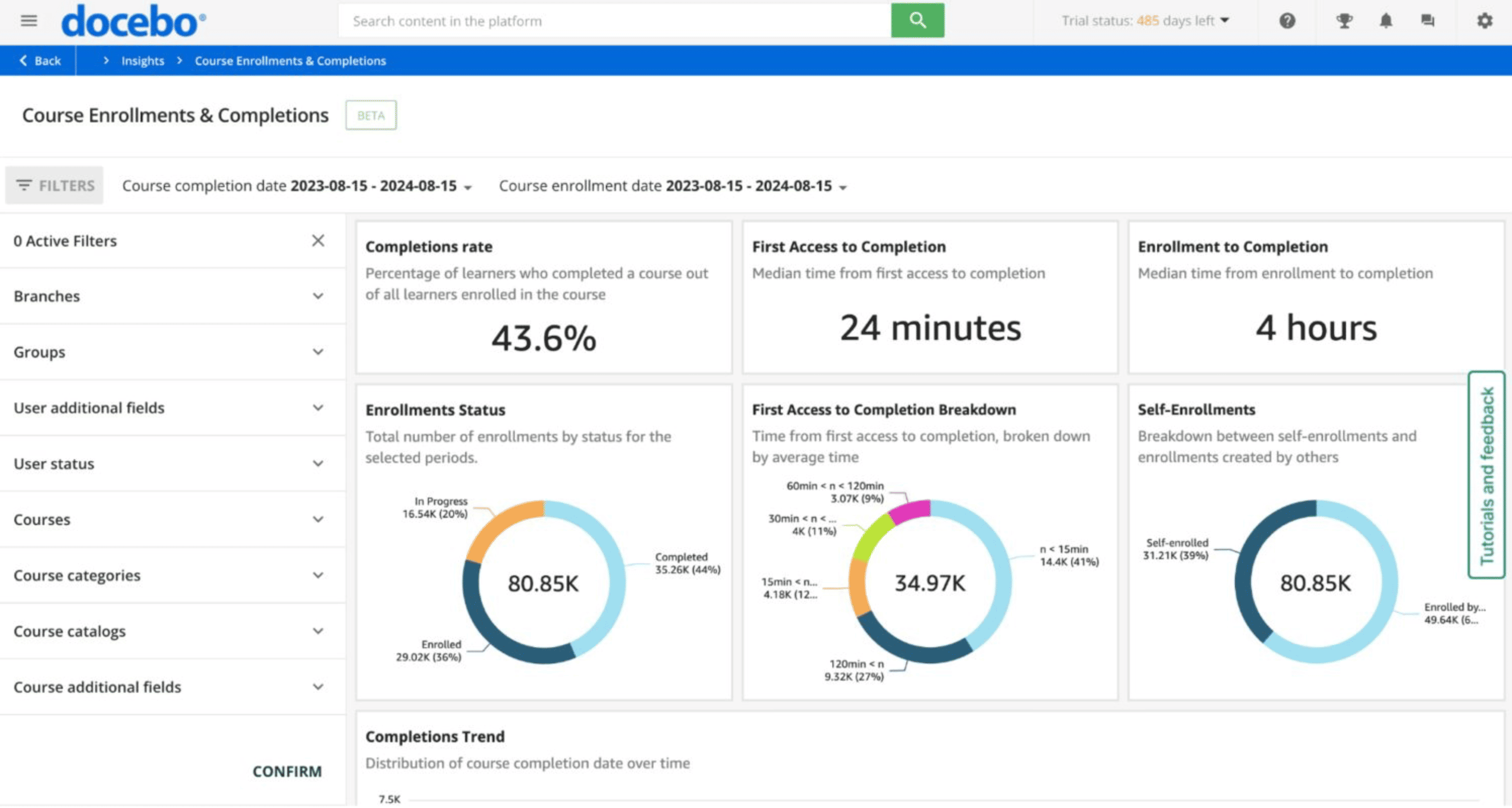
Docebo is well-suited for organizations that want to measure learning effectiveness, performance improvement, and ROI. Its dashboards, APIs, and data exports support deep analytics and external BI tools.
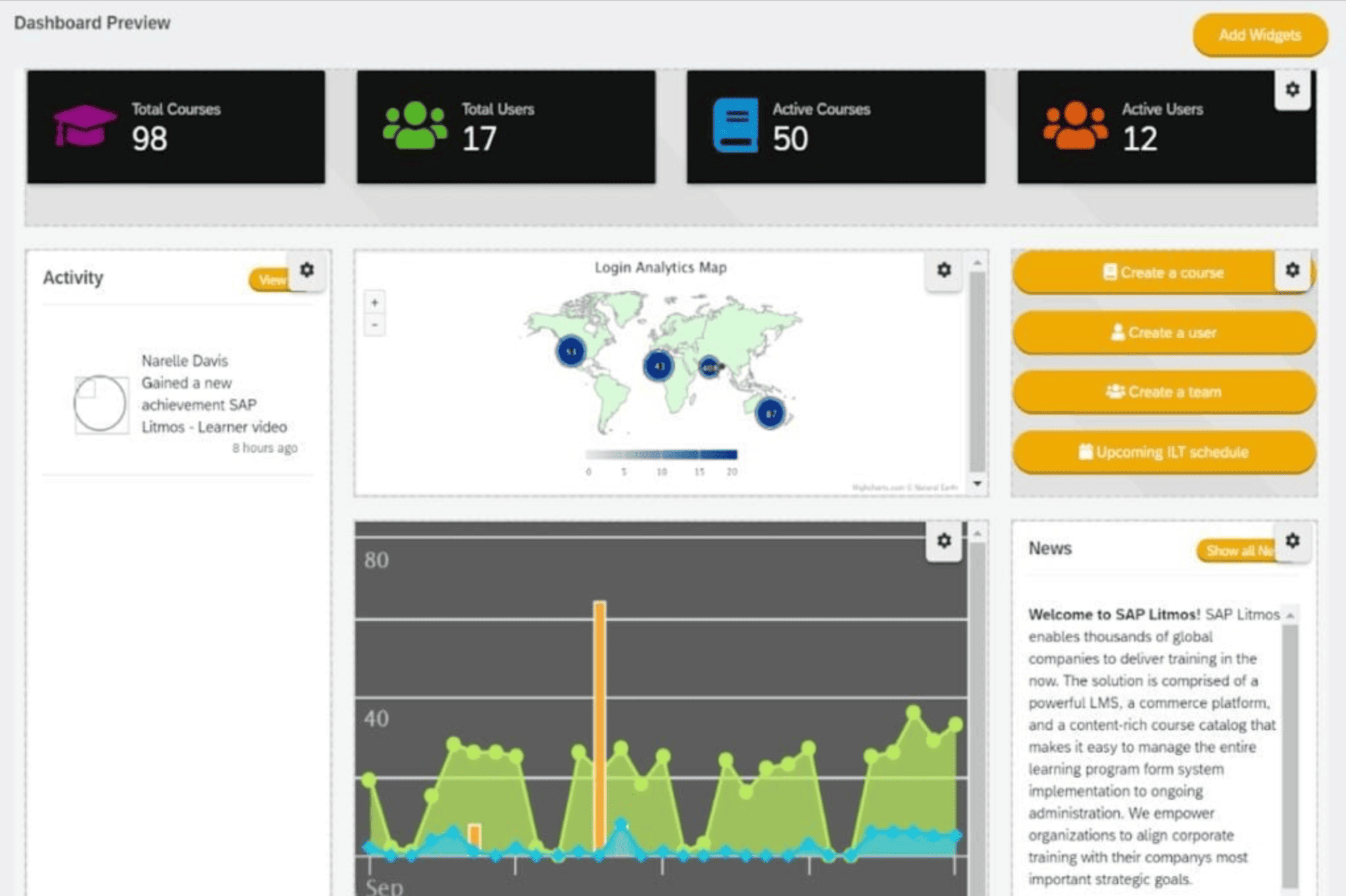
SAP Litmos focuses on operational reporting, completion rates, certifications, and compliance. While effective for day-to-day needs, it lacks the depth and customization that large enterprises may require.
Engagement & Collaboration Tools
Both platforms include features designed to keep learners engaged, but they take different approaches to collaboration. Docebo emphasizes social and peer-driven learning, while SAP Litmos focuses on structured engagement that supports completion and compliance.
| Engagement Feature | Docebo | SAP Litmos |
|---|---|---|
| Social learning | Built-in social feeds, sharing, and commenting | Limited social interaction features |
| Peer-to-peer knowledge sharing | Strong support for user-generated content and peer feedback | Minimal peer collaboration |
| Coaching and mentoring | Dedicated coaching and mentoring workflows | Not natively supported |
| Gamification | Badges, leaderboards, and points | Badges, leaderboards, and points |
| Notifications and reminders | Highly configurable, automated notifications | Standard reminders and alerts |
| Virtual learning support | Natifve integrations with Zoom and Microsoft Teams | Natifve integrations with Zoom and Microsoft Teams |
Docebo is designed to support continuous learning through collaboration. Features such as social feeds, user-generated content, and structured coaching programs encourage learners to share knowledge and learn from one another. Gamification elements and personalized notifications further increase engagement, making Docebo a strong fit for organizations that want to build a learning culture rather than simply deliver courses.
SAP Litmos focuses on engagement that supports efficiency and completion. Its gamification and notification tools help motivate learners, but collaboration features are intentionally limited to keep the platform simple. This works well for organizations that prioritize consistency, compliance, and quick adoption over social interaction.
Integrations & Ecosystem
Integrations determine how well an LMS fits into a broader technology stack.
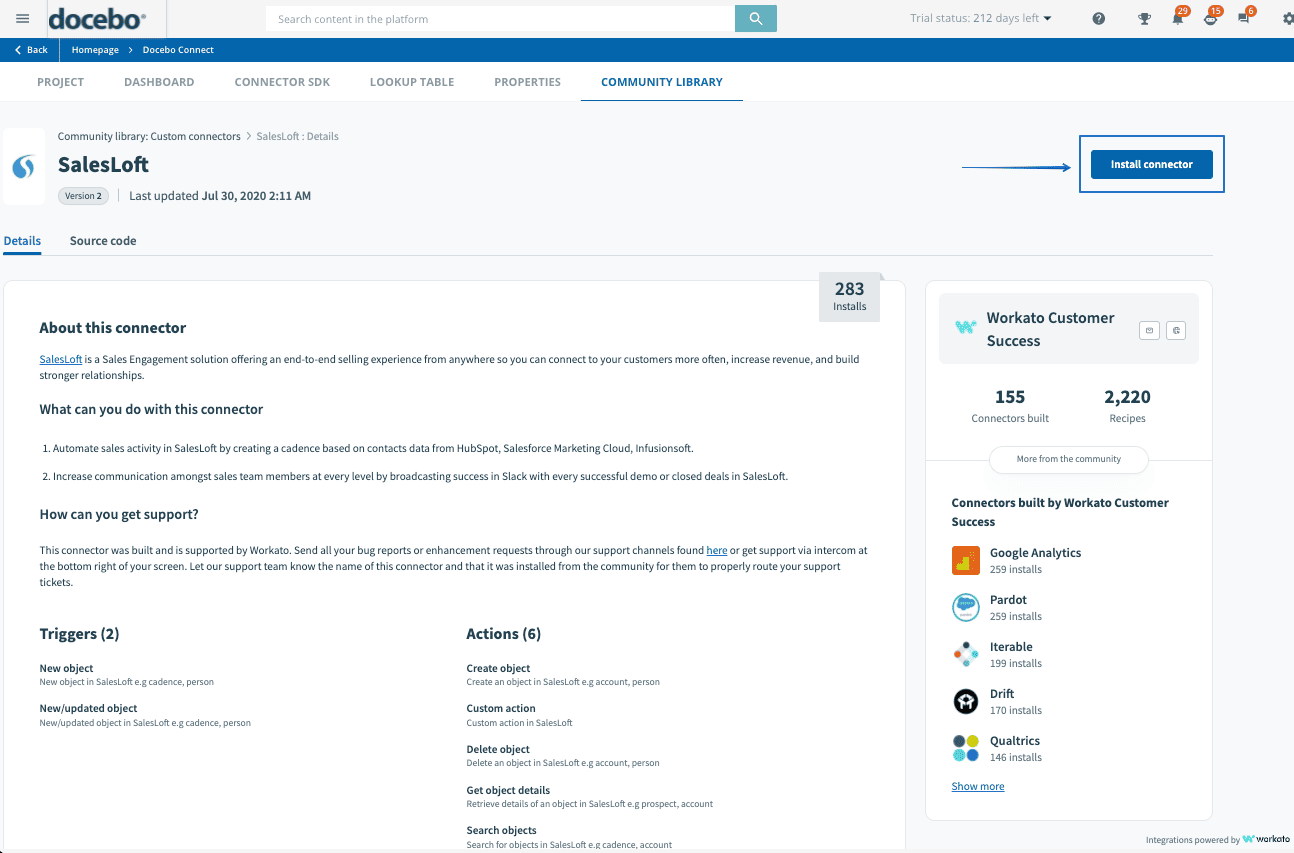
Docebo is designed to operate as part of a large, interconnected enterprise environment. Its open APIs and broad marketplace make it ideal for organizations with complex workflows.
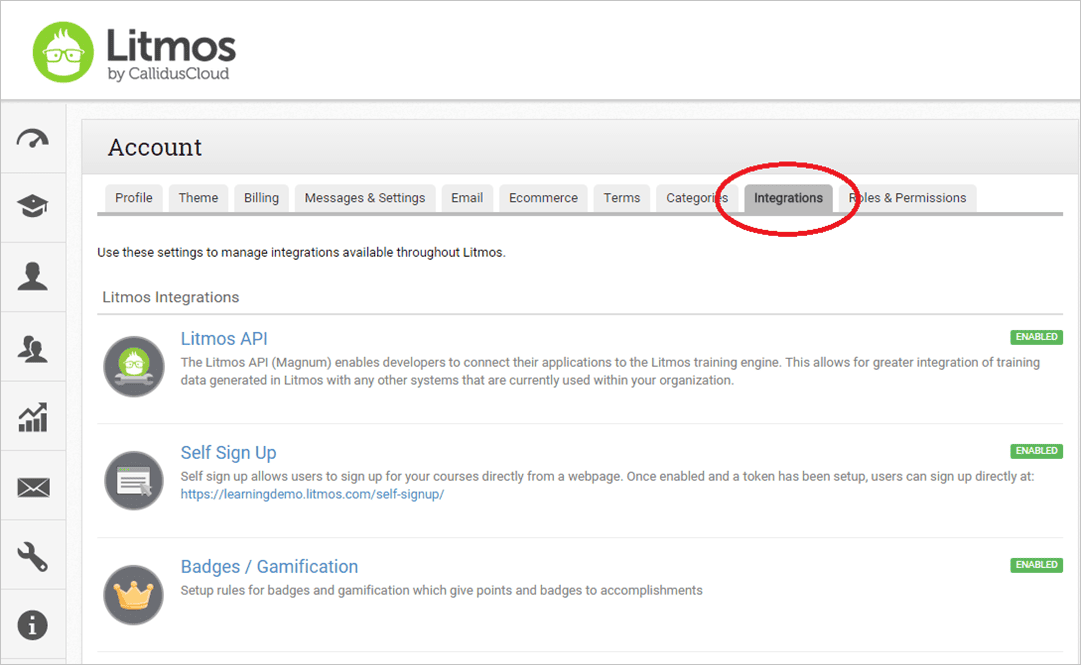
SAP Litmos prioritizes essential integrations over endless customization. It works especially well for companies already invested in SAP or Microsoft tools.
Docebo vs Litmos: Pricing & Cost Structure Overview
Pricing is one of the most significant differences between Docebo and SAP Litmos. Both platforms use quote-based models rather than public price lists, but they differ in transparency, cost structure, and how quickly pricing scales as usage grows.
Docebo Pricing Approach
Docebo positions itself as a premium, enterprise-grade LMS, and its pricing reflects that focus. The platform uses an annual subscription model based primarily on yearly active users, selected plan tier, and optional add-ons.
Key characteristics of Docebo pricing include:
- No published pricing; all plans require a custom quote
- Annual contracts only (no free or month-to-month plans)
- Pricing influenced by user volume, integrations, analytics needs, and support level
- Additional costs for add-ons, onboarding, and advanced capabilities
In practice, Docebo pricing typically starts around $25,000 per year, even for smaller deployments. Most organizations fall into one of two plans:
- Elevate – commonly ranging from $30,000–$50,000 per year for mid-sized teams
- Enterprise – starting at $60,000+ per year, with large or global deployments often reaching six figures
While Docebo’s modular approach allows organizations to build highly customized learning ecosystems, it can also make total cost harder to predict. Add-ons such as Advanced Analytics, Extended Enterprise portals, branded mobile apps, or AI content tools can significantly increase the final contract value.
Docebo is generally best suited for organizations that:
- Have large or growing learner populations
- Need advanced analytics, automation, and integrations
- Are comfortable with enterprise contracts and longer implementation timelines
SAP Litmos Pricing Approach
SAP Litmos uses a tiered, per-active-user pricing model, also delivered via custom quotes. While Litmos does not publish official prices, industry benchmarks and customer reviews provide clearer guidance on expected costs.
Litmos pricing is typically built around:
- Active users (unique logins per year)
- Selected tier (Foundation, Platinum, or Platinum AI)
- Whether training content libraries are bundled
- Add-ons such as integrations, data exports, or services
In general, SAP Litmos is priced lower per user than Docebo, especially at scale. Directional benchmarks often show:
- LMS-only pricing around $3–$6 per active user per month for smaller volumes
- Reduced per-user costs at higher volumes (often $2–$4 per user/month)
- Higher costs when bundled with content libraries, particularly for small teams
Litmos separates the LMS from training content, services, and certain integrations. As a result, the base price can look attractive, but total cost increases as organizations add content libraries, Salesforce connectors, managed services, or advanced data access.
SAP Litmos is typically a good fit for organizations that:
- Want predictable per-user pricing
- Focus on compliance, onboarding, and standardized training
- Prefer a simpler LMS with fewer configuration decisions
Litmos vs Docebo: Which LMS Is Right for You?
Choosing between Docebo vs. SAP Litmos ultimately comes down to organizational size, training complexity, and long-term learning strategy. While both are respected LMS platforms, they are built with very different priorities in mind.
Docebo is best viewed as a full learning ecosystem. It shines in environments where learning is strategic, data-driven, and continuously evolving. If your organization needs deep customization, AI-powered personalization, advanced analytics, multi-audience training (employees, partners, customers), and tight integration with a broader enterprise tech stack, Docebo delivers exceptional depth.
SAP Litmos, on the other hand, is designed for speed, clarity, and ease of use. It works especially well for teams that want to roll out training quickly without managing a complex system. Its strengths lie in compliance training, onboarding, and standardized learning programs, supported by predictable per-user pricing and a clean user experience.
Looking for something in between Docebo and Litmos?
Do you feel like Docebo and SAP Litmos sit at two opposite ends of the spectrum?
One is powerful but complex and expensive, the other is easy to use but more limited. If you’re looking for an LMS that’s easy to implement, simple to manage, yet still AI-powered and future-ready, it might be time to look at EducateMe.
EducateMe is designed for teams that want modern LMS capabilities without enterprise-level friction. It combines fast setup and intuitive UX with advanced AI tools, making it a strong middle-ground option for growing companies, training teams, and education-driven businesses.
EducateMe focuses on delivering real value quickly, without long onboarding cycles, hidden costs, or unnecessary complexity.
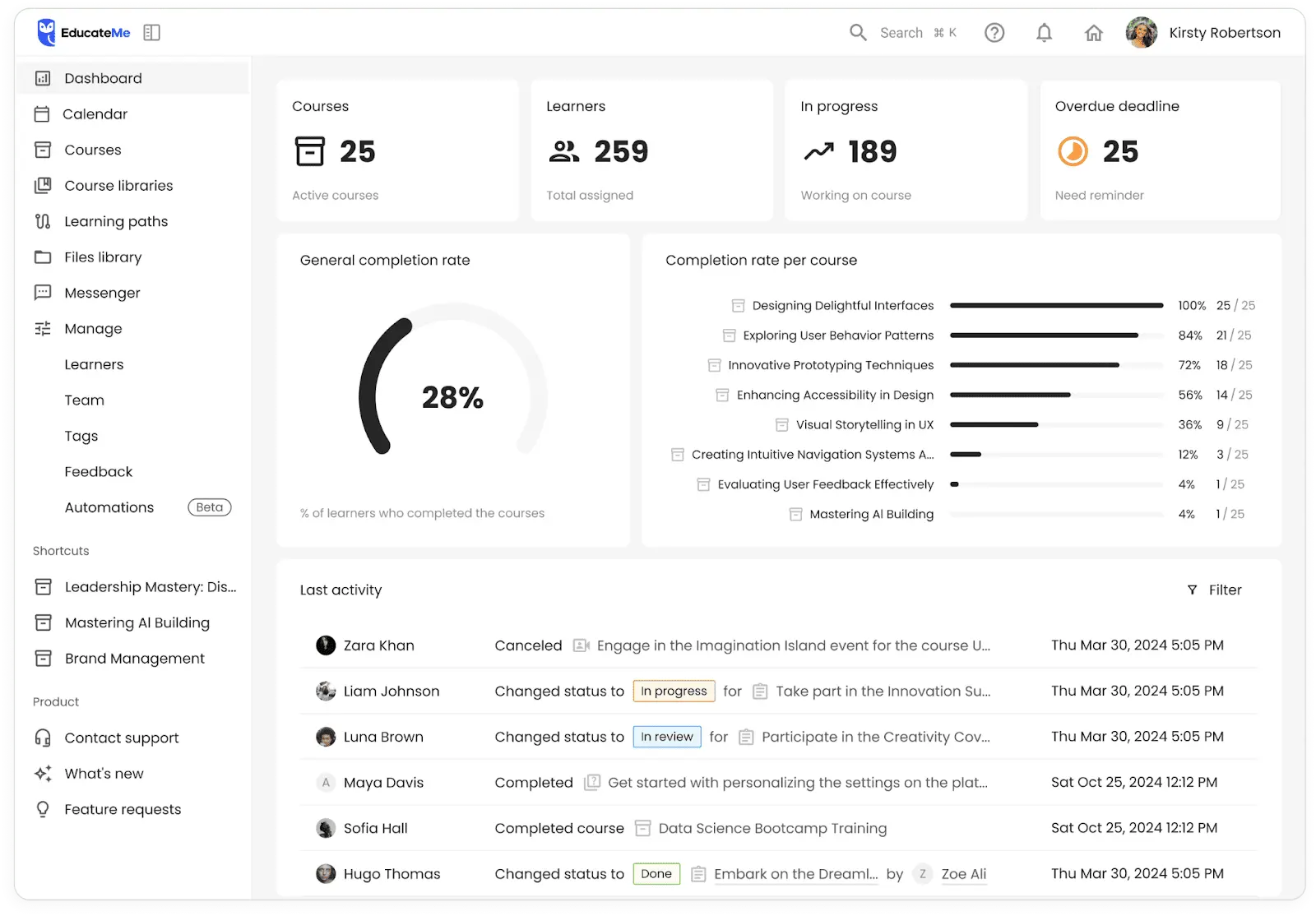
Core features include:
- Launch branded training spaces in days, not months
- Build, update, and enhance courses with an AI Assistant that generates lessons, quizzes, activities, and learning materials in context
- AI role-play coach for practical, scenario-based learning
- Smart automation & workflows to reduce admin effort
- Multi-tenancy support for departments, clients, or external audiences
- Advanced white-labeling to fully match your brand
- Clear analytics & progress tracking without complex BI setup
- Modern integrations & API access for flexible tech stacks
Whether you’re moving away from enterprise LMS complexity or outgrowing basic tools, EducateMe offers a balanced approach that scales with your needs.
Want to see it in action? Book a demo to get a personalized walkthrough. Or try EducateMe free for 14 days and explore all features with zero risk.
Frequently asked questions
Neither is built primarily for small teams, but Litmos fits them more comfortably. Its per-active-user pricing, fast setup, and minimal admin overhead suit lean teams without a dedicated LMS manager. Docebo's enterprise contracts, longer implementation, and roughly $25,000 annual entry point make it a stretch for smaller budgets. If your team is under a few hundred learners and wants speed over depth, Litmos is the easier starting point of the two.
Standards-based content moves cleanly, since both support SCORM, xAPI, and AICC — export those files and re-import them. The harder work is rebuilding anything platform-specific: Docebo's custom learning paths, automation rules, and integrations don't transfer directly to Litmos, and Litmos's library content stays with Litmos. Plan to remap SSO, HRIS connections, and user roles, then migrate learner records and completion history. Pilot one course group before moving everyone.
Not strictly, but it fits best there. SAP Litmos runs as a standalone LMS and integrates with non-SAP tools, so you're not required to use other SAP products. That said, its tightest integrations and biggest advantages show up for teams already invested in SAP or Microsoft environments. If you don't use SAP tools, Litmos still works, but you may not get full value from that ecosystem alignment. Confirm current integration options for your specific stack before committing.
Docebo handles it well; Litmos is more limited. Docebo supports employee, partner, and customer training with extended enterprise portals, which suits organizations training multiple external audiences under one system. Litmos focuses more on internal use cases like compliance and onboarding. If external training is central to your strategy, prioritize multi-tenant portal capabilities in your evaluation. EducateMe also offers native multi-tenancy for departments, clients, and partners with transparent pricing — book a demo to see how it compares.