
10 Sales Training Ideas That Will Work in 2026

By Sofia KondratSofia KondratCorporate Training Expert & Content EditorHey there! I’m Sofi Kondrat, your go-to corporate training advisor here at EducateMe. I’ve been navigating the highs…Read more
Corporate Training Expert & Content Editor
7 min read
Sales training in 2026 has one job: change on-the-job behavior, fast. Not “watched the video,” not “passed the quiz,” but better discovery, cleaner follow-ups, stronger objection handling, and more confident reps.
The good news? You’ve got tools now that make training way more practical: AI transcription, AI roleplay coaches, bite-sized microlearning, and analytics that connect learning to revenue outcomes. (And yes, this is exactly where an LMS can go from “content storage” to “performance engine.”)
Below are 10 sales training ideas built for how teams actually sell in 2026 – hybrid, async, and increasingly AI-assisted.
What makes a sales training work in 2026?
Before we jump in, here’s the filter to use:
- Real deals > made-up scenarios. Use actual call clips, emails, and objections.
- Short + frequent beats long + rare. Microlearning + reinforcement beats a quarterly “training day.”
- Practice is the product. Roleplays, drills, and feedback loops win.
- Measure behavior, not vibes. Track things like talk ratios, question quality, objection outcomes, and deal stage conversion.
1. Build a “Call Clip Netflix” from your best demos
The fastest way to level up reps is to let them learn from what actually works in your organization. Take your best customer demos and turn them into a searchable library – organized by persona, deal stage, objection type, and industry.
This becomes one of those great sales training ideas that reps use mid-week, not just during onboarding. They can jump straight to “pricing pushback” or “security review” and copy the structure that wins.
Make it stick by adding one tiny checkpoint after each clip: a two-question quiz or a quick “what would you say next?” prompt. That’s where an LMS for sales training shines, especially if you’re using AI to transcribe calls and generate learning assets in minutes.
2. Turn real transcript moments into instant lessons
Microlearning works when it’s not random trivia. The trick is to pull a real moment from a call transcript (one great question, one messy objection, one awkward “next steps” close) and turn it into a 5–7 minute lesson.
In 2026, microlearning wins because it’s easy to do consistently. Instead of “training day” once per quarter, you’re building a weekly habit. Reps improve faster because they practice often, not because the content is longer.
3. AI roleplays that scale
Traditional roleplays often fail for one reason: nobody wants to perform in front of coworkers. AI roleplays solve that. Reps can practice privately, repeat scenarios, and ramp up difficulty (friendly buyer → skeptical buyer → procurement boss battle.
This is one of the most interactive sales training ideas for distributed teams because practice doesn’t depend on manager availability. The real power move: generate roleplay scenarios directly from your call transcripts – so reps rehearse the objections they’ll hear this week, not the generic ones from a textbook.
4. Gamified roleplay leagues
Gamification gets a bad rep when it’s just points for clicking “Next.” But when the points are tied to actual practice (roleplays, call reviews, rewriting talk tracks) it works surprisingly well.
Keep it simple: run a 2–4 week league, track progress, celebrate improvement (not only top performers), and award small wins weekly. If you want fun sales training ideas that don’t feel childish, this is the sweet spot: light competition + real skill-building.
5. “Win/Loss Clinics” built on evidence, not opinions
Once a month, pick one won deal and one lost deal and review them with receipts: call clips, email threads, notes, timeline. The goal isn’t blame, it’s pattern recognition.
Teams love this because it’s instantly useful. Enablement loves it because it generates training content for free: the best clip becomes a module, the biggest mistake becomes a “spot-the-problem” quiz, and the key objection becomes a roleplay scenario.
6. An objection-handling “escape room” workshop
If you’re planning sales training workshop ideas, this is a crowd-pleaser that still drives skill. Small groups “unlock” stages by responding to objections in under 45 seconds. Each stage is based on real objections pulled from transcripts, so it feels like the job, not theater.
It’s fun, fast, and forces your sales representatives to think in frameworks: clarify → reframe → validate → next step.
7. Coaching sprints with one measurable behavior
Sales managers don’t need more dashboards. They need focused coaching that moves one needle at a time.
Run a 2-week sprint per rep, centered on one behavior: question quality, talk-to-listen ratio, next-step clarity, objection handling. Reps submit a couple of calls, AI helps summarize patterns, managers add targeted feedback, and the sprint ends with a repeat roleplay to prove improvement.
8. Personalized learning paths based on a skills matrix
The fastest way to lose reps is to assign the same training to everyone. Instead, use a basic skills matrix (discovery, product, negotiation, outbound, writing, etc.) and build adaptive paths.
This becomes especially powerful when you combine it with your LMS reports and analytics. You can see where your employees struggle, assign the right practice, and measure improvement over time.
9. Async peer “shadowing”
For sales team training ideas that work in hybrid reality: create a weekly habit where reps post one short clip (60–90 seconds) and one question (“How would you handle this?”). Everyone comments on two clips.
It’s lightweight, it builds a culture of learning, and it quietly creates a goldmine of reusable content for onboarding.
10. A/B test talk tracks like a growth team
Treat messaging as an experiment, not a doctrine. Pick one moment in the funnel (opening pitch, pricing framing, competitive response), run two variants for two weeks, and compare results.
Then bake the winning version into your LMS: short lesson, quick quiz, roleplay practice, and a checklist reps can use before calls.
Bonus: quick sales training ideas for meeting time
If you need something you can drop into a weekly sales meeting without derailing the agenda, use one of these formats:
Start with a 90-second call clip, ask the team to name what worked, then do one “say it your way” round where three reps deliver the next line. Or run a 5-minute micro-quiz on messaging changes, followed by a 3-minute AI roleplay “speed run” volunteers can try live.
These are meeting-friendly because they’re short, practical, and still feel interactive.
If you’re reading these and thinking “Cool… but how do I actually turn this into training people will complete?” – this is where an LMS setup matters. Not the boring, file-dump kind. The kind that lets you take real sales moments (calls, demos, objections) and turn them into a training experience your team can practice on, repeat, and improve.
This is where EducateMe fits really nicely.
The simplest flow is: upload your best customer demos or sales calls → EducateMe auto-generates transcripts + summaries → you turn those real moments into quick lessons, quizzes, and “what would you say next?” checkpoints.
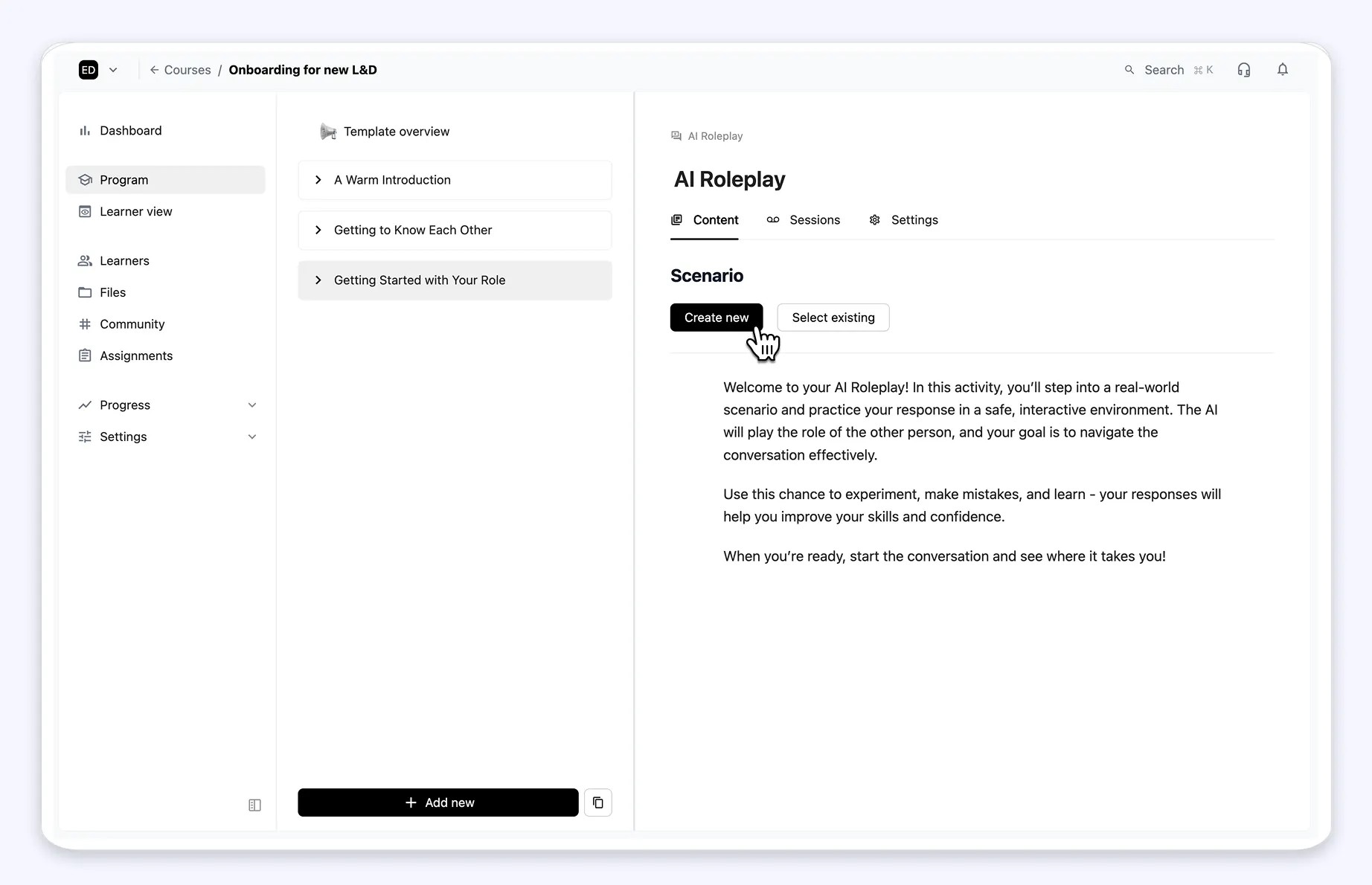
Then you add the part most teams avoid: roleplay. EducateMe’s AI roleplay lets reps practice sales conversations in a self-paced way (pricing pushback, competitor comparisons, discovery calls, procurement, whatever you design), and managers can assign it once and review results without running awkward live roleplays.
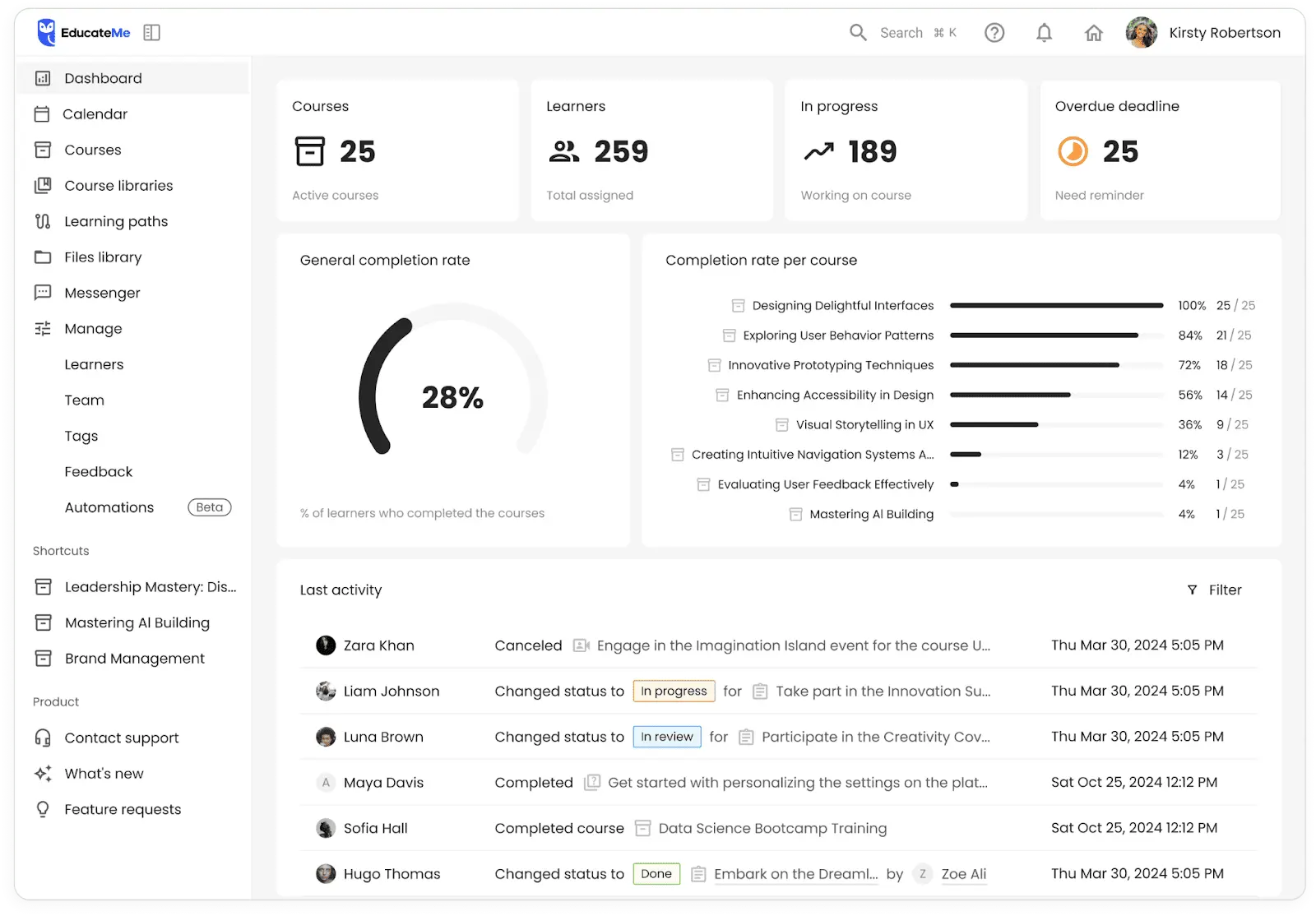
You also get a clean course dashboard (progress, completion rate, time spent, activity performance), so training doesn’t disappear into “we think it helped.” It stays measurable – and tied to the skills that move deals.
Want to see what this looks like with your real calls and scenarios? Book a demo or try EducateMe for free.
What to measure so training actually proves ROI
The best training in 2026 is the kind you can defend with data. Instead of only tracking completion, track behaviors and outcomes: stronger discovery, cleaner next steps, better objection outcomes, improved stage conversion, faster ramp.
If you build your training from real demos and transcripts, you also get something even better than “engagement”: you get a program reps trust, because it’s based on what wins in your deals.
Frequently asked questions
The most effective sales training blends practice with real-world context: roleplay of actual objections, call reviews using recorded conversations, microlearning for product and pitch updates, and peer coaching between reps. Gamified challenges keep motivation up. What separates good sales training from forgettable training is repetition on realistic scenarios, not one-off seminars reps forget by the next quarter.
Start with the specific gaps — prospecting, discovery, objection handling, or closing — then build focused practice around each. Combine structured content with live roleplay and call feedback so reps rehearse before they're in front of customers. Reinforce over time rather than cramming everything into onboarding. AI roleplay coaches, like EducateMe's, let reps practice pitches repeatedly and get consistent feedback without tying up a manager.
Good sales training covers product knowledge, your sales process, discovery and questioning skills, objection handling, and closing techniques — plus practice applying them. Include real call examples and current competitive positioning so reps aren't working from outdated scripts. Assessments and roleplay show whether the training actually stuck. The mix of knowledge and rehearsed practice is what changes behavior on live calls.
Look past completion to behavior and results: ramp time for new reps, win rates, average deal size, and how consistently reps apply what they learned on real calls. Roleplay scores and manager observations help before results show up in the pipeline. Set a baseline before training so you can attribute changes. If numbers don't move, the training needs rethinking, not repeating.