



o one arrives at Tovuti’s pricing page to see a number. They arrive to be told to book a demo. That experience reflects how Tovuti structures pricing: there are no published plans or per-user rates. Instead, cost is determined later, after discovery clarifies learner volume, use cases, and implementation scope.
For organizations evaluating LMS platforms at scale, this means pricing enters the conversation later than usual, after initial fit and capability have already been assessed.
To make early-stage planning easier, this article outlines how Tovuti LMS pricing works in practice. It highlights the ranges buyers commonly encounter, what causes quotes to vary, and what to account for before committing to a sales-led evaluation.
How Tovuti LMS Pricing Works
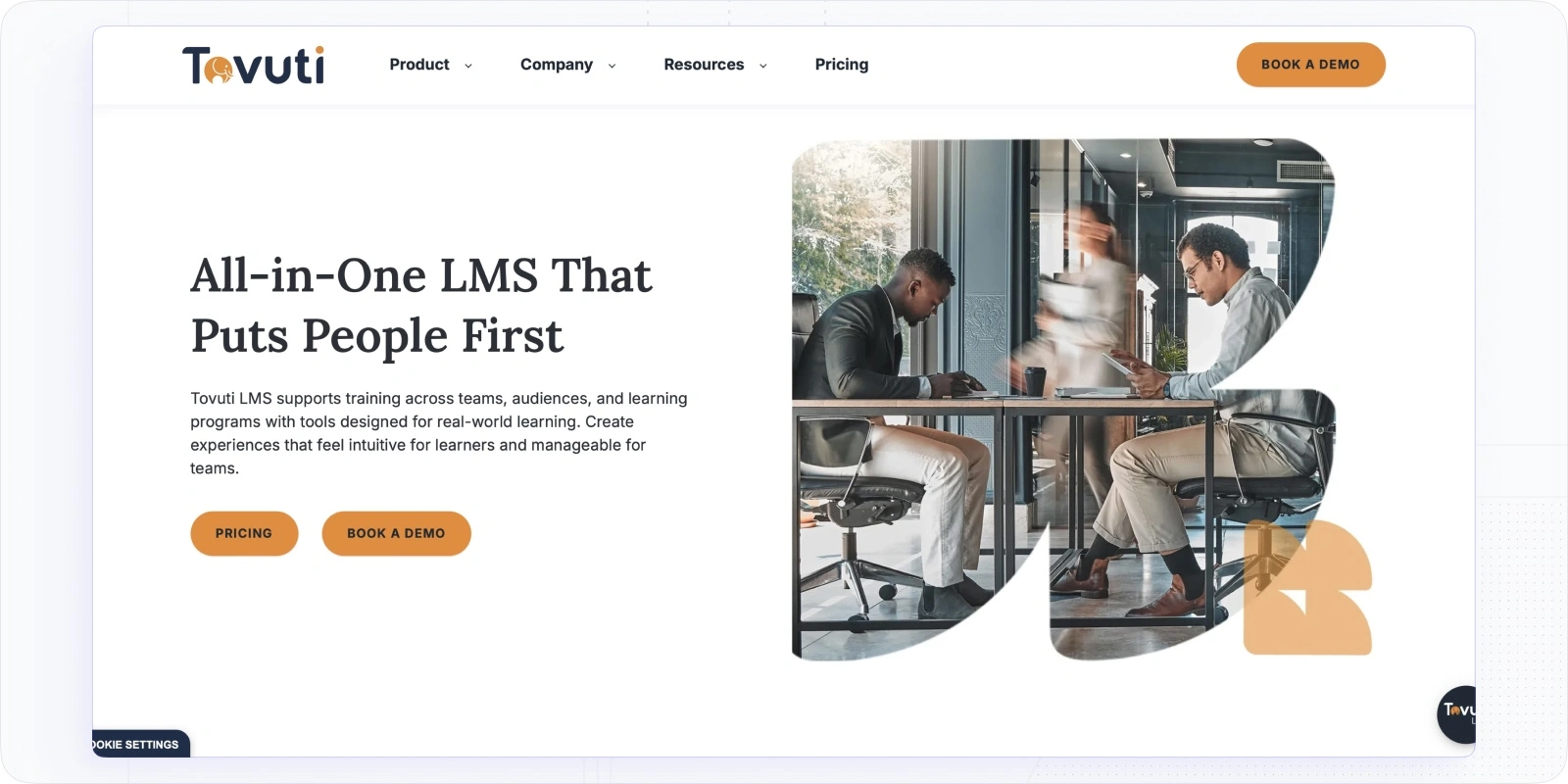
Tovuti operates on a fully customized pricing model. There are no public plans, no visible per-user rates, and no self-serve checkout. To receive pricing, buyers must go through a demo and discovery process with the sales team.
This approach is also reflected across independent review platforms. On G2 and Capterra, Tovuti is listed as having no publicly disclosed pricing, with buyers directed to contact the vendor directly for a quote. These platforms also indicate that pricing primarily scales with learner volume and implementation scope, rather than feature-based tiers.
In practice, this means:
- Pricing is not published or standardized
- Cost is shared only after a discovery call
- Quotes are tailored based on several variables, including:
- Number of learners
- Training use cases (employee, customer, partner, compliance)
- Required features and modules
- Integrations and automation needs
- Support level and professional services
Tovuti presents this model as a benefit, emphasizing that pricing is not driven by rigid feature tiers or forced upgrades. Instead, quotes are shaped primarily by learner volume, implementation complexity, and service requirements.
The downside is that pricing clarity arrives later in the buying process, after time has already been invested in demos, discovery, and internal alignment.
Tovuti LMS Pricing: Expected Ranges
Because Tovuti does not publish pricing, most available figures come from third-party directories and market overviews. As a result, any numbers you come across should be treated as budgeting benchmarks, not official quotes from the vendor.
Here’s a commonly referenced range based on industry sites and user-shared pricing estimates:
These estimates are widely cited across software comparison sites and pricing overviews (e.g., Growhackscale and Research.com), which gather community-shared data and reported pricing bands.
⚠️ Note: None of these figures come directly from Tovuti’s official pricing page. Pricing ultimately varies based on scope, setup, and service requirements.
What Impacts the Cost of Tovuti LMS?
With Tovuti, pricing is not calculated from a simple per-user formula. Quotes are built around how the platform will be used, how complex the rollout is, and what level of support is required. As a result, cost varies significantly between organizations—even when learner counts look similar on paper.
This is why two companies with the same number of users can receive very different quotes: Tovuti pricing reflects deployment reality, not just scale. Let’s take a closer look at the most common factors that influence cost.
Number of learners
Learner volume remains the primary scaling factor. Pricing typically increases in defined tiers as usage grows, particularly when deployments expand from small internal teams to organization-wide or external audiences.
Implementation complexity
A straightforward internal employee portal is far less costly than a multi-region, multi-department rollout. Requirements such as custom workflows, role-based permissions, localization, and advanced reporting increase implementation effort and, in turn, pricing.
Integrations
Connecting Tovuti to systems like HRIS platforms, CRMs, identity providers (SSO), or external data sources often raises costs. This is especially true when integrations involve custom data synchronization, automation, or compliance-driven reporting.
Professional services
Many deployments include professional services such as onboarding, configuration, data migration, reporting setup, automation design, and administrator training. These services are often a major driver of first-year cost beyond the LMS license itself.
Multi-portal or multi-audience use
Organizations delivering training to employees, customers, and partners frequently require separate branded portals with distinct rules and content. Supporting multiple audiences increases both technical complexity and ongoing management effort.
Branding and customization
Advanced white-labeling, tailored user experiences, and custom dashboards may require additional configuration or services beyond a standard setup.
Support level
Higher support tiers (such as faster response times, priority SLAs, or dedicated account management) can also affect pricing, particularly for large or regulated organizations.
Taken together, these factors explain why Tovuti pricing varies widely across customers. The final quote reflects not just how many learners you have, but how the platform is expected to operate inside your organization.
What to Expect When Requesting a Tovuti Quote
Requesting a Tovuti quote follows a typical enterprise SaaS buying process, where pricing is shared only after requirements are clearly defined.
In most cases, buyers can expect the following sequence:
- Book a demo through the Tovuti website to initiate the process.
- Participate in a discovery call to outline learner volumes, training use cases, integration requirements, and compliance considerations.
- Receive a tailored pricing proposal once scope and complexity have been assessed
- Review annual contract terms, even if pricing is presented as a monthly figure.
For organizations in regulated industries, the process may include additional discussion around security controls, access management, and auditability. As with many enterprise LMS platforms, first-year pricing often includes onboarding or professional services (such as implementation support, configuration, or training) alongside the core license.
The key takeaway for buyers is timing: pricing clarity typically comes after initial evaluation and internal alignment, not before.
Additional Costs to Consider
Subscription pricing is only one part of the total cost of adopting Tovuti. For many organizations, first-year spend is shaped as much by setup and services as by the LMS license itself, especially in enterprise or multi-audience deployments.
Common additional costs include:
- Onboarding and implementation services – Initial setup often covers platform configuration, portal creation, workflow design, and administrator training. These services are frequently bundled into first-year contracts and can significantly increase upfront cost.
Custom integrations – Connecting Tovuti to HRIS systems, CRMs, identity providers (SSO), or external data sources may require custom development, particularly when data synchronization, automation, or advanced reporting is involved.
Data migration from a legacy LMS – Moving users, historical completions, certifications, and content from an existing system is often scoped as a separate effort and can add meaningful cost depending on data volume and complexity.
Advanced branding or white-labeling – Organizations running customer or partner training programs may require deeper branding, white-labeled portals, or tailored user experiences beyond a standard configuration. - Ongoing professional services – After launch, some teams continue to rely on professional services for reporting customization, automation updates, new portal rollouts, or optimization work.
- Contract minimums or annual commitments – As with many enterprise LMS platforms, contracts are typically annual and may include minimum spend thresholds, even if pricing is discussed on a monthly basis.
These factors explain why first-year cost is often noticeably higher than the license alone for quote-based LMS platforms. Accounting for them early helps procurement and training teams set realistic budgets and avoid surprises later in the buying process.
Final Verdict — Is Tovuti Worth it?
Tovuti LMS pricing makes the most sense for organizations that prioritize flexibility and configurability over upfront simplicity. Its all-in-one positioning can be appealing for teams looking to consolidate learning tools and support complex training programs across employees, partners, or customers.
That value, however, comes with trade-offs. Pricing clarity arrives later in the process, and implementation effort can be meaningful depending on scope. As a result, Tovuti tends to work best when buyers already expect a sales-led evaluation and have the internal resources to manage it.
For teams that want cost clarity earlier, or a faster path to a pricing decision, this is often where alternatives enter the picture.
One option frequently considered is EducateMe, which emphasizes transparent pricing, quicker evaluation, and lower implementation overhead while still supporting multi-audience training.
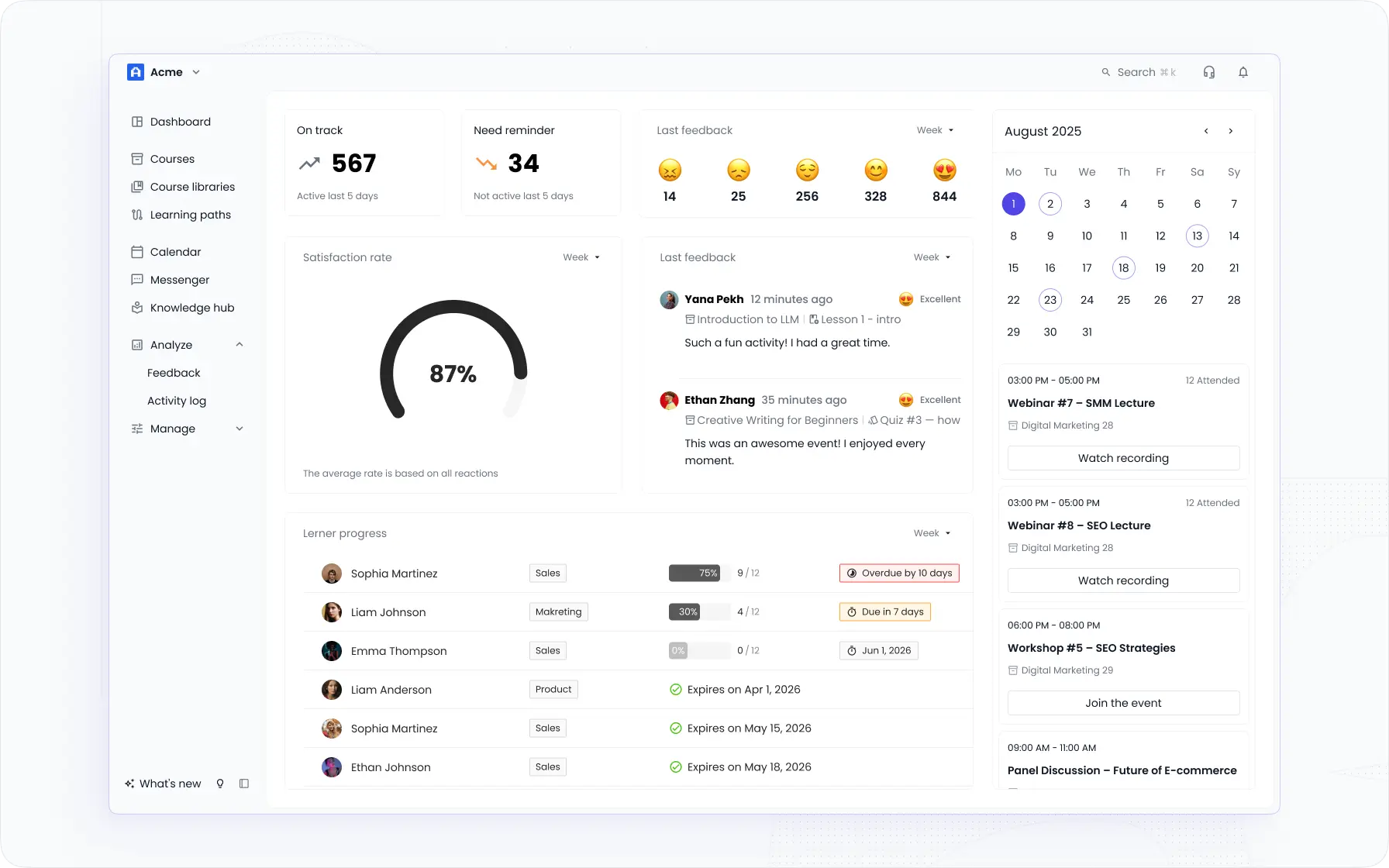
EducateMe simplifies corporate learning for modern teams. Built for organizations, training providers, and fast-moving companies that want an advanced AI-first LMS without lengthy setups or high enterprise costs, EducateMe makes managing training easy. With this platform, you get:
- Flexible plans that scale with your team, so you only pay for what you actually use.
- Fast, intuitive setup, allowing fully branded training portals to launch in just hours.
- AI-powered course creation and automation, reducing time spent on content development and administrative tasks.
- Multi-tenant support, perfect for agencies, departments, or client-based programs.
- Complete white-label options, letting your LMS fully reflect your brand identity.
- All-in-one features, including live sessions, analytics, progress tracking, and seamless integrations in a clean, user-friendly interface.
- Free trial access, so you can explore all features without commitment.
Ready to explore a flexible, modern LMS? Book a demo or review EducateMe pricing to see how it compares.
Frequently asked questions
How do I get a Tovuti LMS pricing quote?


To get pricing, you start by booking a demo through Tovuti’s website. This is followed by a discovery call to discuss learner volumes, use cases, integrations, and compliance needs. After assessing your requirements, Tovuti provides a tailored pricing proposal for your organization.
Why is Tovuti’s first-year cost often higher than the license alone?
First-year costs usually include onboarding, implementation, and professional services in addition to the core LMS license. Custom integrations, data migration, and advanced branding can also add to the total spend. Planning for these costs upfront helps avoid unexpected budget surprises.
What additional costs should I consider when adopting Tovuti?
Beyond the subscription, organizations often pay for setup services, custom integrations, and data migration from legacy systems. Advanced branding, multi-portal configurations, and ongoing professional services may also apply. Contract minimums or annual commitments can further increase the initial cost.
Is Tovuti the right LMS for every organization?
Tovuti works best for teams that need flexibility, configurability, and the ability to consolidate multiple learning tools. Pricing clarity typically comes later in the sales-led process, and implementation can require significant internal resources. Organizations seeking faster evaluation and more predictable pricing may consider alternatives like EducateMe.