
Seismic Pricing: Costs, Plans, and Hidden Fees [2026]

By Sofia KondratSofia KondratCorporate Training Expert & Content EditorHey there! I’m Sofi Kondrat, your go-to corporate training advisor here at EducateMe. I’ve been navigating the highs…Read more
Corporate Training Expert & Content Editor
6 min read
How much does Seismic cost? That’s the first question most buyers search in Google when evaluating this AI-powered sales enablement platform, and also the hardest one to get a straight answer to.
Seismic doesn’t publish pricing on its website. There’re no public plans, no entry-level tiers, and no instant quotes. Instead, pricing is handled through custom contracts, which can make it difficult to understand what you’ll actually pay before speaking with sales.
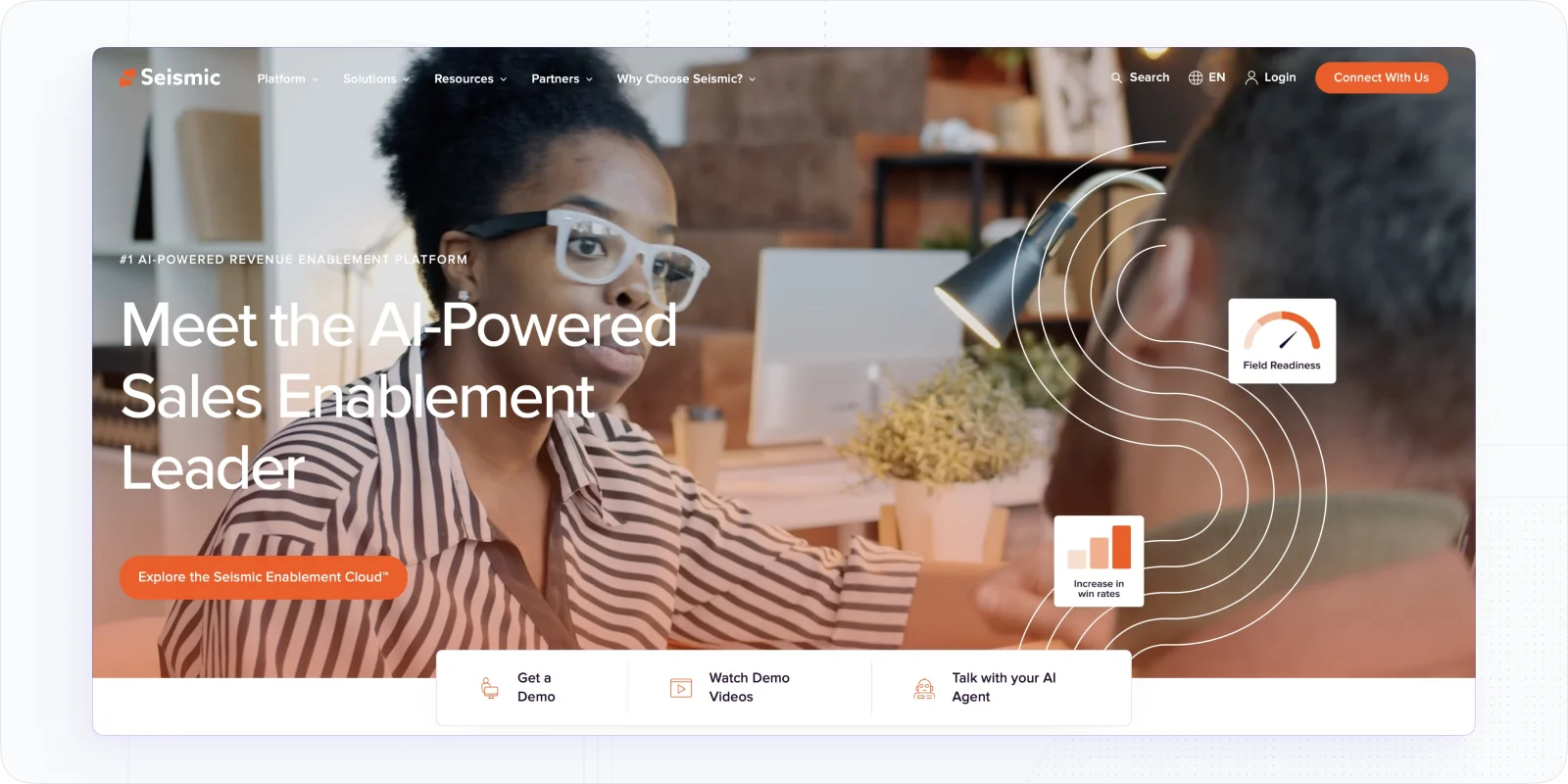
This article breaks down how Seismic pricing works, what typical cost ranges look like based on real-world benchmarks, which hidden fees to expect, and whether the platform is worth the investment.
How Seismic Pricing Works
Seismic pricing follows a custom-quote, enterprise-first model. There’re no public plans, no fixed tiers, and no self-serve checkout. Every customer receives a custom quote based on how the platform will be used across the organization.
In practice, Seismic pricing is built around users, modules, and scale, rather than a flat monthly fee.
The core elements of the Seismic pricing model
1. User-based licensing (with role differences)
Seismic pricing per user depends on who is using the platform:
- Sales reps
- Marketing users
- Enablement and admin roles
These roles are often priced differently, which means total cost grows as more teams are added, even if headcount doesn’t change dramatically.
2. Modular platform structure
Seismic isn’t a single-purpose LMS. Pricing increases as more capabilities are included, such as:
- Sales enablement and content management
- Learning, onboarding, and coaching
- Advanced analytics and reporting
This is why Seismic sales enablement pricing and Seismic learning pricing are often bundled together, even when teams only need part of the functionality.
3. Annual contracts and minimum commitments
Most customers are required to:
- Sign annual contracts
- Commit to a minimum number of seats
- Pay upfront for the full term
Monthly pricing may be calculated internally, but billing is typically annual.
What buyers usually pay
Because pricing isn’t public, benchmarks matter. Based on procurement platforms, customer reviews, and vendor negotiations:
- Mid-market teams typically spend $20,000–$60,000 per year
- Enterprise organizations often exceed $100,000 annually
- Overall, Seismic software pricing commonly falls between $20,000 and $120,000+ per year
In short: Seismic pricing is flexible, but not simple. The more teams, features, and governance you need, the higher the cost, and the harder it is to predict without a sales conversation.
Seismic Pricing Breakdown
Because Seismic doesn’t publish official pricing tiers, understanding the cost comes down to how customers typically deploy the platform in practice. While exact quotes vary, market benchmarks and buyer reports reveal clear patterns in how Seismic packages its product.
Below is a pricing breakdown based on common Seismic deployments, not advertised plans.
Estimated Seismic pricing packages (based on market benchmarks)
| Package Type | What’s Typically Included | Typical Annual Cost | Who It’s For |
|---|---|---|---|
| Core Sales Enablement | Content management, search, and basic analytics | $20,000–$40,000 | Mid-market sales teams |
| Sales Enablement + Learning | Employee onboarding, structured training paths, and coaching tools | $40,000–$70,000 | Enablement-led organizations |
| Enterprise Platform | Advanced analytics, enterprise integrations, and governance controls | $70,000–$120,000+ | Large, global enterprises |
These packages often combine Seismic sales enablement pricing with Seismic learning pricing, which means teams looking only for LMS functionality may still pay for broader enablement features.
Seismic pricing per user: what benchmarks show
Seismic doesn’t disclose per-seat pricing publicly, but third-party procurement data provides helpful reference points.
- Vendor-reported negotiated pricing: approximately $30-60 per user for Seismic’s Professional Edition
- Customers typically license around 100 sales users, plus additional marketing and admin seats
- Different user roles may be priced differently, increasing total contract value
While licenses are often calculated monthly, billing is typically annual, with minimum seat requirements baked into the contract.
Why pricing varies so widely
Two companies with the same headcount can receive very different quotes. That’s because Seismic pricing is influenced by:
- Number of enabled teams (sales, marketing, enablement)
- Feature depth, not just user count
- Integration and governance needs
- Global rollout and compliance requirements
In other words, Seismic pricing scales with complexity. The more enterprise-level controls you need, the faster costs rise.
Additional Costs to Expect
The license fee is only part of the picture. To understand the real cost of Seismic, buyers need to factor in several additional expenses that often appear after the initial quote. These costs vary by contract, but they show up consistently across mid-market and enterprise deployments.
Implementation and onboarding
Most Seismic customers go through a structured rollout process.
- Average implementation timeline: ~2-3 months
- Professional services are commonly required
- Larger or more complex organizations may see longer timelines
Implementation costs are often bundled into the first-year contract, which can make initial pricing appear higher than expected.
Training and enablement
While Seismic is designed for enterprise teams, it still requires internal onboarding.
- Admin and enablement team training may be included or billed separately
- Ongoing enablement typically requires dedicated internal resources
- Advanced features often come with a learning curve
For organizations without a dedicated enablement team, this can increase both time and cost.
Integrations and technical setup
Seismic integrates with major CRM and marketing platforms, but not all integrations are included by default.
- CRM integrations (e.g., Salesforce) may require higher-tier plans
- API access and custom integrations can add cost
- Complex data flows may require additional setup work
These technical requirements often influence the final quote.
Support tiers and service levels
Standard support is usually included, but enhanced service levels may cost extra.
- Priority or dedicated support options
- Custom SLAs for enterprise environments
- Ongoing account management for large teams
Support costs tend to scale with organization size and contract value.
Renewals and contract escalators
Seismic contracts are typically renewed annually.
- Multi-year agreements may include price escalators
- Renewal pricing is negotiable but requires active procurement involvement
- Discounts are more common at renewal than during initial purchase
Ignoring renewal terms can significantly increase long-term costs.
No free trial or self-serve plan
Seismic doesn’t offer:
- A free plan
- A public trial
- A low-cost entry tier
Evaluation happens through demos and sales-led pilots, which adds time to the buying process. Seismic’s total cost of ownership is higher than the license price alone. Implementation, training, integrations, and renewals all play a role in the final number.
Final Verdict: Is Seismic Worth It in 2026?
Seismic is a powerful, enterprise-grade sales enablement platform, and its pricing reflects that positioning. For large organizations with mature sales operations, dedicated enablement teams, and the budget to support long-term adoption, Seismic can deliver strong value.
It is particularly well-suited for companies that:
- Manage large, distributed sales teams
- Need enablement embedded directly into sales workflows
- Require advanced analytics, content governance, and reporting
- Are comfortable with annual contracts and multi-month rollouts
In these cases, Seismic’s higher cost is often justified by the depth of functionality and control it provides.
That said, Seismic isn’t the right fit for every organization. Teams that primarily need learning, onboarding, or customer education often find the platform more complex (and more expensive) than necessary. The lack of transparent pricing, lengthy implementation timelines, and bundled features can make it difficult for mid-market teams with simpler requirements to justify the investment.
This is why many organizations begin comparing Seismic with more flexible LMS-focused alternatives.
One option often considered is EducateMe – a modern LMS designed to support employee, partner, and customer training without enterprise-level overhead.
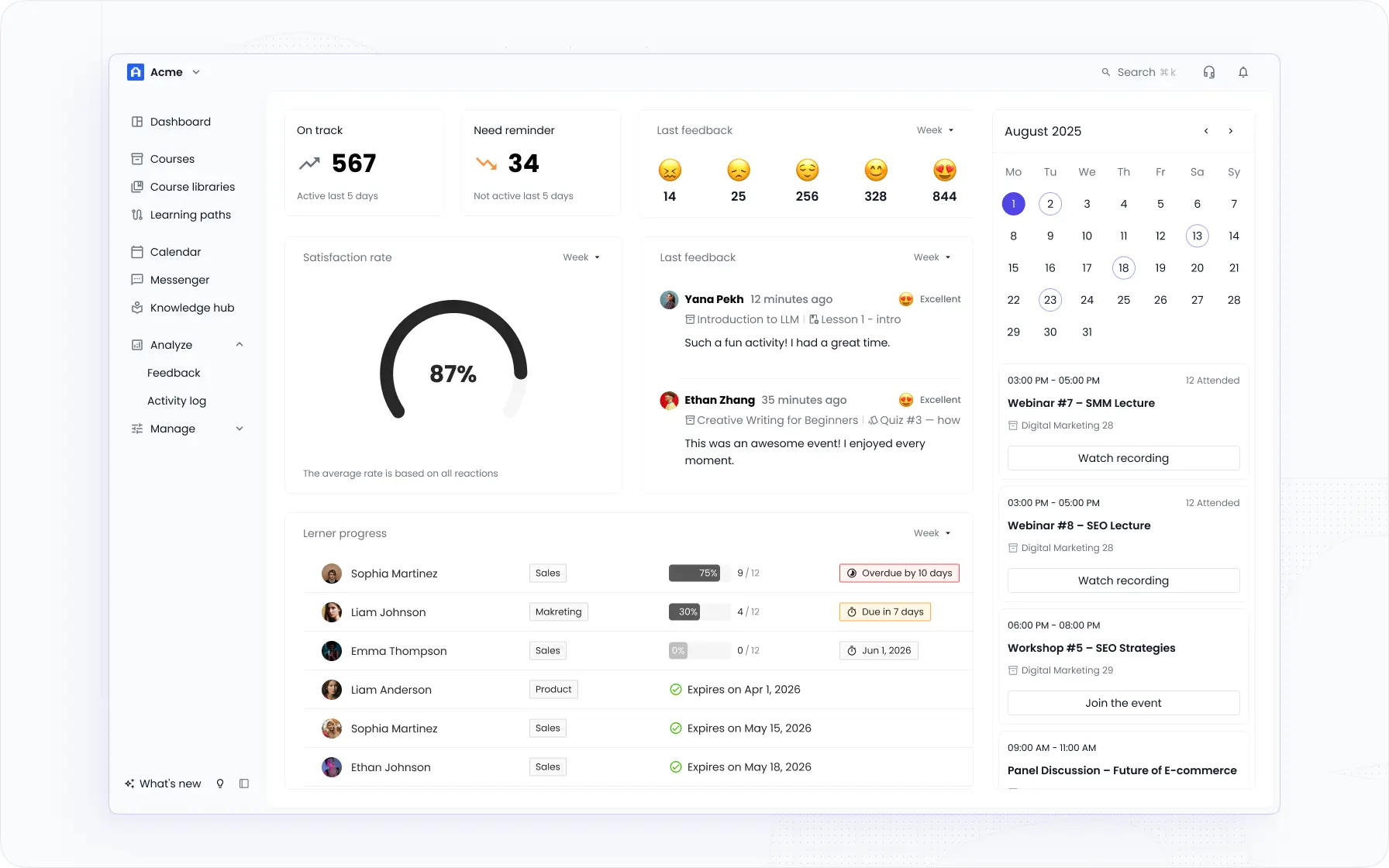
EducateMe offers:
- Transparent, scalable pricing that adapts as teams grow
- Fast implementation, often within hours rather than months
- AI-powered course creation and automation to reduce manual work
- Multi-tenancy, ideal for departments, partners, or client training
- White-labeling, live sessions, analytics, and integrations in a clean interface
- A free trial, allowing teams to evaluate the platform without commitment
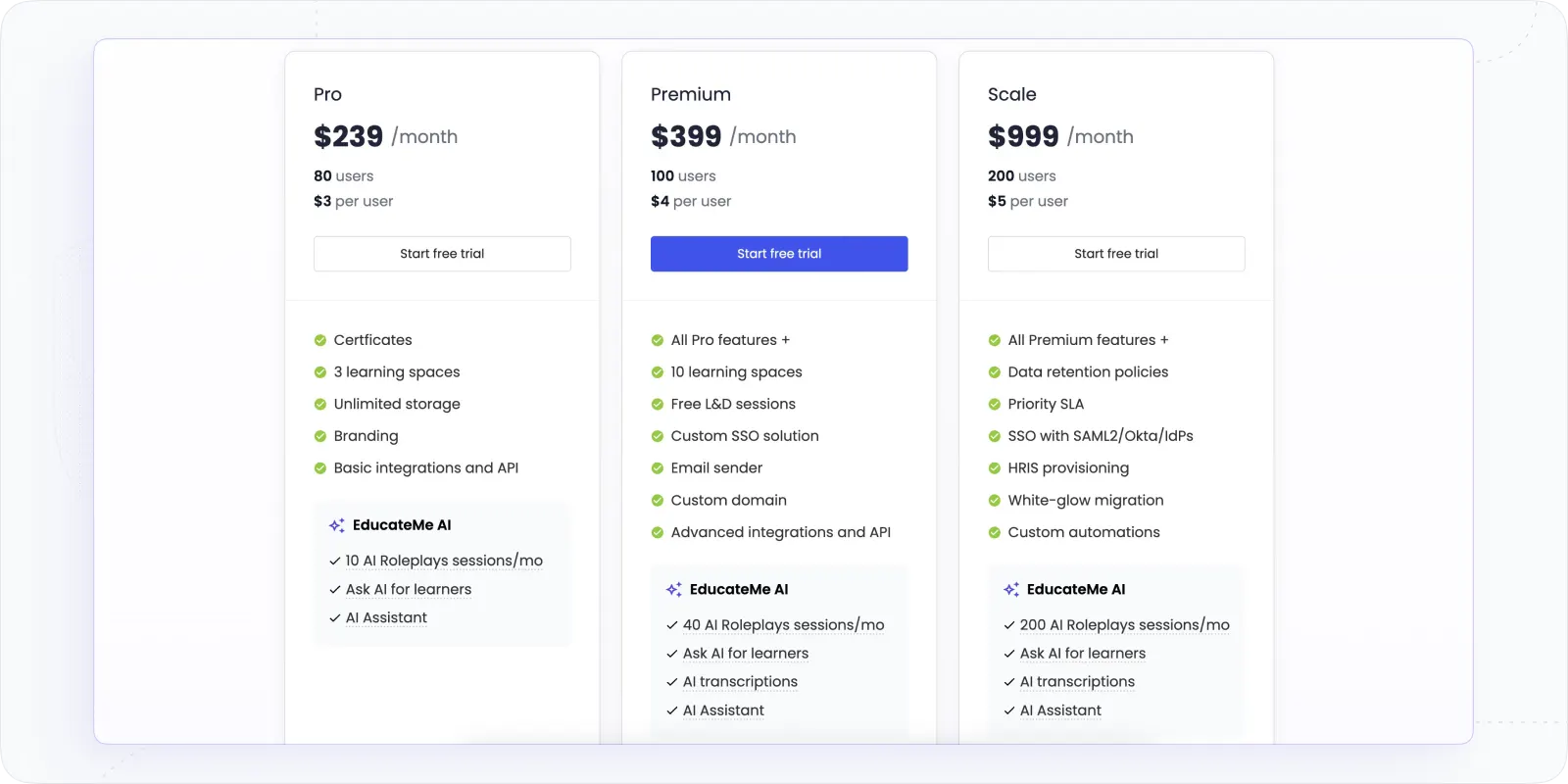
If Seismic feels too heavy or costly for your current stage, EducateMe provides a practical, lower-risk alternative. Try EducateMe for free or book a demo to see if it fits your needs.
Frequently asked questions
Often, yes. Seismic is a sales enablement platform first, and its learning features are usually bundled with broader enablement and content-management functionality. If you only need onboarding, training, or customer education, you may pay for capabilities you won't use. Buyers wanting pure LMS functionality frequently find dedicated learning platforms cheaper and simpler. Decide whether you genuinely need enablement embedded in sales workflows, or just structured training, before committing to Seismic's bundle.
Because Seismic prices sales reps, marketing users, and enablement or admin roles differently. That means your total cost climbs as you add teams, even if overall headcount stays flat — a marketing seat and an admin seat may not cost the same as a rep seat. When you request a quote, break down exactly how many of each role you need, since the role mix drives contract value as much as the raw user count does.
No. Seismic doesn't provide a free plan, public trial, or low-cost entry tier. Evaluation happens through demos and sales-led pilots, which adds time to the buying process and means you're leaning on sales estimates early rather than hands-on testing. If trying a platform before committing budget matters, factor that in — some lighter LMS-focused alternatives offer full free trials with real product access, letting you evaluate without procurement risk.
Focus on the levers that move cost. Only license the roles and modules you'll actually use (don't pay for enablement features you don't need), and negotiate the seat minimum down to real usage. Cap renewal escalators in writing upfront, since discounts come easier at renewal than at signing. Ask for an all-in first-year figure including implementation. If the enablement depth isn't essential, LMS-focused platforms like EducateMe are worth comparing — book a demo.