


f you’re the kind of user who appreciates eduMe for its mobile-friendly, bite-sized frontline learning approach, the question of eduMe pricing becomes even more important. Especially in 2026, with so many LMS options available, it’s worth understanding what the platform really costs and which plan fits your team best.
In this article, we break down eduMe’s pricing structure in depth, explore real-world costs and scenarios, and highlight when it’s a strong fit (or not). By the end, you’ll have the clarity you need to make a confident budgetary decision.
How eduMe Pricing Works
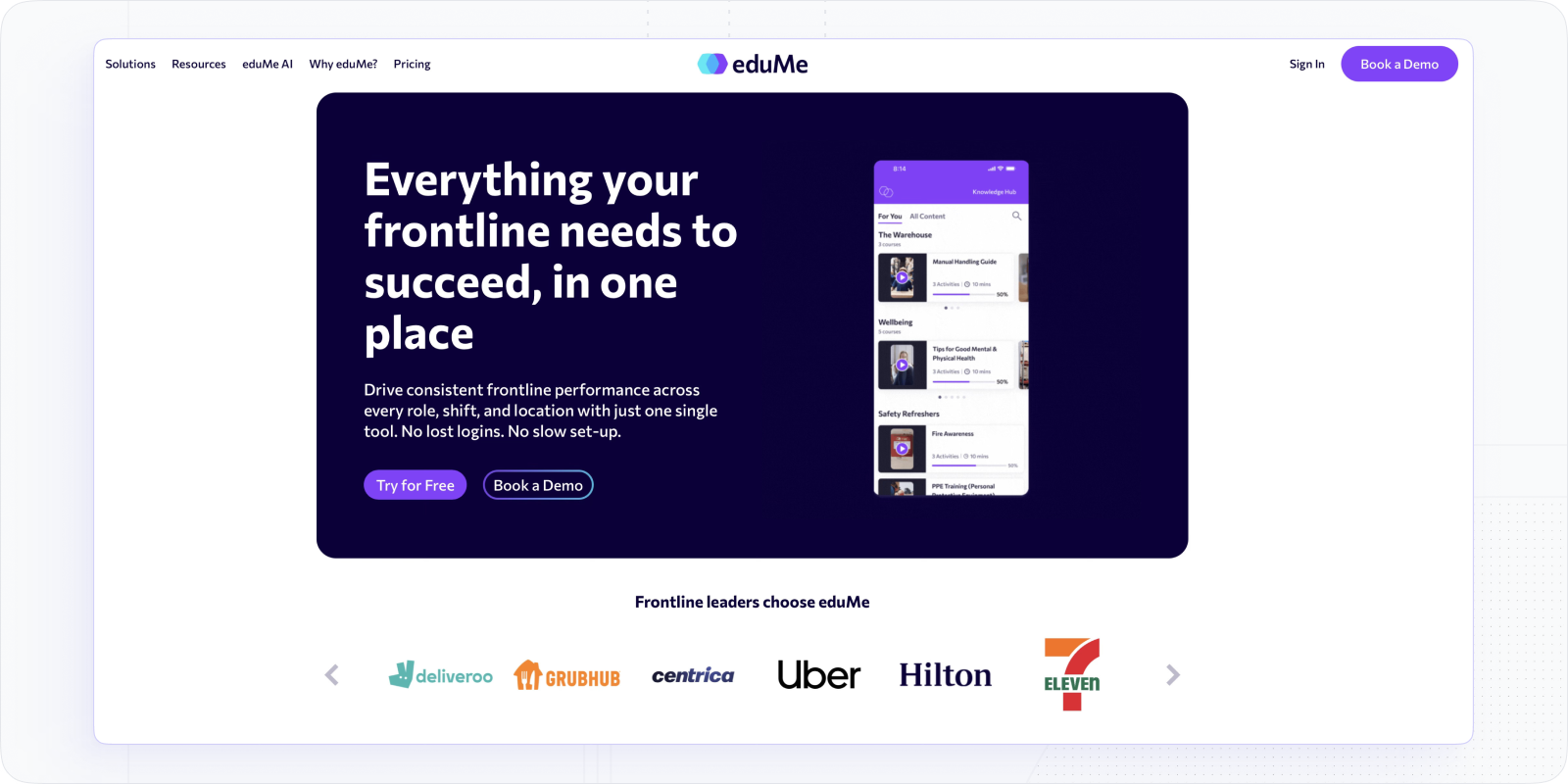
When evaluating eduMe pricing, it’s important to understand the pricing model at a foundational level: eduMe primarily uses a subscription-based, per user, per month pricing model with a minimum user commitment. This aligns with common SaaS marketplace practices where the subscription fee varies with scale and usage bands, rather than flat tier limits alone.
According to eduMe’s own published pricing structure, plans start at a set rate per user and scale up with organizational size.
The Basics of eduMe’s Pricing Model
- Per User/Per Month: eduMe charges based on the number of learners who access the platform each month.
- Minimum Commitment: There is typically a minimum commitment of 100 users required to begin (this isn’t ideal for smaller pilots or teams under 100).
- Annual Billing: Organizations usually enter annual contracts, with invoices paid upfront and tied to the yearly total user count.
- Enterprise Custom Pricing: For larger teams (especially 500+ users or complex enterprise needs), pricing is custom, requiring a quote from eduMe’s sales team.
This model contrasts with flat-rate monthly LMS pricing or usage-based tiers (e.g., per course, per active learner). It offers predictability for high-volume teams, but it can feel rigid for organizations with fluctuating headcounts or those who want to scale usage gradually.
eduMe Pricing Breakdown
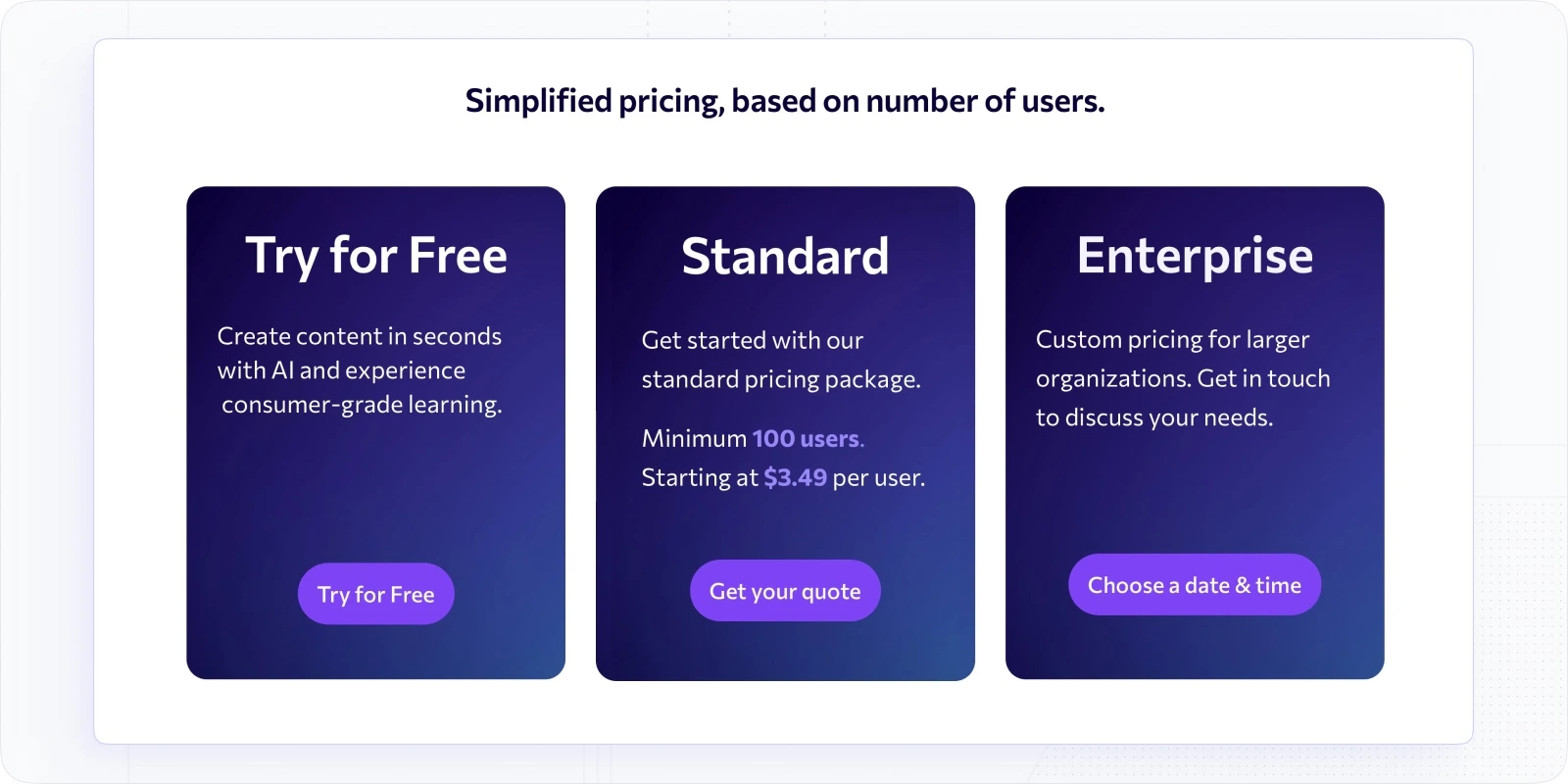
To make sense of eduMe pricing, let’s look at the two primary commercial options: the Standard plan and the Enterprise tier. While exact pricing beyond the Standard plan isn’t publicly listed, patterns from software directories confirm this structure.
eduMe Pricing Overview (2026)
Standard Plan — Simple & Predictable
eduMe’s Standard plan is designed for larger frontline workforces that want a predictable mobile learning solution. At $3.49 per user per month with a 100-user minimum, the math is simple:
- 100 users × $3.49 × 12 months = $4,188 annually
- 500 users × $3.49 × 12 = $20,940 annually
- This gives organizations a straightforward baseline for budgeting — with no tiered “feature walls” beyond the standard package.
The Standard plan includes core LMS capabilities like:
- Microlearning delivery optimized for mobile access
- Content creation and assignment tools
- Completion tracking and basic analytics
- Integrations with common communication tools and HR systems (e.g., Slack, Microsoft Teams)
Enterprise Plan — Customized for Scale
For larger organizations, eduMe’s Enterprise pricing isn’t fixed. It considers:
- Total user count and user types (internal vs external)
- Integration complexity with HRIS or MSS systems
- Security, compliance, and single sign-on requirements
- Custom branding, service-level agreements, or advanced analytics
Enterprise pricing is typically negotiated directly with eduMe’s sales team and starts with a baseline quote followed by adjustments for scale and services.
Real-World Pricing Insights
Independent sources like G2 also note that eduMe’s pricing is frequently tailored and requires contacting the vendor for detailed quotes. In fact, estimates on G2 list eduMe’s pricing as “contact vendor” with variable cost depending on scope.
Additional Costs to Consider
Beyond the basic subscription fees, enterprise buyers should anticipate additional costs that often emerge during implementation and ongoing management.
1. Onboarding & Implementation
Most enterprise LMS buyers will pay extra for structured onboarding, including:
- Deployment project management
- Content migration from legacy systems
- Admin training and user setup
For large teams, these costs can run into thousands of dollars, depending on the duration and complexity.
2. Integration Fees
eduMe integrates with HR platforms, identity providers, and communication tools, but some of these integrations may incur additional fees (especially APIs or custom build work). Integrations may either be included or require professional services, depending on contract negotiations.
3. Custom Content & Consulting
Organizations that want help designing or building training content may purchase instructional design services. This is especially common for compliance programs, certification courses, or customer onboarding tracks that require high production value.
4. Advanced Analytics & Reporting
While basic analytics come standard, deep custom reporting, executive dashboards, or integration with business intelligence tools may be add-ons.
5. Hidden Usage Costs
SaaS pricing can sometimes include seat minimums or “active user” definitions that cause unexpected costs if your organization has seasonal employees or fluctuating groups. It’s wise to clarify definitions of “active user” and billing triggers with your sales rep before purchase.
When eduMe Is a Strong Fit
eduMe’s pricing and product are designed for specific use cases. It shines when the following conditions are true:
Frontline & Distributed Teams
eduMe’s mobile-first focus, complete with integrations for tools like Microsoft Teams and Slack, makes it ideal for large teams where learners are often on the go.
Microlearning & Short Training Modules
Instead of traditional course structures, eduMe prioritizes microlearning, which is well suited for:
- Safety compliance refreshers
- Onboarding mini-modules
- Quick product updates delivered instantly
Predictable User Base
If you have a stable workforce of over 100 learners and steady usage, eduMe’s straightforward per user pricing is predictable and easy to budget.
Minimal Technical Overhead
eduMe’s SaaS delivery model means no servers to manage, automatic updates, and a quick implementation cycle — ideal for resource-lean L&D teams. Modern SaaS LMS adoption is widely acknowledged for faster deployment and lower long-term IT costs compared with self-hosted systems.
When eduMe May Not Be Ideal
Despite its strengths, there are scenarios where eduMe pricing and product structure may not be the best fit.
Small Teams Under 100 Users
The 100-user minimum becomes a barrier for:
- Startups testing a training program
- Teams piloting a new onboarding workflow
- Departments with limited headcount
In such cases, alternatives with no minimum commitments are more cost-effective.
Multi-Portal or Multi-Audience Needs
If your organization intends to segment portals (e.g., internal employees, partners, contractors, and customers) eduMe’s pricing and architecture may not accommodate multiple branded portals without significant cost.
Advanced Customization or White-Labeling
Enterprise buyers who need deep customization, extensive localization or white labeling should validate these needs early in the negotiation to avoid unexpected costs.
Final Verdict: Is eduMe Worth It in 2026?
Here’s the bottom line: eduMe pricing delivers clarity and simplicity, which is a strong advantage for large frontline organizations looking for a mobile-first, easy to roll out training platform.
If your primary objective is to train hundreds or thousands of frontline workers with consistent, bite-sized learning delivered where your teams already work, eduMe remains a compelling choice in 2026.
But what if that level of investment or rigidity doesn’t match your needs? Many companies begin exploring alternatives when they want more pricing flexibility, multi-audience support, and modular scalability.
EducateMe LMS is a good choice among eduMe competitors.
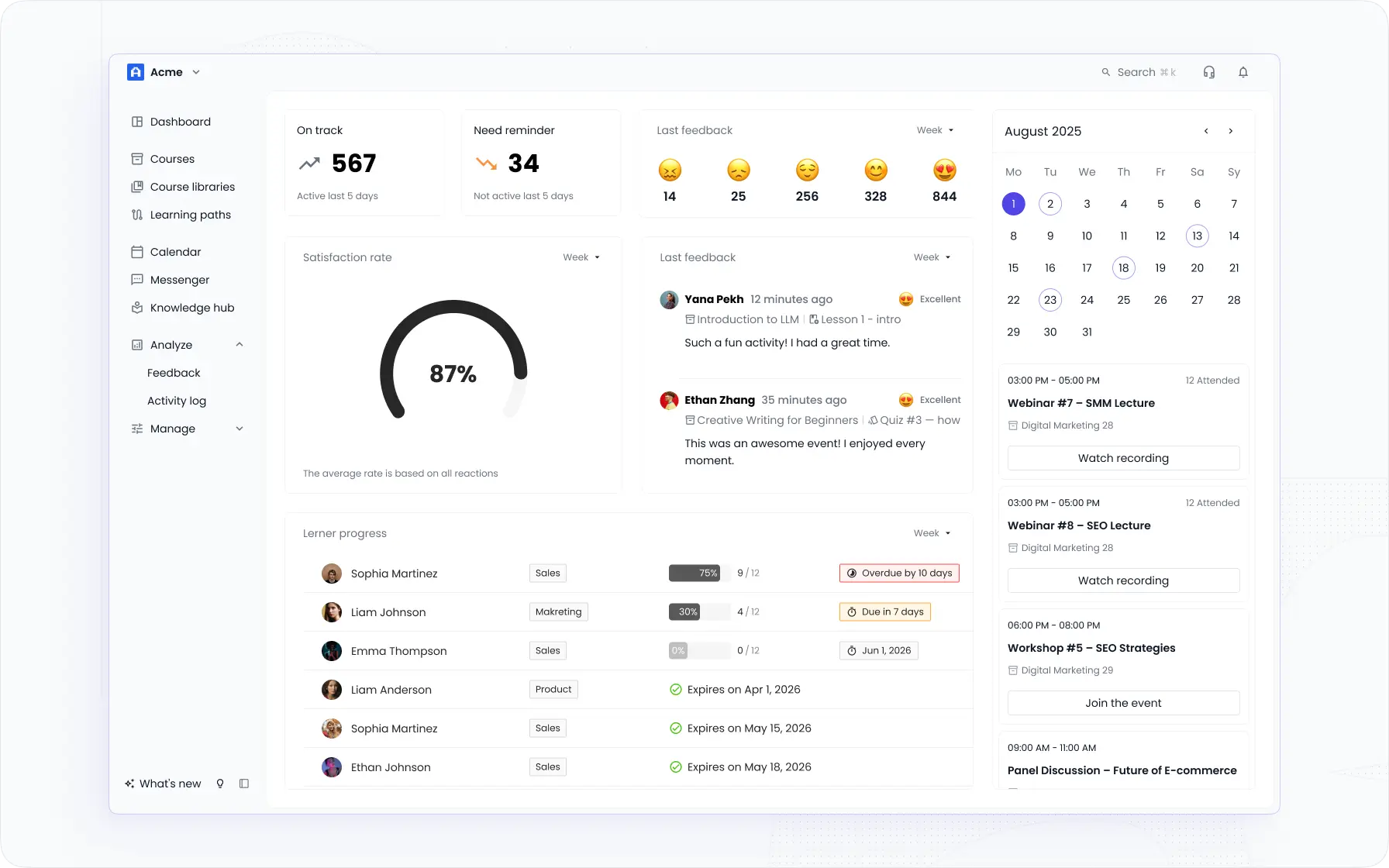
This LMS platform is designed for enterprise and mid-market customers with varied training audiences, including both internal employee training and external partners or customers. Unlike eduMe’s minimum seat commitment, EducateMe often allows more flexible pricing that scales with real usage and audience diversity.
Here’s how EducateMe stands out:
- Flexible plans that grow with your team, so you only pay for what you actually need.
- Fast, user-friendly setup, allowing fully branded training portals to launch in just hours.
- AI-powered course creation and automation, saving time on content development and admin tasks.
- Multi-tenant support, perfect for agencies, departments, and client-based programs.
- Complete white-label options, so the platform fully reflects your brand identity.
- All-in-one features, including live sessions, progress tracking, analytics, and smooth integrations, wrapped in a clean, intuitive interface.
- Free trial access, giving you the chance to test the platform risk-free before committing.
In other words, it combines enterprise-level functionality with simplicity and affordability, making it ideal for fast-moving, dynamic organizations.
Ready to explore options? Start with a personalized demo of EducateMe and compare it side-by-side with eduMe’s pricing and features to determine the best fit for your 2026 L&D strategy.