
CYPHER Learning Pricing: What It Really Costs in 2026

By Alexa BerezinaAlexa BerezinaL&D Specialist & CSM LeadMy name is Oleksandra (Alexa), and I’m a certified Learning & Development specialist focused on turning complex knowledge…Read more
L&D Specialist & CSM Lead
7 min read
What should buyers know about CYPHER learning pricing 2026? That’s the most common question people type into Google when they start looking into this LMS. And the hardest one to get a straight answer to.
CYPHER Learning doesn’t publish a simple pricing table; instead, pricing is quote-based, negotiated annually, and shaped by how many learners you have, how you plan to use the platform, and how complex your setup is.
This guide breaks down CYPHER Learning pricing, using public benchmarks, marketplace data, and real-world buying patterns, so you can understand what it typically costs, what drives the price up or down, and whether it’s actually a good fit before you ever talk to sales.
How CYPHER Learning Pricing Works
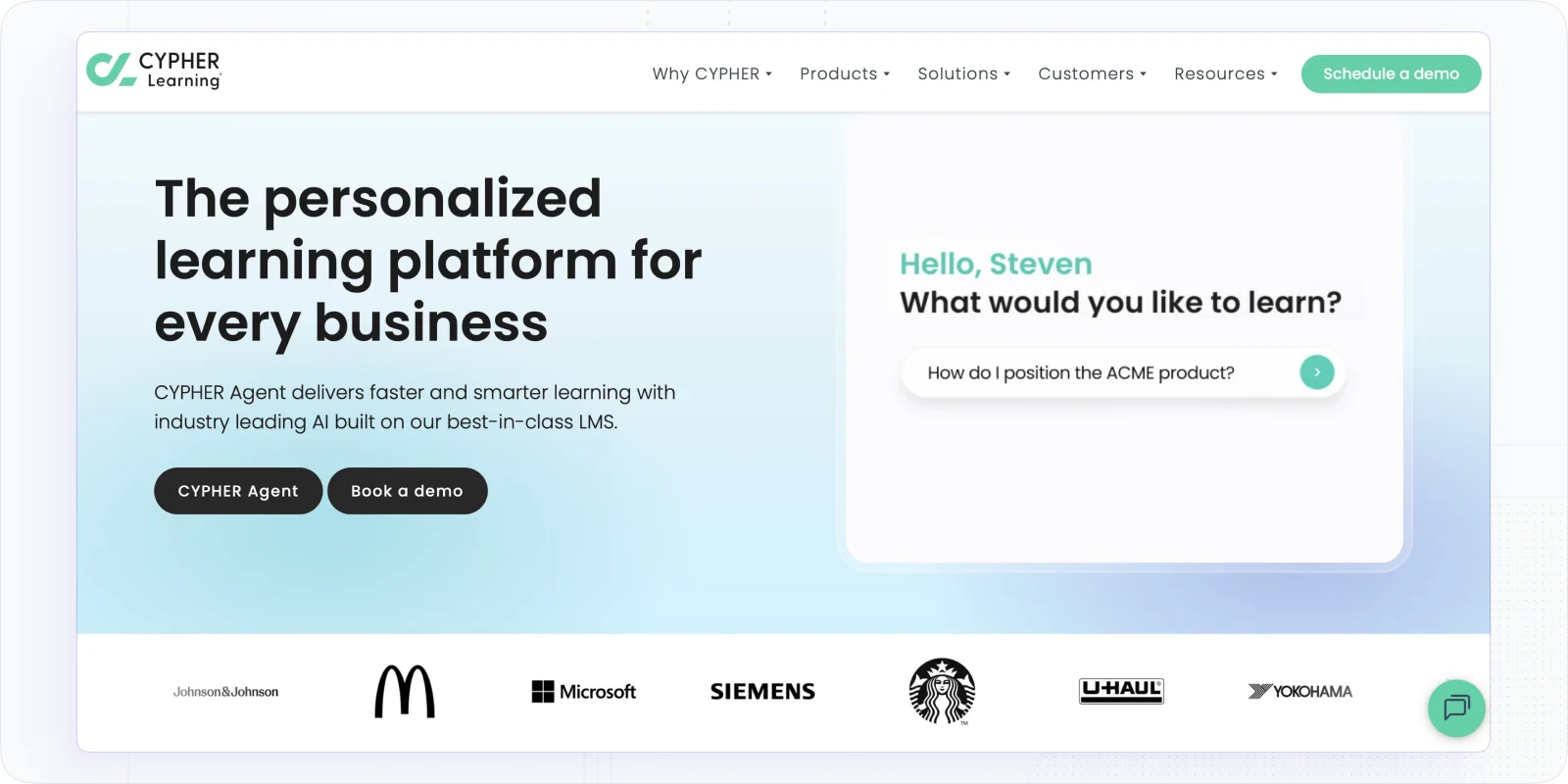
CYPHER Learning pricing is based on an annual subscription model, with costs shaped by active learners, feature tier, and deployment complexity. In practice, this means there’s no fixed price list, and every organization gets a custom quote.
At a high level, CYPHER Learning follows the same commercial logic as most enterprise LMS platforms. You don’t buy licenses one by one or pay month to month. You commit to a contract, usually for a year (sometimes longer), and pricing is negotiated upfront.
Pricing model overview
CYPHER Learning typically prices its platform using the following structure:
- Subscription-based licensing, billed annually
- Pricing tied to active learners, not total registered users
- Tiered plans that unlock more advanced features at higher levels
- Custom quotes only, with no public per-user pricing
- Minimum annual contract values that apply even for smaller deployments
If you’ve ever purchased HR software, CRM platforms, or compliance tools at the enterprise level, this will feel familiar. The LMS itself is treated as infrastructure, not as a plug-and-play tool, unfortunately.
Why pricing isn’t public
The lack of transparent pricing isn’t accidental: CYPHER Learning serves very different audiences, from corporate training teams to academic institutions, and that's why usage can vary widely.
A company training 800 internal employees in one region looks nothing like a global organization running:
- employee onboarding
- partner certification
- customer education
- compliance training
- multiple branded portals
Pricing flexes to account for those differences. The upside is flexibility; the downside is that you won’t know your real cost until fairly late in the sales process.
What usually affects the final quote
While every contract is unique, most CYPHER Learning quotes are influenced by the same core factors:
- Number of active learners (the biggest driver)
- Feature tier (Enhanced vs. Enterprise)
- Number of portals or tenants
- Integrations (HRIS, CRM, SSO, APIs)
- Support level and SLAs
- Implementation and onboarding scope
This is why two organizations with similar headcounts can end up with very different prices, even if they’re using the same LMS.
Realistic Pricing Ranges and Benchmarks
In short, most organizations pay between $10,000 and $100,000+ per year for CYPHER Learning, depending on scale and complexity. This range appears consistently across software marketplaces, buyer disclosures, and procurement discussions.
Although CYPHER Learning doesn’t publish a price list, independent platforms converge around the same baseline:
- Marketplaces such as GetApp, Software Advice, and Capterra list a starting price of around $10,000 per year
- Vendor intelligence platforms describe pricing as custom, annual, and enterprise-oriented
- Buyer-reported contracts show costs scaling mainly with active learners and deployment scope, not just features
That ~$10,000 figure should be treated as an entry point, not an average.
A quick way to sanity-check CYPHER Learning pricing 2026 is to look at how the platform is positioned on third-party marketplaces. On GetApp’s CYPHER Learning listing, the LMS is consistently categorized as enterprise-focused, with pricing tied to organizational size, usage complexity, and annual contracts rather than per-user self-serve plans.
Typical annual spend by organization size
Based on aggregated marketplace data and common enterprise LMS benchmarks, budgets usually fall into these ranges
- Small or limited deployments: ~$10,000–$15,000 per year
- Mid-market organizations: ~$20,000–$50,000+ per year
- Large or global enterprises: $80,000–$100,000+ per year
Two companies can both “start at $10,000” and still end up far apart in final cost. The biggest drivers are active learner count, number of portals, integrations, enterprise features, and support requirements.
Quick budget reality check
- Under $15k/year — very limited scope
- $25k–$50k/year — standard mid-market enterprise LMS use
- $75k+/year — complex, multi-audience, global training environments
That doesn’t mean CYPHER Learning is overpriced. It means it’s priced like infrastructure, not like a self-serve SaaS tool.
CYPHER Learning Pricing 2026 Breakdown by Tier
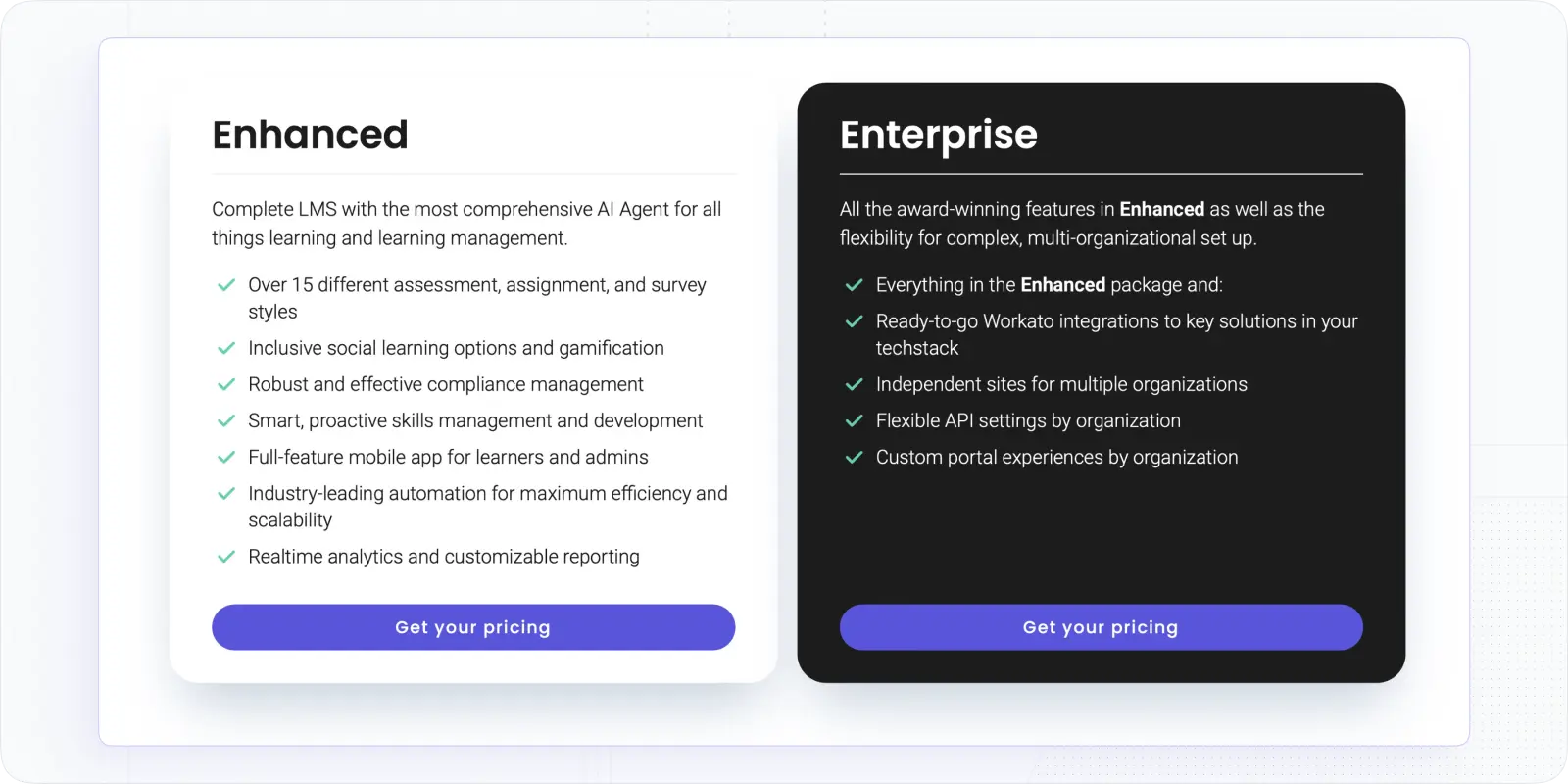
Here’s the simplest way to compare CYPHER LMS pricing across tiers, using realistic market ranges rather than sales estimates.
Disclaimer: All figures below are based on public marketplace data, buyer disclosures, and standard enterprise LMS benchmarks. Final pricing is always quote-based.
| Tier | What’s typically included | Estimated annual price range | Best suited for |
|---|---|---|---|
| Enhanced / Professional | Advanced reporting, automations, integrations, multi-portal support, branded learning environments, and customer success | $10,000–$25,000+ | Mid-market organizations running structured training programs |
| Enterprise | Unlimited portals, white-labeling, advanced SLAs, global support, custom integrations, and governance controls | $30,000–$55,000+ | Large or global enterprises with complex training ecosystems |
How does this compare to other LMS options
During vendor shortlisting, CYPHER Learning usually lands in the upper mid-market to enterprise pricing band.
- Compared to self-serve LMS platforms is significantly more expensive
- Compared to mid-market LMS tools is moderately higher
- Compared to full enterprise LMS suites is broadly comparable
At this stage, price alone isn’t enough. Perceived value matters.
On Capterra’s CYPHER Learning profile, reviewers often praise flexibility, functionality, and support for complex training programs. At the same time, some note that the platform can feel heavyweight for smaller teams, reinforcing that CYPHER Learning delivers the most value when its full feature set is used.
Additional Costs to Expect
The subscription price is only part of the total cost. For most mid-market and enterprise buyers, real spend increases once implementation and scale enter the picture.
- Implementation and onboarding. Configuration, migration, and admin training can raise first-year costs, especially for multi-portal or regulated environments.
- Integrations and technical setup. HRIS, CRM, SSO, and API integrations may be included at higher tiers or scoped separately.
- Support levels and SLAs. Faster response times, uptime guarantees, and dedicated managers are often negotiated extras.
- Portals, tenants, and branding. Training multiple audiences can significantly increase pricing.
- eCommerce and transaction fees. Payment processing or revenue share models may apply if you sell courses.
First year vs. renewal
Here’s what procurement teams typically see:
| Cost phase | What changes |
|---|---|
| Year 1 | Higher total spend due to onboarding, setup, and integrations |
| Renewals | Lower and more predictable, assuming scope doesn’t expand |
Key takeaway: always ask for an all-in first-year estimate, not just license fees.
Is CYPHER Learning Worth the Price?
Short answer: yes, but only if you actually need what you’re paying for.
CYPHER Learning delivers real value in the right context and unnecessary cost in the wrong one. This is where many buying decisions either click… or quietly fall apart six months later.
When CYPHER Learning makes financial sense
CYPHER Learning tends to justify its pricing when training is mission-critical, not optional.
It’s usually a strong fit if your organization:
- Trains hundreds or thousands of learners on a recurring basis
- Runs multiple training audiences (employees, partners, customers)
- Needs separate portals or branded experiences
- Operates in regulated industries where tracking, reporting, and auditability matter
- Requires deep integrations with HR, CRM, or identity systems
- Treats learning as long-term infrastructure, not a side project
In these scenarios, the pricing aligns with the value. You’re paying for scale, control, reliability, and support, not only a place to upload courses.
For organizations like this, CYPHER Learning often compares favorably with other enterprise LMS platforms in the same price bracket.
When the price starts to feel heavy
CYPHER Learning LMS pricing becomes harder to justify when complexity outpaces need.
It’s often not the best fit if you:
- Have a small or fluctuating learner base
- Only need basic course delivery
- Want transparent, self-serve pricing
- Don’t need multiple portals or advanced automation
- Want to launch quickly without implementation projects
- Are experimenting rather than committing long term
In those cases, you may find yourself paying for enterprise architecture you never fully use.
How CYPHER Learning compares during vendor shortlisting
During LMS evaluations, CYPHER Learning usually lands in a specific competitive zone.
Price-wise, it typically sits:
- Above lightweight, self-serve LMS tools
- Slightly above many mid-market platforms
- In line with enterprise LMS suites
This makes it a serious contender when learning is tied to compliance, scale, or revenue, and an overinvestment when it isn’t.
That’s why many teams evaluate it alongside, not instead of, simpler alternatives. Some organizations reach the same conclusion during evaluation:
“We need something modern and capable, but not enterprise-heavy.”
Unlike enterprise-first platforms, EducateMe is designed for teams that want clarity and speed without sacrificing flexibility. Pricing is transparent and publicly available, so you can see realistic costs upfront on the EducateMe pricing page instead of waiting for a sales quote.
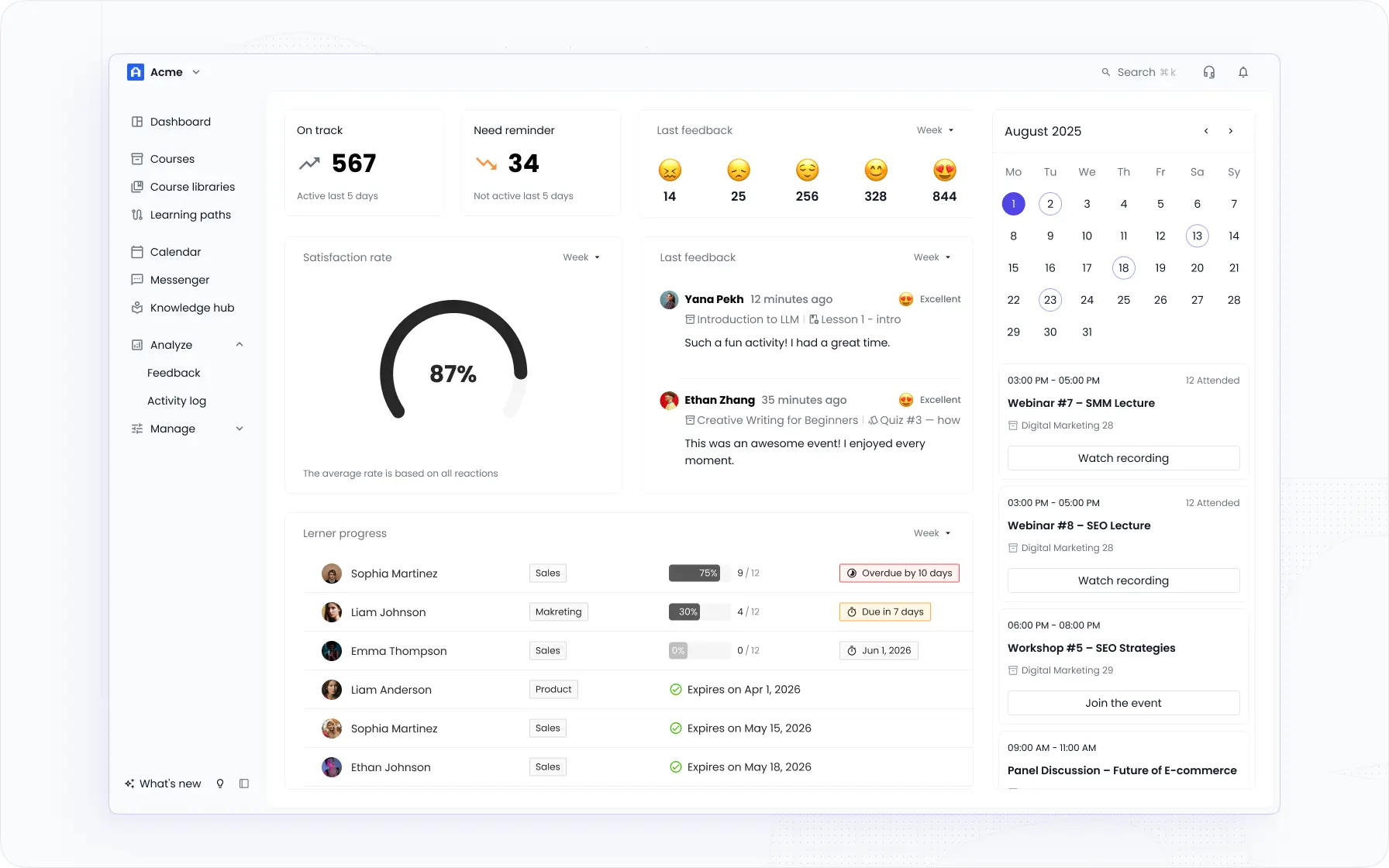
It’s commonly chosen by organizations that value:
- Predictable pricing without annual negotiation cycles
- Faster setup, with no long implementation projects
- A modern, intuitive experience for learners and admins
- Advanced AI functionality and automation
- Enough flexibility to support growth, without enterprise overhead
For teams that want to move quickly, EducateMe also offers a straightforward way to evaluate the platform in practice.
You can book a demo and see how it fits your use case before committing budget or internal resources.
In other words, while CYPHER Learning pricing makes sense for complex, large-scale training ecosystems, EducateMe tends to appeal to upper mid-market teams looking for balance: capable, modern, and easier to budget for.
Final Takeaway For Decision-Makers
CYPHER Learning pricing isn’t opaque because it’s misleading, but because it’s built for complex use cases.
If your organization needs structure, scale, and long-term stability, the investment can make sense. If you’re paying for simplicity and speed, it probably won’t.
The key isn’t whether CYPHER Learning is “expensive.” It’s whether it’s expensive for your actual needs.
Frequently asked questions
CYPHER Learning doesn't advertise a standard self-serve free trial. Because it sells through a quote-based enterprise process, most buyers see the platform through a guided demo or a scoped proof-of-concept rather than open sign-up access. If hands-on evaluation before committing budget matters to you, ask sales directly about a trial or sandbox. Some mid-market alternatives, EducateMe among them, offer full free trials with real product access instead.
Focus on the levers that move the price: active learner count, feature tier, and number of portals. Push to be billed on active rather than registered learners if your usage fluctuates, and cap renewal increases in writing before signing. Ask for an all-in first-year figure that includes implementation, not just license fees. If you won't use enterprise modules in year one, negotiate them out and add later.
CYPHER Learning serves both education and corporate buyers, and the two have very different usage patterns, which shapes the quote. Academic deployments often price around large student populations with seasonal activity, while corporate contracts weight active employees, portals, and integrations. Feature needs differ too — compliance and HRIS integrations matter more to companies. Always confirm which pricing framework your quote uses, since the same headcount can produce different costs across the two.
Often, yes. Enterprise LMS contracts commonly build in annual renewal increases unless you negotiate a cap upfront, and CYPHER Learning's quote-based model gives room for that. Your renewal can also climb if your active learner count or portal usage grows during the term. Lock in renewal terms and price protection in the initial contract — it's far harder to add later. Teams wanting to skip yearly negotiation cycles often look at transparent-pricing platforms; book a demo to compare.