
Blackboard LMS Pricing: What Organisations Actually Pay, and Why

By Roman ShaukRoman ShaukCorporate Training & AI Expert, FounderRoman Shauk is the Founder of EducateMe.Read more
Corporate Training & AI Expert, Founder
5 min read
Anyone who’s purchased Blackboard knows the first quote is never the full story. That’s because Blackboard (now part of Anthology) doesn’t sell licenses at fixed, publicly listed prices. Every deal goes through a sales-led negotiation, allowing pricing to align with institutional needs.
This means the full Blackboard pricing picture is rarely visible at the start. Costs only become clear as scope expands, services are added, and long-term commitments take shape. For many organizations, that’s where planning breaks down.
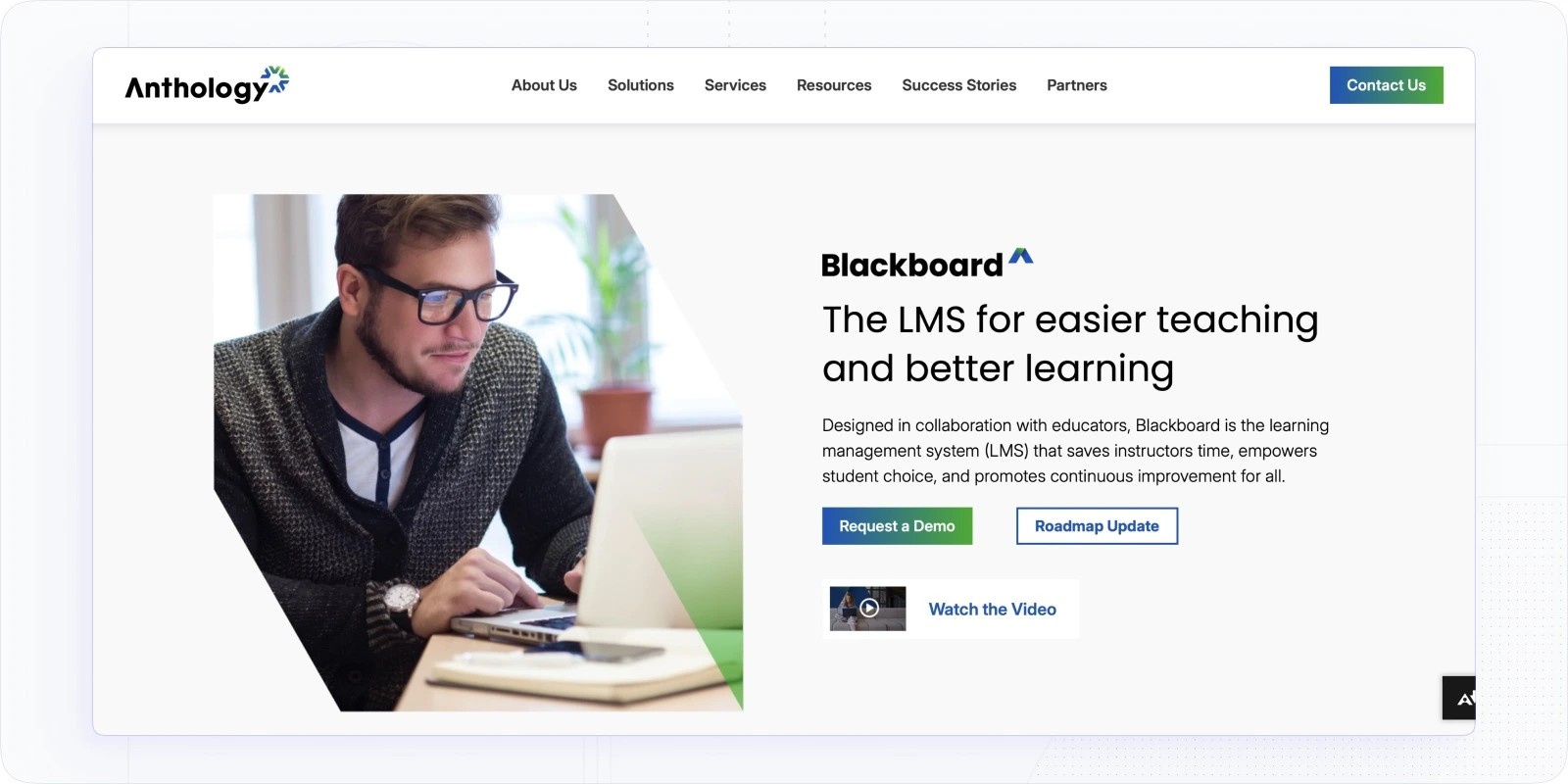
To close that gap, this article clarifies how Blackboard pricing works in practice. You’ll see where spend expands beyond the quote and how to recognize when added structure stops delivering proportional value.
How Does Blackboard LMS Pricing Work in Practice?
Blackboard is sold through a contract-based model, with pricing typically listed as custom and quote-based on third-party platforms like Capterra. What organizations pay depends on how user populations are defined, modules are added, and contract minimums are set over time.
Here are the mechanics of how the Blackboard pricing model is structured.
1. Annual billing
Blackboard learn pricing is usually agreed on an annual or multi-year basis. Once signed, scope changes during the contract term are limited.
This makes early scoping critical. Learner counts, environments, and service tiers set during procurement often stay in place even when usage patterns change. Adjustments typically require formal approvals or contract changes, not simple configuration updates.
2. User volume construct
Anthology Blackboard pricing rarely reflects monthly activity. In most enterprise contracts, pricing is based on user bands or a contracted population minimum.
In practical terms, organizations pay for who is eligible to access the platform, not just who actively uses it. This LMS pricing model fits environments where access rights matter more than fluctuating usage, such as higher education, public sector, and large enterprises.
A publicly available UK public-sector pricing framework for Blackboard Learn Ultra illustrates this model, citing annual pricing commonly in the £13–£20 per user range, structured around fixed user bands rather than activity levels. This keeps enterprise LMS pricing stable even when usage is seasonal or uneven.
3. Modular pricing
The base LMS price is only the starting point. Blackboard contracts usually grow after rollout because new requirements appear as the platform is used.
At first, standard reporting is enough. Over time, teams ask for deeper analytics, more integrations, governance test environments, and broader data access. Each addition makes sense on its own, but together they add up to the Backboard costs. This is how modular pricing increases total spend over time.
4. Contract minimums and renewal mechanics
Blackboard contracts typically include minimum user thresholds, which effectively set a baseline annual spend. Once agreed, that baseline tends to remain stable for the duration of the contract term, even if usage fluctuates.
At renewal, pricing usually continues from the existing baseline rather than resetting. Incremental increases are common, and public-sector pricing frameworks reference annual escalators of around 5%, with more favorable terms often available through longer multi-year commitments.
Over time, these renewal mechanics often have a greater impact on total cost than the initial quote.
Blackboard LMS for Business Pricing: Realistic Cost Ranges
Because Blackboard does not publish standard pricing, the most practical way to approach cost is through budget ranges, not fixed prices. The following figures reflect real-world procurement patterns and publicly referenced benchmarks.
| Deployment size | Annual subscription | One-time implementation | Typical profile |
|---|---|---|---|
| Small / contained | Low five figures | ~£9,800+ | Single region, limited users, minimal integrations |
| Mid-market | Mid five figures | Five figures | Multiple departments, reporting needs, SIS or HR integrations |
| Enterprise / global | High five to six figures | High five figures+ | Large populations, governance requirements, and multiple environments |
These ranges reflect how Blackboard pricing behaves once real operational requirements are factored in, not just the base LMS.
To ground this, a simple benchmark helps.
Using the publicly referenced £13–this £20 per user per year range, an organization with 5,000 eligible learners would expect an annual subscription cost of £65,000–£100,000. That figure covers the platform license only.
Implementation, integrations, additional environments, and service tiers are typically scoped and priced separately.
Additional Costs that Commonly Expand Blackboard Budgets
Organizations rarely overspend on Blackboard by accident. They overspend because costs emerge after initial approval. Here are the areas where budgets most often expand.
Implementation and onboarding
Implementation is the work required to adapt Blackboard to how an organization actually operates. This typically includes content and data migration, identity and access setup, integration configuration, role and permission design, and training for administrators and instructors.
Public references indicate that entry-level implementation starts at around £9,779, with costs increasing as scope expands. In enterprise environments, implementation frequently reaches the high five figures, particularly when governance, integrations, and data controls are required.
Integrations and data workflows
Although Blackboard supports standard integration methods, connecting it to existing systems still requires effort. Costs commonly arise from:
- Single sign-on configuration.
- User provisioning.
- Alignment with HR, SIS, or ERP systems.
- Reporting exports to BI tools.
- Controlled data access for compliance and audits.
In regulated environments, these integrations require design, testing, and validation. They are rarely completed without dedicated implementation work.
Additional environments and governance tooling
Most organizations start with a single production environment, but as governance, audit, or accreditation requirements increase, that setup becomes insufficient. Teams add test and staging environments to manage changes safely, formalize approval workflows, and restrict data access.
While these additions improve control and compliance, they create ongoing costs tied to extra environments, services, and administrative effort.
Training and change enablement
Training and change enablement are frequently scoped lightly during procurement. Once the platform is live, gaps in adoption, role clarity, or workflow usage surface quickly. At that point, organizations typically add paid training, enablement sessions, or external support to stabilize usage, pushing costs beyond the original plan.
Is Blackboard LMS Worth the Price in 2026?
Blackboard is worth the price when learning operations require structure, scale, and long-term stability. It’s a strong fit if:
- You support thousands of learners.
- Governance, auditability, and role separation are required.
- Learning delivery is mission-critical.
- Platform stability matters more than rapid change.
However, the platform may be hard to justify if:
- Your organization needs fast deployment with minimal services.
- Programs change frequently.
- Clear, predictable pricing is essential.
- Administrative overhead must stay low.
Final Verdict
Blackboard pricing makes sense for organizations that treat learning as long-term infrastructure. When governance, auditability, and operational consistency are non-negotiable, the pricing reflects the level of control the platform is built to provide.
In those cases, Blackboard can feel heavy, not because it’s flawed, but because it’s designed for institutions that prioritize control over agility. This is often the point where teams begin exploring Blackboard Learn alternatives to benchmark whether a lighter structure would better match their current operating needs.
One option frequently considered is EducateMe - a modern LMS designed to support employee, partner, and customer training without the enterprise-level overhead that comes with contract-heavy platforms.
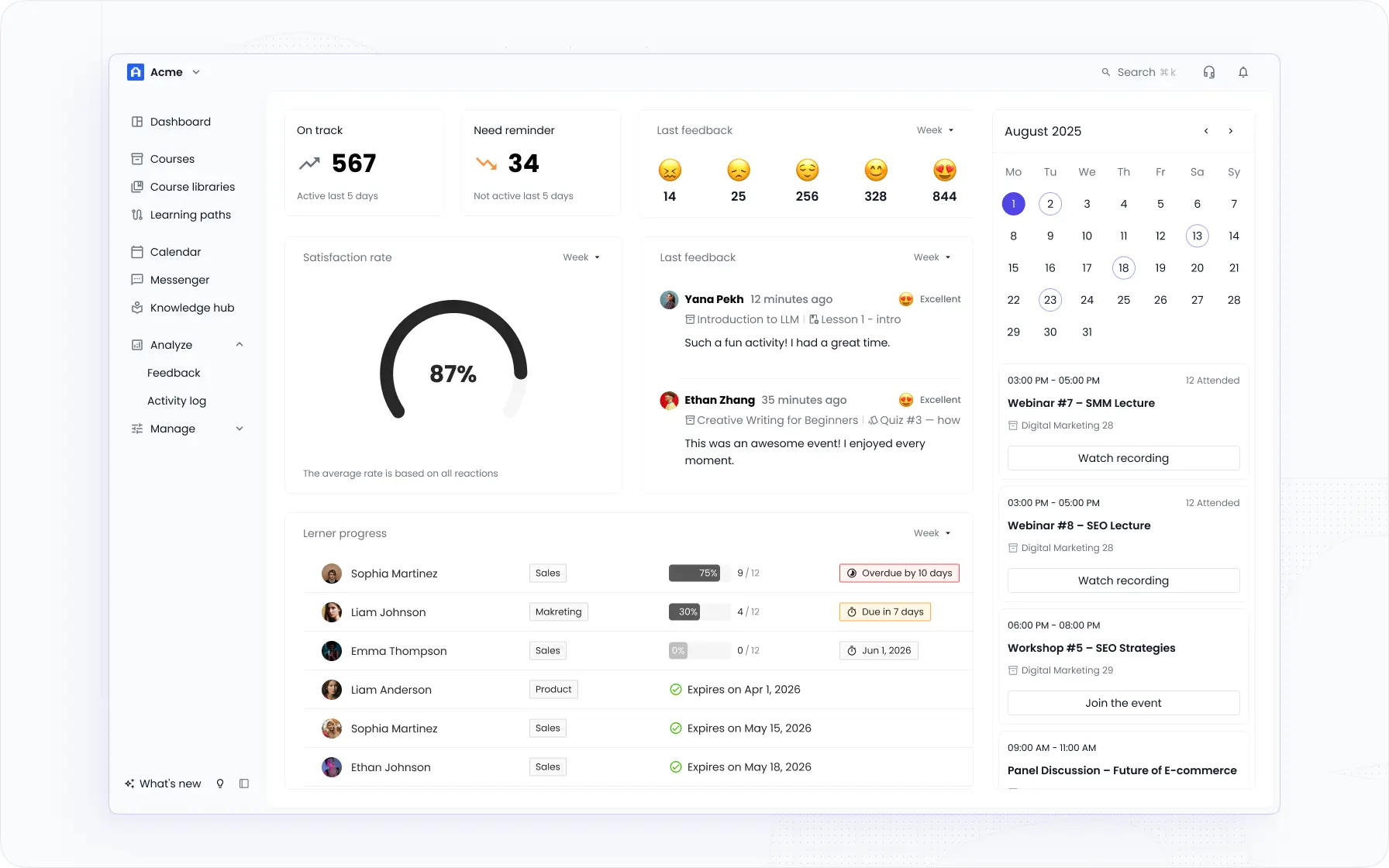
EducateMe is particularly appealing to teams that want:
- Transparent, scalable pricing that grows with usage, not eligibility counts
- Fast implementation, often measured in hours or days rather than months
- AI-powered course creation and automation to reduce manual admin work
- Multi-tenancy, ideal for departments, partners, customers, or regions
- White-labeling, live sessions, analytics, and integrations in a clean, intuitive interface
- A free trial, allowing teams to evaluate fit before committing
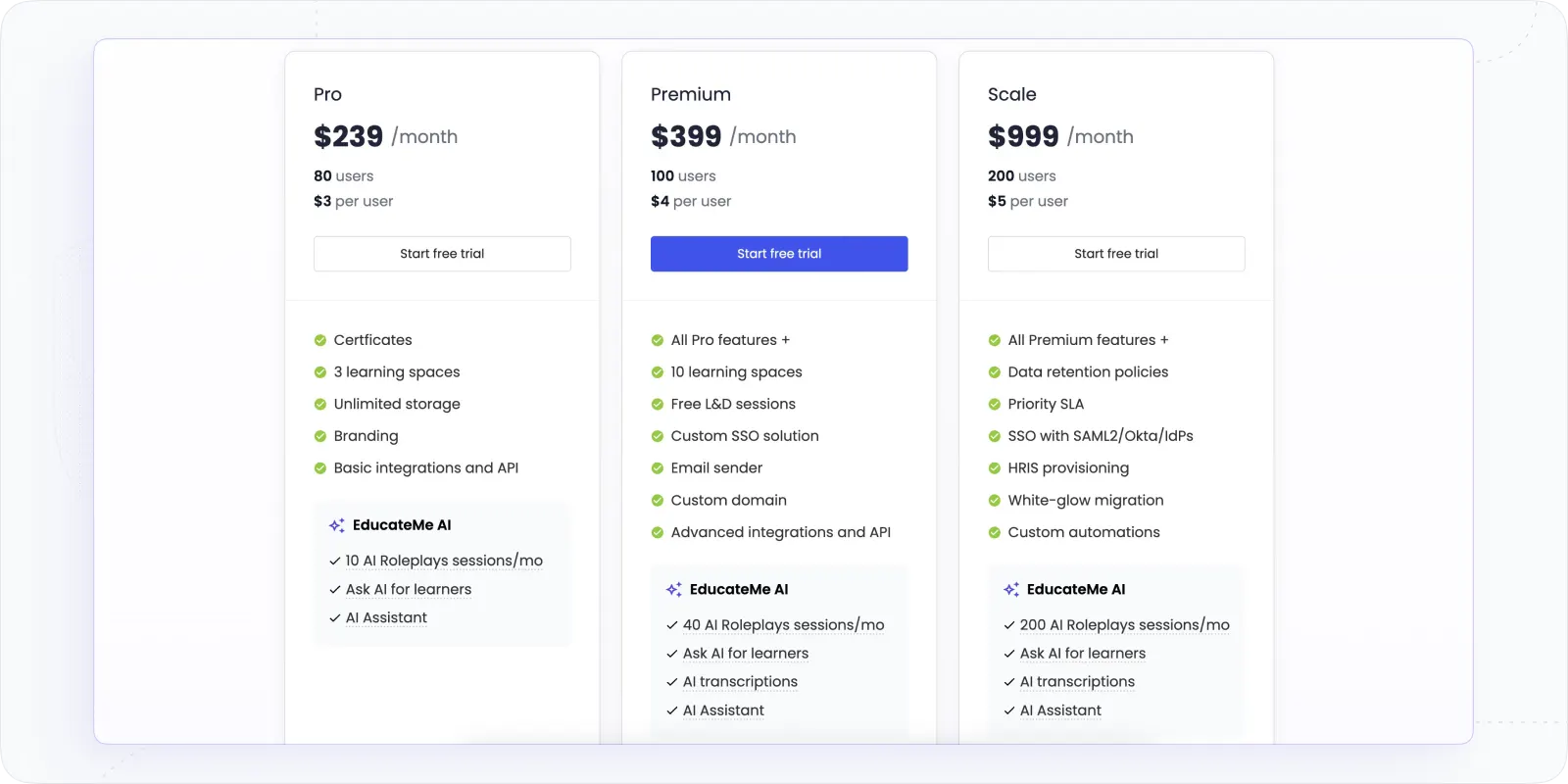
For organizations that don’t require rigid governance structures or long-term procurement cycles, EducateMe offers a lower-risk way to deliver high-quality learning at scale. It’s often chosen by teams who want clarity, speed, and cost control, without sacrificing modern learning experiences.
If Blackboard feels too heavy or too expensive for your current stage, EducateMe provides a practical alternative worth benchmarking. You can try EducateMe for free or book a demo to see whether its approach better matches how your learning programs operate today.
Frequently asked questions
Blackboard LMS pricing is quote-based. Annual costs typically range from mid-five figures for mid-sized deployments to six figures for large institutions, depending on user volume, modules, service tiers, and contract length.
Not strictly. Pricing is usually based on user bands or a contracted population minimum, meaning organizations pay for eligible users rather than monthly active usage.
Blackboard is typically worth the investment for organizations that require governance, auditability, and long-term stability. It may feel excessive for teams prioritizing speed or pricing transparency.
Organizations often explore Blackboard Learn alternatives when programs are still evolving or when lower overhead and predictable pricing are priorities.